
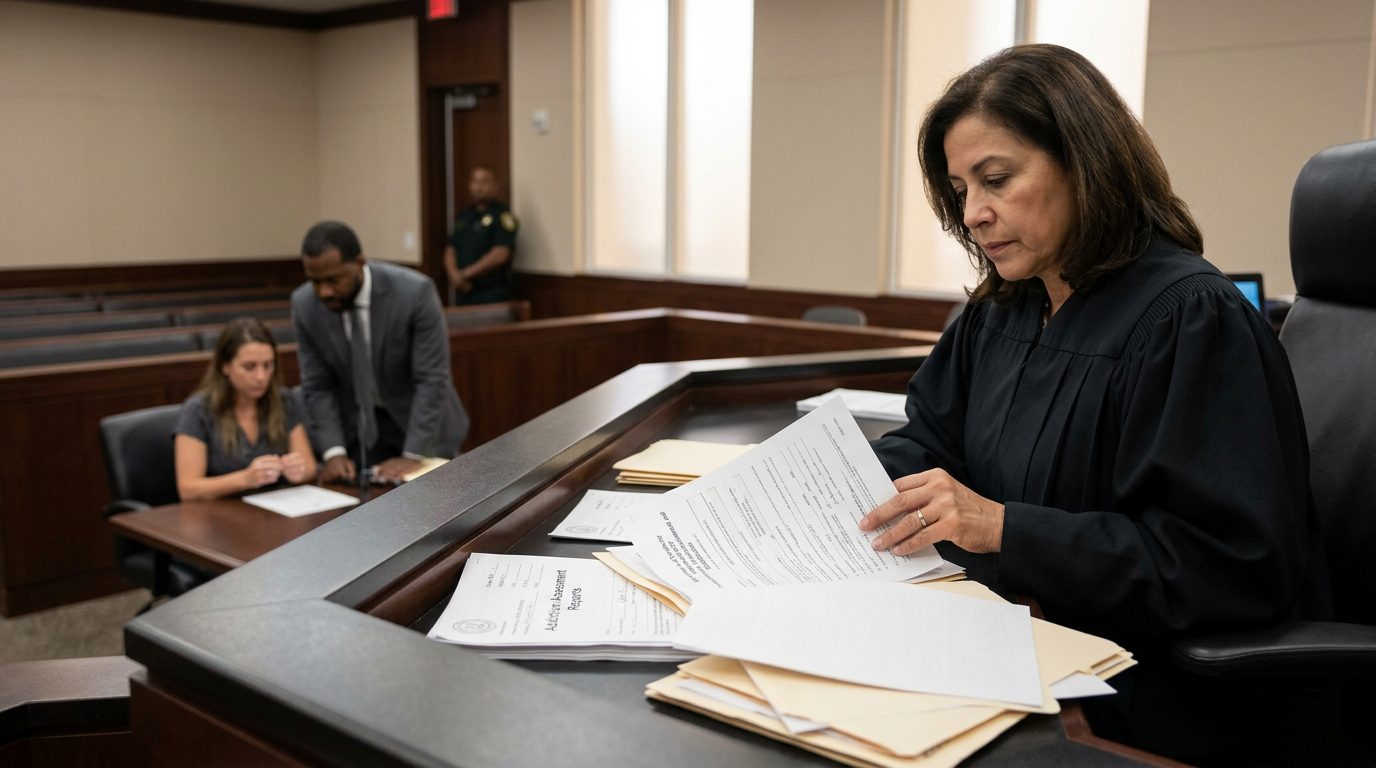
Marchman Act & Involuntary Commitment
Involuntary Commitment for Addiction in Miami-Dade County
When a loved one struggles with substance abuse, the Marchman Act provides a legal path to court-ordered treatment. Robinson & Casey guides families through the petition process and hearing.
By Richard J. Casey III, Esq. · Published October 03, 2026
Involuntary Commitment for Addiction in Miami-Dade County, Florida: What Families Need to Know
Involuntary commitment for addiction in Miami-Dade County is a legal process that allows a family member, healthcare provider, or law enforcement officer to petition a court to require someone to enter addiction treatment when they cannot or will not seek help voluntarily. Florida’s Marchman Act (Chapter 397, Florida Statutes) is the statute that makes this process possible for substance use disorders involving any drug—opioids, methamphetamine, alcohol, and others.
This guide explains what involuntary commitment means, how it works in Miami-Dade County, and when families typically consider this difficult but sometimes necessary step.
If you're considering involuntary commitment for a loved one struggling with addiction in Miami-Dade County, you're not alone—families in your situation reach out regularly to understand their legal options and next steps. Talk it through with our team — the first consultation is free, confidential, and carries no obligation.

What Is Involuntary Commitment for Addiction in Miami-Dade County?
Involuntary commitment for addiction is a court-ordered requirement that someone enter and remain in an addiction treatment program, even if they object or refuse voluntary admission.
Unlike voluntary treatment—where a person chooses to enter a program and can leave—involuntary commitment removes that choice. A court decides whether the person meets legal criteria for commitment based on evidence presented in a hearing. The goal is to interrupt the cycle of active addiction and connect the person to professional treatment when willingness alone is not enough.
In Miami-Dade County, involuntary commitment happens through the Marchman Act process. Families pursue this option when they’ve exhausted other approaches: when a loved one’s addiction has progressed to the point where they’re in danger, when repeated attempts at voluntary treatment have failed, or when the person denies they have a problem at all. These situations are emotionally exhausting and often feel hopeless. Involuntary commitment is a legal tool designed for exactly these circumstances.
How Do I Get Someone Involuntarily Committed in Florida?
The process begins with filing a petition with the court in the county where the person lives or is located.
Under the Marchman Act, several people can file a petition:
- A family member (spouse, parent, adult child, sibling)
- A healthcare provider who has treated the person
- A law enforcement officer
- A licensed substance abuse treatment provider
- A licensed mental health professional
- A state attorney or public defender
The petition must allege facts showing that the person:
- Has a substance use disorder (addiction to alcohol or drugs)
- Is likely to suffer serious harm without treatment
- Is unwilling or unable to seek treatment voluntarily
Once filed, the court typically schedules a hearing. At the hearing, the petitioner presents evidence—often including testimony from family members, medical records, or documentation of past treatment attempts and relapses. The person being petitioned against has the right to be present, to have an attorney, and to present their own evidence.
If the judge finds that the legal criteria are met, the court issues a commitment order. The person is then transported to a designated treatment facility for assessment and care.
Timeline: The process from petition to commitment order typically takes a few days to a week, though emergency situations can move faster.
Does Florida Have a 5150 Hold?
No. Florida does not use a “5150 hold”—that’s California’s mental health emergency commitment mechanism.
Florida has its own systems. For substance use disorders, Florida uses the Marchman Act. For mental health crises, Florida uses the Baker Act, which is Florida’s mental health involuntary commitment statute.
Under the Marchman Act, Florida does offer emergency involuntary commitment for addiction. This is the closest equivalent to a 5150 hold. An emergency commitment typically lasts up to 5 days and is used when someone is in immediate danger and needs urgent assessment and stabilization. During this time, the treatment facility evaluates the person’s condition and determines whether longer-term commitment is appropriate.
If the facility and the court determine that extended commitment is necessary, the commitment can be extended to 60 days or longer for active treatment.
Involuntary Commitment for Opioid, Methamphetamine, and Other Drug Addiction in Florida
The Marchman Act applies to all substance use disorders, regardless of which drug is involved.
Opioid addiction—including addiction to prescription painkillers and heroin—is one of the most common reasons families pursue involuntary commitment in Miami-Dade County. The opioid crisis has created situations where addiction progresses rapidly and overdose risk is immediate. Methamphetamine addiction also frequently leads to involuntary commitment; the behavioral and medical consequences of methamphetamine use often create urgent safety concerns. Alcohol addiction is equally covered under the Marchman Act.
The law does not distinguish between substances. What matters is whether the person meets the statutory definition of substance use disorder: a pattern of use that causes significant impairment or distress, continued use despite harm, and loss of control over use. This definition applies whether the addiction involves opioids, methamphetamine, cocaine, alcohol, benzodiazepines, or other substances.
Mental Health and Substance Abuse: When Both Are Present
Many people who struggle with addiction also have a co-occurring mental health condition—depression, anxiety, bipolar disorder, or post-traumatic stress disorder, for example.
When both conditions are present, involuntary commitment under the Marchman Act can include mental health assessment and treatment as part of the overall care plan. The treatment facility will evaluate both the addiction and any mental health needs. This dual-diagnosis approach is important because untreated mental illness often fuels continued substance use, and addiction treatment alone may not be effective if underlying mental health issues are not addressed.
In Miami-Dade County, many licensed treatment providers are equipped to handle co-occurring disorders. The court process does not distinguish between “pure” addiction and addiction with co-occurring mental health conditions—the Marchman Act covers both.
Not sure what your next step is?
Talk it through with our team — the first consultation is free, confidential, and carries no obligation.
County Agencies and Resources in Miami-Dade
Miami-Dade County’s Department of Children and Families (DCF) oversees substance abuse treatment services and works closely with the court system to implement involuntary commitment orders.
The Florida Department of Children and Families maintains a statewide network of licensed treatment providers. In Miami-Dade County, treatment options include residential programs, intensive outpatient programs, and community-based services. After a person is committed, the facility conducts an assessment and develops a treatment plan tailored to their needs.
Central Intake is the entry point for many Miami-Dade County substance abuse services. If you are considering involuntary commitment or need information about treatment options, Central Intake can provide referrals and connect you with appropriate resources.
What Happens After Involuntary Commitment?
Once someone is committed, they are transported to a designated treatment facility for assessment.
The facility conducts a comprehensive evaluation: medical history, substance use history, mental health screening, and any co-occurring conditions. Based on this assessment, the treatment team develops an individualized treatment plan. This may include detoxification, medication-assisted treatment, counseling, group therapy, and psychiatric care if needed.
The committed person retains legal rights throughout the process. They have the right to legal representation, the right to request a hearing to challenge the commitment, and the right to know the terms of their treatment plan. Family members are often invited to participate in treatment planning and family therapy sessions.
The length of commitment depends on the type of order. Emergency commitment lasts up to 5 days. Extended commitment typically lasts 60 days but can be extended if the treatment team and court determine it is necessary. As the commitment period progresses, the focus shifts toward discharge planning: preparing the person for transition to ongoing outpatient care, support groups, or continued treatment in a less restrictive setting.
When Families Consider Involuntary Commitment
Families typically reach this decision after a long period of struggle.
Often, a loved one has been through voluntary treatment one or more times and relapsed. Or they’ve refused treatment entirely, denying they have a problem despite clear evidence: job loss, legal trouble, health crises, damaged relationships. Sometimes there’s an acute crisis—an overdose, a psychiatric emergency, a threat of harm—that forces the decision.
Pursuing involuntary commitment is emotionally difficult. It feels like a betrayal, even though it’s an act of love. Families often feel guilt, anger, and exhaustion. They worry about the legal and financial consequences, about whether commitment will work, about what happens after.
These feelings are normal. So is the recognition that voluntary approaches have not worked and that something more must be tried. Involuntary commitment exists because addiction is a serious medical condition that sometimes requires intervention beyond what the person can choose for themselves.
Next Steps: Getting Legal Guidance for Your Situation
If you’re considering involuntary commitment for a loved one, understanding the legal process and your options is the first step.
An attorney experienced in Marchman Act cases can help you evaluate whether involuntary commitment is appropriate for your situation, explain what the process will look like in Miami-Dade County, help you prepare a petition, and represent you at the court hearing. They can also answer questions about your loved one’s rights, what to expect during treatment, and how to support recovery after commitment.
Robinson & Casey handles involuntary commitment cases for families throughout Miami-Dade County and South Florida. If you’re navigating this decision and want to understand your legal options, contact us for a consultation. Families in your situation reach out regularly, and we’re here to help you understand what comes next.
You can also call us at (561) 849-4149 to speak with an attorney about your specific circumstances.

Frequently Asked Questions
Can I file a Marchman Act petition on my own, or do I need an attorney?
You can file a petition yourself, but an attorney can help ensure it includes the necessary facts and legal language, and can represent you at the hearing.
How long does involuntary commitment last?
Emergency commitment lasts up to 5 days. Extended commitment typically lasts 60 days but can be renewed if treatment is ongoing.
What is the difference between the Marchman Act and the Baker Act?
The Marchman Act covers substance use disorders. The Baker Act covers mental health crises. A person can be committed under either statute depending on whether their primary condition is addiction or mental illness.
Will my loved one be angry at me for pursuing involuntary commitment?
Possibly, at first. Many people who are committed initially resist but later recognize that treatment saved their life. Anger often fades as recovery progresses.
What happens if my loved one refuses to comply with the treatment plan?
The treatment facility and court work together to address non-compliance. Depending on the circumstances, the commitment may be extended or other measures taken to support engagement in treatment.
Time Matters
Emergency commitment under the Marchman Act can begin within days of filing. The sooner you contact an attorney, the sooner you can move forward with a petition.
The Marchman Act Process
File a Petition
A family member, healthcare provider, or law enforcement can petition the court. The petition must describe the person's substance abuse and why treatment is necessary.
Emergency Commitment Hearing
The court holds a hearing, typically within days. If the judge finds probable cause, emergency commitment can begin immediately—lasting up to 5 days.
Extended Commitment Hearing
If treatment is needed beyond the emergency period, a second hearing determines whether extended commitment (typically 60 days) is appropriate.
Treatment & Recovery
During commitment, the person receives court-ordered treatment. The goal is stabilization and a foundation for ongoing recovery.
How Robinson & Casey Helps
Petition Preparation
We draft a complete petition with the facts and legal language the court requires, ensuring your case is presented clearly.
Court Representation
We represent you at the emergency and extended commitment hearings, advocating for your loved one's access to treatment.
Legal Guidance
We explain your rights, the process, and what to expect—so you can make informed decisions during a difficult time.
Fast Action
We understand urgency. We work quickly to file petitions and prepare for hearings when time is critical.
Common Questions
Can I file a Marchman Act petition myself?
Yes, you can file without an attorney. However, an attorney ensures your petition includes the necessary facts and legal language, and can represent you at the hearing to strengthen your case.
How long does involuntary commitment last?
Emergency commitment lasts up to 5 days. Extended commitment typically lasts 60 days but can be extended further if the court finds it necessary.
Who can file a Marchman Act petition?
A family member, healthcare provider, law enforcement officer, or other interested person can file. The petitioner must describe the person's substance abuse and why treatment is needed.
What happens if the person refuses treatment?
The court can order involuntary commitment, which requires the person to enter a treatment facility. Refusal to comply can result in legal consequences.