
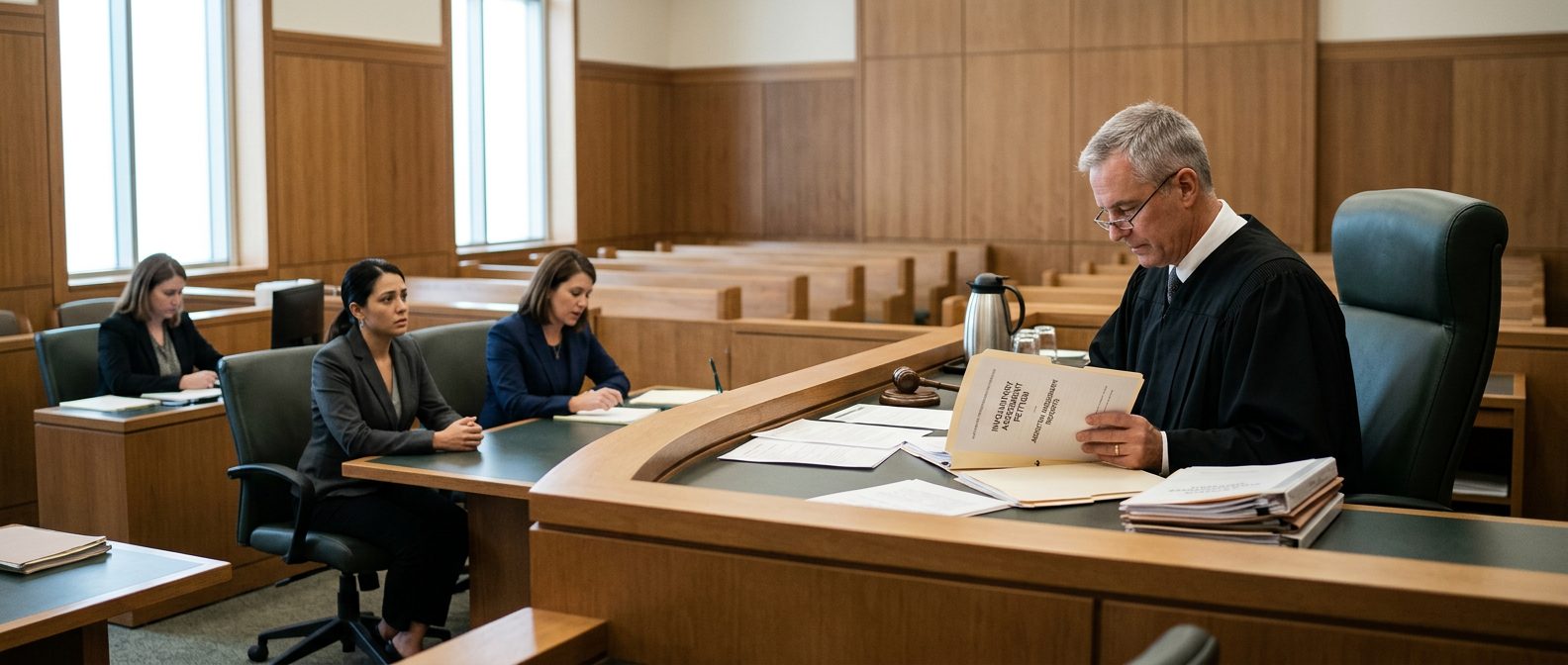
Involuntary Commitment for Addiction
Understanding Florida's Involuntary Commitment Timeline
Know the legal process and key deadlines when filing a Marchman Act petition for a loved one struggling with addiction.
By Richard J. Casey III, Esq. · Published October 01, 2026
Involuntary Commitment for Addiction Timeline in Florida
Florida’s Marchman Act allows involuntary commitment for addiction when someone poses actual or threatened harm to themselves or others. The involuntary commitment process typically takes 5 to 14 days from petition filing to court hearing. Understanding each stage helps families prepare during a stressful time.
If you're navigating addiction in your family right now and wondering what the legal process looks like and how long it takes, families in your situation reach out to discuss the timeline and next steps. Talk it through with our team — the first consultation is free, confidential, and carries no obligation.

What Is the Marchman Act?
Florida’s Marchman Act (Fla. Stat. § 397.675) is a civil law focused on treatment, not punishment. Family members, healthcare providers, law enforcement, and other authorized persons can file a petition with the circuit court. The involuntary commitment process differs from criminal proceedings and centers on getting someone into treatment.
How Long Does Involuntary Commitment Take?
The timeline from petition filing to court hearing typically spans 5 to 10 business days. The hearing decision often comes the same day or within 24 hours. Total time from petition to treatment facility admission usually takes 7 to 14 days, though expedited hearings are possible in emergencies.
Florida law requires a Marchman Act petition be heard within 10 days of filing. In practice, many hearings occur within 5 to 7 days depending on court docket. Emergency petitions may be heard within 24 to 48 hours if imminent danger is demonstrated.
Step-by-Step Timeline: From Petition to Commitment
Day 1: Petition Filing and Service
A family member or authorized person files the petition with the circuit court in the respondent’s county. The court clerk records the filing and assigns a case number. The respondent must be served with the petition and given hearing notice. Service typically occurs within 1 to 3 days.
Days 2–3: Respondent Notification and Preparation
Once served, the respondent has the right to prepare a response and gather evidence. They may consult with an attorney. The respondent’s rights include being heard at the hearing, presenting witnesses and evidence, and cross-examining the petitioner’s witnesses.
Days 4–10: Court Schedules the Hearing
The court schedules the hearing within the 10-day statutory window. Both the petitioner and respondent are notified of the date, time, and location. This period allows both sides to prepare cases and gather medical records or witness statements.
Hearing Day: Judge Reviews Evidence and Makes a Decision
At the hearing, the judge hears testimony from the petitioner, respondent, and any witnesses or medical professionals. A licensed physician or mental health professional typically evaluates the person before or at the hearing. The judge reviews evidence of substance abuse impairment and actual or threatened harm.
The judge’s decision typically comes the same day or within 24 hours. If granted, the court issues a commitment order. If denied, you may refile with additional evidence or explore other legal options.
Post-Hearing: Transport and Admission
If committed, the individual is transported to a licensed treatment facility. Facility intake and initial assessment begin immediately. Clinical staff evaluate the person and develop a treatment plan.
Requirements for Involuntary Commitment Under the Marchman Act
To meet involuntary commitment criteria, the person must:
- Be impaired by substance abuse to the extent that judgment is substantially impaired
- Present actual or threatened harm to themselves or others
- Be unlikely to voluntarily seek or follow treatment
Factors That Influence the Timeline
Court docket availability is the most common factor affecting timeline. Busy courts may schedule hearings further out, though law requires the hearing within 10 days.
Respondent location can delay service of process. If the person cannot be found, the timeline extends until they are located.
Facility capacity may affect admission timing. Treatment facilities sometimes have waiting lists after a commitment order is issued.
Case complexity influences preparation time. Contested evidence or multiple witnesses may require more preparation time for both sides.
Emergency circumstances can trigger expedited hearings. Imminent danger may result in a hearing within 24 to 48 hours.
Not sure what your next step is?
Talk it through with our team — the first consultation is free, confidential, and carries no obligation.
How Long Can Someone Be Held Under Involuntary Commitment?
The initial commitment period is typically 5 days for evaluation and stabilization at a receiving facility. After this assessment period, commitment can be extended for up to 60 days if the person continues to meet criteria. After 60 days, the person may voluntarily continue treatment or commitment may be renewed if criteria are still met.
Your Role in the Timeline
If you are filing the petition, provide detailed information about the addiction, specific incidents, and any harm or threats. Documentation—such as incident reports, medical records, or behavioral observations—speeds up the process and strengthens your case.
You may be asked to testify at the hearing about your observations and concerns. An attorney can help ensure the petition is filed correctly, prepare you for the hearing, and represent you if the respondent contests the petition.
Frequently Asked Questions
How long does involuntary commitment take in Florida?
The legal requirement is a hearing within 10 days of petition filing. In practice, many hearings occur within 5–7 days depending on court docket availability.
What happens if the respondent contests the petition?
The respondent has the right to present evidence and testimony at the hearing. The judge will hear both sides before deciding whether commitment criteria are met.
Can the initial 5-day hold be extended?
Yes. After the initial 5-day assessment period, commitment can be extended for up to 60 days if criteria continue to be met.
What if the petition is denied?
If denied, you may refile with additional evidence or explore other legal options. An attorney can advise on your next steps.
Does the respondent have to be present at the hearing?
Yes, the respondent has the right to be present, be heard, and present evidence. If they cannot be located, the hearing may be postponed.

Next Steps
Understanding the timeline and what to expect at each stage reduces uncertainty during a stressful time. Robinson & Casey helps families file Marchman Act petitions, prepare for hearings, and navigate treatment placement.
If you’re facing addiction in your family, call us to discuss the involuntary commitment process, your options, and what comes next.
Call Robinson & Casey at (561) 849-4149 to schedule a consultation.
Key Phases of the Involuntary Commitment Process
Petition Filing
A petition is filed with the court on behalf of the respondent. The petition must include specific facts showing that the person is unable to manage their addiction and poses a danger to themselves or others.
Immediate Custody & Evaluation
Upon filing, law enforcement may take the respondent into custody for evaluation. An evaluation by a qualified evaluator must occur within 5 days of custody to assess the need for treatment.
Hearing Within 10 Days
Florida law requires a hearing before the court within 10 days of the petition filing. In many cases, hearings occur within 5–7 days depending on court docket availability. The respondent has the right to present evidence and testimony.
Court Decision & Treatment Order
The judge determines whether involuntary commitment is necessary. If ordered, the respondent may be committed for treatment, typically for up to 60 days initially, with potential extension.
Time Is Critical
The 10-day hearing deadline is a statutory requirement under Florida law. Missing deadlines or procedural steps can delay the process or affect the outcome. Early legal guidance ensures your petition is filed correctly and on time.
Why You Need Legal Guidance for This Process
Proper Petition Preparation
The petition must meet strict legal requirements and include sufficient factual detail. Errors or omissions can result in dismissal or delay.
Meeting Statutory Deadlines
Florida's involuntary commitment process has multiple time-sensitive deadlines. An attorney ensures each step stays on track.
Protecting Your Rights & Your Loved One's
Both the petitioner and the respondent have legal rights throughout the process. An attorney helps navigate these protections.
Court Representation
Having an attorney present at the hearing strengthens your case and ensures all evidence and testimony are properly presented to the judge.