
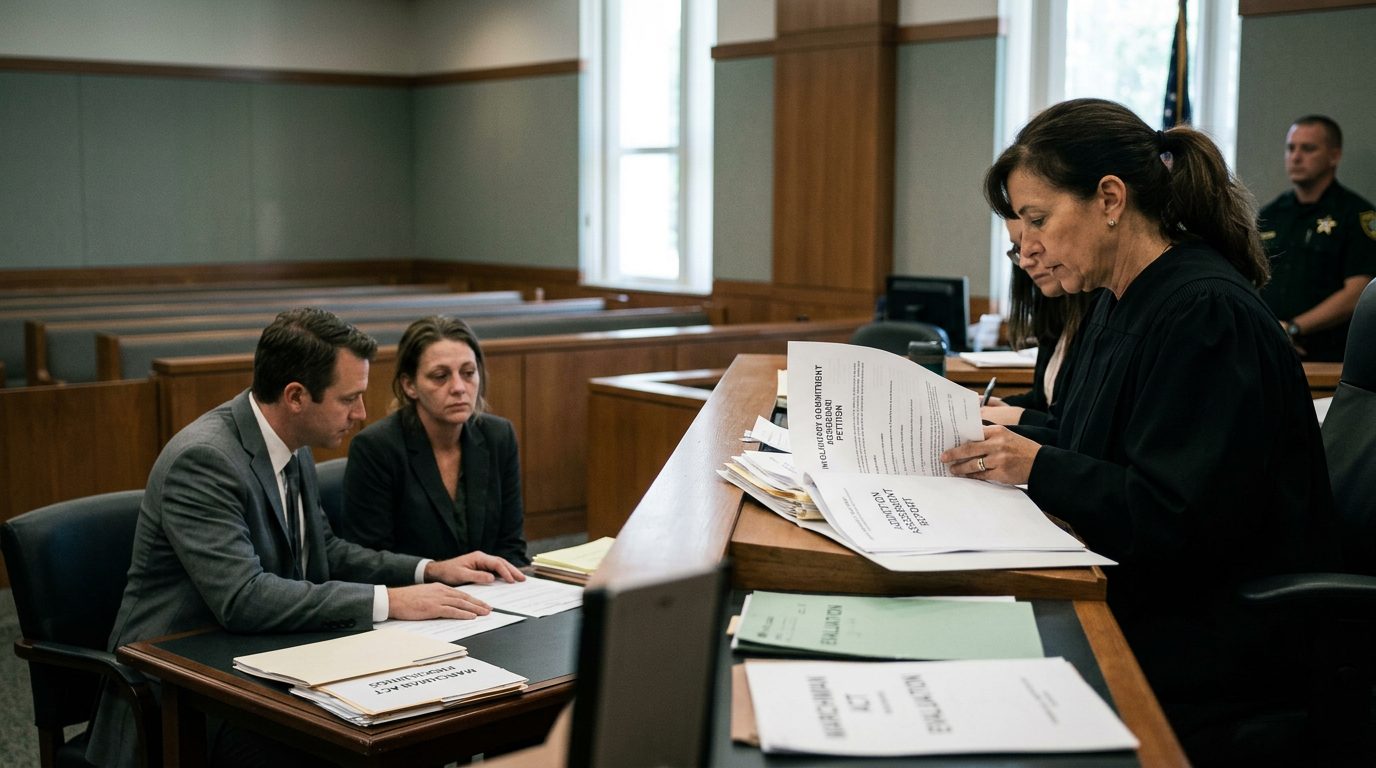
Marchman Act & Guardianship
Involuntary Commitment for Opioid Addiction in Florida
When a loved one cannot manage their opioid use disorder, Florida law provides a path to court-ordered treatment. Robinson & Casey guides families through the Marchman Act process.
By Richard J. Casey III, Esq. · Published September 23, 2026
Involuntary Commitment for Opioid, Methamphetamine, and Alcohol Addiction in Florida
Florida’s Marchman Act allows involuntary commitment for individuals struggling with opioid, methamphetamine, and alcohol addiction when they cannot manage their affairs or pose danger to themselves or others. Each substance presents distinct legal grounds, clinical markers, and treatment urgency that shape how courts evaluate and handle these cases.
Not sure what your next step is?
Talk it through with our team — the first consultation is free, confidential, and carries no obligation.

Why Substance-Specific Involuntary Commitment Matters
Each addiction carries its own medical profile, behavioral risks, and legal implications. Understanding these differences helps families and caregivers make informed decisions about legal intervention and prepares them for what to expect in court.
Opioid addiction brings acute overdose risk. Methamphetamine addiction often triggers psychosis, aggression, and severe impairment of judgment. Alcohol addiction creates medical emergencies through withdrawal syndrome and organ damage. While Florida’s Marchman Act (Chapter 397, Florida Statutes) applies uniformly to all substance use disorders, courts weigh substance-specific clinical evidence when deciding whether to grant involuntary commitment. This substance-specific context also shapes the urgency of intervention, the type of guardianship needed, and the treatment options available after commitment.
Involuntary Commitment for Opioid Addiction in Florida
Opioid addiction carries immediate overdose risk, making involuntary commitment increasingly common in Florida.
Legal Grounds Under the Marchman Act
Under Florida Statute Chapter 397, a court may order involuntary commitment of an individual with opioid use disorder if the person cannot manage their affairs or poses a danger to themselves or others due to substance dependence. For opioid addiction, courts focus on overdose risk, prior overdose events, and inability or refusal to seek treatment.
Clinical Markers and Evidence
Toxicology results confirming opioid use, medical records documenting prior overdoses or emergency room visits, and addiction medicine assessments showing dependence are critical. Behavioral documentation—missed appointments, isolation, criminal activity related to obtaining drugs, or statements expressing suicidal ideation—strengthens the petition. The National Institute on Drug Abuse (NIDA) documents that opioid overdose deaths remain a leading cause of unintentional injury death in the United States, underscoring the medical urgency courts recognize in these cases.
Emergency Intervention and Medication-Assisted Treatment
When overdose risk is imminent, emergency temporary guardianship allows rapid court intervention without waiting for a full hearing. This bridge to involuntary commitment can be granted within hours if the evidence shows immediate danger. After commitment, FDA-approved medication-assisted treatment—methadone, buprenorphine, or naltrexone—forms the foundation of recovery, combined with counseling and behavioral support.
Involuntary Commitment for Methamphetamine Addiction in Florida
Methamphetamine addiction presents a distinct legal and clinical challenge because it frequently triggers acute psychiatric symptoms.
Why Methamphetamine Cases Are Legally Distinct
Methamphetamine use often causes psychosis, paranoia, aggression, and severely impaired decision-making. These symptoms may render the individual incapable of managing their affairs or create imminent danger to themselves or others—the legal thresholds for involuntary commitment. Courts recognize that methamphetamine-induced psychosis differs from opioid overdose risk; the danger may be behavioral and psychiatric rather than solely medical.
Evidence and Documentation
Psychiatric evaluations documenting psychotic episodes, aggression, or suicidal or homicidal ideation are essential. Behavioral history—arrests, violent incidents, self-harm attempts, or statements of paranoia—supports the petition. Prior treatment attempts and relapse patterns demonstrate that voluntary intervention has failed. Unlike opioid addiction, no FDA-approved medication treats methamphetamine use disorder specifically, so post-commitment treatment focuses on inpatient rehabilitation, psychiatric care, and behavioral therapy.
Dual Diagnosis Considerations
Many individuals with methamphetamine addiction also have co-occurring mental health conditions—bipolar disorder, schizophrenia, or severe depression. Courts evaluate whether the addiction, the mental illness, or both warrant involuntary commitment. This dual diagnosis often strengthens the case for commitment and shapes the treatment plan post-commitment.
Involuntary Commitment for Alcohol Addiction in Florida
Alcohol addiction presents unique medical urgency because withdrawal can be life-threatening.
Medical and Behavioral Grounds
Courts consider alcohol withdrawal syndrome, liver disease, cognitive impairment, and danger to self or others. Unlike opioid overdose or methamphetamine psychosis, alcohol withdrawal itself is a medical emergency requiring immediate intervention. The Substance Abuse and Mental Health Services Administration (SAMHSA) recognizes that severe alcohol withdrawal can cause seizures, hallucinations, and delirium tremens—conditions requiring inpatient medical management.
Clinical Documentation
Medical records showing liver function abnormalities, prior detoxifications, or hospitalizations for alcohol-related conditions are critical. Psychiatric evaluations documenting depression, suicidal ideation, or cognitive decline strengthen the petition. Behavioral evidence—job loss, family breakdown, legal problems, or inability to maintain self-care—demonstrates inability to manage affairs due to addiction.
Withdrawal Risk and Emergency Intervention
Alcohol withdrawal can develop within hours of the last drink and may require immediate medical stabilization. Emergency temporary guardianship allows courts to order immediate inpatient detoxification and medical monitoring. After commitment, naltrexone or acamprosate—FDA-approved medications for alcohol use disorder—support long-term recovery alongside counseling and peer support.
How Florida Law Treats These Three Addictions
Florida courts apply a uniform legal standard across all substance addictions: the individual must be unable to manage their affairs or pose danger to themselves or others due to substance dependence. However, substance-specific clinical evidence shapes how courts evaluate each case.
For opioid addiction, courts weigh overdose risk, prior overdose history, and failed treatment attempts. For methamphetamine addiction, psychiatric symptoms, behavioral danger, and impaired decision-making capacity are central. For alcohol addiction, medical urgency—withdrawal risk, organ damage, and medical complications—often drives the decision.
Medical and addiction medicine testimony helps courts understand the substance-specific risks. Toxicology, behavioral documentation, and prior treatment history are common to all three; substance-specific clinical markers (overdose risk, psychotic episodes, withdrawal danger) differentiate each case and influence urgency and intervention type.
Not sure what your next step is?
Talk it through with our team — the first consultation is free, confidential, and carries no obligation.
Gathering Evidence for Substance-Specific Involuntary Commitment
Strong petitions include medical records, toxicology results, and behavioral documentation tied to the specific substance.
For opioid addiction: toxicology confirming opioid use, prior overdose emergency room records, addiction medicine assessment, and statements about overdose risk or suicidal ideation.
For methamphetamine addiction: psychiatric evaluation documenting psychosis or aggression, behavioral history (arrests, violent incidents, self-harm), prior treatment attempts, and evidence of impaired decision-making.
For alcohol addiction: medical records showing liver disease or prior detoxifications, psychiatric evaluation documenting depression or suicidal ideation, behavioral history (job loss, family breakdown), and evidence of withdrawal risk or medical complications.
Statements from family, employers, healthcare providers, or others with direct knowledge of the substance-specific harms strengthen all petitions. Current risk factors—overdose risk for opioids, acute psychotic episodes for methamphetamine, imminent withdrawal for alcohol—demonstrate why immediate intervention is necessary.
The Role of Emergency Temporary Guardianship in Substance-Specific Cases
When immediate intervention is necessary, emergency temporary guardianship bridges the gap between crisis and full involuntary commitment proceedings.
Emergency temporary guardianship is granted without a full hearing if the court finds reasonable cause to believe the individual poses imminent danger. For opioid addiction, this may mean acute overdose risk or a recent overdose event. For methamphetamine addiction, it may mean active psychosis or violent behavior. For alcohol addiction, it may mean imminent withdrawal or acute medical crisis.
Once emergency temporary guardianship is granted, the court orders the individual into immediate care—typically inpatient treatment or medical stabilization. A full involuntary commitment hearing follows, usually within 5 to 10 days, where the petitioner must present evidence that involuntary commitment is warranted. If the court finds grounds, it may order plenary guardianship (full authority over the individual’s affairs) or limited guardianship (authority over specific decisions, such as treatment).
What Happens After Involuntary Commitment for These Addictions
After involuntary commitment, the guardian and treatment providers work together to place the individual in appropriate care and manage ongoing recovery.
Opioid addiction: Medication-assisted treatment with methadone, buprenorphine, or naltrexone is combined with counseling, behavioral therapy, and peer support. Many individuals transition to outpatient treatment after stabilization.
Methamphetamine addiction: Inpatient rehabilitation, psychiatric care, and behavioral therapy form the core of treatment. No FDA-approved medication exists for methamphetamine use disorder, so treatment focuses on addressing co-occurring mental health conditions and building recovery skills.
Alcohol addiction: Medical detoxification in an inpatient setting is often the first step. Naltrexone or acamprosate supports long-term abstinence. Inpatient or intensive outpatient rehabilitation, peer support groups, and ongoing counseling follow.
The guardian may have authority over treatment decisions, living arrangements, and finances. Family involvement in treatment planning and recovery support is encouraged. Ongoing guardianship may continue or be modified as the individual progresses in recovery.
When to Consider Involuntary Commitment for Opioid, Methamphetamine, or Alcohol Addiction
Involuntary commitment is appropriate when voluntary treatment has failed, the individual refuses help, and there is clear evidence of danger or inability to manage affairs.
Red flags for opioid addiction: recent overdose, overdose risk, inability to stop using despite consequences, missed treatment appointments, or statements about wanting to die.
Red flags for methamphetamine addiction: active psychosis or paranoia, aggression or violence, impaired judgment, inability to care for self, or statements of suicidal or homicidal ideation.
Red flags for alcohol addiction: severe withdrawal symptoms, liver disease or medical complications, cognitive impairment, inability to stop drinking despite consequences, or suicidal ideation.
When you observe these signs and voluntary treatment isn’t working, involuntary commitment may be the only legal pathway to intervention. Robinson & Casey helps families evaluate whether involuntary commitment is appropriate for their situation, gather the necessary evidence, and file a petition with the court.

Frequently Asked Questions
Can someone be involuntarily committed for opioid addiction in Florida?
Yes. Under Florida’s Marchman Act, individuals with opioid use disorder can be involuntarily committed if they cannot manage their affairs or pose danger to themselves or others due to addiction.
What is the difference between emergency temporary guardianship and plenary guardianship for addiction cases?
Emergency temporary guardianship is a short-term order (typically 5–10 days) that allows immediate intervention when danger is imminent. Plenary guardianship is a longer-term court order granting the guardian broad authority over the individual’s affairs, including treatment decisions.
What medical evidence is needed to support an involuntary commitment petition for methamphetamine addiction?
Psychiatric evaluation documenting psychotic symptoms, behavioral history showing danger or impaired judgment, prior treatment attempts, and toxicology confirming methamphetamine use are essential.
Is medication-assisted treatment available for all three addictions?
Medication-assisted treatment is FDA-approved for opioid and alcohol use disorders. No FDA-approved medication exists specifically for methamphetamine addiction; treatment focuses on inpatient rehabilitation and psychiatric care.
How long does involuntary commitment last?
Initial involuntary commitment typically lasts 5 days. The court may extend it for up to 60 days if grounds are met. Guardianship may continue longer if the individual remains unable to manage their affairs.
If a loved one’s struggle with opioids, methamphetamine, or alcohol has reached a crisis—overdose risk, psychosis, or refusal of help—families in your situation can contact us to explore involuntary commitment as a legal pathway to intervention. Reach out to Robinson & Casey to discuss your circumstances and next steps.
Time Matters
Opioid addiction progresses rapidly. If you believe a family member poses danger to themselves or others due to opioid use, or cannot manage their affairs, contact an attorney immediately to discuss your options.
Two Paths to Court-Ordered Treatment
Emergency Temporary Guardianship
Rapid court intervention when immediate danger exists. This temporary measure can be filed and heard within days, allowing the court to authorize emergency treatment while a fuller guardianship petition is prepared.
Plenary Guardianship
A comprehensive guardianship that gives a court-appointed guardian broad authority over the individual's medical, financial, and personal decisions. Often pursued after emergency intervention or when long-term oversight is needed.
Limited Guardianship
Tailored to specific needs—for example, authority over medical decisions and addiction treatment alone, while the individual retains control of other personal or financial matters.
Mental Health Guardianship
Focused on individuals whose opioid use disorder co-occurs with mental illness. This guardianship addresses both conditions and ensures coordinated treatment.
How Robinson & Casey Helps
Petition Preparation & Filing
We prepare all required court documents, including detailed petitions that present the facts and legal grounds for involuntary commitment under the Marchman Act.
Court Representation
We represent you and your family throughout the hearing process, presenting evidence and advocating for the court-ordered intervention your loved one needs.
Emergency Response
When immediate action is required, we move quickly to file emergency temporary guardianship petitions and seek urgent court hearings.
Guidance on Treatment Options
We help families understand what treatment and recovery resources are available once the court order is in place, and how guardianship authority enables access to them.
Common Questions
Can someone be involuntarily committed for opioid addiction in Florida?
Yes. Under Florida's Marchman Act, individuals with opioid use disorder can be involuntarily committed if they cannot manage their affairs or pose danger to themselves or others due to addiction.
Who can file a Marchman Act petition?
Family members, healthcare providers, law enforcement, and other interested parties may petition the court. An attorney can advise you on standing and the strongest approach for your situation.
What happens after the court order is granted?
The individual is typically directed to an inpatient or outpatient treatment program. The guardian (or the court) ensures compliance and can modify the treatment plan as needed.
How long does the guardianship last?
Emergency temporary guardianship is short-term. Plenary and limited guardianships continue until the court finds they are no longer necessary, or until modified by the court.