
Marchman Act & Guardianship | Miami-Dade and South Florida
After an Overdose, Your Family Still Has Options
Robinson Casey focuses exclusively on Marchman Act petitions and guardianship matters for families in Miami-Dade, South Florida, and across Florida. Richard J. Casey III, Esq. leads each matter with our support team.
By Richard J. Casey III, Esq. · Published October 18, 2026
Many families face a loved one released from hospital after overdose Florida treatment questions with little warning. A Marchman Act petition is a court filing that asks a Florida judge to order assessment, stabilization, or treatment for an adult with a substance use impairment. A hospital discharge doesn’t end your options. This page explains how the process works, who can file, and what to do right now.
What Is a Marchman Act Petition?
A Marchman Act petition is a court request for help for an adult who cannot decide about treatment on their own. Under § 397.675, a person meets the criteria for involuntary admission if there is good faith reason to believe they are substance abuse impaired. The impairment must also leave them without self-control over substance use.
An overdose is often what prompts the call. But the court looks at impairment and judgment, not the overdose alone. For an adult, a petition may be filed by a spouse or legal guardian, any relative, a service provider, or an adult with direct personal knowledge of the impairment and past treatment, under § 397.68112.
Guardianship is a separate matter. It deals with whether a person can manage their personal or financial affairs. Some families need to understand both.
If your loved one is home after an overdose and you don't know what comes next, we'd be glad to talk through your options in a free, confidential first consultation. Talk it through with our team — the first consultation is free, confidential, and carries no obligation.
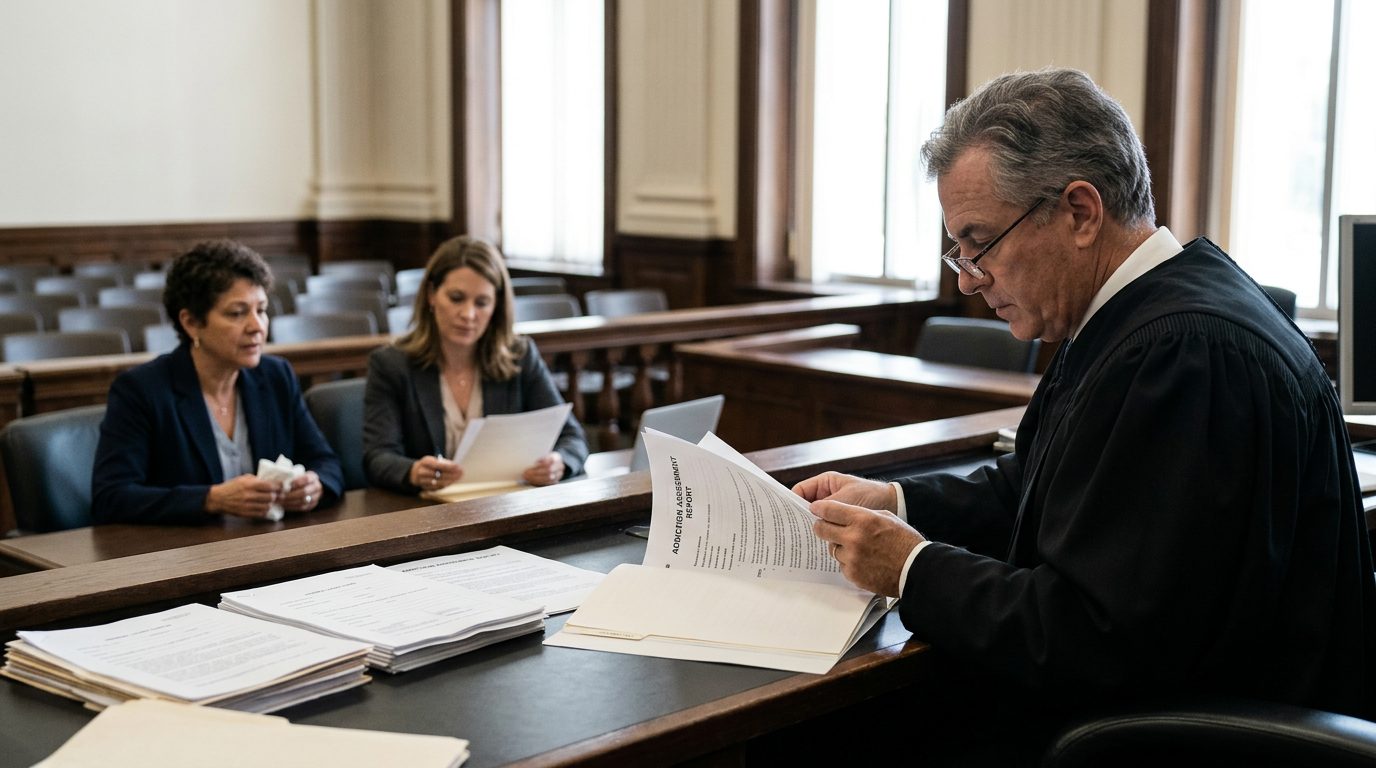
Does a Hospital Discharge End Your Options?
No. A hospital discharge is a medical decision made by the treating team. Your family’s options continue after the patient leaves.
How long someone stays in the hospital depends on their medical condition. The medical team decides when discharge is appropriate. A lawyer does not make that call.
The common gap looks like this:
- The person leaves the hospital.
- Medical care ends.
- No substance use treatment has been arranged.
Before discharge, ask the team these questions:
- What follow-up care is planned?
- Which referrals were made?
- What warning signs were written in the chart?
The Florida Department of Health describes treatment and recovery support options that families can review.
Request and keep these records: the discharge summary, notes on substance use, any treatment recommendations, and any prior assessments. A qualified professional’s report done within 30 days before filing can accompany a petition, under § 397.68141.
What Surviving an Overdose Can Mean for Decisions
Surviving an overdose can change how a person thinks, remembers, and feels. Clinicians evaluate physical complications, withdrawal, and changes in thinking. Those findings matter to the court’s question.
The court asks whether the person has lost self-control. It also asks whether impaired judgment keeps them from understanding their need for care. The test appears in § 397.675.
Write down what you observe, with dates. Note exact words when you can. Describe behavior you saw, not guesses about what it means.
Facts in a petition must be true. A written declaration must state, under penalties of perjury, that the facts are true. A knowingly false declaration is a third-degree felony under § 92.525.
Calling 911 and Emergency Court Orders
In an active overdose, call 911 first. Keep the person breathing. If naloxone is on hand, use it as its label directs.
When an emergency exists, a court can act on the petition alone. It may order an assessment and stabilization without first appointing a lawyer, under § 397.6818. A service provider may hold the person for no more than 72 hours of observation, unless a listed condition applies.
Even in an emergency, the person keeps the right to counsel. That right is explained in § 397.681.
How a Marchman Act Petition Works in Florida
A petition goes to the clerk, the court sets a hearing, and a judge decides based on evidence. Here are the main steps:
- Gather facts. The petition must name the respondent and the petitioner, state your relationship, and give the reasons treatment is needed. See § 397.68141.
- File in the right county. File where the person is located. The clerk may not charge a filing fee, under § 397.681.
- Get a hearing date. The court schedules a hearing within 10 court working days unless it grants a continuance. See § 397.68151.
- Give notice. Copies go to the respondent, the petitioner, and others the court directs.
- Attend the hearing. The respondent generally must be present. The court hears evidence, including testimony from family members, under oath. Under § 397.6957, the respondent must be present at a hearing on a petition for involuntary treatment services unless the court finds that he or she knowingly, intelligently, and voluntarily waives the right to be present or, upon receiving proof of service and evaluating the circumstances of the case, that his or her presence is inconsistent with his or her best interests or is likely to be injurious to self or others.
- Complete a clinical assessment. The court generally cannot order treatment without one. An assessment order is valid for 90 days.
- Decide on treatment. If the court finds the conditions proved by clear and convincing evidence, it may order treatment for up to 90 days. Under § 397.697, when the court finds that the conditions for involuntary treatment services have been proved by clear and convincing evidence, it may order the respondent to receive involuntary treatment services from a publicly funded licensed service provider for a period not to exceed 90 days.
The petitioner carries the burden of proof. In J.C. v. State, the Fifth District reversed an order where the judge questioned the only witness while the petitioner was absent. The Fourth District reached a different result in J.J.J. v. D.G. and certified conflict, so the rule may vary by district.
Florida courts have also recognized a constitutional right to counsel in these cases. See Hillsborough County v. Albrechta. How fast each stage moves depends on the court’s calendar and the facts of the case.
Common Questions and Objections
Refusing treatment alone does not decide the case.
- “He’s an adult. Isn’t refusing treatment his choice?” Under § 397.675, mere refusal is not by itself evidence of lack of judgment. The real question is whether impairment keeps him from weighing his need for care.
- “Can we wait and see if he stays sober?” Waiting can mean the person leaves care before any order is considered. The petition follows its own court timeline.
- “Do we need to live in the same county?” The petition goes where the person is located. The county where the family lives is not the test.
- “What about medication?” Under § 397.697, an order lets the provider require treatment services that will benefit the person.
- “How do we talk to him?” Partnership to End Addiction describes CRAFT, a family method for communicating with a loved one who refuses treatment.
Not sure what your next step is?
Talk it through with our team — the first consultation is free, confidential, and carries no obligation.
Frequently Asked Questions
Can a Marchman Act petition be filed after a hospital discharge? A hospital discharge does not end your options. The facts of the case decide the next step.
Who can file a Marchman Act petition in Florida? For an adult, a spouse, legal guardian, relative, service provider, or adult with direct knowledge can file.
Does an overdose automatically lead to a court order? No. A court order requires clear and convincing evidence that the statutory conditions are met.
Does my loved one have a right to a lawyer? Yes. The respondent has the right to counsel at every stage and can ask for appointed counsel if unable to pay.
What should a family do first? Call 911 in an emergency, request hospital records, and write down specific behavior with dates.
Is the first conversation free? Yes. The initial consultation is free, confidential, and has no obligation to continue (Spanish: consulta inicial gratuita, confidencial y sin compromiso).

Why Families Bring These Cases to Robinson Casey
Robinson Casey limits its practice to Marchman Act and guardianship matters. That includes:
- Marchman Act petitions
- Involuntary commitment for addiction
- Guardianship, including emergency temporary, plenary, and limited guardianship
- Mental health guardianship
Richard J. Casey III, Esq. is the responsible lawyer for this page. Support staff help families organize records and keep paperwork moving.
The practice serves Miami-Dade, South Florida, and clients statewide. If a matter may be referred to another lawyer or firm, we will tell you so.
If your loved one has been released and you’re weighing next steps, our team can talk through your options. Reach out at robinsoncasey.com/contact or call (561) 849-4149.
Why Families Start Here
Focused Practice
Our practice limits its work to Marchman Act petitions and guardianship matters, so every conversation centers on these cases.
Clear Next Steps
We explain the court process in plain language and outline the options that may fit your loved one's situation.
Compassionate Guidance
We understand that a hospital discharge can leave a family frightened and unsure what comes next. We listen first.
Free, Confidential Consultation
Your first consultation is free, confidential, and carries no obligation to continue.
Don't Wait for the Next Crisis
A hospital discharge can feel like the end of an emergency, but it is often the start of the hardest decisions for a family. Speak with our team early so you understand your options before another overdose occurs.
Matters We Handle
Marchman Act Petitions
A court request for assessment, stabilization, or treatment for an adult with a substance use impairment.