
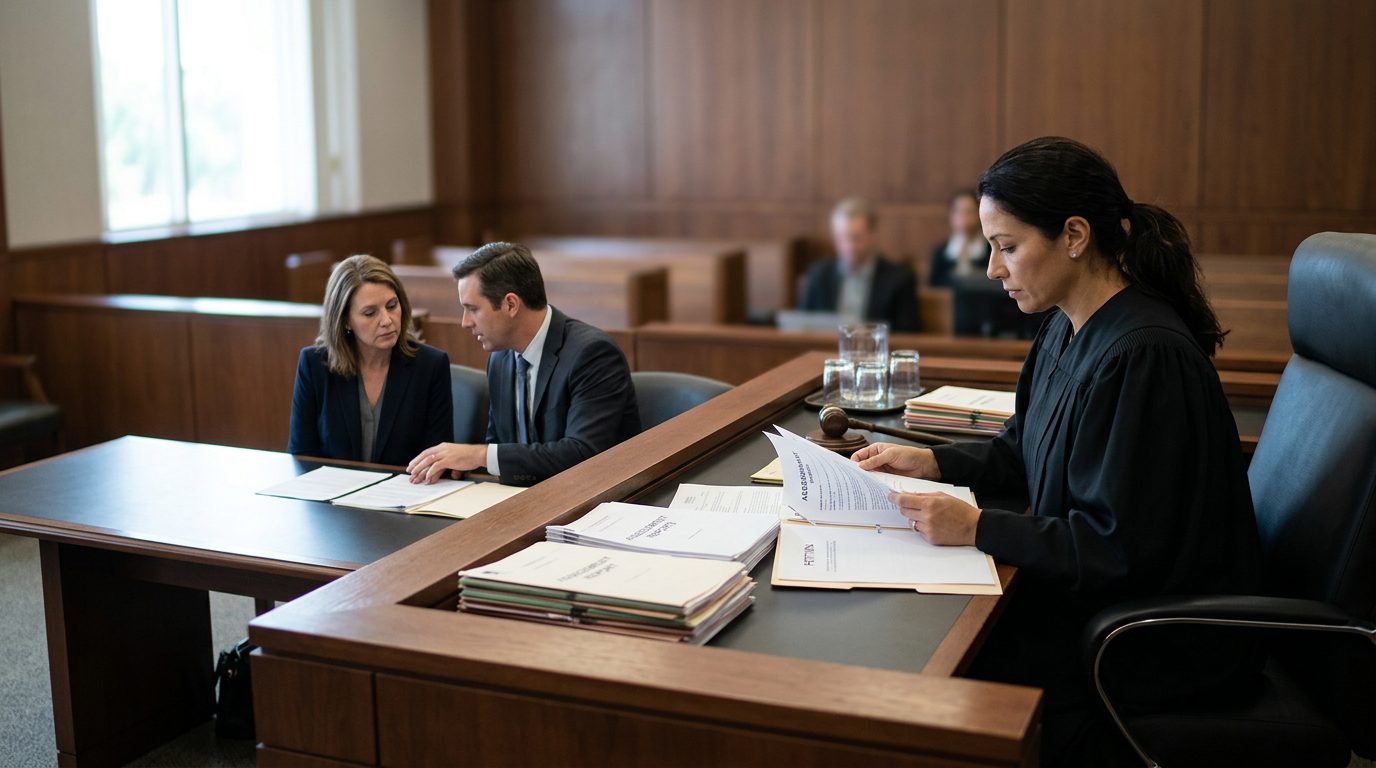
Marchman Act Petitions and Guardianship | Florida
Preparing to Talk About a Marchman Act Petition? Start With This Checklist.
General information from Robinson Casey, a Florida law firm that focuses exclusively on Marchman Act petitions and guardianship matters. Responsible lawyer: Richard J. Casey III, Esq.
By Richard J. Casey III, Esq. · Published October 16, 2026
This marchman act checklist for parents Florida families can use walks you through five yes-or-no checks. The Marchman Act provides for voluntary admissions and for involuntary assessment, stabilization, and treatment of adults and youth severely impaired by substance abuse, as the Florida Department of Children and Families explains.
You did not choose this situation. You may be trying to help an adult child who is struggling and has not agreed to get help. That is a hard place to stand. Take your time with each check.
For the broader picture, read our involuntary commitment for addiction overview.
Where You Are Right Now, and What This Checklist Can and Cannot Do
This checklist is general information, not legal advice. Reading it does not predict how a court will decide any case.
Florida courts decide each petition based on the evidence and their own discretion. Other requirements may also apply.
Keep a notebook as you go. Write down what you saw yourself, and separate it from what you only heard from others. That split matters, because the statute asks about personal knowledge in some places. Answer honestly, even when the answer is uncomfortable. A “no” is useful information too.
If your adult child's drinking or drug use has you stuck between worry and doubt, our team can talk through your situation with you, with no pressure to move forward. Talk it through with our team — the first consultation is free, confidential, and carries no obligation.

Check 1: Is the Person You Are Worried About an Adult?
Florida law sets different petition rules for adults and minors. For an adult, the statute lists who may file, including a spouse or legal guardian, any relative, a service provider, and an adult with direct personal knowledge of the impairment (§ 397.68112). In ordinary usage, a parent is considered a relative, though whether a parent may file a petition is a question the court decides under the governing statute. Other requirements may apply, and the court decides.
Yes or no: is your loved one 18 years of age or older?
If yes, move to Check 2. If no, note that the statute names different petitioners for minors, including parents. Other laws and services may also apply. This checklist is written for adult children.
Check 2: Has Substance Use Taken Away Your Loved One’s Self-Control?
The statute looks at whether substance impairment has caused a loss of self-control over use.
Yes or no: has alcohol, drugs, or medication use led to events you have seen, such as missed work, unsafe driving, or medical episodes?
Under § 397.675, a person may meet the criteria for involuntary admission if there is good faith reason to believe they are substance abuse impaired or have a substance use disorder and a co-occurring mental health disorder. The impairment must also have caused them to lose the power of self-control with respect to substance abuse. The statute lists more criteria beyond this one, so other requirements also apply.
If yes, write down dates and specific events while they’re fresh. Use plain words, such as “could not stop after one drink.” If you’re unsure, keep a simple log for the next few weeks.
Check 3: Did You Personally See the Behavior?
A petition rests on facts the petitioner can describe, so it helps to know which facts you saw yourself.
Yes or no: do you have firsthand knowledge of the behavior, not just reports from others?
A petition must state the reasons you believe your loved one is impaired (§ 397.68141). At a hearing, the court hears all relevant evidence. That can include testimony from family members familiar with the person’s history (§ 397.6957).
If yes, list others who saw the same events. Gather any messages, photos, or records you already hold. If no, note which facts you can confirm and which you cannot. Keep your notes factual, with no guesses about motives.
Check 4: Has Your Loved One Refused or Left Treatment?
A refusal of care is one fact to record, but the statute says a refusal alone is not evidence of impaired judgment.
Yes or no: has your loved one declined treatment, left a program early, or refused to talk about getting help?
Under § 397.675, mere refusal to receive services does not constitute evidence of lack of judgment about the need for services. Other facts matter too, and the court decides how much weight they carry. A person who wants treatment may apply to a service provider for voluntary admission (§ 397.601).
If yes, write down what was offered, when, and how your loved one responded. If the person is now willing, note that. A voluntary path may fit.
Check 5: Is There a Mental Health Condition or Safety Concern Too?
A co-occurring mental health condition or a risk of harm can change which parts of the statute are in play.
Yes or no: do you see signs of severe depression, psychosis, thoughts of self-harm, or a risk of harm to others?
The statute’s criteria include a co-occurring mental health disorder and a risk of physical harm to self or others (§ 397.675). In an emergency, the court may rely solely on the petition’s contents. It may then enter an assessment order without appointing an attorney (§ 397.6818).
If someone is in immediate danger, call 911 first. Then read our co-occurring mental health and addiction page.
Not sure what your next step is?
Talk it through with our team — the first consultation is free, confidential, and carries no obligation.
How to Read Your Results
Several yes answers suggest the situation may be worth discussing with a lawyer. Mixed or no answers may mean it helps to gather more facts first.
No result from this checklist confirms that a petition will be filed, granted, or successful. The court decides based on the evidence and its discretion. If the court finds the conditions proved by clear and convincing evidence, it may order involuntary treatment services for a period not to exceed 90 days (§ 397.697).
If your loved one uses benzodiazepines, read our benzodiazepine addiction involuntary treatment page. For the conversation that may come before any legal step, see conversations with a reluctant adult child.
Use this marchman act checklist for parents Florida as a starting point, not a verdict. Keep your answers in writing, so you can share them later.
What to Gather Before Any Conversation With a Lawyer
Gather a dated timeline, the treatment already tried, and any prior medical or law enforcement contact tied to the substance use.
Write a timeline with dates, places, and who was present. List every treatment offer, program, or provider tried, with dates. Note any prior medical, court, or law enforcement contact, if you know of it.
A petition must include, among other things, the respondent’s name, the petitioner’s name, the relationship between them, and the factual allegations that show the need for services; other requirements may also apply. Section 397.68141 provides that a petition may come with a professional’s report from within 30 days before filing; the statute also addresses what the petition says if the person was not assessed (§ 397.68141). The court decides how these requirements apply in a given case.
Petitions are filed with the clerk of court in the county where the person is located. The respondent has a right to counsel at every stage, and a respondent who desires counsel and is unable to afford private counsel has the right to court-appointed counsel (§ 397.681).

Your Next Step: A Free, Confidential First Consultation
If several checks point toward a legal question, talking it through with a lawyer is the next step.
Robinson Casey is a Florida law firm that limits practice to Marchman Act petitions and guardianship matters. Richard J. Casey III, Esq. is the responsible lawyer. Our free, confidential first consultation carries no obligation to continue.
If your adult child’s drinking or drug use has you stuck between worry and doubt, our team can talk through your situation with you. Call (561) 849-4149 or request a consultation.
Frequently Asked Questions
Is this checklist legal advice?
No. It is general information to help you organize facts before a conversation with a lawyer.
Can a parent file a Marchman Act petition for an adult child?
The statute lists who may file for an adult, including any relative. Other requirements may apply, and the court decides (§ 397.68112).
Is a lawyer required?
The respondent has the right to counsel, and a respondent who desires counsel and is unable to afford private counsel has the right to court-appointed counsel (§ 397.681). These rights belong to the respondent, not the petitioner.
Where is a petition filed?
It is filed with the clerk of court in the county where the person is located (§ 397.681).
How a Confidential Consultation Can Help
Free and confidential
Your first consultation is free, confidential, and carries no obligation to continue.
Organized facts
Bring the checklist items you have gathered so the conversation can focus on your family's situation.
Your questions answered
Ask about the Marchman Act, guardianship options, and what the court process may involve.
Easy to reach
Call (561) 849-4149 to speak with our team or schedule a consultation.
Important: This Is Not Legal Advice
This checklist is general information to help you organize facts before speaking with a lawyer. Reading it does not create an attorney-client relationship.
Gather These Items Before Your Consultation
Your relationship and contact details
Write down your relationship to the person, their full legal name, date of birth, and current address and phone number, if known.
A timeline of recent events
Note dates, places, and what happened, including any incidents that caused concern for the safety or health of your family member.
Treatment and health history
List past treatment programs, providers, hospitalizations, and any medications you know about, along with approximate dates.
Documents and records
Gather court papers, police reports, medical or treatment records you already have, and any written communications that relate to the situation.