
Marchman Act Guidance · Miami-Dade and South Florida
Understand the Marchman Act Clinical Assessment Before the Hearing
A plain-language guide from Richard J. Casey III, Esq., who limits practice to Marchman Act and guardianship matters, on what the assessment is and how the process unfolds.
By Richard J. Casey III, Esq. · Published October 19, 2026
A Marchman Act clinical assessment is a professional evaluation of a person’s substance use and overall condition. A Florida court uses it to decide whether the person needs involuntary treatment.
If a family member is in crisis, you probably have many questions. This guide walks through the steps in order, from who can start the process to what the court sees before the hearing.
Written by Richard J. Casey III, Esq., the lawyer responsible for this page. Robinson Casey limits its practice to Marchman Act and guardianship matters and serves families across South Florida and statewide.
What Is a Marchman Act Clinical Assessment?
A Marchman Act clinical assessment is the professional evaluation that gives the court facts about a person’s substance use. The respondent must be present at the hearing unless the court finds that he or she knowingly, intelligently, and voluntarily waives the right to be present or, upon receiving proof of service and evaluating the circumstances of the case, that his or her presence is inconsistent with his or her best interests or is likely to be injurious to self or others (Fla. Stat. § 397.6957).
The assessment works toward one question. Does the person meet the statutory criteria for involuntary admission? Under Fla. Stat. § 397.675, there must be a good faith reason to believe the person is substance abuse impaired or has a substance use disorder and a co-occurring mental health disorder. Because of that impairment, the person must have lost the power of self-control with respect to substance abuse.
The assessment is not the hearing. The assessment produces information. The hearing is where a judge reviews that information and the evidence. The Marchman Act covers substance use. Mental health commitment falls under a different law, the Baker Act, so the two are often confused.
If you are waiting on an assessment result or a hearing date for someone you love, you do not have to work through the next step alone. Our team is ready to talk through where things stand. Talk it through with our team — the first consultation is free, confidential, and carries no obligation.

Who Can File a Marchman Act Petition?
For an adult, a petition can be filed by the respondent’s spouse or legal guardian, any relative, a service provider, or an adult with direct personal knowledge of the person’s impairment and prior treatment (Fla. Stat. § 397.68112). The person named in the petition is called the respondent.
The petition goes to the clerk of the court in the county where the person is located. The clerk may not charge a fee to file it (Fla. Stat. § 397.681). A wrong-county filing is usually a venue problem, not a loss of the court’s power. In J.P. v. J.N., the Fifth District held that filing in the wrong county did not divest the circuit court of jurisdiction.
A petition may include a report from a qualified professional who examined the person within 30 days before filing. If the person was not assessed, or refused to be, the petition must say so (Fla. Stat. § 397.68141).
Filing starts the court process. It does not mean a judge has found the person needs treatment. Gather dates, facts, and any papers you received before you talk with a lawyer.
Where the Assessment Takes Place and Who Conducts It
The assessment is done by a qualified professional. The court can send the person to a licensed service provider for evaluation. The path depends on whether an emergency exists.
In an emergency, the court may rely only on the petition. Without appointing an attorney, it can enter an ex parte order for assessment and stabilization. That order must be carried out while the hearing is pending (Fla. Stat. § 397.6818). The court may also order a law enforcement officer to take the person into custody and deliver them for evaluation. A Lake County Clerk of Court guide describes the same transport step.
Because an emergency order can be entered without a lawyer, the right to counsel matters early. Under § 397.681, the respondent has that right at every stage of the court case, unless the respondent is present and the court finds that the respondent knowingly, intelligently, and voluntarily waived it.
Outside an emergency, the court handles it differently. If the person was not assessed, the assessment by a qualified professional must occur within 72 hours after arrival at a licensed service provider (§ 397.6957). Fla. Stat. § 397.6957 reads: “The respondent’s assessment by a qualified professional must occur within 72 hours after his or her arrival at a licensed service provider unless the respondent shows signs of withdrawal or a need to be either detoxified or treated for a medical condition, which shall extend the amount of time the respondent may be held for observation until such issue is resolved but no later than the scheduled hearing date, absent a court-approved extension.” Where and how the assessment starts depends on the facts of each case.
What the Clinician Examines During the Assessment
The clinician looks at the person’s substance use and whether it has affected their judgment and self-control. The clinician also checks for risk of harm to self or others, and for any other health needs. These points match the criteria in § 397.675.
The clinician’s written report has set requirements. It must give the information the findings rest on. It must note any co-occurring mental health or other treatment needs. The report goes to the clerk no later than the close of business the day before the hearing (§ 397.6957).
Missing treatment recommendation is serious. The statute says that a failure to include one results in the petition’s dismissal. Family members may also testify at the hearing about the person’s history and how it relates to their current condition.
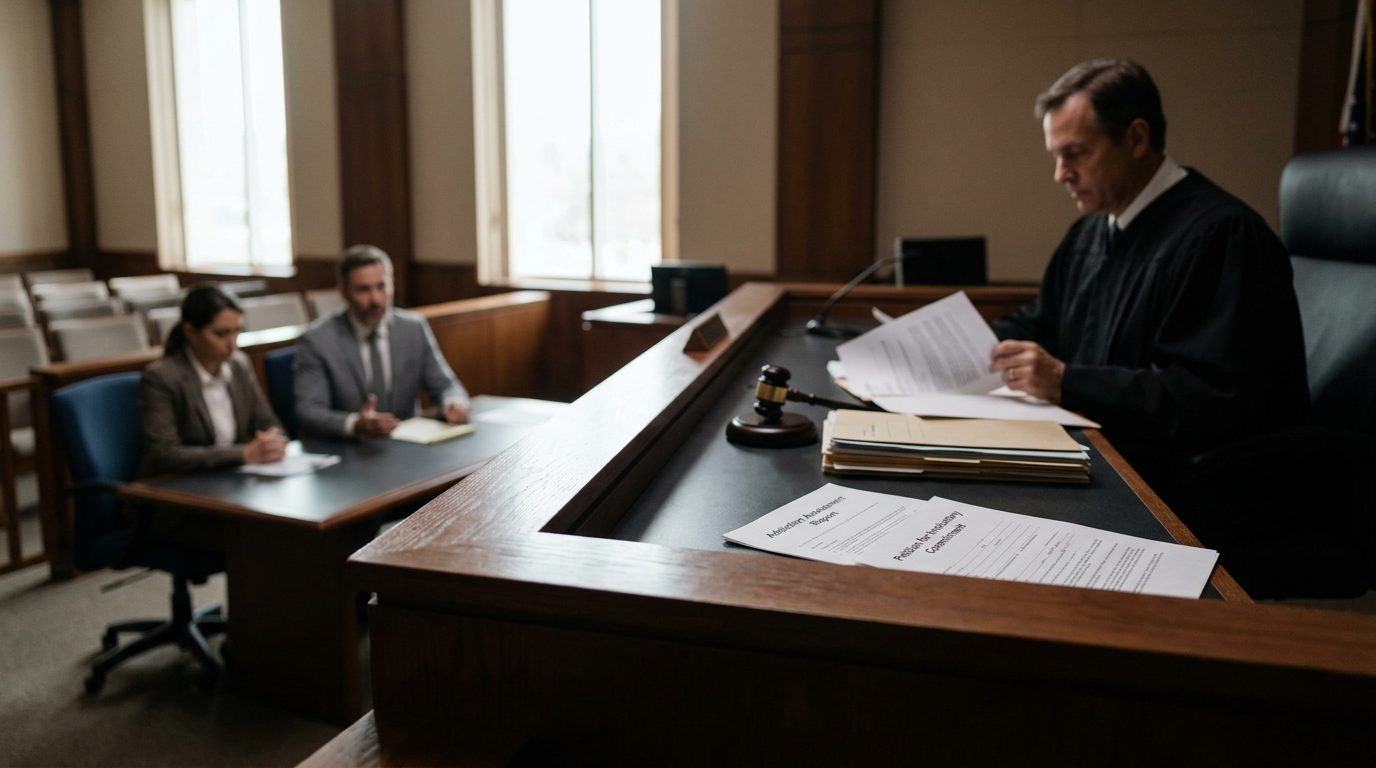
The court shall hear and review all relevant evidence, including the results of the assessment completed by the qualified professional.
How Long Can Assessment and Stabilization Last?
A service provider may hold a person for no more than 72 hours of observation. Several exceptions can extend that time (Fla. Stat. § 397.6818). The service provider may petition the court in writing for additional observation time under § 397.6957, and after a hearing, the court may grant additional time. Signs of withdrawal, or a need for detox or medical treatment, can extend the stay until the issue is resolved, but no later than the scheduled hearing date, absent a court-approved extension. An observation period that ends on a weekend or holiday can also extend it to the next court working day.
Stabilization is the period when the person is kept safe and cared for while the assessment and court process move forward. Its length turns on the clinical findings and what the court orders.
The court must schedule the hearing within 10 court working days, unless a continuance is granted (Fla. Stat. § 397.68151). An assessment order is valid for 90 days. The respondent’s assessment by a qualified professional must occur within 72 hours after his or her arrival at a licensed service provider (§ 397.6957). Fla. Stat. § 397.6957 reads: “The respondent’s assessment by a qualified professional must occur within 72 hours after his or her arrival at a licensed service provider unless the respondent shows signs of withdrawal or a need to be either detoxified or treated for a medical condition, which shall extend the amount of time the respondent may be held for observation until such issue is resolved but no later than the scheduled hearing date, absent a court-approved extension.”
An emergency order that is not carried out by the first hearing date is void (§ 397.6818).
What Can Happen After the Assessment?
After the assessment, the court holds a hearing. The judge then decides whether involuntary treatment is ordered. The Marchman Act also allows voluntary admission, according to the Florida Department of Children and Families.
If the court finds the conditions for involuntary treatment are proved by clear and convincing evidence, it may order treatment for up to 90 days (Fla. Stat. § 397.697). When the conditions no longer exist, the person must be released.
At the hearing, testimony is taken under oath and the proceedings are recorded. The respondent may refuse to testify. The respondent must be present at the hearing unless the court finds that they knowingly, intelligently, and voluntarily waive that right or, after receiving proof of service and evaluating the circumstances, that their presence is inconsistent with their best interests or is likely to be injurious to self or others (§ 397.6957).
Courts have also addressed the judge’s role. In C.W.R.K. v. Stewart Marchman Act Behavioral Healthcare, the Fifth District held that a trial court failed to follow the statute when, with the petitioner absent, it questioned the health care professional. A Fourth District decision in J.J.J. v. D.G. certified conflict with that line. Treat this as Fifth District law, not statewide law.
No result can be predicted from the assessment alone. Each case turns on its own record.
Not sure what your next step is?
Talk it through with our team — the first consultation is free, confidential, and carries no obligation.
How Is Assessment Information Kept Private?
Petitions, court orders, and related records are confidential under Florida law (Fla. Stat. § 397.6760). The clerk may release them on request to listed people. That list includes the petitioner, the respondent, and the respondent’s attorney.
The clerk may not publish personal identifying information on a public docket or in a publicly accessible file. Anyone who receives these records must keep them confidential.
People receiving substance abuse services also have protected rights. Their dignity must be respected, and service providers must protect those rights (Fla. Stat. § 397.501).

If an Assessment or Hearing Is Already Underway
If your son, daughter, spouse, or parent is waiting on assessment findings, or a hearing date is set, this is a stressful time. You may feel urgency and uncertainty about what comes next.
Quick Answers
Who can file a Marchman Act petition? An adult respondent’s spouse or legal guardian, any relative, a service provider, or an adult with direct personal knowledge can file.
Does the respondent have a right to a lawyer? Yes. The respondent has the right to counsel at every stage of the court case, unless the respondent is present and the court finds that the respondent knowingly, intelligently, and voluntarily waived it.
Can the person refuse to testify? Yes. The respondent may refuse to testify at the hearing.
If you are facing these steps for someone you love, you can contact Robinson Casey or call (561) 849-4149. Your first consultation is free, confidential, and carries no obligation to continue.
Why Families Start Here
Focused Practice
Robinson Casey limits its practice to Marchman Act and guardianship matters, so every case is handled within these areas.
Free First Consultation
Your first consultation is free, confidential, and carries no obligation to continue.
Support for Families
Our team works with families across South Florida and statewide through a difficult and fast-moving process.
Clear Explanations
We explain each step in plain language so you know what to expect from the assessment through the hearing.
If Someone Is in Immediate Danger
A legal petition is not a substitute for emergency help. If a person is at risk of harm to themselves or others, call 911 right away, then contact our office to discuss next steps.
What This Guide Covers
Who Starts the Process
An overview of the people who may begin a Marchman Act petition and what information they typically gather first.
What the Assessment Includes
How a clinical evaluation looks at substance use, mental health, and overall condition.
What the Court Reviews
The documents and findings a judge considers before deciding whether involuntary treatment is ordered.
Preparing for the Hearing
Practical steps families can take to organize records, prepare questions, and understand each stage.