
Marchman Act & Guardianship | Miami-Dade and South Florida
When Your Adult Child Is Away at School and Struggling, Know Your Options
Robinson Casey focuses on Marchman Act petitions and guardianship matters for families across South Florida and statewide. Learn how Florida law may apply to a college student and what steps parents can take.
Casey III, Esq. · Published November 4, 2026
When Your Adult Child Is Away at School and Getting Worse
A parent may be able to use the Marchman Act for a college student in Florida if the student meets the state’s legal criteria. Where your child lives affects where you file, but it doesn’t change what the law asks.
You have paid for treatment. You have tried interventions and held firm on boundaries. Still, the same cycle keeps coming back. Then the call comes from a campus, a hospital emergency room after an overdose, or a roommate who can’t find your son or daughter.
You may be asking a plain question: can Florida law reach a child who is hours or states away? The Florida DCF Marchman Act page offers general information about the Marchman Act. This page explains how that process works in Florida. It is general information, not advice about your case.
If your child is away at school and the crisis keeps coming back, we can talk through whether a Marchman Act petition fits your family's facts. Talk it through with our team — the first consultation is free, confidential, and carries no obligation.

Yes, a Parent May Be Able to Petition for an Adult Child
A parent may be able to file a Marchman Act petition for an adult child. For an adult, the law lets any relative, a spouse, a legal guardian, a service provider, or an adult who has direct personal knowledge of the impairment and of the person’s prior course of assessment and treatment file (Fla. Stat. § 397.68112).
The core test sits in Fla. Stat. § 397.675. The court needs a good faith reason to believe the person is substance abuse impaired, or has a substance use disorder along with a co-occurring mental health disorder. The person must have lost the power of self-control over substance use.
Then one more element must also be shown. Or, without care, the person is likely to neglect himself or herself or refuse to care for himself or herself, which poses a real and present threat of substantial harm, and it is not apparent that such harm may be avoided through the help of willing, able, and responsible family members or friends or the provision of other services; or there is a substantial likelihood that the person has inflicted, or threatened or attempted to inflict, or, unless admitted, is likely to inflict, physical harm on himself, herself, or another.
The evidence is what counts.
A dorm, an apartment, or a home in another county mostly changes where the petition is filed. Fla. Stat. § 397.681 says the petition goes to the clerk in the county where the person is located, and the clerk may not charge a filing fee for it. Whether you qualify to file in your situation is worth reviewing in a consultation.
What You Fear Most, and What the Marchman Act Can and Cannot Do
The Marchman Act is a court process that can order an assessment and, if the criteria are met, treatment. It cannot promise recovery or any set result. You’re afraid of overdose, jail, homelessness, and losing hope. Those fears deserve a plain answer.
No court order can make an adult stop using. The statute lets a judge order treatment for a period not to exceed 90 days. A renewal may be requested before that period ends if the conditions justifying involuntary treatment services are expected to exist after 90 days of treatment services (Fla. Stat. § 397.697). Whether the criteria are met depends on the facts of each case.
On jail, the statute’s rights section says a person receiving substance abuse services who is not accused of a crime may not be jailed. The exception is protective custody under the chapter (Fla. Stat. § 397.501).
On hope, the process runs on a court’s schedule, and the judge decides on the evidence. The Marchman Act won’t end your worry. What it can do is put the question of care in front of a judge.
Documents to Gather Before You File
A strong petition rests on dated, specific facts, not general worry. Start with records that show use, harm, and any treatment already tried.
A petition must name the person to be helped and you. It must state your name, the person’s name, your relationship, the name of the person’s attorney if known, and the facts behind your belief that the person is impaired, has lost self-control, and has either inflicted or is likely to inflict physical harm on himself, herself, or others unless the court orders services, or refuses care because impaired judgment prevents a rational decision (Fla. Stat. § 397.68141). A report from a qualified professional who examined the person within 30 days before filing may be attached. If there was no assessment or a refusal, the petition must say so.
Gather these items:
- Overdose, emergency room, and hospital discharge papers, with dates.
- Campus or police reports, arrest records, and notices about missed classes or a withdrawal.
- Treatment history: programs, dates, and where your child left care early.
- Texts, emails, voicemails, and photos showing use or dangerous behavior, each with its date.
- A written timeline in your own words.
Vague dates make a petition harder to follow, so write down exact dates. Keep originals and make copies. Questions about who can see the court records in a Marchman Act case are worth raising at your free, confidential initial consultation.
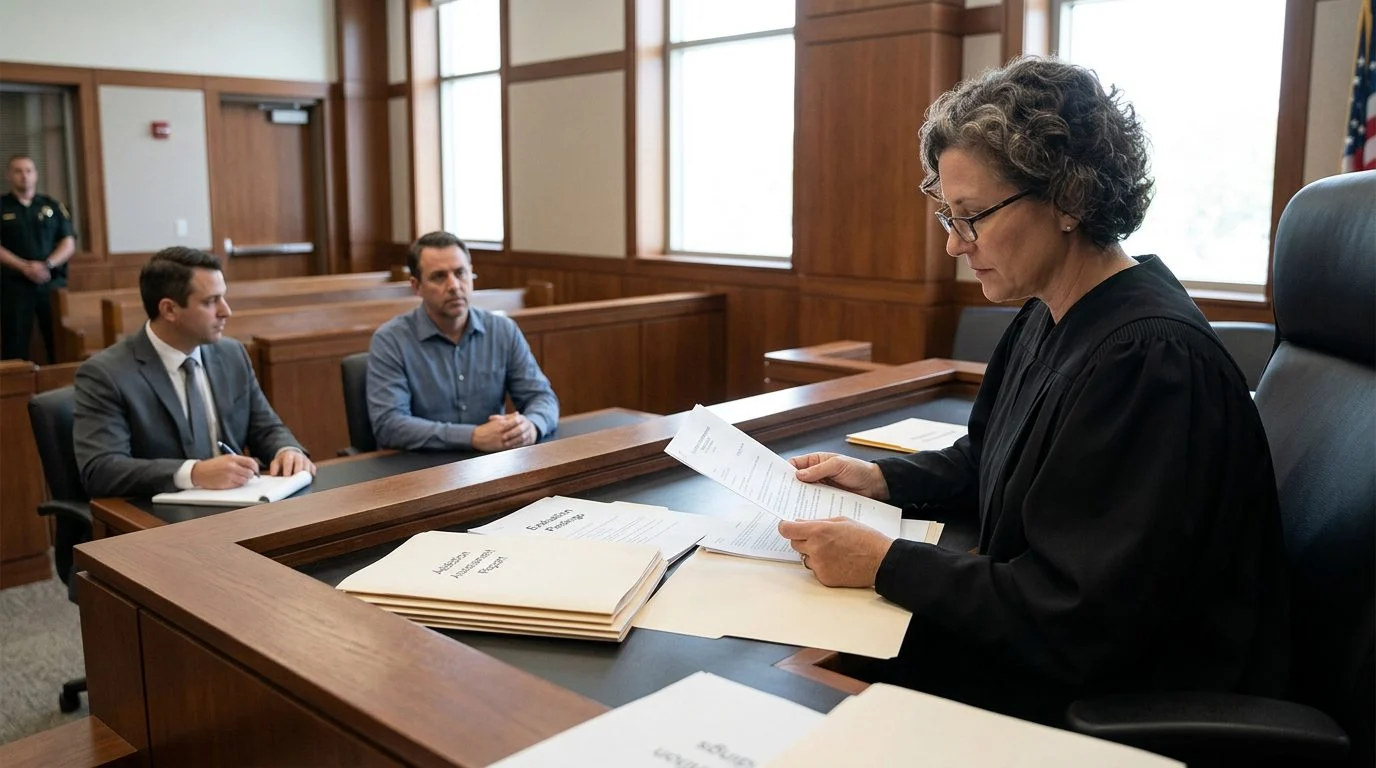
What a Hearing Looks Like When Your Child Is Away From Home
A Marchman Act hearing is set within 10 court working days unless the court grants a continuance. Your child must receive a copy of the petition and the notice (Fla. Stat. § 397.68151).
Unless the chief judge has approved private process servers, the clerk sends the summons to law enforcement within 6 hours. That step matters when your child is in another county, because you are not the one who serves it.
If your child cannot afford one, the court can appoint counsel (Fla. Stat. § 397.681).
Family members can testify. That helps when relatives live far away.

Talk With Robinson Casey About Your Child’s Situation
A short conversation can show whether a Marchman Act petition fits your child’s situation.
Common questions
Can a parent use the Marchman Act for a college student in Florida?
A parent may be able to, if the student is an adult who meets the criteria in Florida law.
When your son or daughter keeps going back to use, you shouldn’t have to carry the court process alone. Call (561) 849-4700 to talk through the petition, the records you already have, and where your child is located. The first consultation is free, confidential, and carries no obligation to continue. You can also reach us through the Robinson Casey contact page.
This page is the responsibility of Richard J. Casey III, Esq., of Robinson Casey.
How Robinson Casey Supports Families
Focused Practice
Our practice focuses on Marchman Act petitions, guardianship, and related mental health and addiction matters.
Built Around Families
We understand how stressful it is for a parent when a child's health or safety is at risk, and we explain each step in plain language.
Free First Consultation
Your initial consultation is free, confidential, and carries no obligation to continue.
Support Staff Who Help Coordinate
Our assistants and office staff help parents keep track of information, documents, and next steps.
South Florida and Statewide
We serve families in Miami-Dade and throughout South Florida, and we take matters across Florida.
Do Not Wait Until Things Reach a Crisis
If your child is in immediate danger, call 911 right away. For non-emergency concerns, reaching out early gives you more room to understand your options before a situation escalates.
Matters Our Practice Handles
Marchman Act Petitions
Petitions for involuntary assessment and stabilization under Florida's Marchman Act for individuals struggling with substance use.
Involuntary Commitment for Addiction
Guidance for families considering court-ordered treatment when a loved one refuses help.
Emergency Temporary Guardianship
Help with urgent requests when a person needs immediate court-supervised protection.
Guardianship Options
Plenary, limited, and mental health guardianship matters, each suited to different levels of need.