
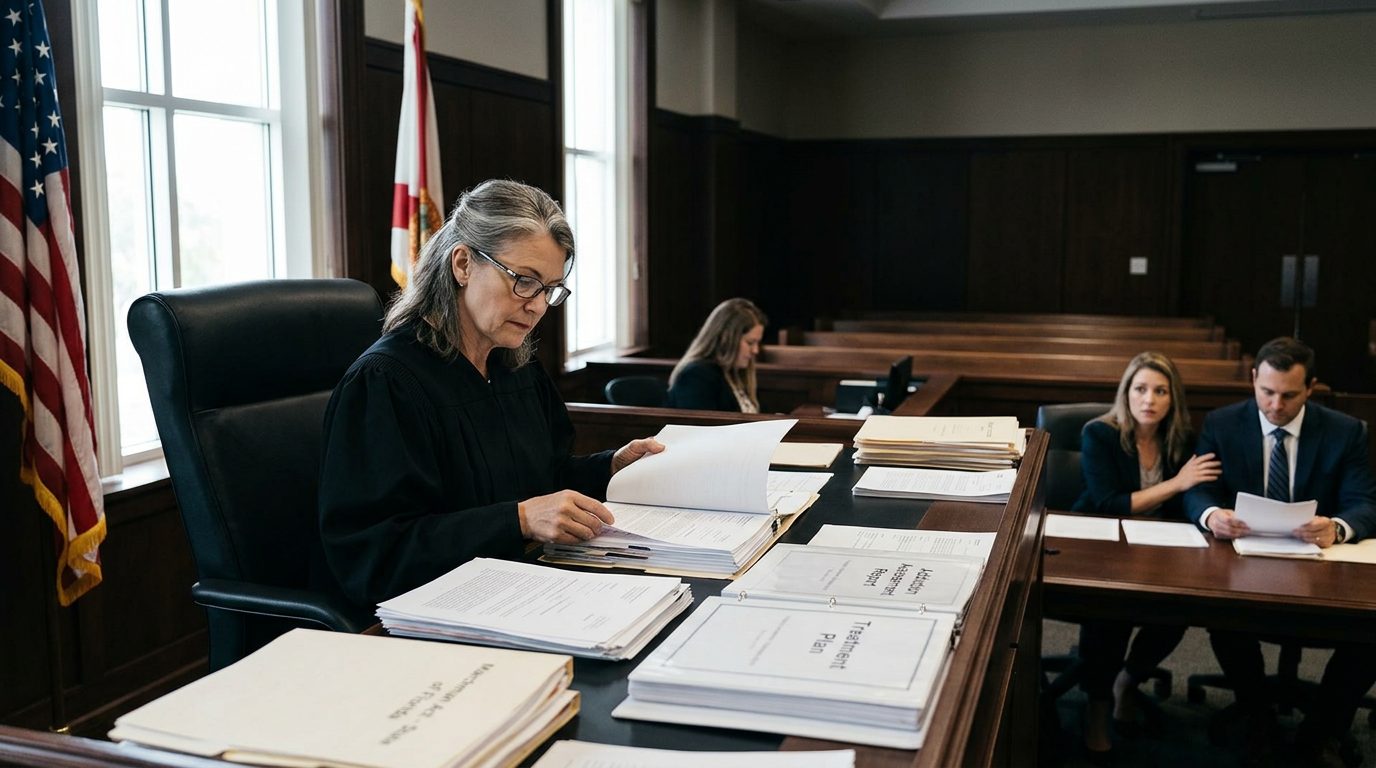
Marchman Act Petitions | South Florida and Statewide
Talk Through Your Marchman Act Options Before You File
Robinson Casey focuses on Marchman Act petitions and guardianship matters for families in Miami-Dade, South Florida, and across Florida. Your first consultation is free, confidential, and carries no obligation to continue.
By Richard J. Casey III, Esq. · Published October 21, 2026
A Marchman Act consultation before filing in Florida is a confidential first conversation about whether a court petition for substance abuse treatment may fit your family’s situation. It takes place before anything is filed. Robinson Casey limits its practice to Marchman Act petitions and guardianship matters, serving South Florida and statewide.
If a loved one’s drinking or drug use is putting their health, home, or safety at risk, you may feel stuck between waiting and acting. This guide explains the eligibility standards, the evidence a petition needs, and the court steps, so you can weigh your options with clear facts.
What a Marchman Act Consultation Is and Who It Is For
A Marchman Act consultation is a first meeting where an attorney reviews whether a petition for involuntary assessment or treatment may fit the facts. The goal is to test your situation against Florida’s standards before any decision about court is made.
Flagler County’s Marchman Act overview describes that scope.
Families who reach out are often a parent, spouse, adult child, sibling, or close friend. Florida law limits who may file for an adult. A spouse or legal guardian, any relative, a service provider, or an adult who has direct personal knowledge of the impairment and of the prior course of assessment and treatment may file. Fla. Stat. § 397.68112 sets out that list.
Many people come in on someone else’s behalf, often in the middle of a crisis they did not choose. If you’re not sure you qualify to file, bring that question to the consultation.
The first consultation is free, confidential, and carries no obligation to continue.
If a loved one's drinking or drug use has you wondering whether a court petition could help, we're glad to talk through your situation with you first. Talk it through with our team — the first consultation is free, confidential, and carries no obligation.

Core Eligibility Requirements Under the Marchman Act
A court may order involuntary assessment only if there is a good-faith reason to believe the person is substance abuse impaired. The person must also have lost the power of self-control over substance use. Fla. Stat. § 397.675 sets out that standard, which also covers a person who has a substance use disorder and a co-occurring mental health disorder. It also requires one more thing, because of the impairment or disorder. Either the person needs substance abuse services and their judgment is so impaired that they cannot appreciate that need or make a rational decision about it (merely refusing services is not evidence of this). Or, without care or treatment, the person is likely to suffer from neglect or refuse to care for themselves in a way that poses a real and present threat of substantial harm, and it is not apparent that willing, able, and responsible family members or friends or other services can prevent that harm. Or there is a substantial likelihood that the person has inflicted, or threatened or attempted to inflict, or, unless admitted, is likely to inflict, physical harm on themselves or another.
The statute then requires one of two things. First, the person needs services and, because of impairment, can’t appreciate that need or make a rational decision about it. Second, without care, the person is likely to neglect themselves and faces a real and present threat of substantial harm. Fla. Stat. § 397.675 reads: “(b) Without care or treatment, is likely to suffer from neglect or refuse to care for himself or herself; that such neglect or refusal poses a real and present threat of substantial harm to his or her well-being; and that it is not apparent that such harm may be avoided through the help of willing, able, and responsible family members or friends or the provision of other services, or there is substantial likelihood that the person has inflicted, or threatened to or attempted to inflict, or, unless admitted, is likely to inflict, physical harm on himself, herself, or another.” That harm must not be avoidable through willing, able, and responsible family members, friends, or other services. Fla. Stat. § 397.675 reads: “(b) Without care or treatment, is likely to suffer from neglect or refuse to care for himself or herself; that such neglect or refusal poses a real and present threat of substantial harm to his or her well-being; and that it is not apparent that such harm may be avoided through the help of willing, able, and responsible family members or friends or the provision of other services, or there is substantial likelihood that the person has inflicted, or threatened to or attempted to inflict, or, unless admitted, is likely to inflict, physical harm on himself, herself, or another.”
A third path covers physical harm. It applies when there is a substantial likelihood the person has inflicted, threatened, or attempted physical harm on themselves or someone else, or, unless admitted, is likely to inflict physical harm on themselves or another.
A simple refusal of help is not enough by itself. The statute says a mere refusal to receive services does not prove a lack of judgment about the need for them. Fla. Stat. § 397.675 reads: “(b) Without care or treatment, is likely to suffer from neglect or refuse to care for himself or herself; that such neglect or refusal poses a real and present threat of substantial harm to his or her well-being; and that it is not apparent that such harm may be avoided through the help of willing, able, and responsible family members or friends or the provision of other services, or there is substantial likelihood that the person has inflicted, or threatened to or attempted to inflict, or, unless admitted, is likely to inflict, physical harm on himself, herself, or another.”
In a consultation, the attorney compares these standards with what you can actually show. General worry about someone’s drinking is a starting point, not proof.
Evidence and Information a Petition Needs
A petition must name the people involved, state how they are related, and set out the facts behind the belief that the person is impaired. Fla. Stat. § 397.68141 requires the name of the respondent and of the petitioner, their relationship, the name of the respondent’s attorney if known, and the factual allegations establishing the need for services.
A petition can also include a report from a qualified professional who examined the person within 30 days before filing. If the person was never assessed, or refused an assessment, the petition must say so.
Before a consultation, many families gather:
- A dated timeline of substance use and its effects on work, home, health, and safety
- Incidents you saw directly, such as emergency calls, police contact, or medical visits
- Names of people with direct knowledge of the person’s history
- Prior treatment attempts and any hospital discharge paperwork
- The person’s current address and contact details, since location affects where the petition is filed
Write down dates and details, not general labels like “always drinks.” Specific facts are easier to explain clearly to a court.
Who Can File and What Happens After a Petition Is Filed
A petition is filed with the clerk of court in the county where the person is physically located. If the respondent does not appear at the hearing and the court reasonably believes the commitment criteria are met and a substance abuse emergency exists, the court may issue or reissue the ex parte order; if the respondent’s location is known at the time of the hearing, the court must continue the case for no more than 10 court working days.
As noted in J.P. v. J.N., the filing of the petition in the wrong county did not divest the circuit court in Putnam County of jurisdiction. Location still matters, so get it right from the start.
In an emergency, the court may act on the petition alone and enter an ex parte assessment order, without first appointing an attorney. A provider may then hold the person for no more than 72 hours of observation, unless a listed exception applies under Fla. Stat. § 397.6818.
At the hearing, testimony is taken under oath and recorded. The respondent may refuse to testify. The respondent also has a right to counsel at every stage.
According to C.W.R.K. v. Stewart Marchman Act Behavioral Healthcare, the trial court failed to follow the governing statute when, in the absence of the petitioner, it called and questioned the health care professional who executed the involuntary services certificate. That ruling binds courts in the Fifth District, not all of Florida.
How a Marchman Act Consultation Works, Step by Step
A consultation starts with a call or a request and ends with a clear summary of your options. You have no obligation to move forward.
- Call or request a time. Call (561) 849-4149 or use the contact page to schedule a first conversation.
- Share the situation. Describe the person’s substance use, recent events, and any past treatment.
- Check the criteria. The attorney compares your facts with the impairment, loss-of-control, and harm standards.
- Identify gaps. The attorney notes what evidence is missing, such as an assessment, dated records, or witness names.
- Review next steps. You get a plain summary of whether a petition appears to fit, what the court process would involve, and related options like guardianship.
Timing depends on the facts of each situation, including whether there is an emergency.
Why Families Work With Robinson Casey on Marchman Act Matters
Robinson Casey limits its practice to Marchman Act petitions and guardianship matters. Every consultation stays focused on those issues.
- Responsible attorney: Richard J. Casey III, Esq., is responsible for this page.
- Support staff: Assistants and office staff help families organize documents and schedule consultations.
- Coverage: Families across South Florida, including Miami-Dade, and statewide, whose loved one lives elsewhere in Florida.
- Related guardianship services: Emergency temporary, limited, plenary, and mental health guardianship, when a family’s situation calls for one of them.
Our team uses the consultation to answer your questions before you decide anything. You set the pace.
Not sure what your next step is?
Talk it through with our team — the first consultation is free, confidential, and carries no obligation.

Common Questions Before Filing a Marchman Act Petition
Does a consultation commit me to filing?
No. The consultation is confidential and carries no obligation to continue.
Who can file for an adult?
For an adult respondent, a spouse or legal guardian, any relative, a service provider, or an adult who has direct personal knowledge of the respondent’s substance abuse impairment and prior course of assessment and treatment may file. For a minor respondent, a parent, legal guardian, or service provider may file. Florida law sets that list.
Which county handles the petition?
The county where the person is physically located when the petition is filed is the proper place. A wrong county is a venue problem, not a loss of court power.
Does the person get a lawyer?
Yes. The respondent has a right to counsel at every stage of the court proceeding.
How long can treatment last?
If someone you love is struggling and you’re weighing what to do next, you don’t have to sort through the law alone. Reach out to Robinson Casey, and we’ll talk through your situation with you.
Why Families Start with a Consultation
Confidential Discussion
Your situation and your family's details are discussed in a private, confidential consultation.
No Obligation to Continue
The first consultation is free and carries no obligation to move forward with a filing.
Clear Next Steps
We review the facts of your situation so you understand the options available before deciding what to do.
Focused on Families
Robinson Casey works with families dealing with substance use, mental health crises, and the care of vulnerable loved ones.
Matters Robinson Casey Handles
Marchman Act Petitions
Guidance on petitions for assessment, stabilization, and treatment of a loved one under Florida's Marchman Act.
Involuntary Commitment for Addiction
Consultation on involuntary commitment proceedings related to substance use impairment.
Guardianship Matters
Help with guardianship of an adult, including plenary and limited guardianship.
Emergency Temporary Guardianship
Discussion of emergency temporary guardianship when urgent protection is needed, along with mental health guardianship questions.
Come Prepared
Before your call, write down recent events, any prior assessments or treatment, and any safety concerns. Sharing these details helps the consultation focus on your family's actual circumstances.