
Marchman Act & Guardianship · South Florida
Worried about a sibling's safety? Get clear guidance on Marchman Act petitions.
Robinson Casey focuses on Marchman Act petitions and guardianship matters for families in Miami-Dade, South Florida and across the state. Start with a free, confidential first consultation with no obligation to continue.
By Richard J. Casey III, Esq. · Published November 2, 2026
When Your Brother or Sister Can No Longer Keep Themselves Safe
Yes, a sibling can ask a Florida court for help. Under the Marchman Act, if the person is an adult, an adult relative such as a sibling may file a petition for involuntary treatment services for substance abuse impairment. If the person is a minor, only a parent, legal guardian, or service provider may file.
Your brother or sister may keep ending up in the hospital. They may refuse care, spend money needed for rent or food, or put themselves in danger. You may fear harm that can’t be undone, or another crisis that starts the cycle again.
This page explains what the Marchman Act is, what a judge looks for, how a petition moves forward, and when guardianship may fit better. Robinson & Casey focuses exclusively on Marchman Act petitions and guardianship matters, serving families across South Florida and statewide.
If your brother or sister's crisis has you searching for options, we can talk through the facts with you. Call (561) 849-4700 to start the conversation. Talk it through with our team — the first consultation is free, confidential, and carries no obligation.

What the Marchman Act Is and Who It Helps
The Marchman Act is Florida’s court process for people with substance abuse impairment. It can lead to a court-ordered assessment and, when the facts support it, involuntary treatment services.
For an adult, a petition may be filed by a spouse or legal guardian, any relative, a service provider, or an adult with direct personal knowledge of the impairment and prior treatment. That rule comes from § 397.68112. A sibling is a relative. Whether you can file turns on your own facts, so review them before you act.
The Marchman Act covers substance use. Guardianship covers a person’s inability to make safe decisions. The two can overlap when addiction occurs alongside other conditions. The Marchman Act does not replace medical care or a direct talk with your loved one. It is a court process, and the judge makes the rulings.
What Courts Look for Under the Marchman Act
A judge needs specific facts about the impairment and the harm it causes. General worry is not enough.
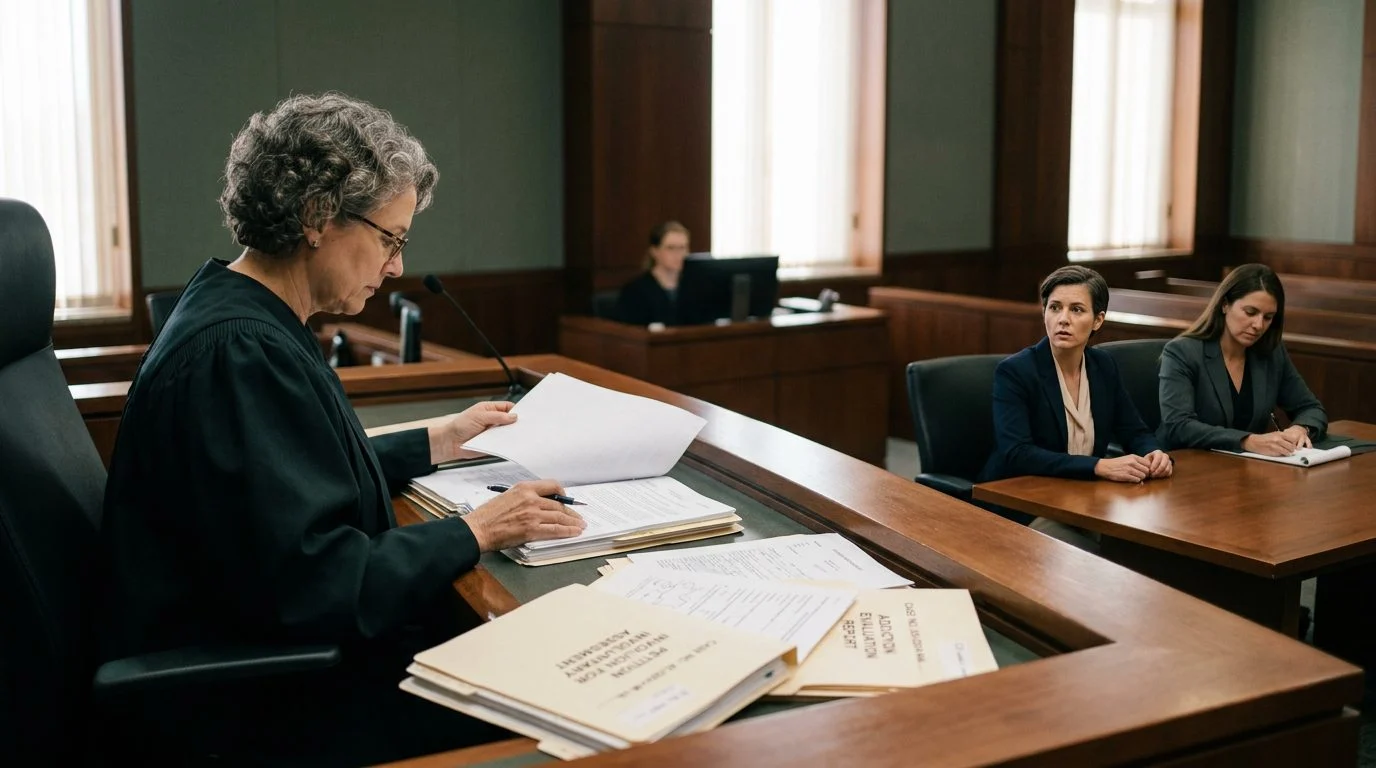
A petition must name the person and the petitioner, state their relationship, and name the person’s attorney if known. It must also explain why you believe the person is impaired and has lost self-control about substance use. The petitioner must prove by clear and convincing evidence that the respondent is substance abuse impaired with a history of not following treatment, and that because of the impairment the respondent is unlikely to take part in recommended services voluntarily or cannot decide whether services are needed. The petitioner must also prove one of two things. The first is that without services the respondent is likely to neglect or refuse to care for themselves, that this poses a real and present threat of substantial harm, and that there is a substantial likelihood of serious bodily harm to self or others in the near future, as shown by recent behavior. The second is that the respondent’s refusal of care rests on judgment so impaired by substance abuse that the respondent cannot appreciate the need for care or make a rational decision about it (§ 397.6957). The petition’s contents, including the reason you believe the person has inflicted or is likely to inflict physical harm on themselves or others without court-ordered services, or that their refusal of care rests on judgment so impaired they cannot appreciate their need for care, are set out in § 397.68141.
The court hears all relevant evidence, including testimony from family members who know the person’s history (§ 397.6957).
Start a dated timeline now. Write down hospital visits, police contacts, missed bills, money lost or taken, refused care, and past treatment attempts. A timeline turns worry into facts a judge can weigh.
How a Sibling Files a Marchman Act Petition, Step by Step
You file the petition with the clerk of the court in the county where your loved one is located. The clerk may not charge a fee for filing it (§ 397.681). In Miami-Dade, the Miami-Dade Clerk’s Mental Health Court page directs adult cases to the Probate Court.
- Consultation. We review the facts, your relationship, and how urgent things are. The first consultation is free, confidential, and carries no obligation to continue.
- Records. Collect your timeline and any documents that show the harm.
- Draft. Prepare the petition with the required allegations and any assessment report.
- File. File with the clerk in the county where your loved one is located.
- Emergency order. If an emergency exists, the court may act on the petition alone and order an assessment and stabilization without appointing an attorney first. The provider may hold the person for no more than 72 hours of observation, unless a listed exception applies (§ 397.6818).
- Hearing. The court must schedule a hearing within 10 court working days unless it grants a continuance (§ 397.68151).
- Order. If the court finds the criteria proved, it may order treatment for up to 90 days (§ 397.697).
Timelines vary by county and case, and the court’s findings shape what follows.
Other Protective Options When Addiction Is Not the Only Issue
Guardianship may fit when your loved one cannot make safe decisions about medical care, money, or housing because of a broader condition. Emergency temporary guardianship is the fastest tool in that group.
A court may appoint an emergency temporary guardian after an incapacity petition is filed, but before a guardian is appointed. The court must find there appears to be imminent danger that the person’s physical or mental health or safety will be seriously impaired, or that property is in danger of being wasted, misappropriated, or lost, unless immediate action is taken (§ 744.3031). The court must appoint counsel for the alleged incapacitated person. Notice must be served on the alleged incapacitated person and their attorney at least 24 hours before the hearing, unless the petitioner demonstrates that substantial harm to the person would occur if the 24-hour notice is given.
That emergency authority lasts 90 days or until a guardian is appointed, whichever comes first. It can be extended for another 90 days if the emergency continues (§ 744.3031).
Limited guardianship gives authority over defined decisions. Plenary guardianship gives broader authority. Mental health guardianship addresses needs tied to a mental health condition. In complex families, more than one tool may apply, so sorting them out is part of the first review.
Questions Siblings Ask Before Filing
Most siblings want to know whether they can file, whether their loved one must agree, and whether the case becomes public. Here are short answers.
Can a sibling file a Marchman Act petition in Florida?
Yes, for an adult, any relative may file under Florida law. Whether you fit that role turns on your own facts.
Does my brother or sister have to agree?
Their agreement is not what starts the case. The petition goes to the court, and the person receives a copy and notice of the hearing. They also have the right to counsel at every stage (§ 397.681).
What if my sibling lives out of state?
The petition goes to the county where the person is located. Bring the location question to your consultation.
Will the case become public?
Petitions, orders, and related records are confidential under § 397.6760. The clerk may not publish personal identifying information on a public docket.
Can the court order someone to be taken for evaluation?
Yes.
Not sure what your next step is?
Talk it through with our team — the first consultation is free, confidential, and carries no obligation.

Why Families Work With Robinson Casey
Robinson & Casey focuses exclusively on Marchman Act petitions and guardianship matters for families across South Florida and statewide. Because the practice is limited to these matters, our work stays on the process you are facing.
Richard J. Casey III, Esq. is the responsible lawyer for this page. The firm’s lawyers and support staff work with families on these matters.
You may be the one making the calls, keeping the records, and worrying at night. If your family is considering a petition, call (561) 849-4700 or request a consultation to talk through the facts with us.
How we help siblings
Focused on family matters
Robinson Casey focuses on Marchman Act petitions and guardianship matters, so your questions go to a firm that works in these areas every day.
Plain-language answers
We explain the process, the court steps and what to expect, so you can make informed decisions for your brother or sister.
Confidential first conversation
Your free first consultation is confidential and comes with no obligation to continue.
Reach us directly
Call (561) 849-4700 to talk with our team about your situation and the next steps available to you.
Do not wait if someone is in immediate danger
If your sibling is at risk of harm, call 911 or go to the nearest emergency room. Then contact our office so we can discuss the court options that may apply to your family.
Matters we handle for families
Marchman Act petitions
Guidance for siblings and other family members considering a petition for help with substance use under Florida's Marchman Act.
Involuntary commitment for addiction
Help understanding how the court process works when a loved one needs treatment and has not agreed to it.
Guardianship matters
Support with guardianship questions, including emergency temporary, plenary, limited and mental health guardianship.
Your next step
Share your concerns during a free, confidential first consultation with no obligation to continue.