
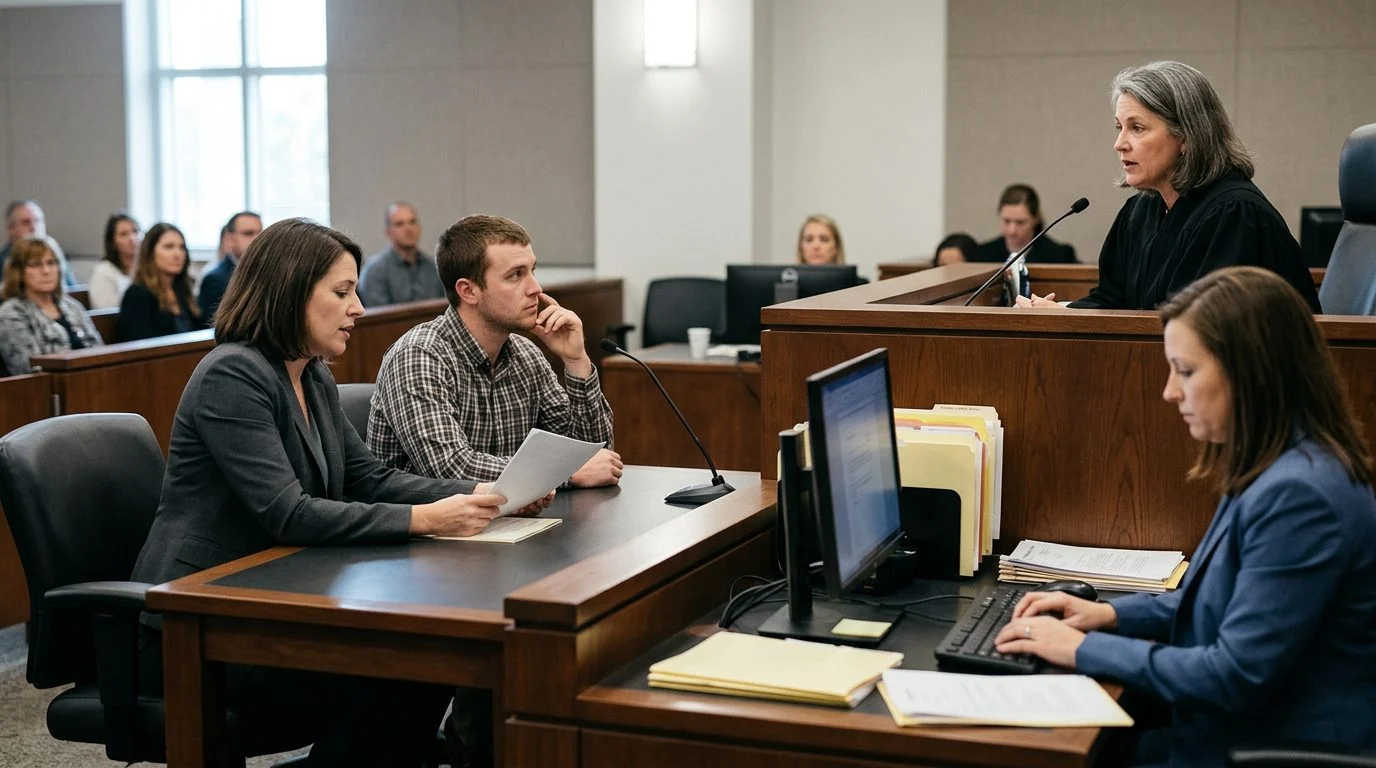
Marchman Act Respondent Lawyer · Miami-Dade & South Florida
Facing a Marchman Act Petition? Understand Your Options Before the Hearing
Robinson Casey focuses on Marchman Act and guardianship matters for families across Miami-Dade, South Florida and statewide. Learn how the process works and what questions to ask.
By Richard J. Casey III, Esq. · Published November 1, 2026
When Your Spouse Is Named in a Marchman Act Petition
Your spouse’s drinking or drug use has made your home unpredictable. Now court papers name them in a Marchman Act petition, and you don’t know what comes next. Yes, a person named in a Marchman Act petition has the right to a lawyer, and a respondent who wants a lawyer and cannot afford one has the right to a court-appointed lawyer.
The Marchman Act is Florida’s civil process for court-ordered assessment and treatment of a person with a substance use problem. It runs under Florida Statutes Chapter 397. Courts have jurisdiction over these petitions, and the alleged impaired person is named as the respondent.
This page answers one question: does the named person get a lawyer, and what rights do they hold? It also explains how a spouse’s role differs from theirs. You may be worried about the kids, the money, and whether the marriage can hold together. For the full overview, read our Marchman Act overview.
If your spouse has been named in a Marchman Act petition, you don't have to work out the next steps alone. Call Robinson Casey at (561) 849-4700 to talk it through. Talk it through with our team — the first consultation is free, confidential, and carries no obligation.

Does a Marchman Act Respondent Get a Lawyer in Florida?
Yes. A respondent has the right to counsel at every stage of the court case. The respondent can give up that right only if they are present and the court finds the waiver was made knowingly, intelligently, and voluntarily (Fla. Stat. § 397.681).
A respondent who wants a lawyer and cannot afford a private one can receive a court-appointed lawyer. If the court believes the respondent needs or wants help, it must appoint one, even if the respondent does not ask (Fla. Stat. § 397.681).
The respondent can also hire a private lawyer. Timing can be tight. In an emergency, the court can act on the petition alone and enter an ex parte assessment and stabilization order before any attorney is appointed (Fla. Stat. § 397.6818). The right to counsel still applies once the case moves forward.
What the Respondent’s Lawyer Does Before the Hearing
A respondent’s lawyer represents the respondent’s interests. The lawyer can access the respondent, witnesses, and records relevant to the case, no matter who pays the fee (Fla. Stat. § 397.68151).
Before the hearing, the lawyer goes over the petition with the respondent. That helps the respondent understand what is claimed and why. Copies of the petition and the hearing notice go to the respondent’s attorney, if known (Fla. Stat. § 397.68151).
The court must schedule the hearing within 10 court working days unless it grants a continuance (Fla. Stat. § 397.68151). That short window is one reason to speak with a lawyer early. If the court appoints counsel, the Office of Criminal Conflict and Civil Regional Counsel represents the person until the petition is dismissed, the order expires, or the person is discharged.
Respondent Rights at the Marchman Act Hearing
The respondent must attend the hearing. The exceptions are a valid waiver, or a court finding that being present is inconsistent with their best interests or likely to harm themselves or others (Fla. Stat. § 397.6957).
The court hears all relevant evidence. That includes testimony from family members who know the respondent’s history, and the assessment results from a qualified professional (Fla. Stat. § 397.6957).
A respondent cannot be ordered into treatment without a clinical assessment. The respondent must be present at the hearing unless the court finds he or she knowingly, intelligently, and voluntarily waives the right to be present or, after evaluating the circumstances of the case, that his or her presence is inconsistent with his or her best interests or is likely to be injurious to self or others (Fla. Stat. § 397.6957). The court must find the conditions proven by clear and convincing evidence before ordering services (Fla. Stat. § 397.697).
Why the Spouse’s Role Is Different From the Respondent’s
A spouse is not the respondent’s lawyer. The respondent’s attorney represents the respondent’s interests, so a spouse’s concerns are a separate matter.
A spouse can file a petition for an adult respondent. Florida law also allows a legal guardian, any relative, a service provider, or an adult with direct personal knowledge of the impairment and of the person’s prior course of assessment and treatment to file (Fla. Stat. § 397.68112). A spouse also receives a copy of the petition and hearing notice when the spouse is applicable (Fla. Stat. § 397.68151).
That testimony is part of the evidence the court reviews (Fla. Stat. § 397.6957). Treatment records are confidential. They may not be disclosed without the individual’s written consent, apart from limited exceptions (Fla. Stat. § 397.501).
Robinson Casey limits practice to Marchman Act and guardianship matters. If a matter falls outside that practice, it may be referred to another lawyer or firm.
If Nothing Changes at Home: Where Marchman Act Cases Lead
Many spouses fear that nothing will change. The process can lead to assessment, stabilization, and court-ordered treatment. How a case unfolds depends on the facts.
Court-ordered treatment can last up to 90 days (Fla. Stat. § 397.697). A renewal can be requested before that period ends if the conditions justifying involuntary treatment services are expected to exist after 90 days of treatment services (Fla. Stat. § 397.697). The person must be released when the conditions that justified treatment no longer exist (Fla. Stat. § 397.697).
Nothing in this process can promise that your marriage or finances will recover. Stability takes time. For related questions, see drug court versus Marchman Act, what happens after a relapse, and methadone and buprenorphine.
Quick Answers
Does a Marchman Act respondent get a lawyer in Florida?
Yes. The respondent has the right to counsel at every stage of the proceeding, which the respondent may waive if present and the court finds the waiver is made knowingly, intelligently, and voluntarily; a respondent who wants a lawyer and cannot afford private counsel has the right to a court-appointed one.
Can a spouse file a Marchman Act petition?
Yes. For an adult respondent, a spouse may file the petition under Florida law.
Does the respondent have to testify?
Under Fla. Stat. § 397.6957(1)(a), the respondent must be present at the hearing unless the court makes one of the findings the statute requires.
Not sure what your next step is?
Talk it through with our team — the first consultation is free, confidential, and carries no obligation.

Talk With Robinson Casey About Your Household’s Next Step
If your spouse has been named, you may feel you are carrying this alone. You don’t have to sort out the petition, the hearing, and your home by yourself. Robinson Casey offers a free first consultation that is confidential, with no obligation to continue.
Richard J. Casey III, Esq. is the responsible lawyer for this page. Call (561) 849-4700 or request a consultation to talk through the petition and your household’s options.
Why Families Call Robinson Casey
A focused practice
The firm concentrates in Marchman Act petitions and guardianship matters, so these proceedings are the core of our work.
A confidential first conversation
Our free first consultation is confidential and carries no obligation to continue.
South Florida and statewide reach
We serve families in Miami-Dade and across South Florida, and we also assist families elsewhere in Florida.
Support for the whole family
Our team keeps families informed at each step, from the first call through the court process.
Act Early
Marchman Act and guardianship proceedings follow court schedules. Speaking with a lawyer early gives you time to understand the petition before important dates arrive.
Common Questions Respondents Ask
What is a Marchman Act petition?
It is a court filing that asks a judge to review whether a person should receive substance use treatment, often through involuntary commitment for addiction.
What happens at the hearing?
The court reviews the petition and the evidence presented. Knowing the process ahead of time helps you respond with clear information.
Who can help me respond?
Robinson Casey focuses on these matters and can explain your options during a free, confidential first consultation.