
Marchman Act Petitions | Miami-Dade and South Florida
Knowing Where a Marchman Act Petition Is Filed in Florida
A plain-language guide to circuit court filing from Robinson Casey, a Florida firm that focuses on Marchman Act petitions and guardianship matters for families in Miami-Dade and across South Florida.
By Richard J. Casey III, Esq. · Published October 22, 2026
When families ask which county court in Florida handles a Marchman Act case, the short answer has two parts. The circuit court hears the petition. The county where the person is located decides which clerk receives it. This guide explains both parts, maps the South Florida circuits, and walks through what happens after filing.
The Short Answer: Circuit Court, Not County Court
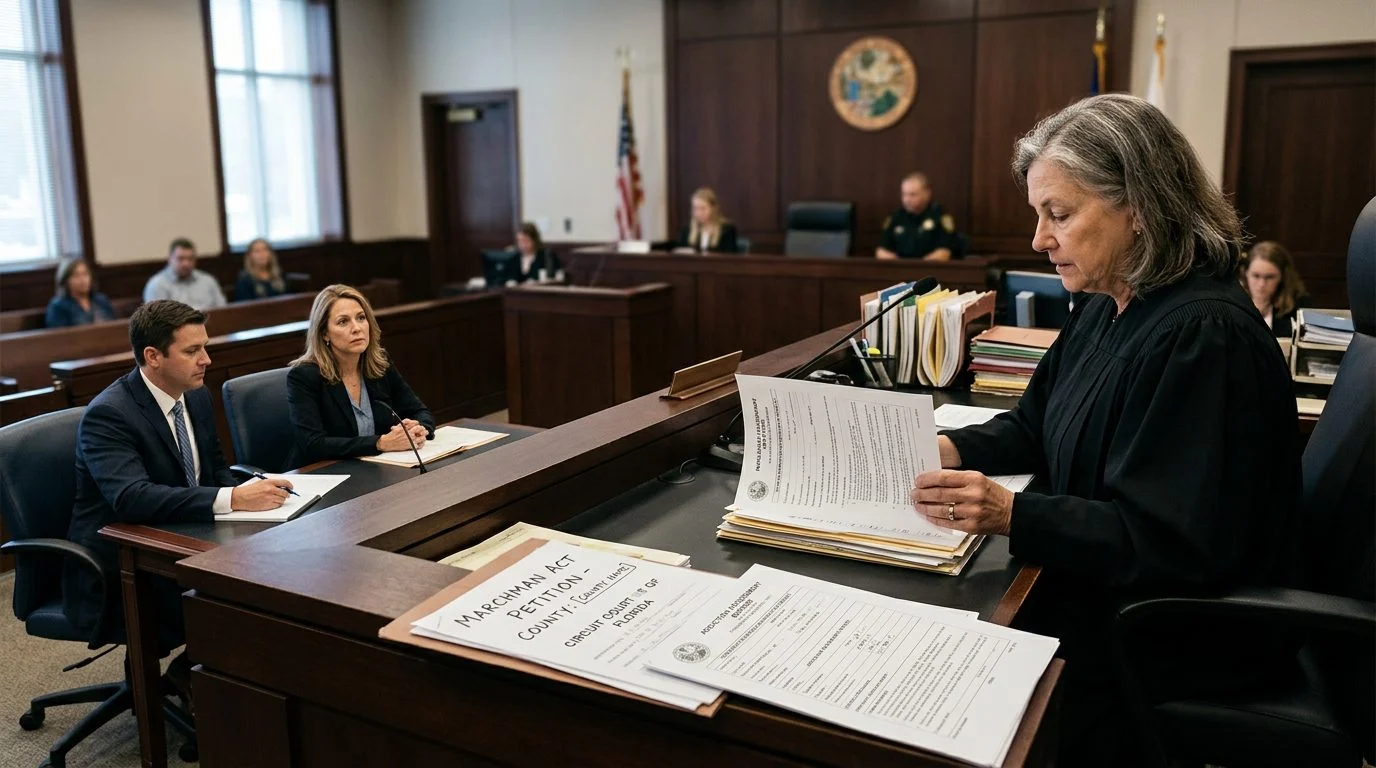
A Marchman Act petition in Florida is heard by the circuit court. Families often search for “county court” because the petition is filed with the clerk of the court in a specific county. The county tells you where to file. The circuit court decides the case.
The Marchman Act is Chapter 397 of the Florida Statutes. Its official short title is the Hal S. Marchman Alcohol and Other Drug Services Act. Florida law gives the courts jurisdiction over involuntary treatment petitions for people impaired by substance abuse (Fla. Stat. § 397.681).
The appeals court explained that the petition was filed in the wrong county. That was a venue problem, not a lack of power to hear the case (J.P. v. J.N.). Getting both the court and the county right matters from the start.
Not sure what your next step is?
Talk it through with our team — the first consultation is free, confidential, and carries no obligation.

How the County Is Chosen for the Filing
A petition must be filed with the clerk of the court in the county where the person is located. The statute uses the word “located,” not “lives,” for the county where a petition must be filed.
Consider a person who is staying at a treatment or detox facility in another county. The facility’s county may control the filing. In the J.P. case, the person was at a Volusia detox facility, not at his Putnam County home. Filing in the wrong county did not take away the circuit court’s jurisdiction. However, the filing of the petition in the wrong county did not divest the circuit court in Putnam County of jurisdiction (J.P. v. J.N.).
The clerk may not charge a fee to file the petition (Fla. Stat. § 397.681). The alleged impaired person is named as the respondent (Fla. Stat. § 397.681). The petition must also name the petitioner and state their relationship (Fla. Stat. § 397.68141). It must state their relationship and the factual reasons for the request (Fla. Stat. § 397.68141).
If the person is an adult, a petition may be filed by the person’s spouse or legal guardian, any relative, a service provider, or an adult who has direct personal knowledge of the impairment and of the prior course of assessment and treatment (Fla. Stat. § 397.68112). Which county is right depends on the facts of each situation.
South Florida Circuits: Miami-Dade, Broward, Palm Beach, and Monroe
Each South Florida county sits in its own judicial circuit. Miami-Dade falls under the Eleventh Judicial Circuit. Broward falls under the Seventeenth. Palm Beach falls under the Fifteenth. Monroe falls under the Sixteenth. Each circuit’s clerk handles filings for its counties.
The Miami-Dade Clerk directs people seeking involuntary alcohol or drug treatment to the Probate Court for adults and the Juvenile Court for minors (Miami-Dade Clerk, Mental Health Court). Families in Miami-Dade can start by contacting Robinson Casey. In Broward, Palm Beach, and Monroe, contact Robinson Casey to confirm where the petition should be filed for the county where the person is located.
Robinson Casey serves families across South Florida and statewide. The firm limits practice to Marchman Act petitions and guardianship matters.
What Happens After a Petition Is Filed
After filing, the court must decide right away whether the person has a lawyer. It must also decide whether appointing one is appropriate (Fla. Stat. § 397.68151). The court must set a hearing within 10 court working days unless it grants a continuance.
The respondent has the right to counsel at every stage of the case, although the respondent may waive that right if the respondent is present and the court finds that such waiver is made knowingly, intelligently, and voluntarily (Fla. Stat. § 397.681). A Florida appeals court has also held that this right rests on due process (Hillsborough County v. Albrechta). The respondent must generally attend the hearing. Testimony at the hearing must be taken under oath, and the court considers all relevant evidence, including testimony from family members familiar with the respondent’s prior history.
If the court finds by clear and convincing evidence that the conditions for involuntary treatment services have been proved, it may order treatment for a period not to exceed 90 days, and a renewal of the involuntary services order may be requested before the end of the 90-day period (Fla. Stat. § 397.697). Emergency situations may follow a different track, which is described in Fla. Stat. § 397.6818.
When the Person and the Family Are in Different Counties
A common South Florida situation looks like this. A parent lives in Palm Beach County, while the son is at a facility in Miami-Dade. The county where the person is found at filing often controls the case. Families should confirm the person’s current location before contacting the clerk.
Filing in the family’s home county is a frequent mistake when the person is elsewhere. The J.P. ruling shows the cost: the case may need to be transferred. Written details of the person’s location at the time of filing help the clerk and the court.
Petitions and related court records are confidential and exempt from public records disclosure. The clerk may not publish personal identifying information on a public docket (Fla. Stat. § 397.6760). A matter may be referred to another lawyer or firm where that is appropriate.

Talk Through Your Filing Location With Robinson Casey
If your loved one’s drinking or drug use has put them at risk, the county question may feel urgent. You may be weighing a petition and unsure where it belongs. Bring the person’s current location, your relationship to them, and the facts you know to a conversation with us. The firm focuses on Marchman Act petitions and guardianship matters. The first consultation is free, confidential, and carries no obligation to continue. Call (561) 849-4149 or contact Robinson Casey. The responsible lawyer for this page is Richard J. Casey III, Esq.
Frequently asked questions
Is a Marchman Act petition filed in county court or circuit court?
Section 397.681 gives ‘the courts’ jurisdiction over involuntary treatment petitions, and the petition is filed with the clerk in the county where the person is located. It is filed with the clerk in the county where the person is located.
Does it cost money to file?
The clerk may not charge a fee to file a Marchman Act petition under § 397.681.
Does the person have a right to a lawyer?
Yes. The respondent has the right to counsel at every stage of the judicial proceeding, however the respondent may waive that right if the respondent is present and the court finds the waiver is made knowingly, intelligently, and voluntarily.
Why Families Contact Robinson Casey
A Focused Practice
Our firm limits practice to Marchman Act petitions, guardianship, and related mental health and addiction matters, so every consultation centers on these issues.
Free, Confidential First Consultation
Your initial consultation is free, confidential, and carries no obligation to continue.
Support for Your Whole Family
Our team works with families who are worried about a loved one's safety, health, and daily needs, and explains each step in clear terms.
Serving Miami-Dade and South Florida
We assist families in Miami-Dade and throughout South Florida, and we also serve clients statewide.
Responsible Attorney
Richard J. Casey III, Esq. Our firm's lawyers and support staff are available to discuss your concerns.
Do Not Wait If Someone Is in Immediate Danger
If you believe a loved one may harm themselves or others, or needs urgent care, do not delay while you search for information online. Call Robinson Casey at (561) 849-4149 to discuss your situation with our office.
Questions Families Often Bring to Our Office
Which Court Hears the Petition?
Marchman Act petitions are filed with the clerk in the county where the person is located. We can explain how this applies to your circumstances.
What Information Should I Gather?
Names, addresses, recent events, and any prior treatment or court history are often helpful. Bring whatever you have to your consultation.
How Is the Process Explained?
We walk clients through each stage in plain language so they know what to expect and who to contact at every step.
Can I Ask Questions First?
Yes. Your first consultation is free, confidential, and carries no obligation to continue. Call (561) 849-4149 to get started.