
Marchman Act Attorney | Miami-Dade, Florida
Marchman Act Guidance for Miami-Dade Families
Robinson Casey limits its practice to Marchman Act petitions and guardianship matters, helping families across South Florida and statewide. Richard J. Casey III, Esq. is responsible for this page.
Casey III, Esq. · Published November 4, 2026
If papers name your loved one in a Marchman Act petition, the case moves fast through a Florida circuit court. An attorney for Marchman Act petition respondent Florida families can rely on can explain the papers, the hearing, and your options. Robinson Casey limits its practice to Marchman Act petitions and guardianship matters, serving families in Miami-Dade, South Florida, and statewide. Richard J. Casey III, Esq. is responsible for this page.
What a Marchman Act Petition Is and Who It Involves
A Marchman Act petition asks a judge to review whether a person needs involuntary treatment for substance use impairment. These petitions fall under Chapter 397 of the Florida Statutes. The person named in the petition is the respondent. This page calls that person your loved one.
The petition must be filed with the clerk in the county where the person is located. The clerk may not charge a fee to file it (§ 397.681). The judge checks the petition against the statute’s criteria.
For an adult respondent, the law lets a spouse, legal guardian, any relative, a service provider, or an adult who has direct personal knowledge of the impairment and of the person’s prior course of assessment and treatment file (§ 397.68112). The petition must name both sides, state how they are related, and lay out the facts that support the request (§ 397.68141).
In Miami-Dade, the Miami-Dade Clerk Mental Health Court page directs adult cases to the Probate Court. Robinson Casey focuses on Marchman Act petitions and guardianship matters for families across South Florida and statewide.
If papers naming your loved one have reached your household and a court date is approaching, reach out to Robinson Casey today to schedule your free consultation. Talk it through with our team — the first consultation is free, confidential, and carries no obligation.

The First Steps After Papers Arrive
Your first steps are to read every page, write down the dates, and keep a clear record. Do this before you make any decisions about the case.
- Read the full packet. Note the case number, the court, and any hearing date.
- Don’t let a date pass. The court must set a hearing within 10 court working days unless a continuance is granted (§ 397.68151).
- Keep copies. Save every document. Log each call, letter, or visit from the court or a provider, with the date.
- Write your questions. Ask what facts the petition relies on. A petition may include a professional’s report from within 30 days before filing. If there was no assessment, the petition must say so (§ 397.68141).
- Hold off on posting. Don’t discuss the case on social media or in group texts until a lawyer has reviewed it.
Your loved one has a right to counsel at every stage of the case, unless they knowingly, intelligently, and voluntarily waive it while present and the court finds the waiver valid (§ 397.681). If the judge believes your loved one needs or wants a lawyer, the judge must appoint one, even against the person’s wishes.
How the Case Moves Forward: Evidence, Hearing, and Court Review
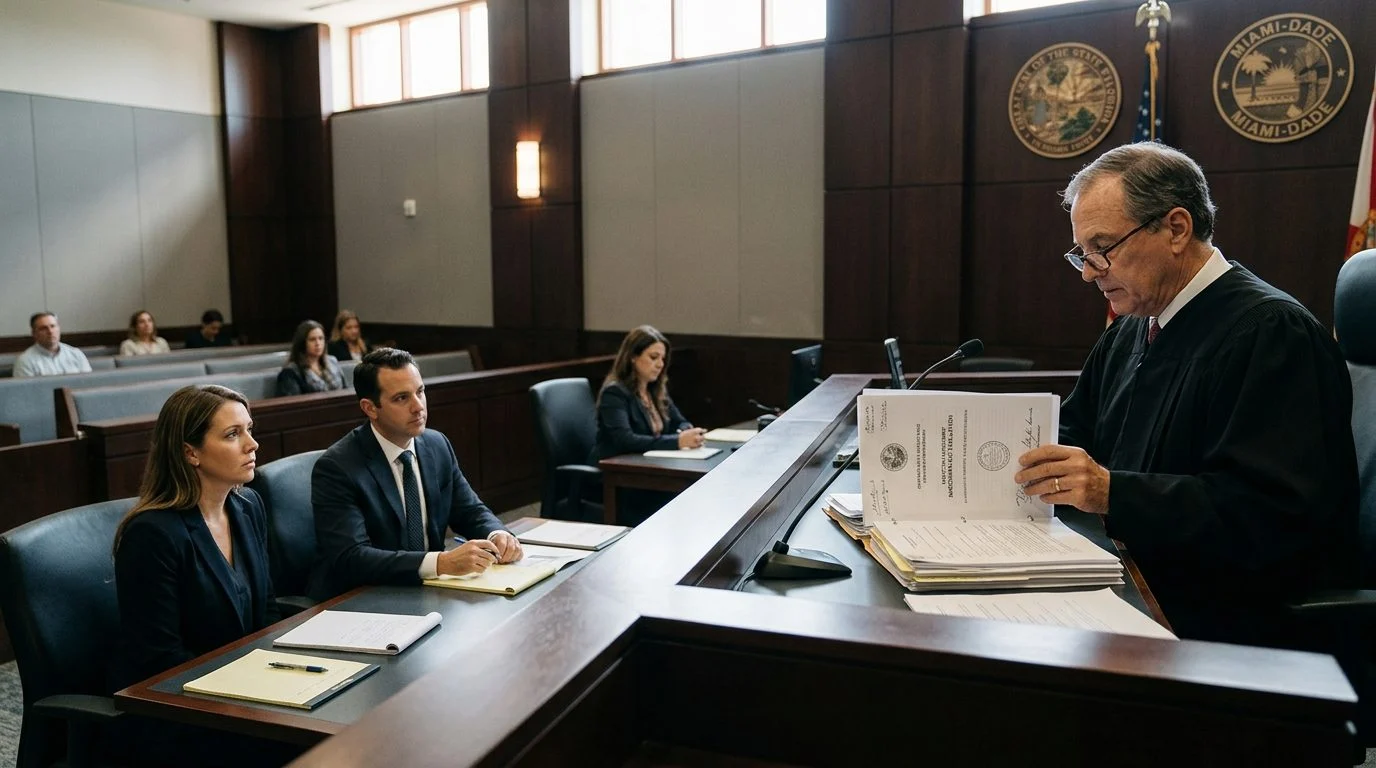
The judge decides at a hearing whether the statute’s conditions are proven. Sworn testimony and other evidence come in at that hearing. What is ready before that day shapes what the judge sees.
- Presence. Your loved one must attend unless the court finds a knowing waiver. The court may also excuse attendance if it is inconsistent with their best interests or likely to be injurious to self or others (§ 397.6957).
- The respondent’s assessment by a qualified professional must occur within 72 hours after arriving at a licensed service provider, unless the respondent shows signs of withdrawal or needs detoxification or treatment for a medical condition, in which case the hold lasts until that issue is resolved but no later than the scheduled hearing date, absent a court-approved extension. For a minor, the assessment must be initiated within the first 12 hours of admission (§ 397.6957).
- Evidence. The court hears all relevant evidence. That includes family members who know the person’s history. The court may also order drug tests (§ 397.6957).
- Testimony. Testimony is taken under oath and recorded. The respondent may refuse to testify (§ 397.6957).
- The order. If the conditions are proven by clear and convincing evidence, the court may order up to 90 days of involuntary treatment services (§ 397.697).
However, if your loved one does not appear at the hearing for any reason, including lack of service, and the court reasonably believes your loved one meets the commitment criteria and that a substance abuse emergency exists, the court may issue or reissue an ex parte order that is valid for 90 days (§ 397.6818).
Protecting Children and the Household While the Case Is Pending
Daily life at home often changes once a petition is filed. Most families start with safety and routines. Keep children’s schedules as steady as you can.
- Record dated facts. Note what happened, when it happened, and who saw it. Specific notes help a lawyer present household concerns clearly.
- Plan childcare and home duties. Decide with counsel who handles school pickups, meals, and bedtime during the case.
- Secure risky items. Lock up or move anything that could cause harm while the case moves forward.
- Keep records private. Petitions, court orders, and related records under this part are confidential. The clerk may not publish personal identifying information on a public docket (§ 397.6760).
- Share notes with counsel. Give your written notes to the lawyer handling the case. That way, safety concerns reach the court in a clear form.
How Robinson Casey Can Help Your Family
Robinson Casey limits its practice to Marchman Act petitions and guardianship matters. Our work centers on those court cases, and we serve families across South Florida and statewide.
- Review the papers. We explain what the petition alleges and what it asks the court to do, in plain language.
- Organize evidence. We help gather records and documents. We also prepare family members who may testify.
- Court representation. We handle court-related matters in Marchman Act and guardianship cases, including hearing preparation and attendance.
- Explain options. We walk through the choices within the process and how each one would affect your family. We don’t predict the outcome.
- Support. Richard J. Casey III, Esq. is the responsible lawyer for this page. Our team includes support staff who keep filings and court dates organized.
Questions Families Ask Before Responding
Court dates in these papers matter, so don’t let them pass without a plan. Here are short answers to common questions.
Where is the petition filed?
It goes to the clerk in the county where the person is located. The clerk may not charge a filing fee (§ 397.681).
Must my loved one attend the hearing?
Generally yes. The court can excuse attendance only in the limited cases the statute allows (§ 397.6957).
Can I give the court information if I didn’t file?
Yes. The court can hear testimony from family members who know the person’s history (§ 397.6957).
Does my loved one need a lawyer?
They have the right to counsel at every stage.
What if my loved one refuses treatment?
Refusing services alone is not evidence of lack of judgment.
How is the Marchman Act different from the Baker Act?
The Marchman Act covers substance use impairment. The Baker Act is a separate Florida law for mental health. This page covers only the Marchman Act.
Not sure what your next step is?
Talk it through with our team — the first consultation is free, confidential, and carries no obligation.

Talk With Robinson Casey About the Petition Now
When papers name your loved one, time matters. The court must set a hearing within 10 court working days unless a continuance is granted (§ 397.68151). Your first consultation is free, confidential, and comes with no obligation to continue.
If papers naming your loved one have reached your family and a hearing date is coming, call (561) 849-4149 or request your consultation now. We can’t promise how a judge will rule, but we can help you understand the petition and your next steps.
Matters We Handle
Marchman Act Petitions
Petitions for court-ordered assessment and treatment of a person struggling with substance use, filed under Florida's Marchman Act.
Involuntary Commitment for Addiction
Guidance on the court process for involuntary commitment when a loved one's substance use places them or others at risk.
Emergency Temporary Guardianship
Help with urgent requests when a person needs a guardian quickly to protect their health, safety, or property.
Plenary and Limited Guardianship
Guardianship petitions for individuals who need broad or narrowly defined decision-making support under court supervision.
Mental Health Guardianship
Representation in guardianship matters involving a person's mental health needs and their ability to make personal decisions.
Why Families Contact Robinson Casey
A Focused Practice
We limit our practice to Marchman Act and guardianship matters, so every case is handled within the same area of Florida law.
A Confidential First Conversation
Your free first consultation is confidential and carries no obligation to continue.
Miami-Dade and Statewide
We serve families throughout South Florida and across Florida.
Supported by Our Team
Our team of assistants and office staff helps keep your matter organized and your questions answered.
Do Not Wait to Ask Questions
Court deadlines and procedures in these matters can move quickly. Speaking with a lawyer early helps you understand your options before a decision must be made.