
Marchman Act & Guardianship Attorneys | South Florida
When a Hospital Discharge Leaves a Loved One Without Addiction Treatment
Robinson Casey focuses on Marchman Act petitions and guardianship matters for families in Miami-Dade, South Florida and across Florida. Talk with us about the next step.
By Richard J. Casey III, Esq. · Published November 3, 2026
Your son was discharged, but your options did not end at the hospital door
If your son was discharged after an overdose and refuses follow-up care, you still have legal options. A hospital discharge ends the hospital stay. It does not end your family’s options. In Florida, a Marchman Act petition may be an available route if an adult son meets the statutory criteria.
You are probably terrified. You may fear another overdose, or worse. You may have spent years paying for treatment, trying interventions and setting boundaries, and he still keeps getting worse. That exhaustion is real.
When a hospital discharge leaves a son refusing addiction treatment in Florida, families often feel stuck between the discharge papers and the next crisis. This page offers general information about steps many parents consider now, why a hospital record can be important, and questions families often ask about a Marchman Act petition.
If your son left the hospital and still refuses care, our team can review his records with you and talk through whether a Marchman Act petition may fit his case. Talk it through with our team — the first consultation is free, confidential, and carries no obligation.
What to do the same day he comes home
Start with paperwork and a written timeline. These two steps help most on the first day.
If he is unresponsive or not breathing, call 911 right away. Don’t wait to see whether he improves on his own.
Ask the discharge team for the discharge summary, the medication list and the follow-up plan. Ask for them in writing if you can. Written papers are easier to share later with a lawyer and with the court.
Write a dated list while the details are fresh. Note when he came home, what he said about treatment, each refusal, and any signs of use. Stick to what you saw and heard.
Ask the hospital what written consent it needs before it shares records with you. Federal rules can keep records of substance use disorder treatment private. 42 U.S.C. § 290dd-2 limits when those records may be used in court against a patient, unless a court order or the patient’s consent allows it. 42 C.F.R. § 2.31 lists what a valid written consent must include.
Why the hospital record matters to a Marchman Act petition
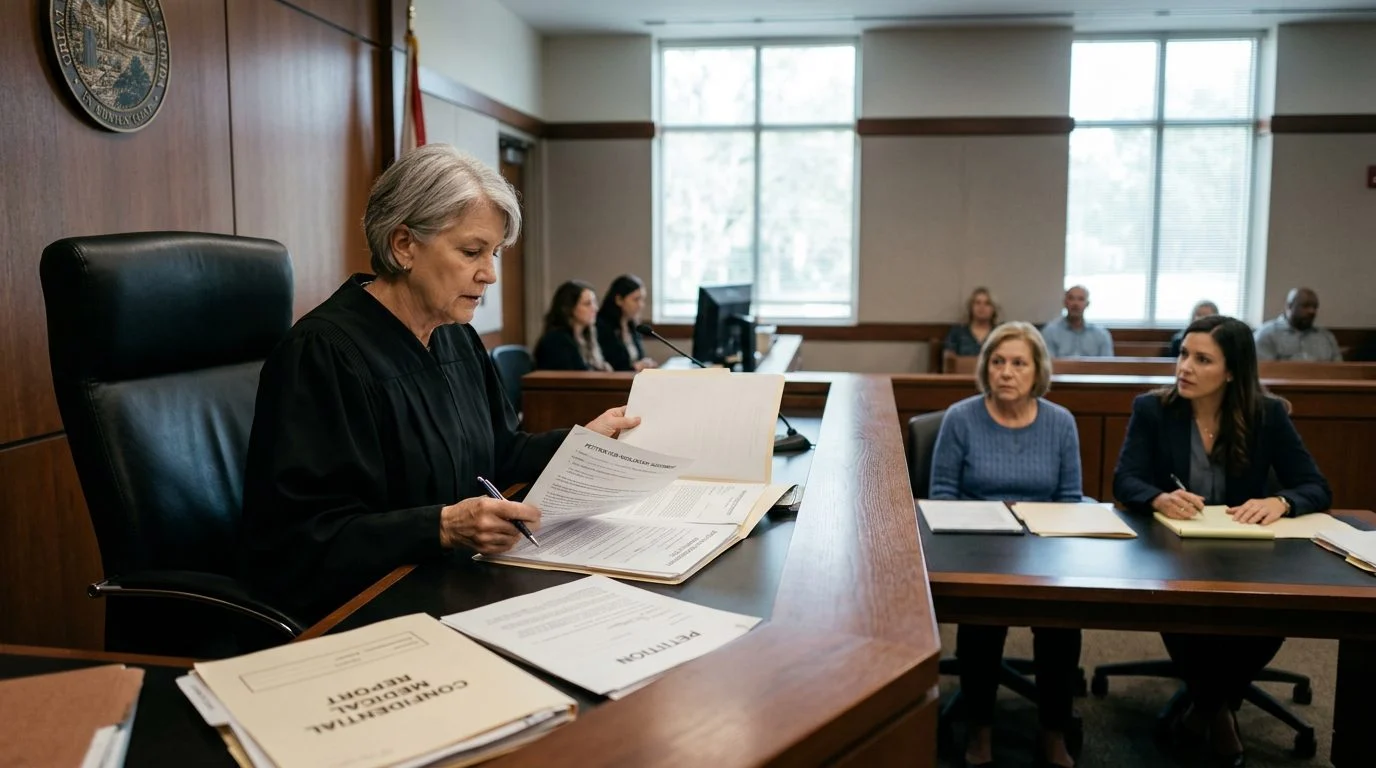
A petition has to rest on facts, and a judge decides based on evidence. The hospital record can supply many of those facts, including the overdose, what clinicians observed, and what they recommended.
Florida law requires the petition to lay out specific facts. It must state why you believe he is impaired, why you believe he has lost power of self-control with respect to substance use, and either the harm you believe he may cause himself or others or why you believe his refusal of care is based on judgment so impaired by reason of substance abuse that he is incapable of appreciating his need for care and of making a rational decision regarding that need. Fla. Stat. § 397.68141 sets out the required contents, including the names of the respondent and petitioner, their relationship, the respondent’s attorney if known, and the factual allegations described above.
Ask whether a clinician assessed him during the stay, and what treatment that clinician recommended. A petition may include a clinician’s report from an exam done within 30 days before filing. If he was never assessed, or refused an evaluation, the petition must say so.
The clinical report also matters at the hearing. It must contain a treatment recommendation. So ask the hospital and any treating clinician about recommendations early.
Bring copies of the discharge papers, any lab or toxicology summaries you have, and your dated list to the first meeting with a lawyer. Those three items give a lawyer a clear starting point.
What Florida law allows: a Marchman Act petition for an adult
Florida law lets a relative file a Marchman Act petition for an adult son. Under Fla. Stat. § 397.68112, the petition may come from the adult’s spouse or legal guardian, any relative, a service provider, or an adult with direct personal knowledge of his impairment and treatment history.
A 2017 Florida appeals decision, J.P. v. J.N., held that a petition filed in the wrong county did not take away the court’s jurisdiction.
The criteria appear in Fla. Stat. § 397.675. A person meets them if there is good faith reason to believe he has a substance use impairment. That impairment must have caused him to lose power of self-control with respect to substance use. Because of such impairment, the person is incapable of appreciating the need for such services and of making a rational decision about them, or, without care or treatment, is likely to neglect himself or herself or refuse to care for himself or herself in a way that poses a real and present threat of substantial harm to his or her well-being, and it is not apparent that this harm may be avoided through the help of willing, able, and responsible family members or friends or the provision of other services, or there is a substantial likelihood that the person has inflicted, threatened or attempted to inflict, or, unless admitted, is likely to inflict, physical harm on himself, herself, or another. The statute adds that mere refusal of services is not, by itself, evidence of lack of judgment. Fla. Stat. § 397.675 reads: “(b) Without care or treatment, is likely to suffer from neglect or refuse to care for himself or herself; that such neglect or refusal poses a real and present threat of substantial harm to his or her well-being; and that it is not apparent that such harm may be avoided through the help of willing, able, and responsible family members or friends or the provision of other services, or there is substantial likelihood that the person has inflicted, or threatened to or attempted to inflict, or, unless admitted, is likely to inflict, physical harm on himself, herself, or another.” Refusal alone does not carry the case.
The petitioner must prove the case by clear and convincing evidence. That includes showing a history of lack of compliance with treatment, under Fla. Stat. § 397.6957. The court hears relevant evidence, including testimony from family members familiar with his history.
The adult also has a right to counsel at every stage. If he cannot afford private counsel, the court can appoint one. The Florida Department of Children and Families describes the Marchman Act as allowing involuntary assessment, stabilization and treatment for adults and youth severely impaired by substance abuse. Whether his facts meet these criteria depends on the facts, which is why a consultation looks at his history.
What a Marchman Act petition cannot do
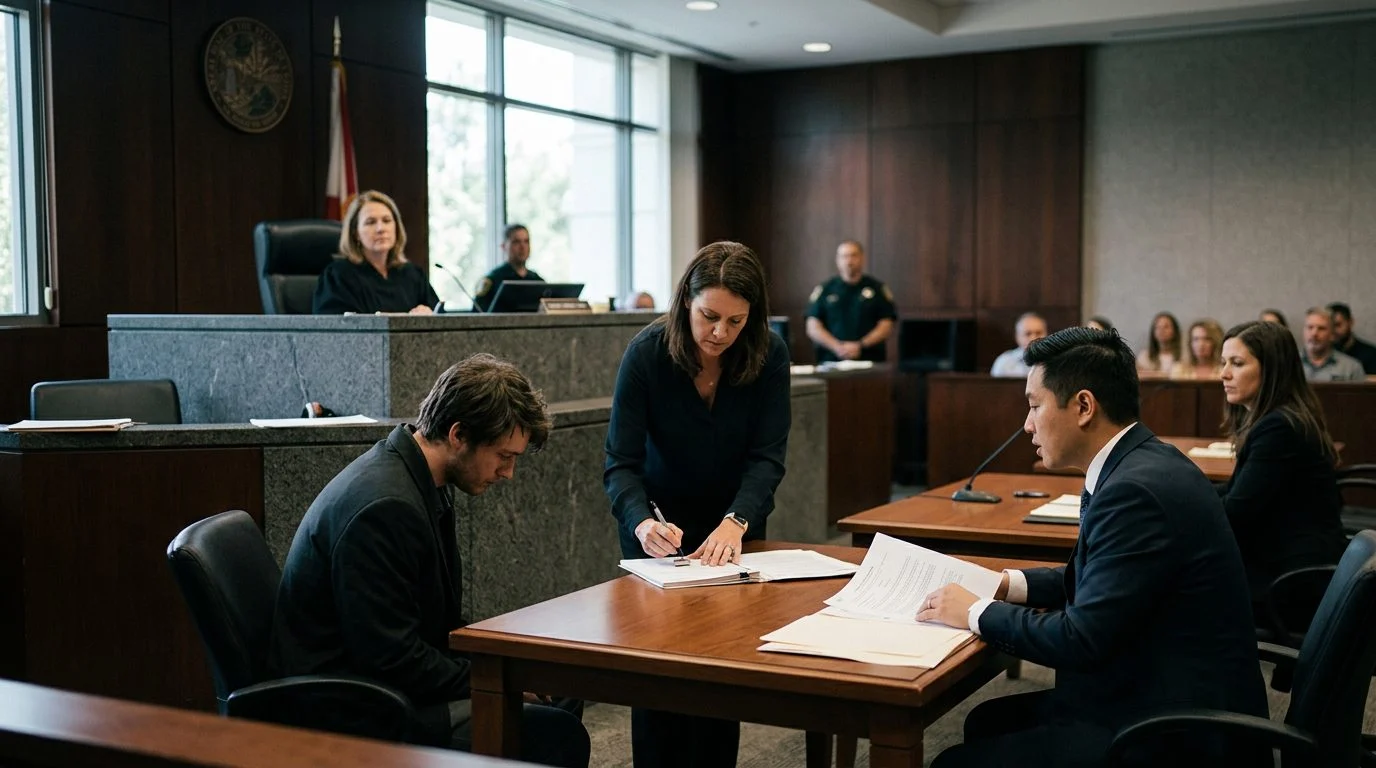
Filing a petition starts a court process. It does not finish one. No lawyer can promise that a judge will order treatment, a particular bed, a timeline or a recovery outcome.
A petition with too few facts can fail at the start. In D.H. v. K.J.R., a Florida appeals court held that an emergency order was entered in error. The petition did not show a good faith reason to believe the statutory criteria were met.
Court-ordered treatment also has a time limit. Under Fla. Stat. § 397.697, an involuntary treatment order may last no more than 90 days. A renewal may be requested before that period ends if the conditions are expected to continue.
Your fear and frustration are real. The court, though, looks for evidence. While you weigh the legal route, CRAFT family training strategies can help you communicate with him, set boundaries and look after your own health.
Related situations to read next
If the court has already ordered treatment, it keeps the case open. Under Fla. Stat. § 397.697, the court keeps authority to monitor compliance, change the treatment and address violations of its orders. That matters if he leaves treatment early or relapses after an order.
Court papers stay private. Under Fla. Stat. § 397.6760, petitions, court orders and related records are confidential. The clerk may release court papers, on request, to listed people such as the petitioner, the respondent and the respondent’s attorney, and to any person or entity authorized by a court order for good cause; in deciding good cause, the court must weigh the person or entity’s need for the information against potential harm to the respondent from the disclosure.
Words matter, too. A PMC review notes that voluntary and involuntary treatment lack one shared meaning across U.S. behavioral health services. So the exact words in the Florida statute are the ones that matter for a petition.
Quick answers
Can I file a Marchman Act petition for my adult son in Florida?
Yes. Under Fla. Stat. § 397.681, a petition for involuntary treatment must be filed with the clerk of the court in the county where your adult child is located.
Can a parent force an adult son into treatment in Florida?
A judge decides, after a hearing, whether the criteria are met by clear and convincing evidence. The petitioner must prove by clear and convincing evidence that the respondent is substance abuse impaired and has a history of lack of compliance with treatment for substance abuse.
Can my son refuse treatment after a hospital discharge?
Refusal alone is not evidence of lack of judgment, but a history of not complying with treatment is part of what a petition must prove.
Not sure what your next step is?
Talk it through with our team — the first consultation is free, confidential, and carries no obligation.
Talk with Robinson Casey about your son’s discharge and refusal
If your son has come home from the hospital and still refuses follow-up care, you don’t have to sort out the legal route alone. Robinson Casey focuses on Marchman Act petitions and guardianship matters for families across South Florida and statewide. Richard J. Casey III, Esq. is the lawyer responsible for this page.
Bring the discharge papers and your dated list. Our team can review them with you and talk through whether a petition may fit his situation. The first consultation is free, confidential and comes with no obligation to continue. Call (561) 849-4149 or use our contact form to schedule.
How Robinson Casey Can Help Your Family
Marchman Act Petitions
We focus on preparing and filing petitions for involuntary treatment for substance use disorders under Florida's Marchman Act.
Guardianship Matters
Our practice covers emergency temporary, plenary, limited and mental health guardianship proceedings.
Confidential Consultations
Your first consultation is free, confidential and comes with no obligation to continue.
Support for Families
Our team works with families across South Florida and statewide to explain each option in plain language.
Don't Let a Discharge Decision Go Unanswered
If a hospital is releasing a patient who still needs addiction treatment, families often have fewer options than they expect. Speaking with an attorney early helps you understand the choices in front of you.
Legal Options We Handle
Marchman Act Attorney
Guidance on filing a petition for involuntary assessment and treatment for a family member struggling with substance use.
Involuntary Commitment for Addiction
Help navigating court proceedings that ask a judge to order treatment when voluntary care is not in place.
Emergency Temporary Guardianship
Assistance with urgent court requests when a person needs a court-appointed guardian quickly.
Guardianship Attorney Services
Support with plenary, limited and mental health guardianship petitions for adults who need decision-making help.