
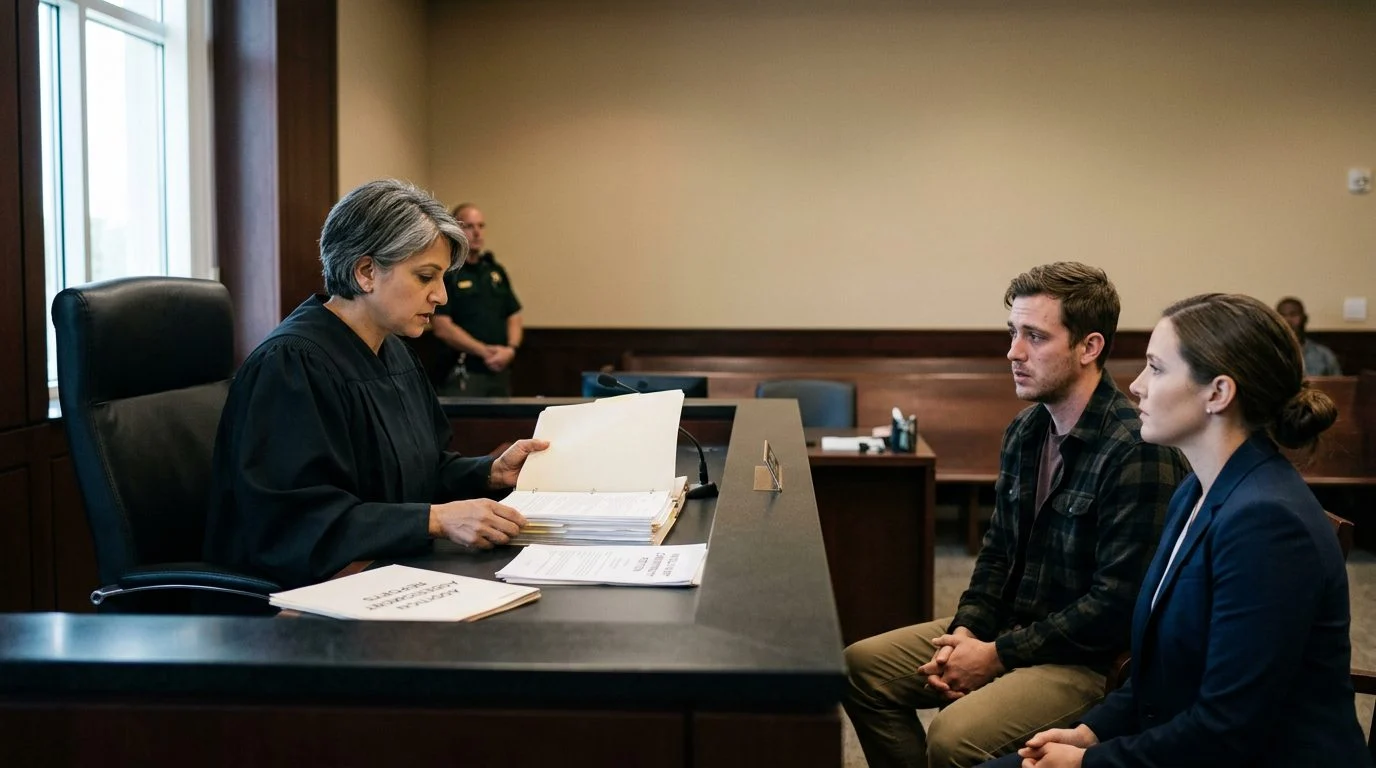
Marchman Act & Guardianship | Miami-Dade and South Florida
Worried About Your Brother? Florida Law May Offer a Path Forward.
Robinson Casey focuses on Marchman Act petitions and guardianship matters for families across South Florida and statewide.
Casey III, Esq. · Published November 8, 2026
If your brother refuses treatment and keeps using drugs, you may be the one handling every crisis. Florida has two main laws for this situation, and they cover different problems.
The Marchman Act covers substance use. The Baker Act covers mental illness. Guardianship is a separate court path for decisions about care, money and daily life.
Your brother refuses help, and you are left managing the fallout
Florida courts can step in, but no court can make your brother want to change.
When an adult relative refuses care and keeps using drugs, the worry rarely lets up. Most families fear four things:
- Irreversible harm, such as an overdose, a fall or a violent episode that cannot be undone.
- Financial exploitation, where others take his money or he gives it away.
- Dangerous decisions, or basic needs like food, rent and medicine going unmet.
- Another psychiatric crisis, followed by discharge with no workable plan.
These fears are reasonable. In the right case, a court process can require an assessment, order treatment for a limited time, or put a decision-maker in place. The question you came with is which law fits. The answer depends on what he uses, what he has done, and whether a mental illness is involved.
Talk it through with our team — the first consultation is free, confidential, and carries no obligation.

Marchman Act or Baker Act: which law covers which problem
For a brother who refuses treatment in Florida, the Marchman Act and the Baker Act are the two laws to compare. The Marchman Act handles substance use, and the Baker Act handles mental illness in a crisis.
The Marchman Act sits in Florida Statutes Chapter 397. Under § 397.681, courts hear involuntary treatment petitions for substance abuse impaired persons. The petition is filed with the clerk in the county where the person is located.
The Baker Act sits in Florida Statutes Chapter 394. Under § 394.463, a person may be taken to a receiving facility for involuntary examination. There must be reason to believe he has a mental illness and, because of that illness, he has refused voluntary examination after its purpose was explained or is unable to decide whether one is needed, and the statute’s further criteria must also be met. The Baker Act benchguide explains the process in more detail.
One person can fall under both laws. Substance use and mental illness often appear together.
Words like “voluntary” and “involuntary” treatment do not carry one shared meaning across U.S. psychiatric care, according to a peer-reviewed review of psychiatric terms.
What a Marchman Act petition covers, and what it cannot do
A Marchman Act petition asks a court to order an assessment and, when the law’s conditions are met, involuntary treatment for an adult.
Who can file. Under § 397.68112, a petition for an adult may be filed by a spouse or legal guardian, any relative, a service provider, or an adult with direct personal knowledge of the impairment and prior treatment. A sibling or adult child fits that list.
What the petition must say. Under § 397.68141, it must name both people and their relationship. It must give the reasons for the belief that he is substance abuse impaired, and the facts behind the belief that he has lost self-control with respect to substance use, and the reason to believe he has inflicted or is likely to inflict physical harm on himself or herself or others unless the court orders involuntary services, or that his refusal of care is based on judgment so impaired by substance use that he cannot appreciate his need for care. If he was never assessed or refused an evaluation, the petition must say so.
Under § 397.697, the court may order treatment from a publicly funded licensed provider for a period not to exceed 90 days, or order treatment from a privately funded licensed provider if he has the ability to pay, or if someone acting on his behalf voluntarily shows both willingness and ability to pay. The court must first find the conditions proven by clear and convincing evidence.
What it cannot do. A petition does not manage his money or make his medical decisions. Those needs point to guardianship, a separate process.
Gather the record early. Past refusals, hospital visits and missed appointments all matter.
The petitioner also carries the burden of proof. In J.C. v. State, the Fifth District reversed an order where the trial court questioned the only witness while the petitioner was absent. The Fourth District has taken a different view on this question. So this rule is Fifth District law, not settled law statewide.
How the process works, step by step
The process moves in five stages, and the court’s calendar shapes the timing.
- First consultation. Bring hospital records, discharge papers and a dated list of incidents. Start with what you have.
- Filing. The petition goes to the clerk in the county where he is located, under § 397.681. The clerk may not charge a fee to file it.
- Hearing scheduled. Under § 397.68151, the court sets a hearing within 10 court working days unless a continuance is granted. Under § 397.68151, the court must immediately decide whether he already has an attorney or whether appointing one is appropriate. His right to counsel at every stage is stated in § 397.681, though he may waive it if he is present and the court finds the waiver knowing, intelligent, and voluntary.
- Hearing. You must prove the grounds by clear and convincing evidence. The court hears relevant evidence, including testimony from family members who know his history. Testimony is taken under oath.
- Order and follow-up. If treatment is ordered, the court keeps jurisdiction to monitor compliance. When the conditions justifying treatment end, release follows under § 397.6971.
Timelines depend on the court’s calendar and the facts of the case.
When guardianship becomes the right path
Guardianship fits when a court must make decisions for an adult who cannot decide safely. A treatment order alone may not cover that need.
- Emergency temporary guardianship. Under § 744.3031, a court may appoint one after a petition for incapacity is filed, if it finds imminent danger. Fla. Stat. § 744.3031 reads: “The court must specifically find that there appears to be imminent danger that the physical or mental health or safety of the person will be seriously impaired or that the person’s property is in danger of being wasted, misappropriated, or lost unless immediate action is taken.” Its authority ends 90 days after appointment or when a guardian is appointed, whichever comes first, but it may be extended for another 90 days if the emergency conditions still exist.
- Plenary guardianship. A full guardianship covers broad decisions for the person.
- Limited guardianship. It covers only the areas where he cannot decide safely.
- Mental health guardianship. This is one of the guardianship matters this firm handles.
Before appointing a guardian, the court must find whether an alternative will sufficiently address the problems. The court must also appoint an attorney for the person, under § 744.331. A guardian also cannot commit him to a facility without formal proceedings and specific court authority, under § 744.3215.
Why families bring this matter to Robinson Casey
Robinson Casey focuses exclusively on Marchman Act petitions and guardianship matters. The firm serves families across South Florida, including Miami-Dade, and statewide.
Richard J. Casey III, Esq. is the responsible attorney for this page. The firm has support staff who help families organize records, dates and deadlines.
A first call covers your timeline, the hospital and discharge records, the immediate risks, and the options that fit your facts. Each option is explained before anything is filed. No outcome can be promised, because every case turns on its own facts.
The first consultation is free, confidential, and carries no obligation to continue (consulta inicial gratuita, confidencial y sin compromiso).
Not sure what your next step is?
Talk it through with our team — the first consultation is free, confidential, and carries no obligation.

Questions families ask before calling
Most adult relatives can file, and the judge hears the petition whether or not he agrees.
Can I file if my brother is an adult?
Yes. Under § 397.68112, a relative can file a petition for an adult.
Under § 397.6760, these records are confidential, and the clerk may release them only to listed people.
What if he was just discharged from the hospital?
A discharge does not close the question. Bring the discharge papers to your first call.
If your brother keeps using drugs, turns down care and has been back in crisis, call (561) 849-4700 or request a consultation online. Bring the discharge papers and your timeline, and we will review where your situation fits.
Why Families Contact Robinson Casey
Free First Consultation
Your initial consultation is free, confidential, and comes with no obligation to continue.
Confidential Discussion
Talk through your brother's situation in a private setting before you decide on any next step.
Direct Phone Access
Call (561) 849-4700 to start the conversation about your family's situation.
South Florida and Statewide
The firm serves families in Miami-Dade and across South Florida, and matters statewide.
Don't Wait for the Next Crisis
Families often reach out only after a emergency. Speaking with a lawyer early can help you understand the options available before the situation escalates.
Matters the Firm Handles
Marchman Act Petitions
Help for families seeking court-ordered assessment and treatment for a loved one struggling with substance use.
Guardianship Matters
Plenary and limited guardianship petitions for adults who need a court-appointed decision-maker.
Mental Health and Addiction Commitment
Mental health guardianship and involuntary commitment for addiction, handled with careful attention to each family's facts.