
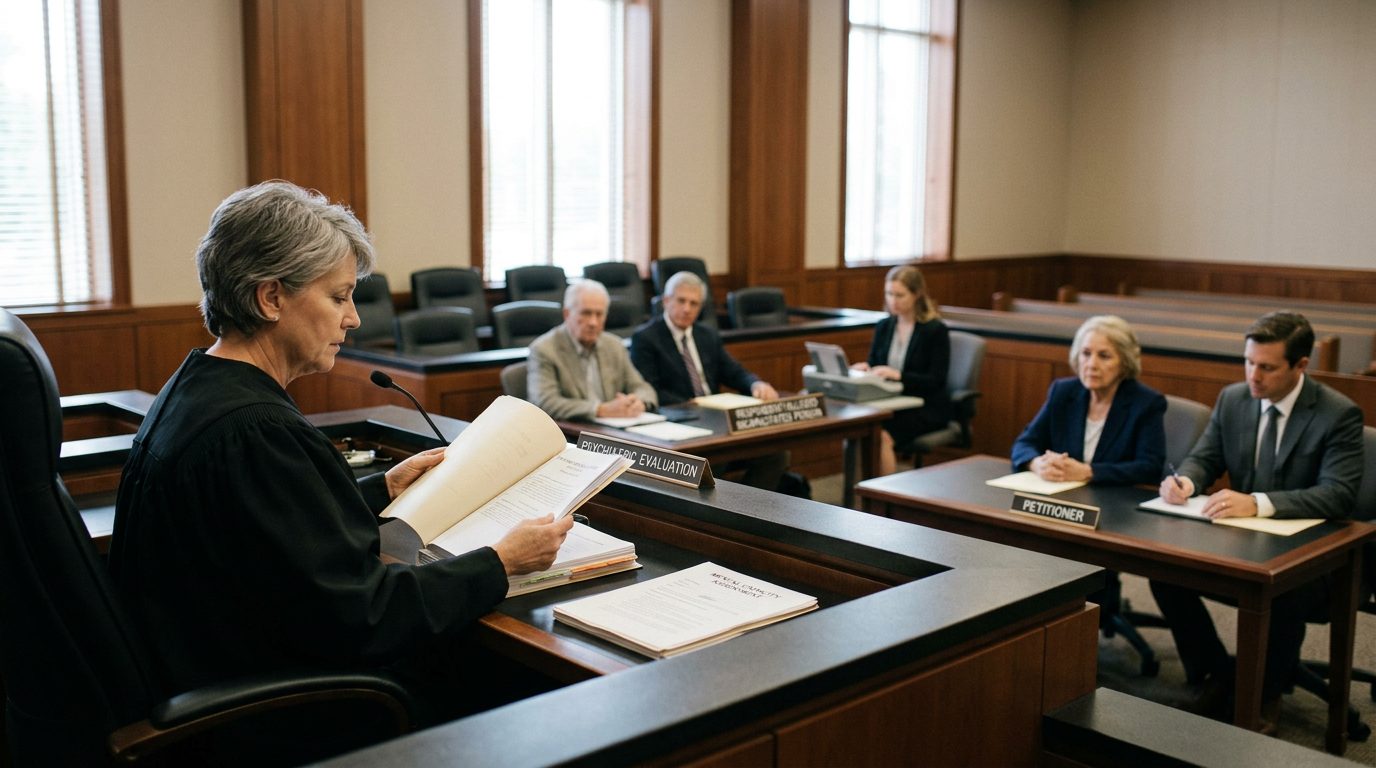
Mental Health Guardianship
Mental Health Guardianship in Florida: Complete Family Guide
Understand when guardianship is necessary, what types exist, and how to protect your loved one's welfare and legal rights.
By Richard J. Casey III, Esq. · Published September 17, 2026
Mental Health Guardianship in Florida: Complete Family Guide
Mental health guardianship is a court-ordered legal authority that allows a guardian to make healthcare, medical, and personal decisions for an adult who lacks the mental capacity to make those decisions safely. Unlike a power of attorney or healthcare proxy, guardianship doesn’t require the person’s consent—it’s established through a court process when clear and convincing evidence shows the individual cannot understand the nature and consequences of their medical or personal choices.
If you’re a family member watching someone you love struggle with serious mental illness, untreated symptoms, or refusal of necessary care, guardianship may be the legal tool that enables you to protect them and make critical decisions on their behalf. This guide explains how mental health guardianship works in Florida, when it becomes necessary, and how it differs from other legal alternatives.

Not sure what your next step is?
Talk it through with our team — the first consultation is free, confidential, and carries no obligation.
What Is Mental Health Guardianship in Florida?
Mental health guardianship is a court-ordered legal relationship in which a guardian receives authority to make healthcare, medical, and personal decisions for an incapacitated adult. The guardian acts as a decision-maker—not as an owner or controller of the person, but as a fiduciary (a person legally obligated to act in the best interest of another).
Under Fla. Stat. § 744.331, Florida law defines incapacity as the condition of a person who has been found by the court to lack the capacity to manage at least some of the property, medical decisions, or personal affairs that constitute the guardianship estate. The court must find, by clear and convincing evidence, that the person lacks this capacity before appointing a guardian.
Mental health guardianship is distinct from general guardianship of a minor or guardianship based on age alone. It focuses specifically on incapacity caused by mental illness, psychiatric disability, or cognitive impairment affecting decision-making. The court remains involved throughout the guardianship—it’s not a private arrangement but a judicial process with ongoing oversight.
When Is Mental Health Guardianship Necessary?
Guardianship becomes necessary when an individual’s mental illness prevents them from understanding and making safe decisions about medical care, treatment, personal welfare, or living arrangements. The legal standard is incapacity—not diagnosis.
A person may have schizophrenia, bipolar disorder, severe depression, or psychosis and still retain capacity to make decisions if they can understand the nature and consequences of their choices. Conversely, someone with a less severe diagnosis may lack capacity if their symptoms prevent rational decision-making.
Common situations that trigger mental health guardianship include:
- Untreated serious mental illness: When someone refuses psychiatric medication or treatment despite symptoms that impair judgment
- Inability to manage medical care: When the person cannot understand why treatment is necessary or cannot follow medical instructions
- Risk of harm: When mental illness creates danger to the person’s health, safety, or welfare
- Inability to meet basic needs: When the person cannot provide food, shelter, clothing, or medical care for themselves
- Lack of insight into illness: When the person denies they have a mental illness and refuses all intervention
If you’re facing a mental health crisis and need immediate intervention, emergency temporary guardianship may be available while you pursue full guardianship through the courts.
Types of Mental Health Guardianship in Florida
Florida law provides three primary guardianship types, each suited to different levels of incapacity and urgency.
Plenary Guardianship grants the guardian full authority over all personal, medical, and financial decisions. It’s appropriate when the person is incapacitated in all or nearly all major life areas. Under Fla. Stat. § 744.441, a plenary guardian may make decisions about medical treatment, psychiatric care, living arrangements, and financial matters. This is the most restrictive form of guardianship and requires the strongest showing of incapacity.
Limited Guardianship grants authority over only specific areas—for example, medical decisions but not financial decisions, or psychiatric treatment but not day-to-day personal matters. Limited guardianship preserves the person’s autonomy in areas where they retain capacity. Many mental health cases are appropriate for limited guardianship because the person may be unable to make safe medical decisions but fully capable of managing finances or other personal affairs.
Emergency Temporary Guardianship is a short-term arrangement lasting up to 90 days, granted without the full hearing process required for permanent guardianship. It’s used in crisis situations when immediate protective authority is needed. An emergency temporary guardian can act quickly to authorize psychiatric hospitalization, medication, or other urgent interventions while the family pursues full guardianship through the regular court process.
Mental Health Guardianship vs. Other Legal Tools
Families often ask whether guardianship is truly necessary or whether other legal tools might work instead. The answer depends on the person’s capacity and the circumstances.
Power of Attorney: A power of attorney requires the person to have capacity at the time they sign the document. They must understand what authority they’re granting and the consequences of doing so. If someone is already incapacitated by mental illness, they cannot execute a valid power of attorney. Guardianship requires no such capacity—the court establishes it through evidence of incapacity, not the person’s consent.
Healthcare Proxy or Healthcare Surrogate: These are voluntary arrangements in which the person designates someone to make medical decisions on their behalf. Again, they require the person’s capacity to make the designation. If the person cannot or will not agree to a healthcare proxy, guardianship may be the only way to obtain legal decision-making authority.
Marchman Act (Involuntary Treatment for Substance Abuse): The Marchman Act (Fla. Stat. § 397.675) is a distinct legal mechanism for involuntary treatment of substance use disorders. It’s not guardianship. If someone’s incapacity stems primarily from addiction, the Marchman Act may be the appropriate tool. However, if mental illness and substance abuse co-occur, guardianship may be necessary to address the broader incapacity.
Guardianship is appropriate when the person lacks capacity, refuses voluntary arrangements, and requires ongoing court-ordered authority to make medical or personal decisions.
The Mental Health Guardianship Petition Process in Florida
Establishing guardianship begins with filing a petition in the circuit court of the county where the person resides. Any interested party—a family member, healthcare provider, social worker, or other concerned person—may file.
The petition must allege specific facts showing that the person is incapacitated. It must include or be accompanied by a physician’s affidavit from a licensed physician who has examined the person within the preceding three months. The affidavit must state the physician’s opinion that the person lacks the capacity to manage property, medical decisions, or personal affairs.
Fla. Stat. § 744.331 requires the court to hold a hearing within 20 days of the petition filing. The person (called the “respondent”) has the right to be present, to be represented by an attorney, and to contest the petition. The burden of proof is clear and convincing evidence—a high standard requiring the petitioner to prove incapacity is substantially more likely than not.
At the hearing, the court considers medical evidence, testimony from the petitioner and the respondent, and any other relevant information. If the court finds incapacity by clear and convincing evidence, it enters an order appointing a guardian and defining the guardian’s authority.
Medical Decisions Under Mental Health Guardianship
A mental health guardian’s primary role is to make medical and psychiatric decisions on behalf of the incapacitated person. This includes the power to consent to or refuse psychiatric medication, psychotherapy, hospitalization, and other mental health treatment.
The guardian must act in the person’s best interest, considering their expressed preferences, values, and known wishes. Fla. Stat. § 744.331 requires guardians to encourage the person’s maximum self-reliance and independence and to make decisions that least restrict the person’s liberty.
In practice, this means a guardian might:
- Authorize psychiatric hospitalization during a mental health crisis
- Consent to antipsychotic or mood-stabilizing medication
- Ensure the person attends therapy or outpatient treatment
- Make decisions about medication changes or adjustments
- Coordinate care among multiple mental health providers
Certain decisions require additional court approval beyond the guardian’s general authority. These include sterilization, psychosurgery, and electroconvulsive therapy (ECT). The court must find that the procedure is in the person’s best interest and that less intrusive alternatives are not available.
Duration and Modification of Mental Health Guardianship
Guardianship typically continues indefinitely until the court terminates it. However, it is not permanent or unchangeable. Florida law provides mechanisms for modification and restoration of rights.
A guardian must file an annual accounting with the court, documenting decisions made and any property or funds managed on behalf of the incapacitated person. The court retains authority to review the guardianship and ensure it remains necessary.
If the person’s condition improves and they regain capacity, they (or another interested party) may petition the court to restore their rights and terminate guardianship. The person must present evidence—typically a physician’s affidavit—showing they now have the capacity to manage their affairs. If the court finds restoration is appropriate, it may terminate guardianship entirely or modify it to limited guardianship over fewer areas.
Guardianship may also be modified if circumstances change. For example, a plenary guardianship might be narrowed to limited guardianship if the person regains capacity in some areas, or a limited guardianship might be expanded if incapacity worsens.
Have questions about what happened?
Ask our team directly. The first conversation is free, confidential, and there is no obligation to continue.
Costs and Financial Considerations
Establishing and maintaining guardianship involves several costs. Attorney fees for preparing the petition, gathering medical evidence, and representing the petitioner at the hearing typically range from $1,500 to $3,500, depending on the complexity of the case and the attorney’s experience. Court filing fees vary by county but generally range from $200 to $500.
If the court appoints a professional guardian (rather than a family member), that guardian may charge fees for their services, often a percentage of the incapacitated person’s estate or a flat monthly fee. Annual accounting and reporting also incur costs, particularly if a professional accountant or attorney prepares the filings.
These costs may be paid from the incapacitated person’s estate if they have assets. If they don’t, the petitioner or family members typically bear the expense. Some counties offer fee waivers or reduced fees for families with limited financial means—ask the court clerk about assistance programs.
Mental Health Guardianship for Adult Children
When a child turns 18, parental authority ends automatically. Parents lose the legal right to access medical records, make medical decisions, or receive information about their adult child’s care—even if the child has serious mental illness and cannot make safe decisions.
This creates a critical gap for families. A parent who has managed their child’s mental health care throughout childhood suddenly has no legal standing. Mental health guardianship bridges that gap.
Establishing guardianship for an adult child with mental illness involves the same petition process as guardianship for any incapacitated adult. The parent must file a petition, provide medical evidence of incapacity, and attend a court hearing. If the court finds incapacity by clear and convincing evidence, it appoints the parent as guardian.
As a guardian, the parent can:
- Access medical records and communicate with healthcare providers
- Consent to psychiatric medication and treatment
- Make decisions about hospitalization and crisis intervention
- Coordinate long-term care and treatment planning
- Make decisions about living arrangements and personal welfare
Guardianship is often part of broader lifetime care planning for adult children with serious mental illness. It ensures continuity of care and decision-making authority even if the parent is no longer able to provide day-to-day care.
Serious Mental Illness and Guardianship in Florida
Serious mental illness—persistent conditions like schizophrenia, bipolar disorder, or severe depression that significantly impair functioning—often creates incapacity that warrants guardianship. However, diagnosis alone does not establish incapacity.
The functional test is what matters: Can the person understand the nature and consequences of decisions about medical care and personal welfare? Do they have the ability to make and communicate choices? Can they appreciate how those choices affect their own situation?
Someone with schizophrenia who is stable on medication and understands the importance of treatment may retain capacity. Someone with depression who is actively suicidal and refuses all intervention may lack capacity. The court looks at functioning, not diagnosis.
Untreated mental illness often compounds incapacity findings. When someone refuses psychiatric medication and their symptoms worsen, their inability to make safe decisions becomes clear. In the cases our attorneys handle involving serious mental illness, we frequently see families struggling with the gap between recognizing incapacity and obtaining legal authority to intervene. Guardianship provides that authority.
Mental Health Guardianship and Substance Abuse
Mental illness and substance abuse often co-occur. Someone with bipolar disorder might also struggle with alcohol or drug use. Someone with depression might self-medicate with opioids. These overlapping conditions can compound incapacity.
Guardianship is appropriate when the person’s incapacity stems from mental illness, addiction, or both. A guardian can make decisions about psychiatric treatment, substance abuse treatment, medication management, and personal welfare.
The Marchman Act (Fla. Stat. § 397.675) is a separate legal mechanism designed specifically for involuntary treatment of substance use disorders. It allows for emergency intervention and court-ordered treatment without guardianship. However, if mental illness is the primary issue or if guardianship is needed for ongoing decision-making authority beyond substance abuse treatment, guardianship may be the more appropriate tool.
Many families use both: a Marchman Act petition for emergency intervention in an addiction crisis, followed by guardianship to address underlying mental illness and ensure ongoing treatment compliance.
Frequently Asked Questions
Does having a mental illness diagnosis automatically mean someone needs a guardian?
No. Diagnosis alone does not establish incapacity. The court must find, by clear and convincing evidence, that the person lacks the capacity to understand the nature and consequences of decisions about medical care or personal welfare. Many people with serious mental illness retain this capacity, especially if they are in treatment and stable.
Can someone contest a guardianship petition?
Yes. The respondent has the right to be present at the hearing, to be represented by an attorney, and to contest the petition. The petitioner must prove incapacity by clear and convincing evidence—a high burden.
Can guardianship be terminated if the person recovers?
Yes. If the person regains capacity, they or another interested party may petition the court to restore their rights and terminate guardianship. The court will consider medical evidence of restored capacity.
What is the difference between emergency temporary guardianship and permanent guardianship?
Emergency temporary guardianship lasts up to 90 days and is granted quickly in crisis situations without a full hearing. Permanent guardianship requires a hearing and is established for an indefinite period unless modified or terminated by the court.
Can a guardian make financial decisions?
Yes, if the person is incapacitated in financial matters. A plenary guardian has full authority over financial decisions. A limited guardian may have authority only over medical decisions, leaving financial decisions to the person or another fiduciary.

Key Takeaways for Families
Mental health guardianship is a court-ordered legal tool designed to protect incapacitated adults and enable families to make necessary medical and personal decisions when mental illness prevents the person from doing so safely. It is not a punitive measure or a loss of rights—it is a protective legal framework with court oversight and ongoing guardian obligations.
Guardianship differs fundamentally from power of attorney, healthcare proxy, and voluntary treatment arrangements because it does not require the person’s consent and is established through a judicial finding of incapacity. Florida law provides three types—plenary, limited, and emergency temporary—to fit different circumstances and levels of urgency.
The petition process requires medical evidence, a court hearing, and proof of incapacity by clear and convincing evidence. The respondent has the right to counsel and to contest the petition. Once established, guardianship continues until modified or terminated by court order.
For families navigating serious mental illness, guardianship enables treatment compliance, medical decision-making, and long-term care planning. It is especially important for parents of adult children with mental illness, ensuring they retain decision-making authority after parental rights end at age 18.
If you’re watching a loved one’s mental illness prevent them from making safe medical or personal decisions, and you’re unsure whether guardianship is the right legal path, families in your situation can reach out to us. Contact Robinson & Casey today to discuss your circumstances and explore whether mental health guardianship or another legal tool may protect your family member and enable you to help.
Diagnosis Alone Is Not Enough
A mental illness diagnosis does not automatically mean someone needs a guardian. Florida courts must find, by clear and convincing evidence, that the person lacks the capacity to understand the nature and consequences of decisions about medical care or personal welfare. Many people with serious mental illness retain this capacity, especially if they are in treatment and stable.
Types of Mental Health Guardianship in Florida
Plenary Guardianship
Grants the guardian broad authority over the ward's person and property. The ward loses most legal rights and decision-making authority. Used when the person cannot manage any significant aspect of their affairs.
Limited Guardianship
Restricts guardianship to specific areas—such as medical decisions or financial matters—while the person retains other rights and autonomy. Preserves the individual's independence in areas where they can still function.
Emergency Temporary Guardianship
Provides immediate protective authority when there is an urgent threat to the person's health, safety, or welfare. Typically granted quickly and for a limited duration while a full guardianship petition is prepared.
Mental Health Guardianship
Focuses specifically on decisions related to mental health treatment, psychiatric medication, and mental health care. May be combined with other guardianship types depending on the individual's needs.
Want to know where you stand?
Tell us what happened and our team will walk you through the options available to you, at no cost.
What to Know About Mental Health Guardianship
Court Process Required
Guardianship is not automatic. A petition must be filed with the court, and the person has the right to be represented and to contest the guardianship. The court evaluates capacity through evidence and testimony.
Protects Rights and Welfare
A guardian makes decisions in the ward's best interest regarding medical treatment, living arrangements, and personal care. The guardian has a legal duty to act in the person's interest, not their own.
Ongoing Court Oversight
Guardianships are not permanent without review. Florida law requires periodic accountings, reports, and court oversight to ensure the guardian is fulfilling their duties properly.
Less Restrictive Alternatives Considered
Courts must consider whether less restrictive options—such as power of attorney, healthcare proxy, or supported decision-making—would meet the person's needs before imposing guardianship.
When Mental Health Guardianship May Be Necessary
Severe Mental Illness with Incapacity
When a person with serious mental illness cannot understand or communicate about medical treatment, medication, or personal care decisions, even with support and treatment.
Refusal of Necessary Treatment
When the person's mental health condition prevents them from recognizing the need for treatment, and they refuse care that is essential to their safety or welfare.
Inability to Manage Personal Affairs
When mental illness impairs the person's ability to handle daily living decisions, such as where to live, what medical care to receive, or basic self-care.
Vulnerability to Exploitation
When the person's condition makes them susceptible to financial or personal exploitation, and they cannot protect themselves from harm.
Robinson & Casey's Approach to Mental Health Guardianship
Family-Focused Guidance
We work closely with families to understand the full picture of your loved one's condition, needs, and circumstances. We help you navigate the guardianship process with clarity and compassion.
Focused on Guardianship Matters
We focus exclusively on Marchman Act petitions and guardianship matters. This focused practice allows us to provide thorough, knowledgeable representation in these specific areas of law.
Responsive Service
We understand that mental health crises and guardianship needs often require prompt attention. We work efficiently to move your case forward while ensuring all legal requirements are met.
Clear Communication
We explain the guardianship process, your options, and next steps in plain language so you understand what to expect and can make informed decisions for your family.
Ready to Protect Your Loved One?
If you believe mental health guardianship may be necessary for a family member, or if you have questions about whether guardianship is the right path, we're here to help.