
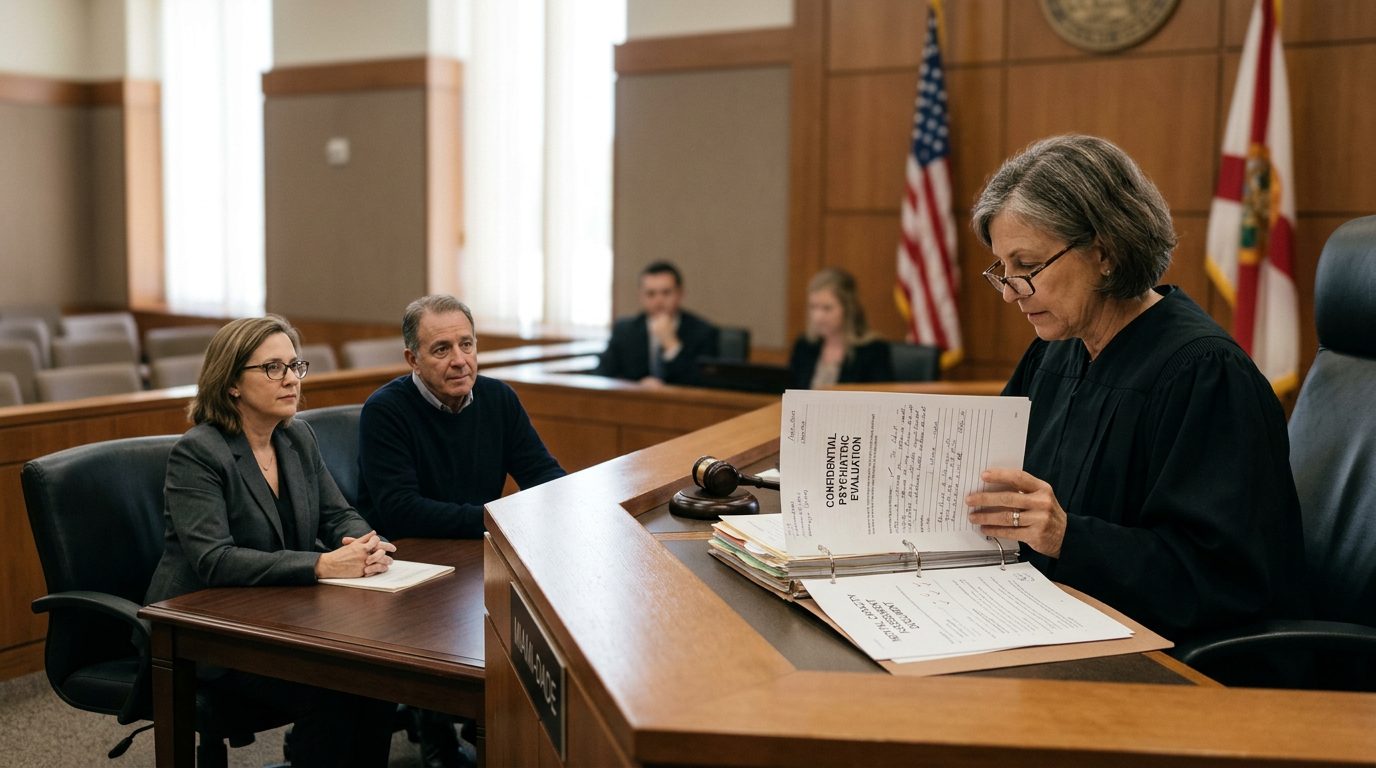
Mental Health Guardianship | Miami-Dade
Mental Health Guardianship Help for Miami-Dade Families
Robinson Casey is a Florida law firm that limits its practice to Marchman Act petitions and guardianship matters, serving families across South Florida and statewide.
By Richard J. Casey III, Esq. · Published October 09, 2026
Mental health guardianship is a court case where a Florida judge decides whether an adult needs a guardian for certain decisions. If you’re looking for a mental health guardianship law firm in Miami Dade, this page explains how the process works and what to expect. Robinson Casey limits its practice to guardianship and Marchman Act matters for families in South Florida and across the state.
What Mental Health Guardianship Is and Who It Is For
Florida law provides that the guardian of an incapacitated person is a fiduciary and may exercise only those rights that have been removed from the ward and delegated to the guardian, and must act within the scope of the authority granted by the court. The case can start with a petition to determine incapacity and may also include a request to appoint a guardian. The court makes both decisions, not the family.
Under Fla. Stat. § 744.3201, an adult may sign the petition. The petition must be verified, meaning signed under oath. It must describe the facts behind the petitioner’s belief and name people who saw those facts firsthand.
Families often ask about guardianship after a relative with a serious mental health condition refuses care, cannot handle money, or may be at risk of harm. Guardianship is not the only tool. A guardian advocate, a durable power of attorney, or an advance directive may fit some families better. The petition must explain why those alternatives are not enough, under Fla. Stat. § 744.334.
Adult relatives and other interested people can bring these petitions. Filing does not mean a guardian will be appointed.

Not sure what your next step is?
Talk it through with our team — the first consultation is free, confidential, and carries no obligation.
Guardianship Matters Robinson Casey Handles
Robinson Casey limits its practice to guardianship and Marchman Act matters. The firm serves families in Miami Dade and South Florida, and across the state where the court has jurisdiction.
- Plenary guardianship: The guardian may exercise the rights the court removes from the ward and delegates to the guardian. The court’s letters must say whether the guardianship is plenary or limited, under Fla. Stat. § 744.345.
- Limited guardianship: The letters list the guardian’s specific powers and duties. Anything not listed stays with the ward.
- Emergency temporary guardianship: A short-term appointment made before the full case is decided. The court must find imminent danger to the person’s health or safety, or danger to property, under Fla. Stat. § 744.3031.
- Mental health guardianship: A guardianship where the incapacity comes from a mental health condition. The medical evaluation plays a central role.
- Marchman Act and involuntary commitment for addiction: These involuntary treatment petitions for substance abuse impaired persons are filed with the clerk of the court in the county where the person is located. The statute’s criteria include a good-faith reason to believe the person is substance abuse impaired.
Some matters may be better handled by another lawyer or firm. If that is the case, we will tell you.
What the Firm’s Guardianship Representation Covers
Representation covers the petition, notice, evaluation steps, hearing, and duties after an appointment.
- Petition preparation: The petition must state the person’s age, residence, next of kin, and the nature and value of the property involved. It must also say whether a willing and qualified guardian can be found.
- Notice: Notice must be served on the person, the person’s attorney, and identified next of kin, under Fla. Stat. § 744.331.
- Right to counsel: The court appoints an attorney for the alleged incapacitated person. The person keeps the right to counsel, under Fla. Stat. § 744.3215.
- Examining committee: Three members examine the person, and one must be a psychiatrist or other physician. Each member files a report within 15 days after appointment.
- Hearing representation: We help the petitioner prepare for the hearing and for testimony.
- After appointment: A guardian of the person must file an annual guardianship plan. The deadline is set by Fla. Stat. § 744.367.
How the Guardianship Process Works, Step by Step
The statute sets the main stages: petition, notice, examination, and hearing. Court calendars and case facts affect the rest of the schedule.
- Initial review: We look at the relative’s condition, medical history, and any existing documents, such as a power of attorney.
- Information gathering: We collect records, a list of next of kin, and a description of assets and income.
- Filing: We prepare and file the verified petition in the proper Florida circuit court. If the facts support it, we may also request an emergency temporary guardian.
- Appointment of the examining committee: The statute says the court must appoint the committee within 5 days after the petition is filed.
- Hearing: In J.C. v. State, the appellate court found that the trial court failed to follow the applicable statute by essentially functioning as the absent petitioner. In J.C. v. State, the appellate court found that the trial court failed to follow the applicable statute by essentially functioning as the absent petitioner.
- After appointment: Letters issue, and the guardian’s reporting duties begin.
For emergency requests, the statute requires 24 hours’ notice before the hearing, unless substantial harm would occur. An emergency temporary guardian’s authority ends 90 days after appointment or when a guardian is appointed, whichever comes first.
Have questions about what happened?
Ask our team directly. The first conversation is free, confidential, and there is no obligation to continue.
Why Families Work With Robinson Casey
Robinson Casey limits its practice to Marchman Act and guardianship matters. The firm serves families in Miami Dade, South Florida, and statewide.
- Clear scope: The firm separates guardianship from Marchman Act involuntary treatment. Each has different criteria and different people who may file.
- Plain explanations: You can ask us to explain each filing step in writing before the next one begins.
- Attorney identified: Robinson Casey is responsible for this page. Please ask us for the name of the attorney handling your matter.
- Client-centered process: We focus on the facts of your family’s situation, not on a standard template.
We do not share testimonials or past results on this page.
Common Questions About Mental Health Guardianship in Miami-Dade
Is guardianship the same as the Marchman Act?
Guardianship and the Marchman Act are different legal processes that address different situations, and families often ask how the two compare.
Will my relative lose all rights?
Florida law lists rights the court may remove and rights the person keeps.
Can I file without a lawyer?
Yes, any adult may sign the petition. A consultation can help you understand what the petition must include.
Does a guardian get paid?
A guardian or attorney may receive a reasonable fee, and the court reviews it under Fla. Stat. § 744.108.
Can a lawyer promise a result?
No. Results depend on the facts and the court’s decision. No lawyer can promise an outcome.

Talk With a Guardianship Attorney About Your Family’s Situation
If you’re a parent, spouse, or sibling worried about a loved one whose mental health condition affects their safety, decisions, or daily care, you don’t have to sort this out alone. In a consultation, we review the relative’s condition, existing documents, and which proceeding fits the facts. Contact Robinson Casey or call (561) 849-4700 to schedule a consultation.
Reading this page does not create an attorney-client relationship. The firm makes no promise about any outcome.
Want to know where you stand?
Tell us what happened and our team will walk you through the options available to you, at no cost.
How We Approach Guardianship and Marchman Act Matters
Focused Practice Areas
Robinson Casey limits its practice to Marchman Act petitions and guardianship matters, so our work centers on these proceedings for families across South Florida.
Family-Centered Guidance
We explain the options in plain language, including how guardianship and the Marchman Act differ, so you can understand the choices in front of your family.
Clear Communication
We keep you informed about each step of the process and answer your questions about what the court filings involve.
Statewide Reach
We represent families in Miami-Dade and throughout South Florida, and we serve clients in other parts of Florida as well.
Guardianship and the Marchman Act Are Different
These are separate legal processes that address different situations. Speak with an attorney about which approach may fit your family's circumstances before you file anything with the court.
Services Offered by Robinson Casey
Marchman Act Attorney
Representation for families involved in Marchman Act petitions seeking help for a loved one with substance use concerns.
Guardianship Attorney
Guidance on guardianship petitions for adults who need a court-appointed decision-maker.
Mental Health Guardianship
Support for families pursuing guardianship where mental health concerns affect a person's ability to make decisions.
Emergency Temporary Guardianship
Help with requests for temporary guardianship when a situation calls for immediate court involvement.
Plenary and Limited Guardianship
Assistance with both full (plenary) and limited guardianship, so the court's order matches the person's actual needs.
Involuntary Commitment for Addiction
Guidance on involuntary commitment proceedings under the Marchman Act for individuals struggling with addiction.