
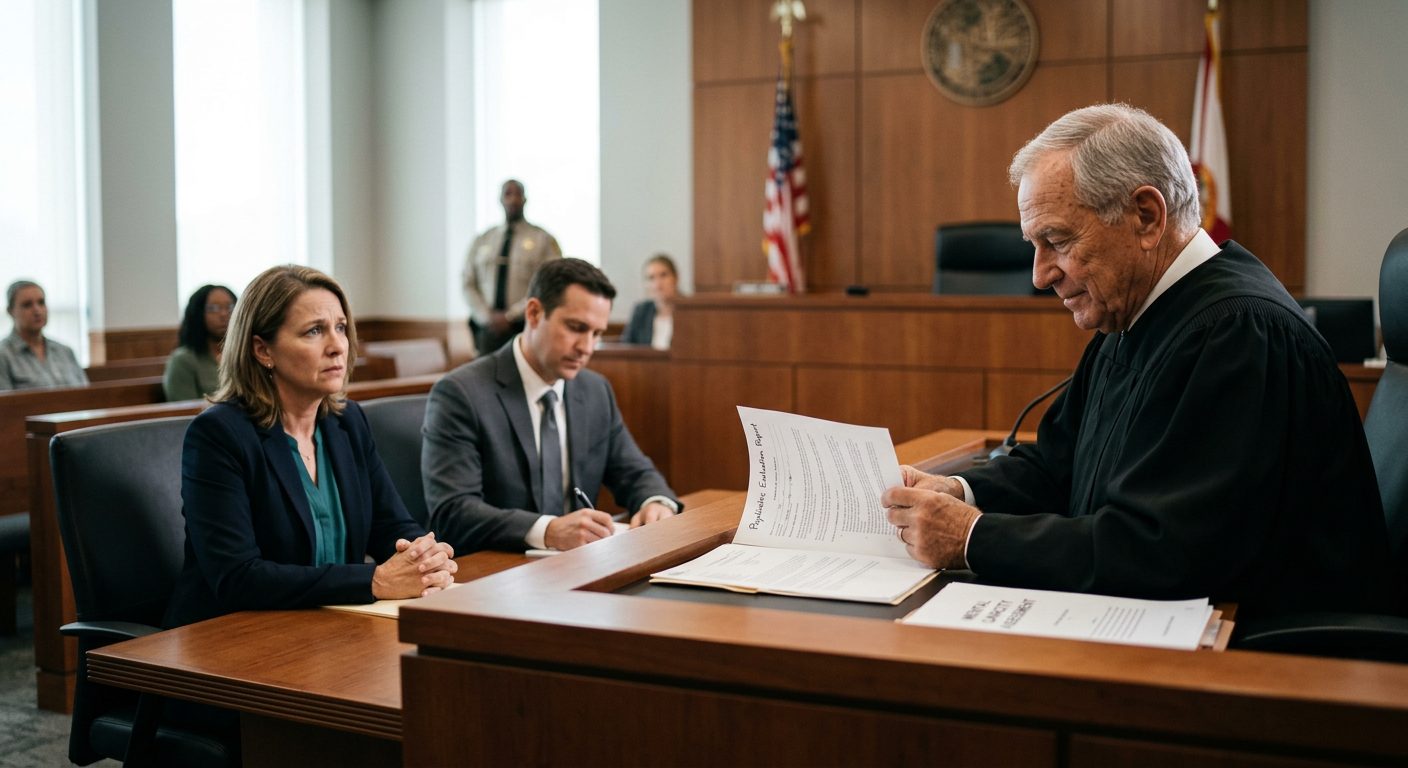
Mental Health Guardianship | Miami-Dade and South Florida
Clear guidance for families facing a mental health guardianship case
Robinson Casey limits its practice to Marchman Act petitions and guardianship matters, helping families across South Florida and throughout Florida.
By Richard J. Casey III, Esq. · Published October 09, 2026
Mental health guardianship in Florida is a court process in which a judge may appoint a guardian to make decisions for an adult found incapacitated. Robinson Casey limits its practice to Marchman Act and guardianship matters, serving families in Miami-Dade, South Florida, and across Florida. This guide covers the options, the court steps, timing, costs, and the questions families ask most before they file.
What Mental Health Guardianship Is and Who It Is For
A mental health guardianship is a court order that gives a named person legal authority over an adult the court has found incapacitated. Florida defines an incapacitated person as someone a judge has determined lacks the capacity to manage some property or meet some essential health and safety needs (§ 744.102).
The court makes the appointment, not the family. A mental health condition alone does not settle the case. The petition must show specific facts about what the person cannot do safely on their own.
A petition must also explain why alternatives are not enough. Those alternatives include a durable power of attorney or an advance directive (§ 744.334). If the person can still sign documents, those tools may matter first.
Petitions are signed by an adult. Family members such as adult children, spouses, and siblings are often among those who begin looking into the process, since they are familiar with the person’s day-to-day situation.

Not sure what your next step is?
Talk it through with our team — the first consultation is free, confidential, and carries no obligation.
Guardianship Options the Firm Handles
Florida separates guardianships by how much authority the court gives the guardian. The court sets the limits in each order.
- Emergency temporary guardianship. A court may appoint one after a petition to determine incapacity is filed. The court must find imminent danger to the person’s health or safety, or danger to property (§ 744.3031). Whether the court grants this relief is up to the court.
- Plenary guardianship. A plenary guardian holds all delegable legal rights and powers of the person. The court uses this option when the person lacks capacity for all tasks needed to care for their person or property (§ 744.102).
- Limited guardianship. A limited guardian holds only the powers the court names. The court uses this option when the person lacks capacity for some tasks but not all (§ 744.102).
- Mental health guardianship. This covers guardianship where a mental health condition drives the petition. Some cases overlap with the Baker Act, which covers involuntary examination (§ 394.463), and with the Marchman Act, which covers substance use (§ 397.675).
Robinson Casey’s practice areas are Marchman Act petitions, guardianship, emergency temporary guardianship, plenary and limited guardianship, mental health guardianship, and involuntary commitment for addiction.
How the Guardianship Process Works, Step by Step
A Florida guardianship case usually moves through a verified petition, notice, an examining committee, and a hearing. The steps below walk through the general sequence families often encounter.
- Consultation and fact gathering. You share details about your family member’s condition, daily needs, medical history, existing documents, and next-of-kin contacts.
- Verified petition. The petition must be verified. It must include facts behind the belief that the person is incapacitated, plus names of people with personal knowledge (§ 744.3201).
- Notice. Notice must be served on the person and read to them. It goes to their attorney and to next of kin named in the petition (§ 744.331).
- Examining committee. The statute says the court appoints three members within 5 days after the petition is filed. One must be a psychiatrist or other physician. Each member files a report within 15 days after appointment (§ 744.331).
- Hearing and order. The court decides whether the person is incapacitated. It also decides which rights, if any, the guardian receives. The outcome rests with the court.
- After appointment. The statute requires an initial guardianship report within 60 days after letters are signed (§ 744.362). Annual reports follow (§ 744.367).
What to Expect on Timing and Cost
Some steps carry statutory deadlines, such as the examining committee timing listed above. Other stages depend on the court’s calendar, how evaluations get scheduled, and when notice is complete. No schedule can be promised in advance.
Costs usually fall into several groups:
- Attorney fees and costs. Florida law allows a reasonable fee and reimbursement of costs for an attorney who served the ward. Fee petitions must include an itemized description of services (§ 744.108).
- Guardian fees for the guardian’s own services, which the court reviews.
- Court and evaluation costs, including filing, service, and examination expenses.
- Bond, if the court requires one before a guardian of property acts (§ 744.3031).
- Accounting and report preparation after appointment.
When fees are reviewed, the court decides what is reasonable. The court may direct payment from the guardianship estate (§ 744.108). Ask for a written explanation of every cost at your consultation.
Have questions about what happened?
Ask our team directly. The first conversation is free, confidential, and there is no obligation to continue.
Why Work With Robinson Casey
Robinson Casey limits its practice to Marchman Act and guardianship matters. The firm serves families in Miami-Dade, South Florida, and across Florida.
- Narrow focus. The firm’s work centers on the areas covered on this page, so its explanations stay tied to those subjects.
- Florida law. The firm practices Florida law and handles Florida circuit court petitions.
- Written steps. You get a plain-language outline of the statutory steps that apply to your facts.
- Clear costs. Fee questions get written answers before you commit to anything.
Robinson Casey is responsible for the content of this page.
Common Questions and Concerns About Mental Health Guardianship
Most families ask about ending a guardianship, using a lawyer, and objections. The answers below are general information and do not predict any result.
Can a guardianship be ended or changed later?
Yes. Any interested person, including the ward, may file a suggestion of capacity. The court must give it priority (§ 744.464).
Does the person get a lawyer?
Yes in emergency temporary cases, where the court must appoint counsel (§ 744.3031). A Florida appellate court has held that a Marchman Act respondent has a constitutional right to counsel (Hillsborough County v. Albrechta). Having a lawyer does not decide the outcome.
What if my loved one objects to the petition?
The person must receive notice and be represented by an attorney. The court weighs the evidence, including the examining committee reports, before it decides.
Can a guardian place my family member in a facility?
Not without first getting specific authority from the court (§ 744.3215).
Which rights does the person keep?
The statute lists rights a person under guardianship keeps. These include annual review, humane treatment, counsel, and visitors (§ 744.3215).
Can a power of attorney work instead?
Possibly, if the person can still sign. A petition must explain why alternatives are insufficient (§ 744.334).
Talk With a Florida Guardianship Attorney About Your Family’s Situation
If a family member’s mental health is putting their safety or money at risk, a court-appointed guardian may be an option to review. Robinson Casey can walk through your facts, the statutory steps, and the questions a court is likely to ask. No one can predict how a judge will rule, so the consultation focuses on your facts and options.
Call (561) 849-4700 or request a consultation to talk through your family’s situation. If your matter may be referred to another lawyer or firm, you will be told before you decide.
Want to know where you stand?
Tell us what happened and our team will walk you through the options available to you, at no cost.
Why families turn to Robinson Casey
Focused practice
Robinson Casey limits its practice to Marchman Act petitions and guardianship matters, so our attention stays on these proceedings.
Families across South Florida
We represent families in Miami-Dade and throughout South Florida, and we take matters statewide.
Plain-language answers
We explain each step, the options available and what the court may ask of your family.
Every case is different
Court decisions depend on the facts of each case and the court's discretion. No lawyer can promise a particular result, and past matters do not predict how a new case will turn out.
Matters we handle
Mental health guardianship
Guardianship proceedings where the person's ability to make decisions is affected by a mental health condition.
Emergency temporary guardianship
Requests for short-term court protection when a person may face serious harm while a longer proceeding is pending.
Plenary and limited guardianship
Guardianship options that differ in how much decision-making authority the court transfers to a guardian.
Marchman Act and involuntary commitment
Petitions under the Florida Marchman Act for individuals whose substance use may require court-ordered assessment or treatment.
Talk with Robinson Casey about your family's situation
Related practice areas
- Marchman Act Attorney | Florida Involuntary Commitment for Addiction
- Guardianship Attorney in Florida | Robinson & Casey