
Marchman Act & Guardianship | Miami-Dade & South Florida
Helping Families Take the Next Step When a Loved One Needs Help
Robinson Casey focuses exclusively on Marchman Act petitions and guardianship matters for families across South Florida and statewide. Get clear answers about your options in a free, confidential first consultation.
By Richard J. Casey III, Esq. · Published October 17, 2026
Usually not on your own. Can you force someone to go to rehab in Florida? A judge can order involuntary assessment and treatment for substance use, but only through a court case under the Marchman Act. This page explains how that process works for families in Miami-Dade, South Florida, and across the state.
Can You Force Someone to Go to Rehab? Only Through a Court
When the court finds that the conditions for involuntary treatment services have been proved by clear and convincing evidence, it may order the respondent to receive involuntary treatment services for a period not to exceed 90 days. This is set out in Florida Statutes section 397.697. Under this law, a family member can ask a judge to step in. The family cannot make that decision alone.
Many families ask this question after a frightening event, like a dangerous overdose or a crash after drinking. Those moments feel urgent. The court process still follows the same steps, whatever the situation.
Persuasion, pressure, and physical removal are not court orders. Acting without legal authority can create legal and safety problems for everyone involved, including the person you are trying to help.
Set your expectations early. A court process is formal, it takes time, and a judge decides the outcome, not the family. Each step follows rules set by statute, so the details matter in every case.
If a loved one's drinking or drug use has you feeling stuck, our team can talk through the facts of your situation with you. Talk it through with our team — the first consultation is free, confidential, and carries no obligation.
Why Forcing Someone Into Treatment Is a Legal Question
A family’s wishes alone do not authorize treatment for an adult. Florida law protects the rights of people who receive substance abuse services. It says an individual “may not be deprived of any constitutional right” under Fla. Stat. § 397.501.
The law also draws a line around refusal. Under Fla. Stat. § 397.675, a refusal to get services does not, by itself, prove that the person lacks judgment about needing them. A person saying “no” is not enough for a court to act.
You may be right that your loved one needs treatment. The court still needs facts that meet the statute before it can act.
Ultimatums, locked doors, and moving someone without legal authority can backfire. They can create legal and safety problems for you and for them. A legal route is slower, but it is the route the law provides.
What the Marchman Act Is and What It Allows
The courts have jurisdiction of involuntary treatment petitions for substance abuse impaired persons, and such petitions must be filed with the clerk of the court in the county where the person is located. See Florida Statutes section 397.681. The law sets out who may enter the process and what must be shown first.
A Marchman Act petition requires a good-faith reason to believe the person has a substance use disorder, or a substance use disorder together with a co-occurring mental health disorder. Because of that condition, the person must have lost the power of self-control with respect to substance use.
The statute then requires more. The person must be unable to appreciate their need for services and make a rational decision about them. Or, without care, they must be likely to neglect themselves in a way that poses a real and present threat of substantial harm. Or they must have inflicted, threatened, or attempted physical harm on themselves or someone else.
The Act’s goal favors the least restrictive option. Fla. Stat. § 397.305 says services should be delivered “in the most appropriate and least restrictive environment which promotes long-term recovery while protecting and respecting the rights of individuals.”
A judge may also order law-enforcement transport to an appropriate facility, according to the Lake County Clerk of Court. The Act’s steps and standards are specific, which is why the details matter in each case.
Who Can File a Petition and What It Must Describe
For an adult, a spouse, legal guardian, relative, service provider, or certain adults with direct knowledge can file a petition. Under Fla. Stat. § 397.68112, an adult who has direct personal knowledge of the person’s substance abuse impairment and prior treatment history may file.
The petition must name the person and the petitioner. It must state their relationship and the attorney’s name if known. It also needs the facts behind the request, under Fla. Stat. § 397.68141. Those facts explain why you believe the person is impaired and has lost self-control.
A petition may include a report from a qualified professional who examined the person within 30 days before filing. If the person was not assessed or refused an evaluation, the petition must say so.
Location matters. The petition is filed with the clerk in the county where the person is located, and the clerk may not charge a filing fee, under Fla. Stat. § 397.681. In J.P. v. J.N., the Fifth District held that filing in the wrong county did not take away the circuit court’s jurisdiction.
Start writing things down now. Record dated, specific observations: what happened, when it happened, and who saw it. These facts shape what a court reviews.
What Happens After a Petition Is Filed
After filing, the court decides whether an attorney is needed and sets a hearing, and a judge makes the final decision. The court must first decide whether the person has an attorney or should be given one. Under Fla. Stat. § 397.68151, the court then schedules a hearing within 10 court working days unless a continuance is granted. A copy of the petition and notice goes to the person.
The person has the right to a lawyer. In Hillsborough County v. Albrechta, the Second District held that a person has a constitutional right to counsel in Marchman Act proceedings.
Court-ordered treatment also requires a clinical assessment first. Under Fla. Stat. § 397.6957, a person may not be ordered into treatment without an assessment unless they are present in court and expressly waive it. The judge hears relevant evidence, including testimony from family members about the person’s history.
In an emergency, the court can act faster. Under Fla. Stat. § 397.6818, the court may rely on the petition and enter an ex parte order for assessment and stabilization. In D.H. v. K.J.R., the Second District held that such an order was error when the petition did not give a good-faith reason to believe the statutory criteria were met.
Who carries the proof also matters. In the J.C. v. State opinion, the court stated that it failed to follow the applicable statute by essentially functioning as the absent petitioner. The Fourth District reached a different result in J.J.J. v. D.G. and certified a conflict.
Court-Ordered Treatment Compared With Voluntary Treatment
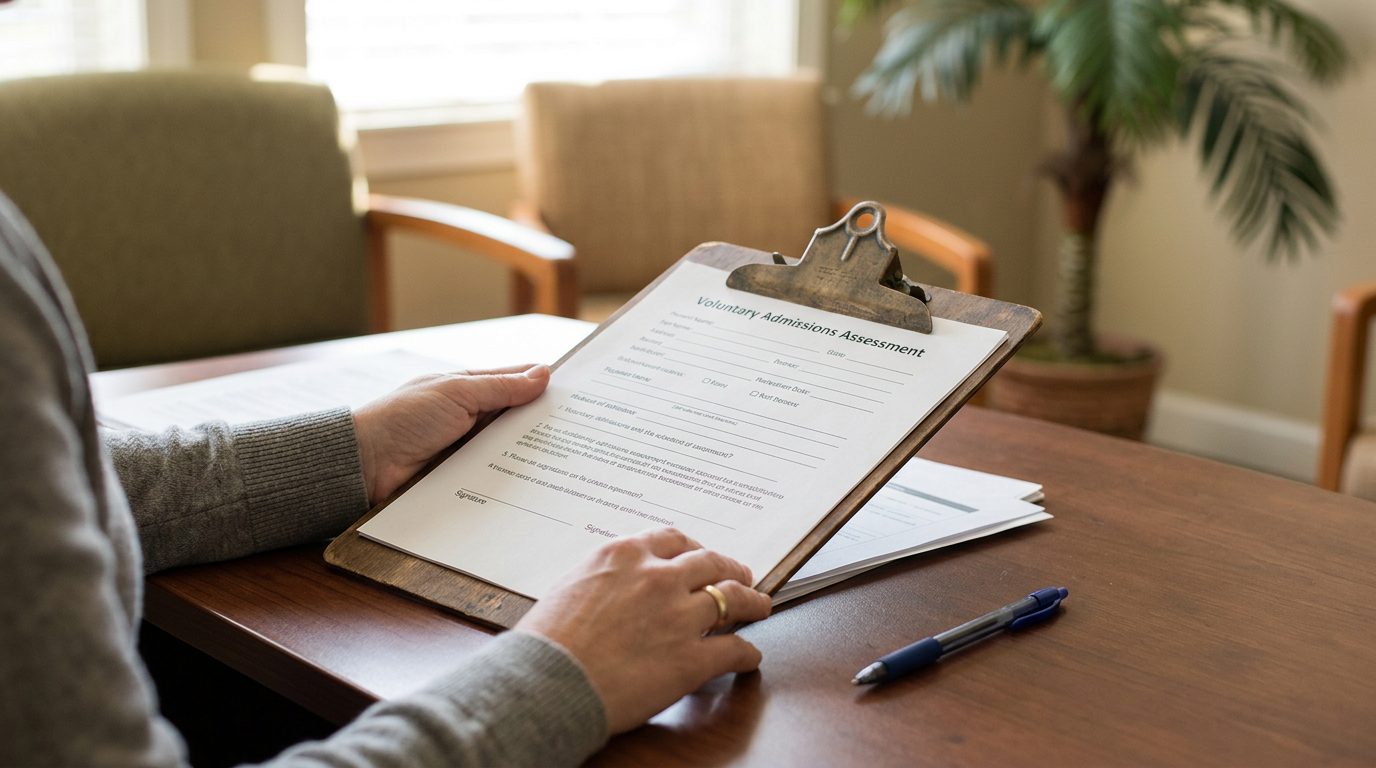
Voluntary admission means the person chooses treatment, and court-ordered treatment means a judge directs it. A person who wants to enter treatment may apply to a service provider for voluntary admission. No court order is involved in that path.
A court order is different. When the court finds the conditions proved by clear and convincing evidence, it may order involuntary treatment services for a period not to exceed 90 days. Renewal may be requested before that period ends, under Fla. Stat. § 397.697.
The court keeps jurisdiction after an order. It can monitor compliance with treatment, change the treatment setting, or address violations of its orders. The judge, not the family, makes those decisions.
Keep in mind that the statute favors the least restrictive setting that fits the person’s needs. Court-ordered treatment is an option the law allows when its conditions are met. Each case turns on its own record.
Not sure what your next step is?
Talk it through with our team — the first consultation is free, confidential, and carries no obligation.
When Mental Health or Guardianship Issues Overlap
Some cases involve both a substance use disorder and a co-occurring mental health disorder, and the statute covers both. The criteria in Fla. Stat. § 397.675 expressly include a co-occurring mental health disorder. The Legislature also states its intent to serve individuals with co-occurring substance abuse and mental disorders.
Other situations involve a person who cannot manage their own affairs. Those matters can follow a different legal path, such as guardianship. Robinson Casey limits its practice to Marchman Act petitions and guardianship matters. Related areas include mental health guardianship, emergency temporary guardianship, plenary and limited guardianship, and involuntary commitment for addiction.
Which path fits depends on the facts of the case. A lawyer can review your loved one’s history, diagnoses, and daily functioning before you choose a direction. You can read more on our Marchman Act attorney page.
Questions Families Ask First
Can you put a family member in rehab?
Not without legal authority. For substance use cases in Florida, the court route starts with a petition filed by someone the statute names.
Can I force my adult son into rehab?
His status as an adult matters. The Marchman Act is the court route in Florida, and a judge reviews the petition and evidence before ordering any treatment.
What if someone doesn’t want to go to rehab?
Refusal alone is not evidence that the person lacks judgment about needing care. A judge looks at the full set of facts before any order issues.
Can you force someone to enter rehab without a court?
Acting without a court order can create legal and safety problems for everyone involved.
Talking With a Florida Lawyer Before You Decide
You did not choose this situation, and waiting or guessing can feel impossible. Many families feel stuck between worry for their loved one and uncertainty about what the law allows.
Richard J. Casey III, Esq. is the responsible lawyer for this page. Robinson Casey offers a free first consultation, which is confidential and carries no obligation to continue. Call (561) 849-4149 or reach out through the contact page to talk through the facts of your loved one’s situation.
Why Families Bring Their Questions to Robinson Casey
Clear Explanations
We walk you through each court step in plain language, so you understand what is being requested and why.
Compassionate Approach
Families facing addiction or mental health crises are under enormous strain. We approach every matter with patience and respect.
Confidential Consultation
Your first consultation is free, confidential, and carries no obligation to continue.
Important: Involuntary Treatment Requires a Court Process
A family member cannot simply send someone to rehab against their will. Acting early and understanding the process can make a real difference.
Matters We Handle
Marchman Act Petitions
Petitions asking the court to order assessment and treatment for a loved one struggling with substance use.
Involuntary Commitment for Addiction
Guidance on the court process for involuntary commitment when substance use puts a person and their family at risk.
Guardianship Matters
Emergency temporary, plenary, and limited guardianship, plus mental health guardianship, for families who need court-supervised decision-making support.
Emergency Temporary Guardianship
Urgent court requests for short-term protection when a person cannot safely manage their own affairs and time is critical.