
Marchman Act Petitions | Miami-Dade & South Florida
Help for a Homeless Adult Child Under the Marchman Act
Robinson Casey focuses on Marchman Act petitions and guardianship matters for families across South Florida and statewide. Responsible attorney: Richard J. Casey III, Esq. Your first consultation is free, confidential, and carries no obligation to continue.
By Richard J. Casey III, Esq. · Published November 3, 2026
Can a Marchman Act petition help if my adult son is homeless and still using drugs?
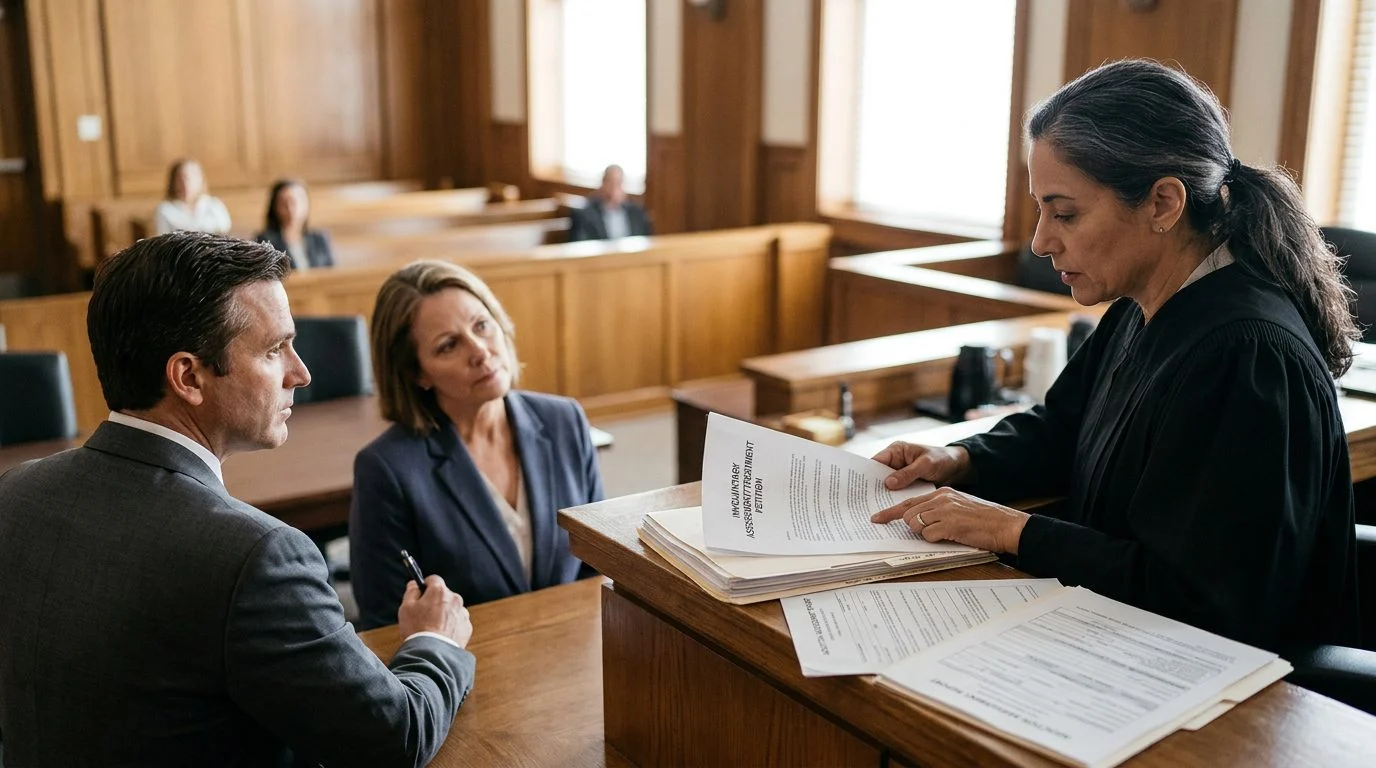
Yes. A Marchman Act petition is one legal path a Florida parent can consider. It asks a court to order an assessment and, if the legal criteria are met, involuntary treatment for an adult who is substance abuse impaired.
You may have spent years on treatment, interventions and firm boundaries. Then came an overdose, a hospital stay, an arrest, or a night when he simply vanished. Now the fear keeps you awake.
You worry he will overdose and die. You worry he will be jailed or end up living on the street. You may also feel that nothing will ever work.
This guide explains the Marchman Act in plain terms. It covers who can file, what the court looks at, and what happens after a petition is filed. Each case turns on its own facts, so treat this as a starting point.
If your son is homeless and still using, you don't have to work out the Marchman Act options alone. We can talk through your situation with you. Talk it through with our team — the first consultation is free, confidential, and carries no obligation.

What is a Marchman Act petition, in plain terms?
A Marchman Act petition is the written request that asks a Florida court to order help for someone with a substance use problem. The law sits in Chapter 397 of the Florida Statutes.
The Florida DCF’s Marchman Act overview says the law allows voluntary admission and involuntary assessment, stabilization and treatment for adults and youth severely impaired by substance abuse.
The person who files is the petitioner. Your adult son would be the respondent. The petition goes to the clerk in the county where he is physically located when it is filed. Under § 397.681, a Marchman Act petition must be filed with the clerk of the court in the county where the person is located. Under J.P. v. J.N., filing the petition in the wrong county did not divest the circuit court in Putnam County of jurisdiction (J.P. v. J.N. venue ruling).
The clerk may not charge a fee to file the petition under Fla. Stat. § 397.681. The process is supervised by a judge. Your son has the right to counsel at every stage of a judicial proceeding on the petition, and he may waive that right only if he is present and the court finds the waiver is made knowingly, intelligently, and voluntarily.
Can a parent file a Marchman Act petition for an adult child?
Yes.
The petition must name your son and you. It must state your relationship and the facts behind it. Those facts must show why you believe he is impaired and has lost self-control. They must also show why he has harmed himself or others, or is likely to, or why his refusal of care reflects impaired judgment (Fla. Stat. § 397.68141).
A certificate or report from a qualified professional who examined him within 30 days before the petition was filed can go with the petition. If he was never assessed or refused one, the petition must say so.
A common mistake is describing years of trouble in general terms. Dates, places and specific events give the court something to weigh.
What does the court look at before ordering treatment?
The petition must state the reason you believe your son is substance abuse impaired. It also looks for proof that he has lost the power of self-control about substance use (Fla. Stat. § 397.675).
The law requires good faith reason to believe that the person is substance abuse impaired, or has a substance use disorder and a co-occurring mental health disorder, and that, because of this, he has lost the power of self-control with respect to substance abuse and also meets one of the further conditions listed in Fla. Stat. § 397.675. Either his judgment is so impaired that he cannot see his need for help and decide about it. Or, without care, he is likely to neglect himself in a way that poses a real threat of substantial harm. Fla. Stat. § 397.675 reads: “(b) Without care or treatment, is likely to suffer from neglect or refuse to care for himself or herself; that such neglect or refusal poses a real and present threat of substantial harm to his or her well-being; and that it is not apparent that such harm may be avoided through the help of willing, able, and responsible family members or friends or the provision of other services, or there is substantial likelihood that the person has inflicted, or threatened to or attempted to inflict, or, unless admitted, is likely to inflict, physical harm on himself, herself, or another.” It must also appear that willing family members or other services could not prevent that harm. Fla. Stat. § 397.675 reads: “(b) Without care or treatment, is likely to suffer from neglect or refuse to care for himself or herself; that such neglect or refusal poses a real and present threat of substantial harm to his or her well-being; and that it is not apparent that such harm may be avoided through the help of willing, able, and responsible family members or friends or the provision of other services, or there is substantial likelihood that the person has inflicted, or threatened to or attempted to inflict, or, unless admitted, is likely to inflict, physical harm on himself, herself, or another.” A third route is a substantial likelihood that he has hurt, threatened or tried to hurt himself or someone else.
Refusing help alone is not enough. The statute says mere refusal to receive services is not evidence of lack of judgment about his need for those services. Fla. Stat. § 397.675 reads: “(b) Without care or treatment, is likely to suffer from neglect or refuse to care for himself or herself; that such neglect or refusal poses a real and present threat of substantial harm to his or her well-being; and that it is not apparent that such harm may be avoided through the help of willing, able, and responsible family members or friends or the provision of other services, or there is substantial likelihood that the person has inflicted, or threatened to or attempted to inflict, or, unless admitted, is likely to inflict, physical harm on himself, herself, or another.”
Facts that often matter include dated overdoses, emergency or hospital visits, arrests, and whether he has stable housing. The judge decides on the evidence presented.
Before ordering treatment, the court must find the conditions proved by clear and convincing evidence (Fla. Stat. § 397.697).
What happens after you file: assessment, hearing and possible orders?
After filing, the court must decide right away whether your son has a lawyer or needs one appointed. It must set a hearing within 10 court working days unless a continuance is granted (Fla. Stat. § 397.68151).
A provider generally may not hold him for more than 72 hours of observation, subject to listed exceptions (Fla. Stat. § 397.6818).
Family members can testify. Testimony is taken under oath.
If the respondent does not appear at the hearing for any reason, including lack of service, the court may issue or reissue an ex parte assessment and stabilization order that is valid for 90 days, when it reasonably believes the commitment criteria and a substance abuse emergency exist. The automatic discharge rule applies at the conclusion of the 90-day period of court-ordered involuntary services, not to the 90-day assessment and stabilization order, and your adult child is automatically discharged unless a motion for renewal of the involuntary services order has been filed with the court (Fla. Stat. § 397.6977).
How is a Marchman Act different from guardianship?
A Marchman Act case is about substance use treatment. A guardianship case is a separate court proceeding about incapacity.
Emergency temporary guardianship is a narrower tool. A court may appoint an emergency temporary guardian only after a petition for determination of incapacity is filed. The court must specifically find that there appears to be imminent danger that the physical or mental health or safety of the person will be seriously impaired, or that property is in danger of being wasted, misappropriated, or lost, unless immediate action is taken (Fla. Stat. § 744.3031).
The alleged incapacitated person and their attorney get at least 24 hours’ notice before that hearing. The exception applies only if the petitioner demonstrates that substantial harm to him would occur if the 24-hour notice is given. The authority lasts 90 days from appointment or until a guardian is appointed, whichever comes first, and it can be extended for 90 more days upon a showing that the emergency conditions still exist.
Which tool fits your son depends on the facts.
Not sure what your next step is?
Talk it through with our team — the first consultation is free, confidential, and carries no obligation.

What should you gather before a first conversation?
Start a written timeline. List dates and details of overdoses, emergency room or hospital visits, arrests, prior treatment programs, and places he has stayed. Write down who saw each event.
Add any assessment reports, discharge papers or medical records you already have. Note what you have tried and when. A clear timeline helps you explain the situation quickly, and it matches what a petition must state.
Can I file a Marchman Act petition for my adult son in Florida?
Yes.
Does my son have a right to a lawyer?
Yes.
How long can a treatment order last?
Once the conditions for involuntary treatment are proved by clear and convincing evidence, a court may order involuntary treatment for up to 90 days. A renewal may be requested before that period ends.
If you are weighing whether a Marchman Act petition fits your son’s situation, you don’t have to sort it out alone. Robinson Casey offers a free, confidential first consultation with no obligation to continue. Call (561) 849-4700 or request a consultation.
Responsible lawyer: Richard J. Casey III, Esq., Robinson Casey. The firm limits its practice to Marchman Act petitions and guardianship matters and serves families across South Florida and statewide.
How Our Firm Supports Your Family
Confidential First Conversation
Your free first consultation is confidential and carries no obligation to continue.
Built for Families
We work with parents, siblings, and other relatives who are worried about a loved one's safety, health, and housing.
Clear Explanations
We explain the petition process, the documents involved, and what to expect at each stage so you can make informed decisions.
Direct Access
Call (561) 849-4700 to talk through your situation with our team.
Don't Wait Until a Crisis to Ask Questions
Talking with a lawyer early gives your family more time to understand the options and plan next steps. Bring your concerns to us before a situation becomes an emergency.
Matters We Handle
Marchman Act Attorney
Petitions for involuntary assessment, stabilization, and treatment for an adult family member struggling with substance use or co-occurring mental health needs.
Involuntary Commitment for Addiction
Guidance on court-ordered treatment for an adult child whose substance use puts their health and safety at risk.
Emergency Temporary Guardianship
Help with urgent court requests when an incapacitated adult needs immediate protection and decisions must be made quickly.
Plenary and Limited Guardianship
Guardianship options that fit the level of support a vulnerable adult needs, from broad authority to narrowly defined powers.
Mental Health Guardianship
Court-supervised support for adults whose mental health condition affects their ability to manage their own care and affairs.