
Marchman Act · South Florida & Statewide
Who Can See Marchman Act Records in Florida?
Robinson Casey focuses on Marchman Act petitions and guardianship matters for families across South Florida and statewide. Richard J. Casey III, Esq. is responsible for this page. Get clear answers about confidentiality and access before you take the next step.
By Richard J. Casey III, Esq. · Published October 31, 2026
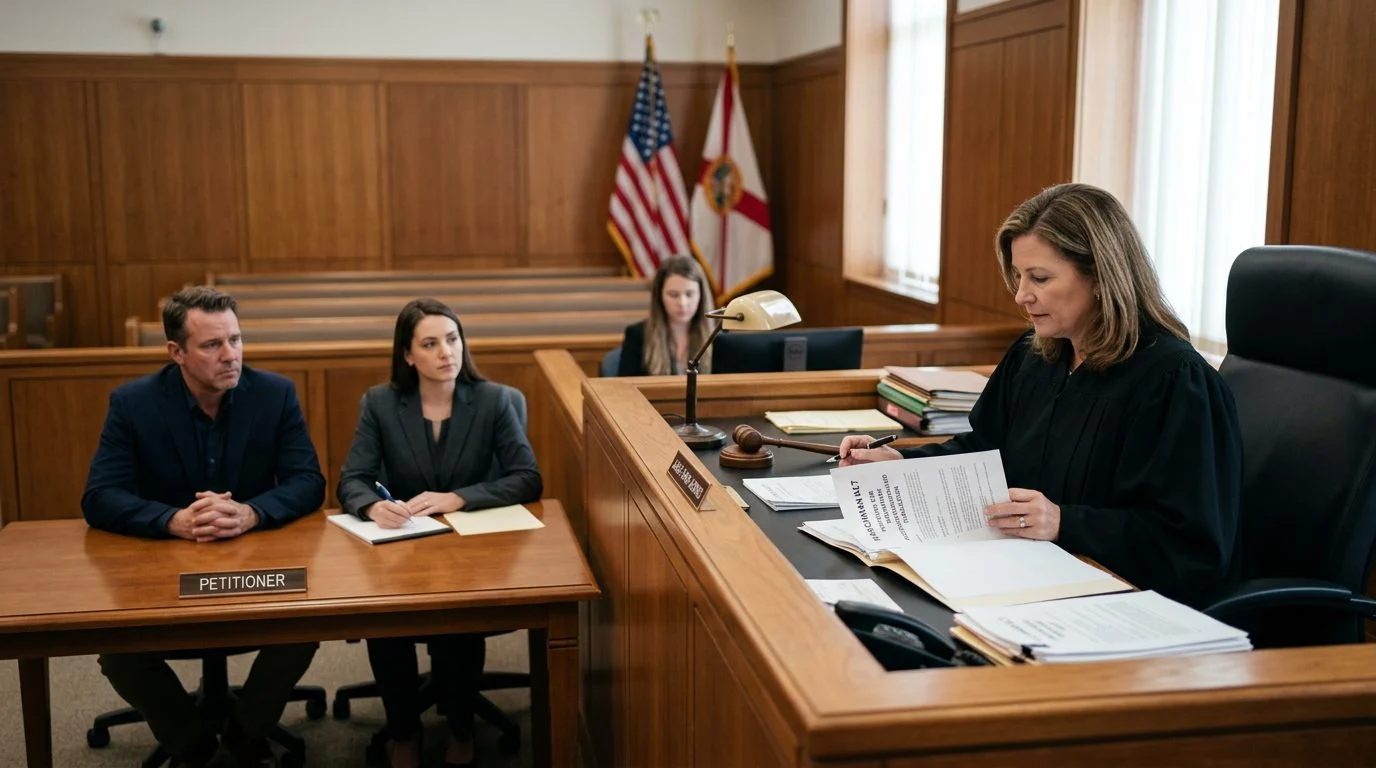
When families search “who can see marchman act records florida,” they usually want one clear answer. The short answer: the people the law names can see the court file, including the petitioner, the respondent, and their attorneys. The general public cannot get these records on request. Clinical treatment records follow separate rules.
Worry about who will read a court file is common when a spouse’s addiction or mental illness has shaken the home. Many spouses lie awake wondering what the children will learn and whether the family name will follow everyone for years.
Your Family’s Privacy Worry Is a Real One
Fear about privacy makes sense when a spouse’s drinking, drug use, or mental health crisis has made home life unpredictable. You may be asking whether a court case will stay in the file or follow your family.
The Marchman Act is Florida’s law for court-ordered help with substance abuse impairment. Under Fla. Stat. § 397.6760, petitions for involuntary assessment and stabilization, court orders, and related records filed with or by a court under this part are confidential and exempt from public records disclosure. Robinson Casey limits its practice to Marchman Act petitions and guardianship matters. Families across South Florida and statewide can reach the firm with these questions.
For the full process, from petition to hearing, read our Marchman Act guide. This page stays on one question: who can see the file, and what stays private?
Not sure what your next step is?
Talk it through with our team — the first consultation is free, confidential, and carries no obligation.

Who Can See a Marchman Act File in Florida?
The people the law names can see a Marchman Act file. Florida law makes petitions, court orders, and related records confidential. They are not open to the general public.
The clerk may release these records on request to a short list of people. The list includes the petitioner and the petitioner’s attorney. It also includes the respondent and the respondent’s attorney. The Florida court records statute also names the respondent’s guardian, treating health care practitioner, and health care surrogate. For a minor respondent, a parent, guardian, or legal custodian may also receive them. The Department of Children and Families may receive them without charge, and so may the Department of Corrections if the respondent is committed or is to be returned to its custody from the Department of Children and Families.
Someone outside that list can still gain access. A court may authorize it by order for good cause. The judge must weigh that person’s need for the information against possible harm to the respondent.
Court file access and treatment chart access are separate questions. The next sections explain the difference.
What the County Clerk Keeps and What the Public Can Request
The clerk of court keeps the court file, and the public cannot request a confidential Marchman Act file. A petition must be filed with the clerk in the county where the person is located. The clerk may not charge a fee to file it, according to Fla. Stat. § 397.681.
Clerks also publish guidance on how these cases are routed. The Miami-Dade Clerk’s mental health court page directs adults to Probate Court and minors to Juvenile Court.
Florida’s general rule starts from public access to court records. The Florida judicial records rule also says information a statute makes confidential must stay confidential. That includes substance abuse service records.
Two practical points matter. A family member who wants to understand the file can call the clerk’s office with the case information and ask how the file is handled.
Clinical Treatment Records and Privacy in Treatment
Clinical treatment records have their own confidentiality rules. A provider generally may not release them without the patient’s consent or a qualifying court order. Federal law on substance use records makes these records confidential when they are kept by a substance use disorder program that is conducted, regulated, or directly or indirectly assisted by a federal department or agency. They may be disclosed only in the ways the statute expressly allows.
A court may authorize disclosure after an application shows good cause. The court must weigh the public interest and the need for disclosure against the injury to the patient, to the physician-patient relationship, and to the treatment services. Federal rules also bar using these records in any civil, criminal, administrative, or legislative proceeding against a patient, unless a court order or the patient’s consent allows it. See the federal confidentiality regulations.
The consent requirements list these elements.
Florida adds its own protection.
Knowing a treatment plan is not the same as having access to the clinical chart. A family’s own knowledge of the plan does not open the chart.
Will the Marchman Act Be on My Loved One’s Record?
A Marchman Act petition and order are court matters, and the court file is confidential. Treatment records have their own protections. The two are different records, and each follows its own rules.
Whether a Marchman Act matter appears anywhere else depends on the type of record and the facts of the case. Ask an attorney about your spouse’s specific concerns, such as employment or professional licensing. Raise those concerns before a petition is filed, not after.
Know what the process includes. Your spouse, if the respondent, has the right to counsel at every stage of the proceeding, unless the respondent waives it while present and the court finds the waiver knowing, intelligent, and voluntary. The court must appoint counsel if it believes the respondent needs or desires it, under § 397.681. At the hearing, testimony is taken under oath and the proceedings are recorded. The respondent may refuse to testify, under § 397.6957.
How the Marchman Act Differs From a Baker Act Record
The Baker Act covers involuntary mental health admission. The Marchman Act covers substance abuse impairment. Each law has its own statute. The Baker Act is in Chapter 394, and the Marchman Act is in Chapter 397.
The Baker Act has its own confidentiality rule. Petitions for voluntary and involuntary mental health admission, and related court records, are confidential and exempt from public records disclosure. The Baker Act court records statute lists the same people who may receive them on request as the Marchman Act does.
Do not assume the two laws follow identical rules. Each has its own petition, hearing, and record-keeping rules. A spouse with both a mental health and a substance use problem may face records under both laws. The facts of the case decide which law applies.
Not sure what your next step is?
Talk it through with our team — the first consultation is free, confidential, and carries no obligation.
Can You Check Whether Someone Was Baker Acted or Marchman Acted?
Most family members cannot look up these records just by asking, because the files are confidential. Only people on the statutory list receive them on request. The same closed list applies to Baker Act records.
A family member outside that list has practical options. You can call the clerk’s office and ask how the file is handled. If you are the petitioner or the respondent, or you have an attorney of record, that attorney can request the file under the statute.
A person outside the list may also ask a court for an order. The judge must weigh that person’s need against possible harm to the respondent. Our Marchman Act guide explains the broader process.
The Marchman Act and Law Enforcement
Law enforcement can be part of a Marchman Act case, most often when a person must be transported. Lake County’s clerk guidance notes that a judge may order law enforcement transport to an appropriate treatment facility. See the Lake County substance abuse guidance.
State law requires an officer to restrain the person in the least restrictive manner available and appropriate. That rule, which applies to a law enforcement officer transporting an individual under this chapter, appears in § 397.341.
Police reports are a separate record from the court file. Ask your attorney how a report fits into the case. For families dealing with a medical emergency, our overdose guide covers what comes next.
How Long a Marchman Act Case Lasts and What Happens to the Records
A court may order involuntary treatment for a period not to exceed 90 days. A renewal may be requested before that period ends, under § 397.697, if the conditions justifying involuntary treatment are expected to exist after 90 days. The court also keeps jurisdiction to enter further orders, including orders monitoring treatment compliance.
The confidentiality rule for these records covers documents filed before, on, or after July 1, 2017. Under § 397.6760, the exemption applies to all such documents. Confidentiality does not end when a hearing ends.
If a respondent misses a hearing, our missed hearing guide explains the next steps. For alcohol withdrawal concerns, see our alcohol withdrawal guide.

Talk Through Your Family’s Privacy Concerns With Robinson Casey
Robinson Casey limits its practice to Marchman Act petitions and guardianship matters. Our attorneys can talk through who may see a file in your family’s situation.
Can a spouse see a Marchman Act file?
A spouse who files the petition is the petitioner and may receive the records on request. The respondent and the respondent’s attorney may also receive them.
Is a Marchman Act case confidential in Florida?
Yes. Florida law makes these petitions, court orders, and related records confidential and exempt from public records disclosure.
Can the public get a Marchman Act file?
No, not on request. Only people on the statutory list receive them, or someone a judge authorizes for good cause.
Is substance abuse treatment information private?
Yes. Federal law limits disclosure of substance use disorder treatment records, and a written consent must meet specific requirements.
Living with a spouse’s addiction or mental illness can feel like carrying the whole load alone. Worry about what a court file could reveal makes that load heavier. If you want to talk through your children, your finances, and your spouse’s next steps, contact Robinson Casey or call (561) 849-4700. Your first consultation is free, confidential, and without obligation to continue.
Responsible attorney: Richard J. Casey III, Esq., Robinson Casey. Attorney advertising. Serving families across South Florida and statewide.
How Our Firm Can Help
Petition Support
Our lawyers focus on Marchman Act petitions, guiding families through the paperwork and the court process.
Confidentiality Questions
We explain how Florida treats these petitions, court orders, and related records, so you know what is protected.
Family Guardianship Matters
Our practice also covers guardianship matters, including emergency temporary, plenary, limited, and mental health guardianship.
Clear Communication
Our team keeps you informed and answers your questions in plain language at every stage.
Important Note
Access to Marchman Act records depends on the details of your case and on Florida law. Information on this page is general and is not a substitute for advice about your own situation.
Questions Families Often Ask
Who files the petition?
The person who files a Marchman Act petition is the petitioner. Our lawyers can explain what that role involves.
What does confidentiality cover?
Florida treats many Marchman Act petitions and court records as confidential. We review what applies to your matter.
What about the respondent's attorney?
Questions about the respondent's attorney and access to the file depend on the case. We can talk through your concerns.
When should I ask for help?
If you are unsure who can see a file, reach out early so we can review your situation before decisions are made.