
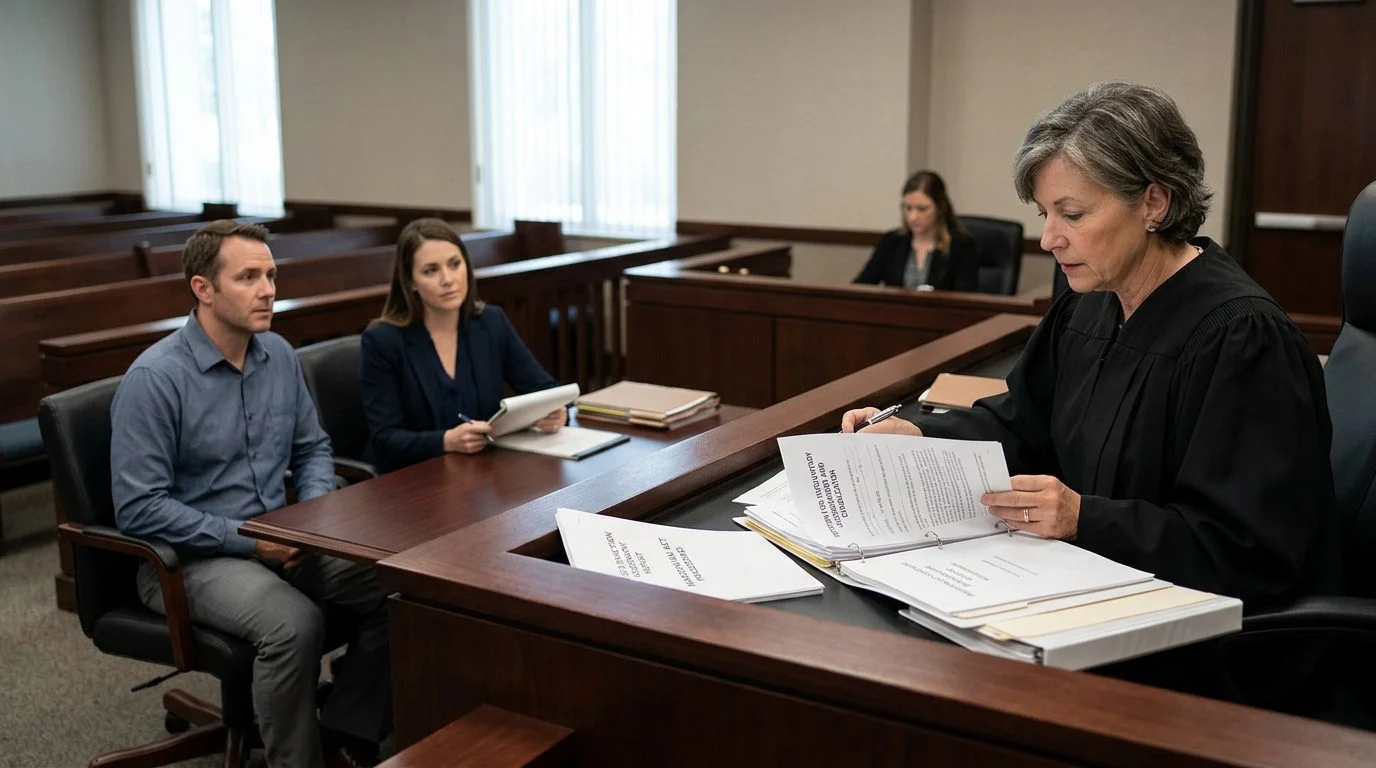
Marchman Act Attorney | Miami-Dade and South Florida
Help for families facing a Marchman Act petition over methamphetamine use
Robinson Casey focuses on Marchman Act petitions and guardianship matters for families across South Florida and throughout Florida. Talk with Richard J. Casey III, Esq. about your family's situation.
How we can help
Free
First consultation, confidential and without obligation
Statewide
Families in South Florida and across Florida
Marchman Act
Petitions and guardianship matters are our focus
By Richard J. Casey III, Esq. · Published October 29, 2026
Yes, Florida has a court process for this. The Marchman Act lets a family ask a judge to order an adult child into assessment and treatment for substance abuse impairment. This page explains how the Marchman Act meth Florida process works, who can file, and what it may cost.
When Methamphetamine Use Has Put Your Adult Child in Danger
If your adult child keeps using meth and each crisis is worse than the last, a court process may be worth understanding now.
You may have already paid for treatment. You may have tried interventions and held firm on boundaries. Still, an overdose, a relapse, a hospital stay, an arrest, or a disappearance keeps pulling you back in.
You likely want to know one thing first. Is there a legal way to get your child into treatment when they won’t go on their own?
There is. The Marchman Act is Florida’s law for court-ordered assessment and treatment of people impaired by substance use. This page covers what the law means for meth, how a petition works, the steps and timeline, what costs to expect, and the questions parents ask most. For the broader picture, see our Marchman Act attorney guide.

What the Marchman Act Covers for Methamphetamine Use
The Marchman Act covers substance abuse impairment, and methamphetamine is an illegal drug that falls within that scope. Flagler County Clerk of Court notes that the Act reaches illegal drugs, prescription drugs, and alcohol.
The statute sets the test. Under § 397.675, there must be a good faith reason to believe the person is substance abuse impaired or has a substance use disorder and a co-occurring mental health disorder. Because of that impairment, the person must have lost the power of self-control with respect to substance use.
Judgment matters too. The law says a refusal of services alone does not prove lack of judgment. Fla. Stat. § 397.675 reads: “(b) Without care or treatment, is likely to suffer from neglect or refuse to care for himself or herself; that such neglect or refusal poses a real and present threat of substantial harm to his or her well-being; and that it is not apparent that such harm may be avoided through the help of willing, able, and responsible family members or friends or the provision of other services, or there is substantial likelihood that the person has inflicted, or threatened to or attempted to inflict, or, unless admitted, is likely to inflict, physical harm on himself, herself, or another.”
Know the difference between two paths. Voluntary treatment depends on the person agreeing. An involuntary order comes from a court, after a petition and a hearing. This process is about substance use impairment. It is separate from a mental health commitment.
Marchman Act Requirements for a Petition in Florida
A parent can file a Marchman Act petition as a relative, and the petition must state specific facts.
- Who may file. For an adult, a spouse or legal guardian, any relative, a service provider, or an adult who has direct personal knowledge of the respondent’s substance abuse impairment and prior course of assessment and treatment may file. See § 397.68112.
- What it must say. The petition names both parties and their relationship, plus the respondent’s attorney if known. It explains why you believe your child is impaired and has lost self-control. See § 397.68141.
- Assessment. The petition may attach a professional’s report from within 30 days. If your child was never assessed or refused, the petition must say so.
- Where to file. The petition goes to the clerk in the county where your child is located. The clerk may not charge a filing fee. See § 397.681.
- Right to counsel. Your child has the right to a lawyer at every stage, and may waive that right if the child is present and the court finds that such waiver is made knowingly, intelligently, and voluntarily. Florida’s Second District held that due process supports this right in Hillsborough County v. Albrechta.
Who presents the case matters. The Fifth District held that a court may not call and question the professional to supply the petitioner’s case when the petitioner is absent (J.C. v. State opinion). The Fourth District disagreed, so the rule can differ by appellate district. For warning signs that justify a closer look, read signs an adult child needs involuntary treatment.
Step-by-Step Marchman Act Process and Timeline
The process runs from petition, to notice, to a hearing, and then to a court order that sets treatment.
- Consultation and fact review. You describe the crisis events, past treatment, and who is involved.
- Gathering records. Collect dates, incidents, treatment records, and names of people who saw what happened. If another relative is involved, see our sibling guide.
- Filing. The petition goes to the clerk in the county where your child is located.
- Notice and summons. A copy of the petition and hearing notice goes to your child, your child’s parent, guardian, or legal custodian if your child is a minor, your child’s spouse or guardian if applicable, your child’s attorney if known, the petitioner, and others the court directs. The clerk issues a summons. See § 397.68151. The clerk issues a summons. See § 397.68151.
- Emergency, if it applies. When emergency circumstances exist, a court can enter an ex parte assessment and stabilization order without appointing an attorney. A provider may hold your child no more than 72 hours of observation, subject to exceptions. See § 397.6818.
- Hearing. If the respondent does not appear at the hearing and the court reasonably believes the respondent meets the commitment criteria and that a substance abuse emergency exists, it may issue or reissue an ex parte assessment and stabilization order valid for 90 days. If the respondent’s location is known, the court must continue the case for no more than 10 court working days.
- Evidence. The court reviews the petition, testimony, and evidence presented. The court shall hear and review all relevant evidence, including testimony from family members familiar with the respondent’s prior history and the results of the assessment. It may also order drug tests. See § 397.6957.
- Order. Under § 397.6957(5), when the hearing ends the court must either dismiss the petition or order involuntary treatment services, to be provided, where possible and appropriate, by a licensed service provider the respondent has chosen. A treatment order must also set out the court’s findings on the respondent’s need for treatment and on whether other, less restrictive alternatives are appropriate. See § 397.697.
Your role is to give accurate facts, keep records, and be ready to testify. Timing depends on court calendars and the facts of each case.
Filing Costs, Fees, and What Your Family May Owe
The petition carries no clerk filing fee, but other costs can still apply.
- Clerk filing fee. None for the petition itself. See § 397.681.
- Service of process fees. The court may prohibit these fees, or a law enforcement agency may waive them, if the petitioner is indigent. See § 397.68112.
- Treatment charges. Before admission, the full charge and the individual’s fee must be disclosed. See § 397.431.
- Ability to pay. The individual must contribute toward the cost of services based on ability to pay, unless other law provides otherwise. See § 397.431.
Costs vary by county and by the facts of the case. The first consultation is free, confidential, and carries no obligation to continue (Spanish: consulta inicial gratuita, confidencial y sin compromiso).
Why Robinson Casey for Marchman Act Petitions
Robinson Casey limits its practice to Marchman Act and guardianship matters, serving families in Miami-Dade, South Florida, and statewide.
Our lawyers focus on petitions, hearings, and court orders for families. Our work also covers guardianship matters, including emergency temporary, plenary, limited, and mental health guardianship, and involuntary commitment for addiction.
Richard J. Casey III, Esq. is the responsible lawyer for this page. Our team includes assistants and office staff who help keep scheduling and paperwork moving. Our team aims to explain each step of the process in plain language.
Questions Parents Ask About Marchman Act Meth Cases
Most parents ask whether they can file alone, whether a criminal case follows, and how long an order lasts.
Does Florida have a 5150 hold?
Florida’s mental health commitment rules are a separate set of laws. This page covers only the Marchman Act, which is about substance use impairment.
Will my child go to jail?
The Marchman Act process is about assessment and treatment. Whether any criminal charge is involved depends on the facts.
Can I file without a lawyer?
A relative can file under Florida law. Your child still has the right to a lawyer, and the court can appoint one. For your child’s own questions about the process, read can my parents force me into rehab in Florida.
How long does treatment last under an order?
A treatment order can last up to 90 days. It ends sooner when the conditions that justified it no longer exist. See § 397.6971.

Talk Through Your Child’s Situation With Robinson Casey
If your child is using meth and each crisis leaves you more afraid, you don’t have to work out the legal path alone. Robinson Casey can review the facts of your child’s situation and explain how the Marchman Act applies. Call (561) 849-4149 or request a consultation.
What to expect when you contact our office
A confidential conversation
Tell us what is happening with your loved one. We listen first, then explain how Florida law may apply to your situation.
Clear explanation of the process
We walk you through the Marchman Act petition process, the court steps involved, and the paperwork that is typically needed.
Support for the whole family
Our office helps families understand their options, including guardianship questions that can arise alongside substance use concerns.
Direct, responsive contact
Call (561) 849-4149 or request a consultation online. Our staff will help you take the next step.
Don't wait to ask questions
Methamphetamine use can change quickly and can put your loved one and your family at serious risk. Early questions help you understand the options available before a crisis grows.
Matters we handle
Marchman Act petitions
Help filing and presenting a petition for court-ordered assessment and treatment for substance use impairment, including methamphetamine.
Involuntary commitment for addiction
Guidance on the court process for involuntary commitment when substance use impairment puts a person at risk.
Guardianship matters
Representation for guardianship petitions, including emergency temporary, plenary, and limited guardianship.
Mental health guardianship
Assistance with guardianship matters where mental health concerns affect a family member's ability to make decisions.