
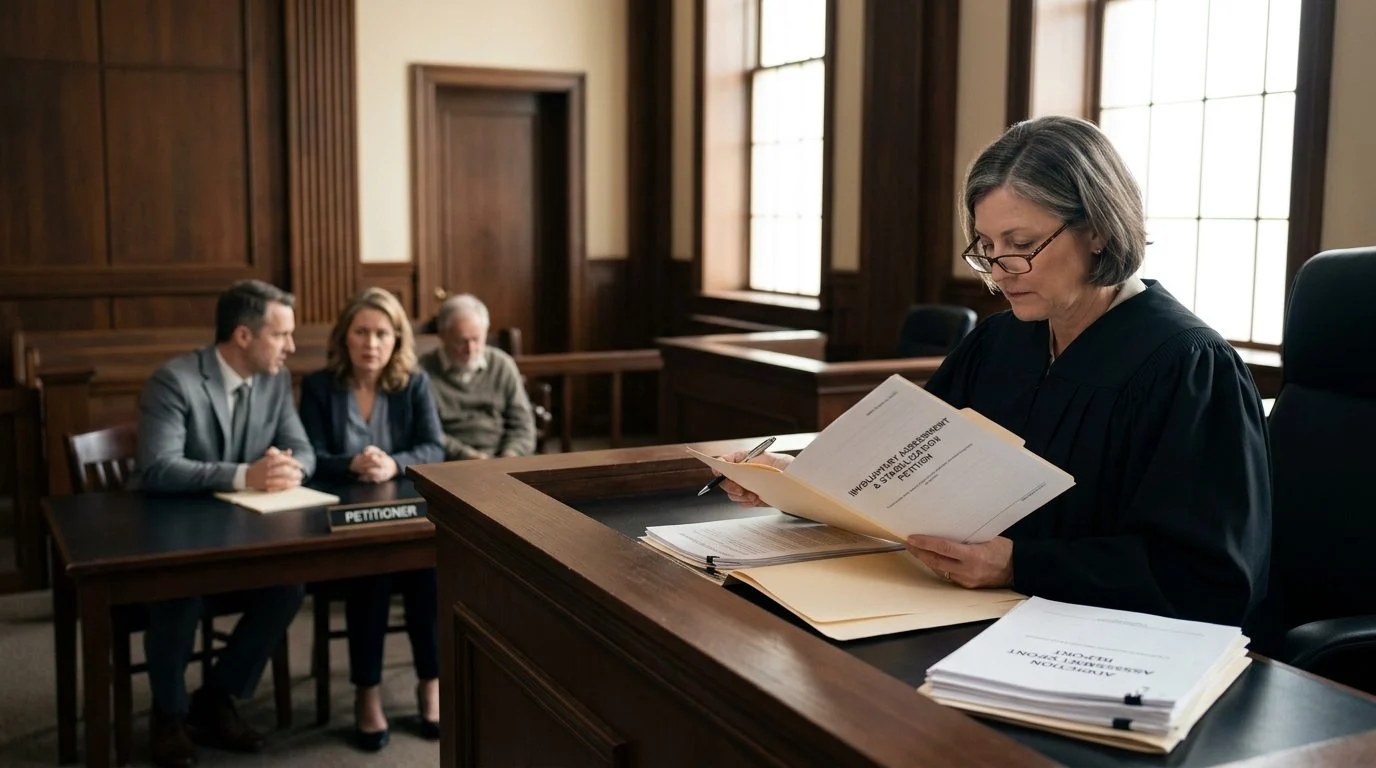
Marchman Act & Guardianship | Miami-Dade and South Florida
When Alcohol and Dementia Put an Older Parent at Risk
Robinson Casey focuses on Marchman Act petitions and guardianship matters for families in Miami-Dade and across South Florida. Richard J. Casey III, Esq. is responsible for this page.
Casey III, Esq. · Published November 6, 2026
When Drinking and Memory Loss Collide in Your Parent’s Life
If your parent drinks heavily and is also losing memory, Florida may offer two separate legal tools. One is the Marchman Act, which covers substance use. The other is guardianship, which covers incapacity. Which one fits depends on the facts.
Maybe you’re the one who finds the stove left on or the pills missed. Maybe your parent came home from the hospital, went back to drinking, and refused to see a doctor. These crises keep coming back, and the family is left to act.
This page explains the Florida laws that may apply to an older adult with alcohol use and dementia. It also explains what a first conversation with Robinson Casey involves. Robinson Casey is a Florida law firm that limits practice to Marchman Act petitions and guardianship matters. It serves families across South Florida and statewide.
If your parent's drinking and memory loss have left their safety in doubt, our team can talk through whether a Marchman Act petition, a guardianship matter, or both fit your family's situation. Talk it through with our team — the first consultation is free, confidential, and carries no obligation.

What the Marchman Act Covers Under Chapter 397
It deals with substance use impairment, not memory loss by itself. The Florida Department of Children and Families describes it as a route to involuntary assessment, stabilization and treatment for adults severely impaired by substance abuse.
Under § 397.675, a person may meet the criteria if there is a good faith reason to believe they are substance abuse impaired or have a substance use disorder and a co-occurring mental health disorder. That impairment must have caused them to lose the power of self-control with respect to substance abuse. They must also need services and be unable to make a rational decision about them. Or, without care, they must be likely to neglect themselves or refuse care in a way that poses a real and present threat of substantial harm, and it must not be apparent that the harm can be avoided through willing, able and responsible family members or friends or other services; or there is substantial likelihood that the person has inflicted, threatened or attempted to inflict, or, unless admitted, is likely to inflict, physical harm on themselves or another. Refusing help is not enough on its own.
Who may file matters too. For an adult, § 397.68112 allows a spouse or legal guardian, any relative, a service provider, or an adult with direct personal knowledge of the impairment and prior treatment to file. A sibling or adult child may qualify.
Location is also important. In J.P. v. J.N., the Fifth District Court of Appeal held that a petition filed in the wrong county is a venue problem, not a loss of jurisdiction. However, the filing of the petition in the wrong county did not divest the circuit court in Putnam County of jurisdiction. (J.P. v. J.N., 225 So. 3d 410 (Fla. 5th DCA 2017)) For Miami-Dade families, this matters when a parent is moved between a hospital and another facility.
What Guardianship Covers Under Chapter 744
Guardianship under Chapter 744 is a court process for an adult the court finds incapacitated. Dementia or other cognitive decline may lead to that finding. The court looks at what the person cannot do safely.
A petition to determine incapacity must be verified. It must state the person’s age, county and address, and the facts behind the petitioner’s belief. See § 744.3201. See § 744.334.
Emergencies move faster. Under § 744.3031, the court may appoint an emergency temporary guardian after a petition to determine incapacity is filed. The court must specifically find that there appears to be imminent danger that the person’s physical or mental health or safety will be seriously impaired, or that the person’s property is in danger of being wasted, misappropriated, or lost, unless immediate action is taken. The court must also appoint counsel for the alleged incapacitated person. Emergency authority expires 90 days after appointment or when a guardian is appointed, whichever occurs first, and may be extended for another 90 days if the emergency still exists.
The examining committee is addressed in § 744.331, not in the emergency temporary guardian statute, § 744.3031. Under § 744.331, the petitioner and the alleged incapacitated person may object to the examining committee reports by filing and serving a written objection on the other party no later than 5 days before the adjudicatory hearing; the court may extend that time for good cause shown. Robinson Casey also handles plenary, limited and mental health guardianship. Each one is tied to the specific rights the court finds the person does not have the capacity to exercise.
Why Alcohol Use and Dementia Can Call for Both Statutes
A parent can need a Marchman Act petition and a guardianship matter at the same time. The two laws ask different questions.
The Marchman Act asks whether substance use has left the person unable to control drinking or make rational choices about treatment. Guardianship asks whether the person can make safe decisions about care, money, housing or daily life. In an older adult, the two often overlap.
Picture your parent who drinks at night and then cannot remember whether they took their blood pressure pills. Drinking can worsen his confusion. That confusion can make him less able to accept treatment. Both problems feed each other.
Guardianship alone does not allow a placement. The right path turns on medical history, recent events and what your parent can still decide.
The Fears Families Bring and What the Law Can Do
The law can give your family a defined role in decisions. No lawyer can promise a particular court result, timeline or outcome.
You may fear irreversible harm. Both paths put major decisions in front of a judge, not only the family. In a Marchman case, a service provider generally may not hold a person for more than 72 hours of observation, unless listed exceptions apply. See § 397.6818.
You may fear financial exploitation. A person found incapacitated keeps the right to be protected against abuse, neglect and exploitation, under § 744.3215. A guardian who controls property must protect it and keep clear records. See § 744.361.
You may fear dangerous decisions. A guardian acts only on rights the court removed from the ward and delegated. Health care decisions can be among them. A guardian also may not act against the ward’s best interests under the circumstances.
You may fear another crisis or hospitalization. In an emergency, a Marchman petition can ask for an ex parte order for assessment and stabilization. Under § 744.3031(1), Florida law requires the court to appoint an attorney for the person alleged to be incapacitated in emergency temporary guardianship summary proceedings. The person has the right to counsel at every stage of a judicial proceeding under § 397.681, but may waive that right if present and the court finds the waiver is made knowingly, intelligently, and voluntarily.
Your goal is a safer, more stable life for your parent over time. The law can build a structure toward that goal. It cannot promise the result.
What to Gather Before a Consultation
Bring facts that show what your parent drinks, what they can still manage, and who makes decisions now. Useful items include:
- Dates of recent hospitalizations and discharge papers.
- Patterns of drinking, along with any falls, fires or unsafe driving.
- Any dementia diagnosis and the name of the attending or family physician. § 744.3201 asks for the name and address of the person’s attending or family physician, if known.
- Unpaid bills, money problems or signs that someone is taking advantage.
- Where your parent lives now and whether that home is safe.
- Names and addresses of close relatives.
Writing these down in one place before the call helps. The first consultation is free, confidential and carries no obligation to continue. If a matter may be better handled by another lawyer or firm, we will say so during the consultation.
Not sure what your next step is?
Talk it through with our team — the first consultation is free, confidential, and carries no obligation.

Talk With Robinson Casey About Your Family’s Situation
A free, confidential consultation can help you see whether a Marchman Act petition, a guardianship matter, or both may fit your parent’s situation. Call (561) 849-4700 or send your questions through our contact page.
Responsible lawyer: Richard J. Casey III, Esq., Robinson Casey.
Frequently Asked Questions
Can a sibling file a Marchman Act petition?
Yes. For an adult, Florida law allows a spouse or legal guardian, any relative, a service provider, or an adult with direct personal knowledge of the impairment and prior course of assessment and treatment to file. § 397.68112
Is there a fee to file?
The court may prohibit, or a law enforcement agency may waive, any service of process fees if a petitioner is determined to be indigent. § 397.681
Does my parent get a lawyer?
Yes. The respondent has the right to counsel at every stage, but may waive that right if present and the court finds the waiver is made knowingly, intelligently, and voluntarily. A respondent who cannot afford private counsel may receive court-appointed counsel. § 397.681
Why Families Contact Robinson Casey
A Focused Practice
Robinson Casey focuses on Marchman Act petitions and guardianship matters, the areas that make up our daily work.
Confidential First Consultation
Your free first consultation is confidential and comes with no obligation to continue.
Plain-Language Options
We explain the legal paths available under Florida law so you can understand what each one involves.
Support for the Whole Family
Our team understands how addiction and cognitive decline affect everyone at home, and we keep families informed at each step.
Do Not Wait for an Emergency
Alcohol use combined with dementia can change quickly, and confusion often makes it harder to know what to do next. Speaking with a lawyer early helps you understand the options before a situation becomes a crisis.
Key Issues in These Cases
Alcohol and Memory Loss
When drinking and cognitive decline happen together, safety risks at home can grow quickly, including falls, wandering, and unsafe decisions.
Who Can File a Petition
Florida law sets out who may file a Marchman Act petition for an adult. We review your family's circumstances and explain how that framework applies to you.
Involuntary Commitment for Addiction
A Marchman Act petition asks the court to consider an assessment or treatment for an adult whose substance use impairs his or her well-being.
When Guardianship Is Considered
If an older adult can no longer make safe decisions, guardianship may be discussed. We explain emergency temporary, limited, plenary, and mental health guardianship options.