
Marchman Act Attorney | Miami-Dade and South Florida
Worried About a Husband Drinking at Home? Talk With a Marchman Act Attorney
Robinson Casey focuses on Marchman Act petitions and guardianship matters for families in Miami-Dade and across South Florida. Your first consultation is free, confidential, and carries no obligation to continue.
Casey III, Esq. · Published November 6, 2026
Yes, a spouse can file a Marchman Act petition in Florida. The Marchman Act is the Florida law for adults whose substance use has taken away their self-control. This page explains who may file, what to write down now, and what the process looks like.
When Drinking at Home Puts the Whole Household at Risk
A spouse can ask a court for help before a crisis, not only after one.
Drinking at home every evening changes daily life. The children notice. Bills go unpaid. Plans fall apart. You may have tried talking, setting limits, and pleading, and nothing has changed. The fear keeps growing: harm to your children, financial ruin, and the slow loss of your marriage and family.
Florida law gives you a path. Under Fla. Stat. § 397.68112, a petition for an adult may be filed by the respondent’s spouse or legal guardian. Any relative, a service provider, or an adult who has direct personal knowledge of the impairment and of the prior course of assessment and treatment may also file.
The Marchman Act sits in Chapter 397 of the Florida Statutes. It is built for substance use impairment. A different Florida law, the Baker Act, deals with mental health crises. Knowing which law fits your situation is one of the first questions to answer.
If your spouse's drinking is putting your children at risk and you're holding the household together alone, we can talk through your options with you. Talk it through with our team — the first consultation is free, confidential, and carries no obligation.

Signs That Home Drinking Is Affecting the Children and What to Document
Start a written record today, with dates and plain facts. Those notes help you explain the problem clearly if you decide to file.
Warning signs to watch for:
- Drinking during school runs, bedtime, or childcare
- Driving with children in the car after drinking
- Falls, burns, cuts, or other injuries at home
- Missed school, meals, or medical needs for the kids
- Blackouts, memory gaps, or days lost to drinking
- Yelling, threats, or sudden anger around the children
- Money missing, bills unpaid, or work missed
If anyone is in immediate danger, call 911 right away.
Keep a simple log with:
- The date, time, and place
- What you saw or heard, in plain sentences
- Who was present, including the children
- Any injuries and the care that followed
- Texts, voicemails, or photos, kept only where lawful
- Missed work or bills tied to the drinking
Keep copies outside the home. Florida petitions must rest on facts. A petition may include a report from a qualified professional who examined your spouse within 30 days before filing. If your spouse was not assessed or refused, the petition must say so.
What the Marchman Act Covers and How It Differs From the Baker Act
The Marchman Act covers court-ordered assessment and treatment for people severely impaired by substance abuse.
Before a court can order involuntary admission, it needs a good faith reason to believe your spouse is impaired. Fla. Stat. § 397.675 also requires that your spouse has lost the power of self-control about substance use. The statute adds a second test: an inability to see the need for help, or a real threat of harm to self or others.
Two laws, two concerns. The Marchman Act addresses substance use. The Baker Act addresses mental health. Some families face both, and which path fits depends on the facts.
Robinson Casey limits its practice to Marchman Act petitions and guardianship matters. That includes involuntary commitment for addiction. Guardianship is available where a family situation calls for it.
The Marchman Act is one tool. No outcome is promised, and the court makes its own decisions.
How the Marchman Act Process Works, Step by Step
A Marchman Act case starts with a filed petition and moves to a court hearing. Here is the general path.
- Consultation. We review the facts, your household, and the children’s situation.
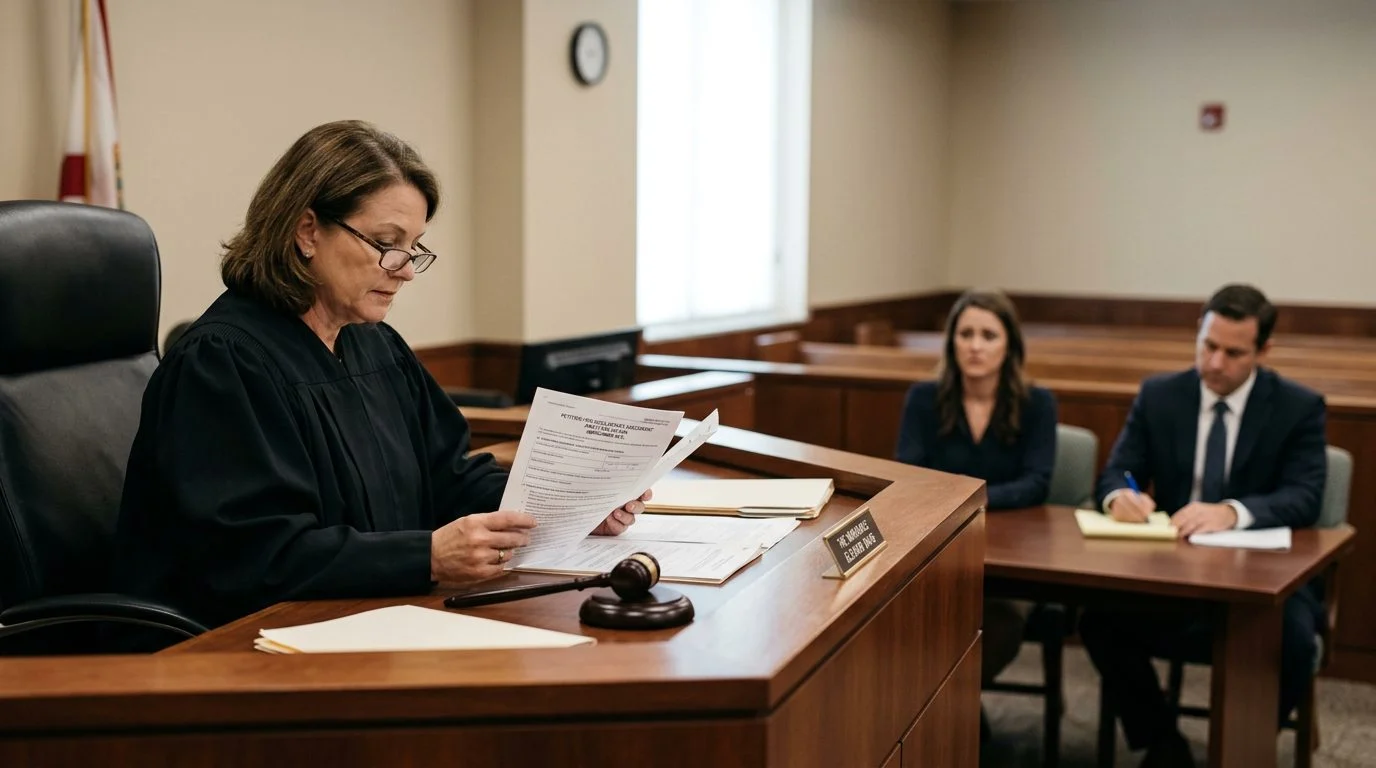
- Filing. The petition goes to the clerk of the court in the county where your spouse is physically located. The clerk may not charge a filing fee under § 397.681. A petition filed in the wrong county is a venue problem, and the remedy is transfer, not dismissal (J.P. v. J.N.).
- Court action. The court decides whether your spouse has a lawyer or needs appointed counsel. It must schedule a hearing within 10 court working days unless a continuance is granted (§ 397.68151).
- Assessment. If your spouse was not assessed, the court can order an assessment and stabilization. Florida appellate courts disagree on one point: whether a judge may question the professional when the petitioner is absent. The Fifth District holds that the judge may not. The Fourth District declined to follow that rule, so the question is not settled statewide (J.J.J. v. D.G.).
- Hearing. Your spouse generally must attend. The court hears all relevant evidence, including testimony from family members who know the history. Testimony is taken under oath and recorded (§ 397.6957).
- Order. If the court finds the conditions proved by clear and convincing evidence, it may order treatment for up to 90 days (§ 397.697).
Court calendars set the pace, and each case has its own facts. Every case is different, and no particular result can be promised.
Why Families Work With Robinson Casey on These Matters
- Richard J. Casey III, Esq. is the responsible lawyer for this page.
- The firm’s lawyers and staff work on these matters, so the focus stays on your household.
- Our team, including support staff, helps families organize records and keep next steps clear during a hard period.
- The first consultation is free, confidential, and carries no obligation to continue.
The firm explains the process and your options. It does not predict outcomes.
Questions Spouses Ask Before Taking the Next Step
Yes, a spouse can file, the clerk may not charge a filing fee, and the court decides what happens next.
Can a spouse file a Marchman Act petition in Florida?
Yes. Under § 397.68112, a spouse may file for an adult.
Will my spouse have to leave the home?
The court decides what orders fit the facts. Your children’s safety and your household’s needs belong in the planning.
What if my spouse refuses an assessment?
When a situation is urgent, a family’s attorney can explain what a petition needs to include and what the court may consider. A treatment order must include findings regarding your spouse’s need for treatment and the appropriateness of less restrictive alternatives (§ 397.6957).
Does a Marchman Act case affect custody?
Custody and family law questions are separate matters. Raise them in a consultation so you know how they connect.
Do I have to pay a filing fee?
The clerk may not charge a fee for filing a petition (§ 397.681). A court may prohibit, or a law enforcement agency may waive, service of process fees for a petitioner found indigent (§ 397.68112).
Can my spouse have a lawyer?
Yes. Yes. Your spouse has a right to counsel at every stage, which he or she may waive only if present and the court finds the waiver made knowingly, intelligently, and voluntarily, and a person who wants counsel and cannot afford private counsel has the right to court-appointed counsel (§ 397.681).
Not sure what your next step is?
Talk it through with our team — the first consultation is free, confidential, and carries no obligation.

Talking Through Your Situation With Robinson Casey
If your spouse’s drinking puts the children at risk, you do not have to hold the household together alone.
You are the one watching the children, paying the bills, and waiting for the next incident. Bring your log and your questions. Talking through the options can help you see what the law allows for your family.
To talk through your options, call (561) 849-4700 or use the consultation request page.
How Robinson Casey Can Help Your Family
Marchman Act Petitions
We help spouses and family members prepare and file petitions under the Florida Marchman Act for an adult who needs help with substance abuse.
Guardianship Matters
Our attorneys handle guardianship cases, including emergency temporary, plenary, limited, and mental health guardianship.
Focused Practice
Robinson Casey limits its practice to Marchman Act and guardianship matters, so every case is handled by lawyers who work in these areas every day.
Confidential First Conversation
Your free first consultation is confidential, and there is no obligation to continue after it.
If Someone Is in Immediate Danger
If your husband is at risk of harm to himself or others, or if you feel unsafe, call 911 right away. Then contact our office so we can discuss the legal options available to your family.
What to Expect When You Reach Out
1. Confidential Consultation
Tell us what is happening at home. Your free first consultation is private, and you are under no obligation to move forward.
2. Review of Your Situation
We listen to the facts, including your household's needs and your children's safety, and explain which legal tools may fit your circumstances.
3. Planning the Petition
If a Marchman Act petition or guardianship filing makes sense, we outline the steps, documents, and court process before anything is filed.
4. Support Through the Court Process
Our team keeps you informed and answers your questions as your case moves forward in court.
Take the First Step. Your Consultation Is Free and Confidential.
Related practice areas
- Marchman Act Attorney | Florida Involuntary Commitment for Addiction
- Adult Son Refuses Treatment? Florida Court Order Options