
Marchman Act
When Your Loved One Refuses Help: The Marchman Act for Family Members
Legal options for families facing addiction or mental health crisis when intervention is urgent and consent is not forthcoming.
By Richard J. Casey III, Esq. · Published September 22, 2026
Marchman Act for Family Members: When a Loved One Refuses Treatment
When someone you love is struggling with substance abuse and refuses help, you face an agonizing reality: you can see the danger, but you can’t force them to accept treatment—at least not through persuasion alone. Florida law offers a path forward through the Marchman Act, a civil procedure that allows family members and other concerned parties to petition a court for involuntary assessment and treatment when voluntary help is rejected and danger is present.
This guide explains when and how the Marchman Act for family members works, what grounds courts consider, and what to expect if you’re considering this option for a loved one.
If you're watching a loved one spiral into addiction despite your pleas for help, you're not alone—families facing this crisis can reach out to us to explore the Marchman Act as a path forward. Talk it through with our team — the first consultation is free, confidential, and carries no obligation.

When Voluntary Treatment Isn’t an Option
Addiction and mental health crises often distort a person’s judgment, preventing them from recognizing they need help. A loved one may deny the problem entirely, minimize its severity, or simply refuse treatment despite mounting consequences. Families watch helplessly as overdose risk climbs, health deteriorates, and the person they know slips further away.
The painful truth: wanting someone to get help is not the same as having legal grounds to compel it. Respect for personal autonomy is a cornerstone of American law. But that principle has limits when substance abuse poses a genuine threat to someone’s health, safety, or welfare—and when they’ve already rejected voluntary care.
The Marchman Act, codified in Chapter 397 of the Florida Statutes, bridges that gap. It’s Florida’s civil procedure for involuntary assessment and treatment of substance abuse. It recognizes that addiction is a disease with biological, psychological, and social dimensions—one that evidence-based treatment can effectively address—and that sometimes intervention must come through the courts when the person affected cannot or will not seek help.
What the Marchman Act Allows Family Members to Do
The Marchman Act isn’t about punishment or control. It’s about getting someone to a qualified facility for professional assessment and, if warranted, evidence-based treatment.
Who can petition: Family members, caregivers, healthcare providers, and others with direct knowledge of the person’s substance abuse may file a Marchman Act petition. You don’t need to be a blood relative; what matters is that you have credible, firsthand knowledge of the problem.
What “involuntary” means: The court can order the person to submit to assessment and, if clinically necessary, to treatment. This isn’t indefinite detention. The goal is evaluation by addiction medicine professionals, a determination of whether treatment is needed, and a plan for care. The respondent (the person the petition is filed against) retains significant legal rights, including the right to a hearing and the right to contest the petition.
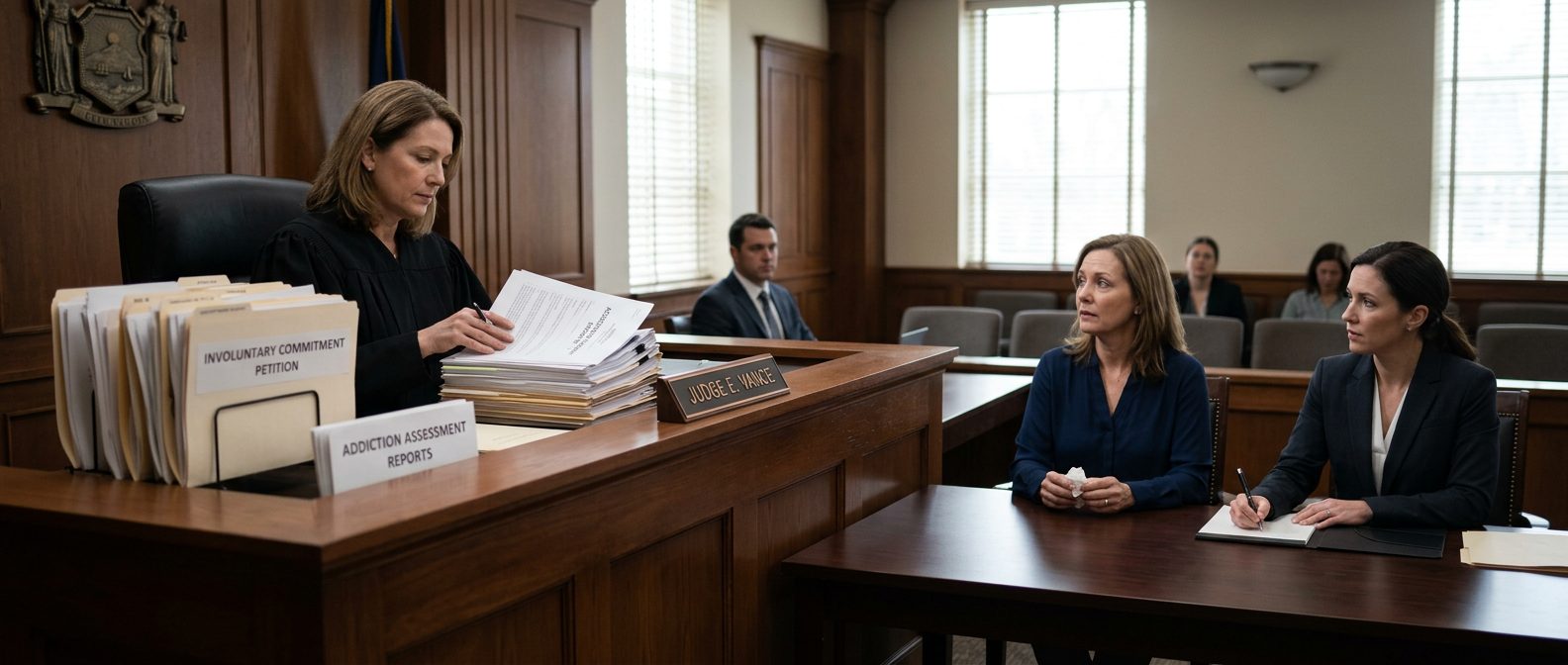
The basic process: You file a petition with the court in the county where your loved one resides. The court may hold an ex parte hearing (sometimes without the respondent present initially) to decide whether to issue a temporary involuntary assessment order. If the court finds probable cause, the person is transported to a receiving facility for evaluation. A full hearing follows, where the respondent can be heard and present evidence. The court then decides whether to order continued treatment.
Grounds for a Marchman Act Petition
Courts don’t grant Marchman Act petitions lightly. You’ll need to demonstrate specific grounds:
- Substance abuse that poses a threat: The person’s use of alcohol or drugs is causing or likely to cause serious bodily harm, or is impairing their ability to care for themselves.
- Refusal or failure of voluntary treatment: They’ve been offered help and rejected it, or they’ve attempted voluntary treatment and failed to engage.
- Loss of control: Their behavior demonstrates they can’t stop or control their substance use despite negative consequences.
- Danger to self or others: This includes overdose risk, suicidal ideation, inability to function, or behavior that endangers others.
Courts evaluate “danger” broadly. It’s not limited to immediate physical violence. It includes deterioration of health, financial ruin, homelessness, overdose risk, and the progressive inability to meet basic needs. Documentation strengthens your petition: medical records, incident reports from law enforcement or emergency responders, witness statements, and a clear timeline of escalating problems and failed interventions.
The Marchman Act Petition Process for Families
Understanding the steps helps you prepare and know what to expect.
Step 1: Filing the petition. You (or your attorney) file the petition with the circuit court in the county where your loved one lives. The petition describes the substance abuse, your relationship to the person, specific incidents or patterns you’ve witnessed, and why you believe involuntary assessment is necessary.
Step 2: The ex parte hearing. The judge may hold a hearing without the respondent present to decide whether there’s probable cause for a temporary involuntary assessment order. You may be asked to testify about what you’ve observed. The standard is not proof beyond a reasonable doubt—it’s whether the judge finds reasonable grounds to believe the person meets the criteria.
Step 3: Temporary assessment order and transport. If the court finds probable cause, it issues a temporary involuntary assessment order. Law enforcement or a designated transport service brings your loved one to a receiving facility (a hospital or treatment center equipped to conduct addiction assessments).
Step 4: The full hearing. Within a short timeframe (typically within 72 hours), the respondent has the right to a full hearing. They can be represented by an attorney, contest the petition, and present evidence. The court hears testimony and decides whether to order continued involuntary treatment or release the person.
Timeline: The process moves quickly—often within days—because the law recognizes the urgency of substance abuse crises. Expect the temporary order within 24–48 hours of filing, and the full hearing within 72 hours.
What Happens After a Marchman Act Order Is Issued
Once the court orders involuntary assessment, the person is evaluated by addiction medicine professionals. They undergo medical and psychological evaluation to determine the nature and severity of the substance use disorder, co-occurring mental health conditions, and appropriate level of care.
Based on that assessment, clinicians recommend a treatment plan. This might be outpatient counseling, intensive outpatient programming, residential rehabilitation, or inpatient hospitalization, depending on clinical need. Involuntary treatment typically lasts for an initial period (often 5–30 days for assessment and stabilization), and it can be extended if the clinical team and court determine it’s necessary.
Your role as family member varies. You may be involved in treatment planning, family therapy, or aftercare coordination. You’ll also be an important source of context and support as your loved one begins recovery.
Not sure what your next step is?
Talk it through with our team — the first consultation is free, confidential, and carries no obligation.
Common Concerns Families Have About the Marchman Act
Will this damage my relationship? Addiction already has. The relationship is already strained by denial, broken promises, and fear. Treatment offers the possibility of repair. Many families report that their loved one, once stabilized and in recovery, understands that the Marchman Act petition came from love, not punishment.
Is this legal? Yes. The Marchman Act is a court-ordered civil procedure with due process protections. Your loved one has the right to be heard, to contest the petition, and to be represented by counsel. The court decides based on evidence, not your wishes alone.
What if they contest it? They have that right. The court will hold a hearing. If the evidence supports the petition, the court can order assessment and treatment. If it doesn’t, the court may dismiss the petition or release the person.
Can they refuse treatment after the order? No. Involuntary treatment is court-ordered. Refusal can result in contempt findings or other legal consequences.
What about privacy and confidentiality? HIPAA and Florida law protect medical information. Your loved one’s treatment records are confidential, though you may be involved in treatment planning with their consent or as part of family therapy.
When to Consider a Marchman Act Petition
Timing matters. Early intervention often leads to better outcomes. Consider a Marchman Act petition if:
- Your loved one has overdosed or come close, or has expressed suicidal thoughts.
- They’ve repeatedly refused voluntary treatment despite escalating consequences.
- Their health, employment, housing, or legal situation is deteriorating rapidly.
- They’ve attempted voluntary treatment and failed to engage or relapsed.
- Their substance use is affecting their ability to care for themselves or others.
- They pose an imminent danger to themselves or others.
These aren’t arbitrary thresholds. They reflect the legal standard: substance abuse that threatens health, safety, or welfare, combined with refusal of voluntary help.
Preparing to File a Marchman Act Petition
Before you file, gather documentation. Collect medical records, emergency room reports, police reports, incident summaries, and written observations of behavior and consequences. Write down specific dates, events, and what you witnessed. This evidence will be critical to the court’s decision.
Understand the legal standard. The court needs to see clear, credible evidence that your loved one meets the criteria—not just that you’re worried or frustrated, but that substance abuse poses a genuine threat and voluntary treatment has been refused or has failed.
Identify the correct venue. File in the county where your loved one resides. If you’re unsure, an attorney can help.
Working with an attorney experienced in Marchman Act petitions strengthens your case. An attorney will help you frame the evidence persuasively, prepare you for testimony, and navigate the hearing. They’ll also ensure your petition meets procedural requirements and deadlines.
Marchman Act vs. Other Legal Options
The Marchman Act is narrowly focused: it’s a civil procedure for involuntary assessment and treatment of substance abuse. It’s fast and specific.
Guardianship (governed by Chapter 744 of the Florida Statutes) is broader. A guardianship gives one person legal authority over another’s person and/or property. It’s more invasive and typically longer-lasting. Guardianship may be appropriate if your loved one needs broader protective arrangements, but it’s not the first tool for substance abuse intervention.
Mental health crisis intervention (involuntary commitment under Florida’s Baker Act) applies when someone poses an imminent danger due to mental illness. If your loved one’s crisis is primarily psychiatric rather than substance abuse, that may be the more appropriate path.
In some cases, families use both: a Marchman Act petition to address the immediate substance abuse crisis, and guardianship later if broader protective arrangements become necessary.
The Marchman Act is often the fastest, most targeted path to involuntary treatment for addiction.
Next Steps: Getting Legal Guidance
Filing a Marchman Act petition alone is possible, but the process is emotionally taxing and procedurally complex. An attorney familiar with these petitions can guide you through each step, help you gather and present evidence effectively, and represent your interests at the hearing.
Before your first consultation, have ready:
- A timeline of your loved one’s substance abuse and key incidents.
- Any medical, police, or emergency records you have.
- A description of voluntary treatment attempts and their outcomes.
- Specific examples of behavior that demonstrates loss of control or danger.
Robinson & Casey handles Marchman Act petitions for families across Florida. Our attorneys understand the urgency of these situations and the emotional weight families carry. We can explain your options, help you evaluate whether a Marchman Act petition is the right step, and guide you through the process if you decide to proceed.
If you're watching a loved one spiral into addiction despite your pleas for help, you're not alone—families facing this crisis can reach out to us to explore the Marchman Act as a path forward. Talk it through with our team — the first consultation is free, confidential, and carries no obligation.

Frequently Asked Questions
Who files the Marchman Act petition—me or an attorney?
You can file it yourself, but an attorney experienced in these cases will ensure the petition meets legal standards, present your evidence persuasively, and represent you at the hearing.
How much does a Marchman Act petition cost?
Costs vary depending on whether you hire an attorney and the complexity of your case. Court filing fees are modest; attorney fees depend on the scope of representation.
Can I file a Marchman Act petition if I’m not a family member?
Yes. Caregivers, healthcare providers, and others with direct knowledge can petition. You don’t have to be related by blood or marriage.
How long does involuntary treatment last?
The initial assessment period is typically 5–30 days. Treatment can be extended if clinically necessary. The duration depends on the individual’s needs and the court’s order.
What if my loved one is out of state?
The Marchman Act applies in Florida. If your loved one is out of state, you may need to explore options in that state or wait until they return to Florida.
If you’re watching a loved one spiral into addiction despite your efforts to help, and you’re wondering whether the Marchman Act might open a door to treatment, reach out. Families facing this crisis can contact us to discuss their options and understand what a Marchman Act petition would look like in their situation. Contact Robinson & Casey today for a confidential consultation—we’re here to listen and help you think through the next step.
Time Matters
Addiction and mental health crises can escalate rapidly. If your loved one is in immediate danger, contact emergency services. For non-emergency involuntary commitment or Marchman Act intervention, an attorney can guide you through the legal process and help you act quickly.
When Family Members File a Marchman Act Petition
Who Can File
A family member, physician, mental health professional, or law enforcement officer may petition the court for involuntary commitment of a person whose addiction or substance abuse poses a danger to themselves or others.
What the Court Considers
The court examines evidence of substance abuse, the person's refusal of voluntary treatment, and whether they present a danger. Your petition must meet strict legal standards to succeed.
The Role of an Attorney
An attorney experienced in Marchman Act cases will prepare your petition, organize evidence, ensure compliance with procedural requirements, and represent you at the hearing before the judge.
Emergency Temporary Guardianship
In some situations, families may also pursue emergency temporary guardianship to make immediate medical or mental health decisions for an adult who cannot or will not consent to care.
Why Robinson & Casey Handles These Cases
Focused Practice
Robinson & Casey focuses exclusively on Marchman Act petitions and guardianship matters. This narrow focus means deep familiarity with the statutes, court procedures, and judges in South Florida and statewide.
Petition Preparation
We prepare petitions that meet all legal requirements and present your family's circumstances persuasively to the court—whether for emergency temporary guardianship, plenary guardianship, limited guardianship, or mental health guardianship.
Representation at Hearing
We represent you and your family at the court hearing, present evidence, and advocate for the protective order or guardianship arrangement your loved one needs.
Urgent Situations
When time is critical, we move quickly to file emergency temporary guardianship or expedited Marchman Act petitions to protect your loved one during acute crisis.
Common Questions About Filing for Your Loved One
Can I file the petition myself?
Yes, but the petition must comply with Florida law and present sufficient evidence to convince the court. An attorney experienced in these cases will ensure your petition is legally sound, well-organized, and persuasive.
What is the difference between temporary and plenary guardianship?
Emergency temporary guardianship is a short-term protective order issued quickly when immediate danger exists. Plenary guardianship is a longer-term arrangement giving a guardian broad decision-making authority. Limited guardianship restricts the guardian's powers to specific areas.
How long does the process take?
Emergency temporary guardianship can be granted within days if the court finds imminent danger. Plenary guardianship typically takes longer as it requires a more thorough hearing. An attorney can explain the timeline for your specific situation.
What happens at the hearing?
You will present evidence of your loved one's condition, danger, and need for intervention. Your attorney will examine witnesses, present documents, and argue why the court should grant the petition. Your loved one has the right to be present and to contest the petition.