
Marchman Act & Guardianship | Miami-Dade and South Florida
Marchman Act Petition Denied? Here Is What Comes Next
Robinson Casey focuses on Marchman Act and guardianship matters for families across South Florida and statewide. Learn what a denial can mean and how to plan your next step.
By Richard J. Casey III, Esq. · Published November 1, 2026
What a Denied Marchman Act Petition Means for Your Family Right Now
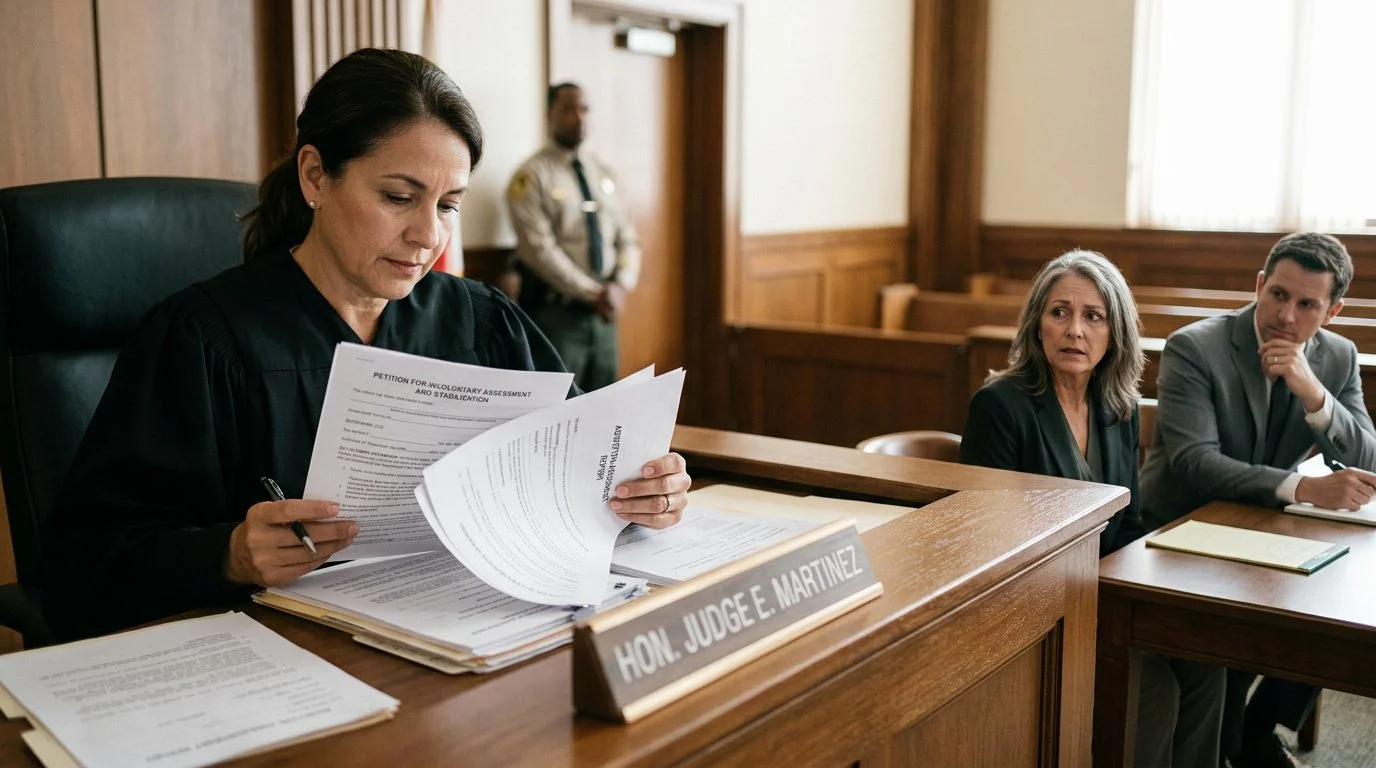
It is a ruling on that record, not a final finding that your loved one is safe or needs no help.
You filed because someone you love was in danger. A denial can feel like the court brushed aside what you have seen with your own eyes. Your concern is real, even when the court rules against the petition.
Timing matters, too. Under the statute, if the court issues or reissues an ex parte assessment and stabilization order after the respondent fails to appear, that order is valid for 90 days, and if the respondent has not been assessed within 90 days, the court must dismiss the case. Track your dates closely.
Feeling stuck is normal after a denial. The legal options have not disappeared, and the crisis may continue. Start by reading the court’s order closely, noting its date, and writing down what the judge said.
If you are watching a loved one's safety slip while the court's ruling leaves you unsure what comes next, our team can talk through the options that remain open to your family. Talk it through with our team — the first consultation is free, confidential, and carries no obligation.

Why Florida Courts Deny Marchman Act Petitions
A court can deny a petition when the petition and evidence do not show the criteria for involuntary admission.
The statute gives two ways to show the second element. One is a need for services plus impaired judgment that blocks a rational decision about that need. The statute’s ex parte reissue provision requires the court to reasonably believe the respondent meets this chapter’s commitment criteria and that a substance abuse emergency exists; it does not itself list a real and present threat of neglect or a likelihood of harm to self or others.
Refusal alone is not enough. The statute’s ex parte provision says the court must reasonably believe the respondent meets this chapter’s commitment criteria and that a substance abuse emergency exists before it may issue or reissue an order; it does not address refusal of services. You need specific behavior that shows why the person cannot make that choice.
Common gaps include missing dated incidents, thin hospital records, and witnesses who could not attend. The court hears testimony from family members about past history, so missing witnesses leave gaps in the record.
A petition can also fail on its face. In D.H. v. K.J.R. opinion, the court found that the petition did not establish a good faith reason to believe D.H. met the statutory criteria for involuntary assessment and stabilization, and that the trial court erred in entering the ex parte order.
A co-occurring mental health condition can raise questions that a Marchman petition alone does not resolve.
Can the Family Refile or Ask the Court to Reconsider?
A family may be able to file again when new or stronger evidence exists. Whether that route is open depends on the facts and the court’s order.
The earlier ruling is the starting point for any new filing. A new incident, hospitalization, or crisis can change the picture, so move promptly when danger is current.
Who can file matters. For an adult, a spouse, legal guardian, any relative, a service provider, or an adult with direct personal knowledge of the respondent’s substance abuse impairment and his or her prior course of assessment and treatment may petition under § 397.68112.
Where you file matters, too. A petition goes to the clerk in the county where the person is located, under § 397.681. However, J.P. v. J.N. opinion held that the filing of the petition in the wrong county did not divest the circuit court in Putnam County of jurisdiction. The Miami-Dade Clerk’s mental health court page directs adult petitions to the Probate Court.
Appeal deadlines are short. Under Florida appellate rule 9.110, a notice of appeal must be filed within 30 days of rendition of the order being reviewed.
A separate guide on urgent Marchman Act filings covers emergencies in more detail.
Other Legal Routes When a Marchman Act Petition Is Denied
Guardianship under Florida Statutes Chapter 744 is a separate route. It can address a loved one’s inability to make safe decisions about medical care, money, or housing.
Emergency temporary guardianship addresses urgent danger. A court may appoint one when imminent danger to health, safety, or property appears and immediate action is needed, under § 744.3031. A petition to determine incapacity must already be on file.
The court must appoint counsel for the alleged incapacitated person. Notice must reach that person and their attorney at least 24 hours before the hearing, unless the petitioner demonstrates that substantial harm would occur if the 24-hour notice is given.
Emergency authority lasts 90 days or until a guardian is appointed, whichever occurs first, and may be extended for another 90 days if the emergency still exists. The petition must be verified and state the nature of the emergency, under Fla. Prob. R. 5.648.
For longer-term options, the court appoints an examining committee, and each member must file a report with the clerk of the court within 15 days after appointment (§ 744.331). Plenary, limited, and mental health guardianship differ in scope.
Involuntary commitment for addiction still runs through the Marchman framework, the route you first took. Research on addiction treatment law describes state involuntary commitment laws and notes their limited use.
Building the Record the Court Will Need Next
A stronger record uses dated facts, records, and witnesses the court can hear. At the hearing, testimony is taken under oath, and the court reviews the qualified professional’s assessment (§ 397.6957).
Gather dated incidents, police or emergency room reports, hospital and discharge papers, medication history, and written messages that show decline. Keep the originals safe.
Track money problems in writing. Note unpaid bills, unusual withdrawals, and pressure from others over money or property. Guardianship law looks at property that may be wasted, misappropriated, or lost. Section 744.3031 of the Florida Statutes separately addresses emergency temporary guardianship, where there appears to be imminent danger that the person’s property is at risk of being wasted, misappropriated, or lost unless immediate action is taken.
Identify witnesses who saw the behavior. Neighbors, employers, caregivers, and clinicians can each describe what they observed.
If your loved one refused an assessment, the petition must say so (§ 397.68141). Note the date of each refusal. Keep a clear timeline and share the record with counsel early.
Protecting Your Loved One While the Legal Process Continues
If your loved one is in immediate danger, call 911 or your local emergency number first. Legal steps do not replace emergency care.
In an emergency, a court may enter an ex parte order for assessment and stabilization without first appointing an attorney (§ 397.6818). That order must be carried out while the hearing is pending.
A respondent has the right to counsel at every stage of the proceeding, unless the respondent is present and the court finds that the respondent knowingly, intelligently, and voluntarily waived that right (§ 397.681). That right matters when a family moves quickly.
Within your control, store medications safely, keep a dated log of each crisis as it happens, and keep copies of important papers.
Avoid taking over your loved one’s money or legal decisions without advice. Acting without legal authority can create problems of its own.
A separate guide on a spouse who drinks daily covers ongoing alcohol use in a household.
Not sure what your next step is?
Talk it through with our team — the first consultation is free, confidential, and carries no obligation.

Taking the Next Step Toward a Stable Plan for Your Loved One
A free first consultation can help you review the denied petition and the options that remain.
You may be watching someone you love make choices that put their health, money, or safety at risk. You may feel you are running out of ways to help.
Robinson Casey limits its practice to Marchman Act petitions and guardianship matters in Florida. The firm serves families in Miami-Dade, South Florida, and statewide. Richard J. Casey III, Esq., is the responsible attorney for this page.
The first consultation is free and confidential, with no obligation to continue (consulta inicial gratuita, confidencial y sin compromiso).
Does a denied petition end the case?
Not necessarily. The ruling covers the petition and the evidence presented at that time.
Can a family file again?
It may be possible with new or stronger evidence. The court’s order and the facts decide that question.
Who may file a petition for an adult?
A spouse, legal guardian, relative, or service provider may file, as may an adult who has direct personal knowledge of the respondent’s substance abuse impairment and his or her prior course of assessment and treatment (§ 397.68112).
If you are weighing these choices now, call (561) 849-4700 or reach out through our contact page to schedule a consultation.
How Robinson Casey Supports Families
Review the Court's Order
We go through the ruling and the record with you to understand what the court decided and why.
Focused Practice
Our practice focuses on Marchman Act petitions and guardianship matters, so we concentrate on these issues every day.
Plan the Next Step
We discuss whether new evidence, a different petition, or another path may fit your family's situation.
Compassionate Guidance
We understand how difficult these cases are for families and we aim to explain each option clearly and calmly.
Do Not Assume the Matter Is Over
A denied petition does not automatically close the situation your family is facing. Speak with an attorney promptly to understand the order and your options.
Questions to Discuss With Your Attorney
What did the court rule?
Understanding the reasons stated in the order is the first step in deciding how to respond.
What evidence was presented?
The record from the hearing shapes what may be presented differently in the future.
Can a new petition be filed?
Your attorney can review the facts to advise you.
Are other options available?
Depending on the facts, guardianship or other court-based tools may be worth discussing.