
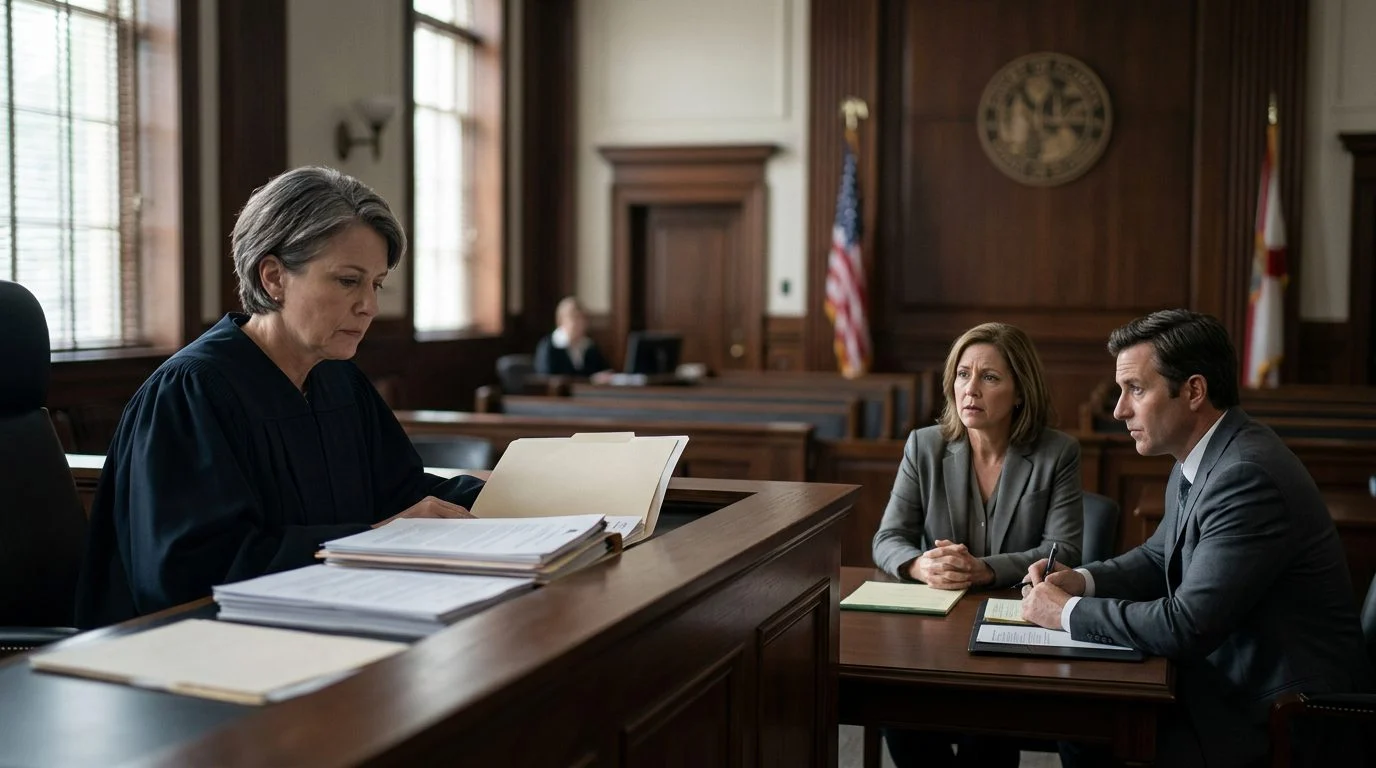
Marchman Act Timeline
How Long Does a Marchman Act Petition Take in Florida?
Understanding the court process and timeline for involuntary commitment petitions
By Richard J. Casey III, Esq. · Published October 02, 2026
Marchman Act Timeline in Florida: How Long Does It Take?
The Marchman Act legal process from petition filing to court order typically takes 5 business days, followed by up to 33 days of involuntary assessment and stabilization at a treatment facility. However, the full timeline depends on court availability, facility capacity, and individual circumstances—and delays can extend the process in both urban and rural Florida counties.
Understanding what happens at each stage helps families prepare for what’s ahead when they’re considering involuntary treatment for a loved one struggling with substance use.

If you're facing a substance use crisis in your family and wondering how the legal process works—or how quickly things move—you're not alone. Talk it through with our team — the first consultation is free, confidential, and carries no obligation.
The Marchman Act Process: Timeline Overview
The Marchman Act is Florida’s civil procedure that allows courts to order involuntary assessment and treatment for individuals with substance use disorders who pose a danger to themselves or others. Florida Statute Chapter 397 establishes the legal framework for this process.
The timeline isn’t always linear. It depends on whether the court has available judges, whether the petition is complete, whether the respondent (the person being petitioned against) can be located, and whether the case is contested or uncontested. Courts in high-volume counties like Miami-Dade and Broward may experience longer delays than less congested jurisdictions.
The key phases are: petition filing, court hearing, judicial determination, and treatment admission.
Filing the Marchman Act Petition
A Marchman Act petition can be filed immediately—there’s no waiting period. Family members, healthcare providers, law enforcement officers, and the state attorney can file a petition on behalf of someone they believe needs involuntary assessment and treatment.
The petition is submitted to the circuit court in the county where the respondent lives or is found. Once filed, the court typically reviews it within 24 hours in most Florida counties. The petition must include factual allegations showing that the respondent is abusing drugs or alcohol and that the abuse creates a substantial threat of serious bodily harm to the respondent or others.
There are no court filing fees for a Marchman Act petition—this is one of the few civil proceedings in Florida where the petitioner avoids upfront legal costs.
The Marchman Act Hearing: When and How Long
A hearing must be held within 5 business days of the petition filing, according to Florida Statute 397.675. This deadline is strict, though in practice it often occurs sooner if the court finds probable cause that the respondent poses an immediate danger.
At the hearing, the petitioner (or their attorney) presents evidence of substance abuse and the threat it poses. The respondent has the right to be present, to have an attorney, and to present their own evidence. The judge then decides whether grounds exist to order involuntary assessment and treatment.
The hearing itself typically lasts 30 minutes to 2 hours, depending on how contested the petition is and how much evidence is presented. Uncontested hearings move quickly; contested ones take longer.
If the judge grants the petition, a court order is issued immediately or within one business day. Law enforcement or medical personnel then transport the respondent to a treatment facility.
What Is the 33-Day Rule in Florida?
Florida law allows up to 33 days of involuntary assessment and stabilization following a court order for Marchman Act commitment. This is one of the most commonly misunderstood parts of the process.
The 33-day period begins after the court issues the order, not from the petition filing date. So if a petition is filed on Monday and a hearing occurs on Friday, the 33 days start counting from Friday (or the next business day).
During these 33 days, the treatment facility conducts medical evaluation, psychological assessment, and initial stabilization. The facility develops a treatment plan and determines whether the respondent’s condition requires continued inpatient care or whether they can be discharged.
At the end of the 33-day period, the facility must make a determination: discharge the individual, or obtain their written consent to continue treatment voluntarily. If the individual does not consent and the facility believes continued treatment is necessary, the facility can petition the court for an extension or continued commitment—but this requires a new court proceeding.
How Long Does a Marchman Act Last?
The Marchman Act itself does not mandate a specific total treatment duration. The court order addresses the initial 33-day assessment period only.
After 33 days, what happens next depends on several factors:
- If the individual consents to continued treatment, they may remain at the facility voluntarily for as long as medically necessary. There’s no legal limit on how long voluntary treatment can last.
- If the individual does not consent, they must be discharged unless the facility petitions the court for a longer commitment order, which requires a new hearing and judicial determination.
- If the facility recommends continued treatment but the individual refuses, the respondent can petition the court to terminate the order—and the court must hold a hearing to decide whether grounds still exist.
Treatment length ultimately depends on medical recommendation, facility programming, individual progress, and the respondent’s willingness to participate.
Not sure what your next step is?
Talk it through with our team — the first consultation is free, confidential, and carries no obligation.
Factors That Influence How Long the Process Takes
Several variables can speed up or slow down the Marchman Act timeline:
Court scheduling. Judges and courtrooms have limited availability. In busy counties, getting a hearing within the 5-business-day window may mean scheduling it for day 5 rather than day 2. In less congested areas, hearings may occur within 2–3 days.
Petition completeness. If the petition lacks required information or doesn’t adequately allege grounds, the court may ask the petitioner to amend it before scheduling a hearing. This adds days to the timeline.
Respondent’s location. If the respondent cannot be located, the hearing may be postponed. Some respondents hide or refuse to appear, which delays the process.
Facility availability. Treatment facilities sometimes have waiting lists. This doesn’t delay the legal process, but it can delay when the respondent is actually admitted to treatment after the court order is issued.
Case complexity. Uncontested petitions move quickly. If the respondent hires an attorney and contests the petition, the hearing takes longer and may require continuances if evidence or witnesses are unavailable.
Potential Delays in the Marchman Act Process
Real-world delays happen regularly, especially in South Florida:
- Court backlogs in Miami-Dade, Broward, and Palm Beach counties can push hearings to day 5 or beyond.
- Respondent’s failure to appear or inability to locate the respondent can result in a postponement.
- Need for continuances if the petitioner’s attorney or witnesses aren’t available, or if the respondent requests more time to prepare.
- Facility transfer delays if the initial facility can’t accommodate the respondent and a transfer to another facility is necessary.
- Administrative processing at the treatment facility after the court order is issued—intake paperwork, medical screening, and bed assignment can take 24–48 hours.
Can You Cancel a Marchman Act in Florida?
Yes, a Marchman Act order can be terminated, but it’s not automatic.
The respondent has the right to petition the court to terminate the order. However, termination requires a court hearing, and the judge must find that grounds for the original order no longer exist. Simply asking to leave doesn’t end the commitment; the respondent must demonstrate that they no longer pose a substantial threat.
During the 33-day assessment period, the facility may also discharge the individual if assessment shows that treatment isn’t necessary or that the respondent doesn’t meet criteria for continued commitment.
After 33 days, if the respondent does not consent to continued treatment, they must be discharged. The facility cannot hold them involuntarily without a new court order.
Who Pays for the Marchman Act in Florida?
Court filing fees: Petitioners pay no court filing fees for a Marchman Act petition. This is a state-funded civil proceeding.
Treatment facility costs: The respondent or their insurance typically covers treatment facility costs. Some facilities accept Medicaid; others offer sliding-scale fees based on income. This is a conversation to have with the facility once the court order is issued.
Legal representation: If you hire an attorney to help file the petition or represent you at the hearing, those attorney fees are your responsibility. Robinson & Casey can discuss fees and options during a consultation.
From Petition to Treatment: The Full Timeline
Here’s what a typical Marchman Act timeline looks like:
- Day 1: Petition filed with the circuit court.
- Days 2–5: Court hearing held (within 5 business days of filing).
- Day 5 or sooner: Court order issued if the petition is granted.
- Day 5–7: Respondent transported to treatment facility and admitted.
- Days 5–38: 33-day involuntary assessment and stabilization period.
- Day 38: Facility determines next steps—discharge, obtain consent for voluntary continuation, or petition court for extension.
This timeline assumes no delays. Real cases may take longer depending on the factors outlined above.
Have questions about what happened?
Ask our team directly. The first conversation is free, confidential, and there is no obligation to continue.
Key Takeaways
- The legal process from petition to court order typically takes 5 business days.
- The initial involuntary treatment period is up to 33 days for assessment and stabilization.
- The 33-day period begins after the court order is issued, not from the petition filing date.
- Total timeline depends on court availability, facility capacity, and individual circumstances.
- Variables such as county backlog, respondent location, and case complexity can extend the process.
- After 33 days, the individual’s continued treatment depends on their consent or further court action.
- The respondent has the right to petition the court to terminate the order, though termination requires a hearing.
Frequently Asked Questions
How quickly can a Marchman Act petition be filed?
A petition can be filed immediately—there’s no waiting period. Once filed, the court typically reviews it within 24 hours.
What happens if the respondent doesn’t show up to the hearing?
The hearing may be postponed, or the court may proceed in the respondent’s absence if they were properly notified. This depends on the judge’s discretion and the circumstances.
Can the 33-day period be extended?
Yes, if the facility believes continued treatment is necessary, it can petition the court for an extension. This requires a new hearing and judicial determination.
Is the Marchman Act the same as a Baker Act?
No. The Baker Act is for involuntary mental health evaluation; the Marchman Act is for involuntary substance use disorder assessment and treatment.
Can someone refuse a Marchman Act order?
A respondent can petition the court to terminate the order, but they cannot simply refuse it. Refusing to comply with a court order can result in legal consequences.

Next Steps: Understanding Your Timeline
If you’re facing a substance use crisis in your family and wondering how the legal process works—or how quickly things move—you’re not alone. Families in South Florida and across the state regularly reach out to understand the Marchman Act timeline, what to expect at each stage, and what options are available.
Robinson & Casey helps families navigate this process by explaining the timeline specific to your county, answering questions about what happens next, and guiding you through the petition and hearing process. Whether you’re in the early stages of considering involuntary treatment or you’re ready to move forward, we can help you understand your options and your timeline.
Call us at (561) 849-4700 to schedule a consultation and discuss your family’s situation.
The Marchman Act Process: Key Stages
Filing & Initial Review
A Marchman Act petition can be filed immediately—there is no waiting period. Once filed with the court, the petition is typically reviewed within 24 hours. The court examines whether the petition meets statutory requirements and whether probable cause exists to believe the respondent is substance-impaired and a danger to themselves or others.
Temporary Custody Order
If the court finds probable cause, a temporary custody order may be issued. This can happen as soon as the same day or within 24–48 hours of filing. The temporary order allows law enforcement or designated persons to take the respondent into custody for evaluation and transport to a treatment facility.
Full Hearing
A full hearing must be held within 5 business days of the temporary custody order. At this hearing, the court determines whether to issue a final order for involuntary commitment. Both the petitioner and respondent have the right to present evidence and testimony. The respondent may appear in person or by counsel.
Final Order & Treatment
If the court finds clear and convincing evidence that commitment is necessary, a final order is entered. The respondent is then admitted to a treatment facility for evaluation and care. The duration of treatment depends on the facility's assessment and the respondent's progress.
What If the Respondent Doesn't Appear?
If the respondent fails to appear at the hearing after proper notice, the court may postpone the hearing or proceed in their absence. Florida law allows the court to enter a final order even without the respondent's presence, provided they were properly notified of the hearing date and time.
Why Timeline Matters in Marchman Act Cases
Speed is Critical
Substance use disorders can escalate rapidly. The Marchman Act process is designed to move quickly so that individuals in crisis can access evaluation and treatment without unnecessary delay.
Proper Preparation Helps
Working with an attorney to prepare a complete, well-documented petition helps ensure the court can act swiftly and reduces the risk of delays due to missing information or procedural errors.
Legal Guidance Throughout
An attorney familiar with Marchman Act procedures can guide your family through each stage, explain what to expect, and help protect your rights and the respondent's rights during the process.
Ready When You Need It
Robinson & Casey handles Marchman Act petitions for families across South Florida and statewide. We understand the urgency and are prepared to help you move forward quickly.