
Marchman Act | Florida
Is Your Loved One Eligible for a Marchman Act Petition?
Use this checklist to understand whether involuntary intervention for substance abuse may be an option under Florida law.
By Richard J. Casey III, Esq. · Published October 01, 2026
Marchman Act Eligibility Checklist for Florida Parents
Your adult child is struggling with alcohol or drugs. You’re wondering whether the courts can order them into treatment without their consent. The answer depends on whether they meet Florida’s legal criteria—and this checklist will help you understand what those are.
The Marchman Act, codified in Florida Statutes Chapter 397, allows a parent, relative, or other concerned person to petition a court for involuntary assessment and treatment of an adult struggling with substance abuse. But not every situation qualifies. This page walks you through the five core legal criteria so you can assess whether your loved one may be eligible—and when to talk to a lawyer.
If you've worked through this checklist and aren't sure whether your loved one qualifies, or if their situation feels more complex, talking it through can help you understand what happens next. Talk it through with our team — the first consultation is free, confidential, and carries no obligation.

What This Checklist Does
This checklist explains the legal grounds for Marchman Act eligibility under Florida law. It helps you think through whether your loved one might meet those grounds. It also clarifies what terms like “substance abuse impairment” and “lack of self-control” actually mean in practice, not just in legal language.
Important: This checklist is informational. It is not legal advice. Only a lawyer who knows your specific situation can evaluate whether your loved one truly qualifies and what your next steps should be. If your loved one is in immediate danger, call 911 or go to the nearest emergency room.
Marchman Act Eligibility Checklist: Five Core Criteria
Work through each question below. A “yes” to all five suggests your loved one may meet the legal criteria.
Criterion 1: Is Your Loved One 18 or Older?
The Marchman Act applies to adults. If your loved one is under 18, different laws (the Baker Act, which addresses mental health crises) may apply instead.
What to do: If your loved one is 18 or older, move to Criterion 2. If they are a minor, consult a lawyer about whether other legal options apply to your situation.
Criterion 2: Does Your Loved One Abuse Alcohol, Drugs, or Both?
Substance abuse means regular or repeated use that is not medically prescribed and causes problems. Casual or occasional use typically does not qualify; the abuse must be ongoing or worsening.
What to do: If you can document or describe a pattern of substance use (daily drinking, frequent drug use, binges, or escalating amounts), move to Criterion 3. If use is truly occasional and not causing harm, the Marchman Act may not apply.
Criterion 3: Has This Substance Abuse Caused Real Impairment in Your Loved One’s Life?
“Impairment” means observable, documented harm—not just the use itself. Courts look for concrete evidence that substance abuse has damaged your loved one’s judgment, health, work, relationships, or safety.
Examples of impairment include:
- Job loss or inability to maintain employment
- Damaged or broken relationships with family and friends
- Health problems (liver damage, infections, malnutrition, overdose risk)
- Legal trouble (arrests, DUIs, probation)
- Accidents, injuries, or unsafe behavior
- Neglect of personal care or hygiene
- Financial crisis or inability to pay bills
What to do: If you can point to one or more of these harms, and they are connected to substance use, move to Criterion 4. If your loved one uses substances but has not experienced real-world harm, the legal threshold may not be met.
Criterion 4: Does Your Loved One Lack the Self-Control to Stop or Reduce Use?
This is the legal heart of Marchman Act eligibility. “Lack of self-control” means your loved one cannot stop using, or will not stop despite knowing the harm it causes.
Lack of self-control includes situations where:
- Your loved one has tried to quit or cut back and has failed
- Your loved one acknowledges the problem but continues anyway
- Your loved one has had chances to seek help and has not, or has relapsed after treatment
- Your loved one refuses to accept that a problem exists
This is not a moral judgment. Addiction is recognized as a disease that affects judgment and decision-making capacity, not a character flaw. The legal question is whether your loved one’s judgment is so impaired that they cannot make the decision to seek treatment on their own.
What to do: If your loved one fits one or more of these descriptions, move to Criterion 5. If your loved one has never tried to quit, or if they have quit successfully before, the picture is less clear—consult a lawyer.
Criterion 5: Is Your Loved One Likely to Suffer Serious Harm Without Intervention?
Courts must find that without involuntary treatment, your loved one faces substantial risk of serious harm. This includes overdose, medical crisis, death, or continued deterioration.
What to do: If you believe your loved one is at serious risk of overdose, medical emergency, or death without intervention, all five criteria may be met. If the risk seems lower, or if your loved one is stable despite substance use, the legal standard may not be satisfied.
Understanding “Substance Abuse Impairment” in Plain Language
The law requires that your loved one’s substance abuse has caused impairment. This does not mean they are high or intoxicated right now. It means the pattern of use has caused real, measurable damage to their life.
Courts look at the full picture: How long has this been going on? What has your loved one lost—job, home, custody, health, relationships? Is the situation getting worse? Has your loved one tried to stop and failed?
Consider situations such as these:
- A 28-year-old who lost two jobs in a year because of absences and poor performance tied to drug use, and whose family has stopped inviting them to events.
- A 35-year-old whose alcohol use has caused liver damage and multiple DUI arrests, and who cannot afford rent.
- A 24-year-old who overdosed twice in six months and whose parents found them unconscious.
These are the kinds of concrete harms courts consider when evaluating whether impairment exists.
Understanding “Lack of Self-Control” in Plain Language
Lack of self-control is the legal finding that your loved one cannot—or will not—stop using substances despite the consequences.
This is different from simply “not wanting to quit.” It means your loved one has reached a point where their judgment is so compromised that they cannot make the rational decision to seek help, even when the harm is obvious.
Courts consider:
- Has your loved one tried to quit? If yes, and they have failed, that supports a finding of lack of self-control.
- Has your loved one been in treatment before? If yes, and they have relapsed, that also supports the finding.
- Does your loved one deny the problem? Even if the evidence is clear, some people cannot see the harm—that too can be lack of self-control.
- Has your loved one had the opportunity to seek help voluntarily? If you have offered to pay for rehab, or if treatment is available, but your loved one refuses, that strengthens the case.
The law recognizes that addiction changes how the brain works. The National Institute on Drug Abuse confirms that addiction alters decision-making and judgment, making it harder for a person to stop even when they want to. The Marchman Act exists because willpower alone is often not enough.
Who Can File a Marchman Act Petition
You do not need your loved one’s permission to file. Parents, other relatives, any three adults with personal knowledge of the substance abuse, healthcare providers, and law enforcement can all file a petition.
According to the Florida Department of Children and Families, the petition is filed in the circuit court in the county where your loved one lives or is found. The court holds an ex parte hearing (without your loved one present) to decide whether to order an involuntary assessment.
Not sure what your next step is?
Talk it through with our team — the first consultation is free, confidential, and carries no obligation.
What Happens After You File: The Process Overview
Filing a petition starts a legal process. Here’s what typically happens:
-
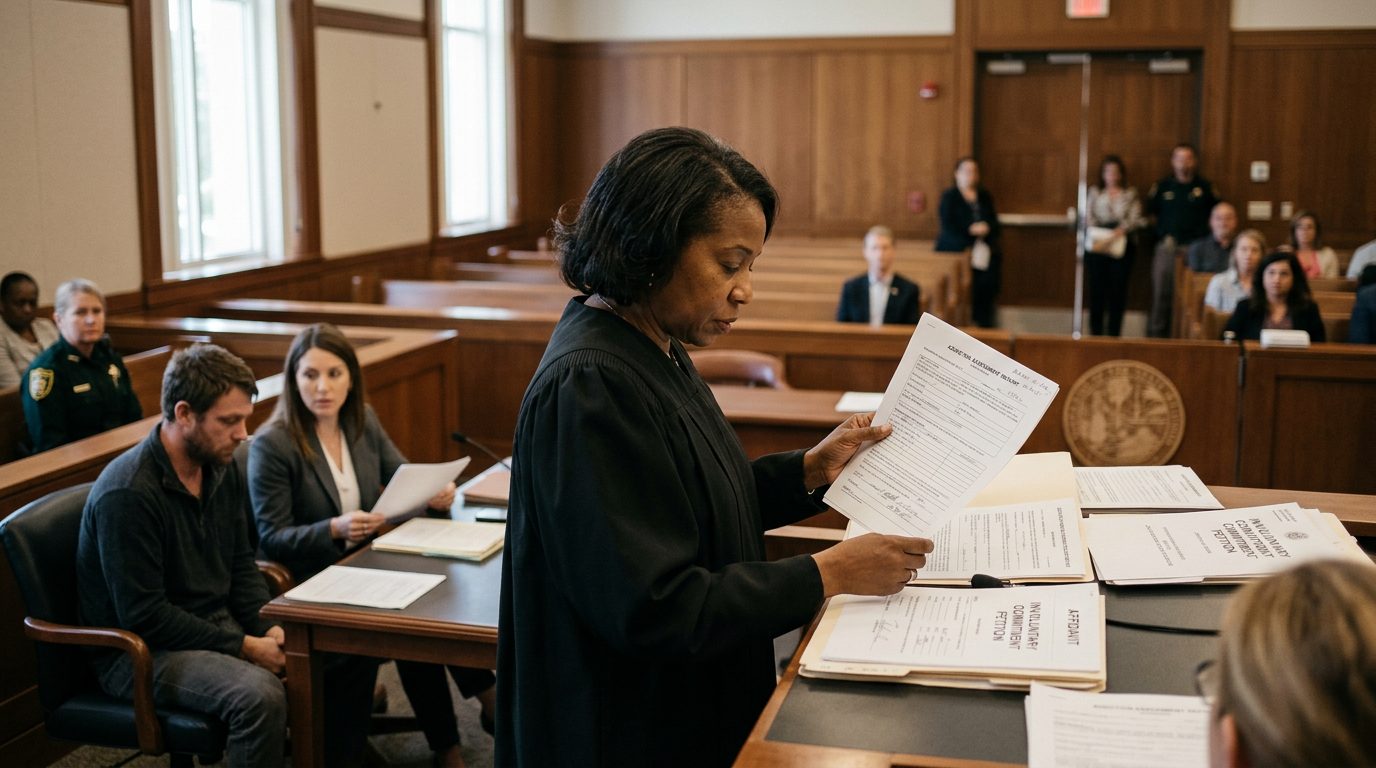
Ex parte hearing: The court may hold an emergency hearing within hours or days, with only you (and your lawyer, if you have one) present. You present sworn testimony about why you believe your loved one meets the criteria.
-
Probable cause finding: If the judge finds probable cause, your loved one is ordered to appear for an involuntary assessment.
-
Assessment: A healthcare provider evaluates whether treatment is medically necessary and whether your loved one meets the legal criteria.
-
Full hearing: Both you and your loved one (or their lawyer) present evidence. The court decides whether to order involuntary treatment.
-
Treatment order: If the court finds the criteria are met, your loved one may be ordered into involuntary treatment.
Common Questions About Marchman Act Eligibility
Can you Marchman Act yourself?
No. The Marchman Act is for involuntary intervention. Someone else must file the petition on your behalf.
How long does the process take?
An emergency ex parte petition can result in a hearing within hours or days. A full hearing typically occurs within 10 days.
Who pays for the assessment and treatment?
Costs vary. Treatment facility fees may be covered by insurance, Medicaid, or the individual’s own resources.
What are the criteria for the Marchman Act in Florida?
The five core criteria are: age (18 or older), substance abuse, impairment, lack of self-control, and substantial likelihood of serious harm. All five must be present.
What This Checklist Does Not Cover
This checklist is a starting point, not legal advice. Your situation may have details—prior treatment, mental health conditions, family dynamics, or your loved one’s response to past interventions—that affect how the law applies.
If your loved one is in immediate danger, call 911 or go to the nearest emergency room. If your loved one is a minor, consult a lawyer about the Baker Act and other options available to you.

Next Steps: When to Reach Out
If you have worked through this checklist and believe your loved one may meet the criteria, a conversation with a Marchman Act attorney can help you understand your options and what to expect.
If you are unsure whether the criteria apply, or if your loved one’s situation involves complications—prior treatment, mental health issues, or family conflict—talking to a lawyer can clarify what is possible and what the next steps look like.
Parents weighing whether involuntary intervention is the right step for someone they love may have questions about how the process works. Common questions include whether their loved one qualifies, what the process costs, how long it takes, and what happens in court. You don’t have to figure this out alone.
Robinson & Casey handles Marchman Act petitions for families across South Florida and statewide. If you’re ready to discuss your situation, contact us for a consultation, or call (561) 849-4149.
Key Eligibility Factors
Substance Abuse or Addiction
The person must have a pattern of substance abuse involving alcohol, drugs, or both that poses a threat to their health, safety, or welfare—or that of others.
Refusal of Voluntary Treatment
The individual must have refused or be unlikely to accept voluntary assessment, treatment, or care despite the substance abuse pattern.
Threat to Health or Safety
There must be a reasonable likelihood that without intervention, the person will suffer serious bodily harm or death, or cause harm to others.
Petitioner Standing
A family member, health care provider, law enforcement officer, or other authorized person must file the petition on behalf of the individual.
Important: Self-Petitioning Is Not Permitted
Under Florida's Marchman Act, the person struggling with substance abuse cannot file a petition for themselves. A family member, physician, treatment provider, or law enforcement must initiate the process.
What Happens Next
Emergency Ex Parte Hearing
If the petition meets legal criteria, a judge may order an emergency assessment, even before the respondent appears in court.
The Full Hearing Process
At the comprehensive hearing, the court weighs evidence and determines whether involuntary assessment or treatment is warranted.
Assessment and Treatment Plan
If the petition is granted, the individual undergoes a professional assessment to determine the appropriate level and type of treatment.
Ongoing Legal Oversight
The court maintains jurisdiction to ensure compliance with treatment orders and to modify them as circumstances change.
Why Robinson & Casey Handles These Cases
Focused Practice
We focus on Marchman Act petitions and guardianship matters, serving families across South Florida and statewide.
Time-Sensitive Process
Substance abuse crises demand rapid action. We understand the urgency these situations demand.
Direct Access
When you call, you reach our office directly. We answer questions about eligibility and next steps without delay.
Compassionate Guidance
We recognize the emotional weight of these decisions and provide clear, supportive counsel throughout the process.