
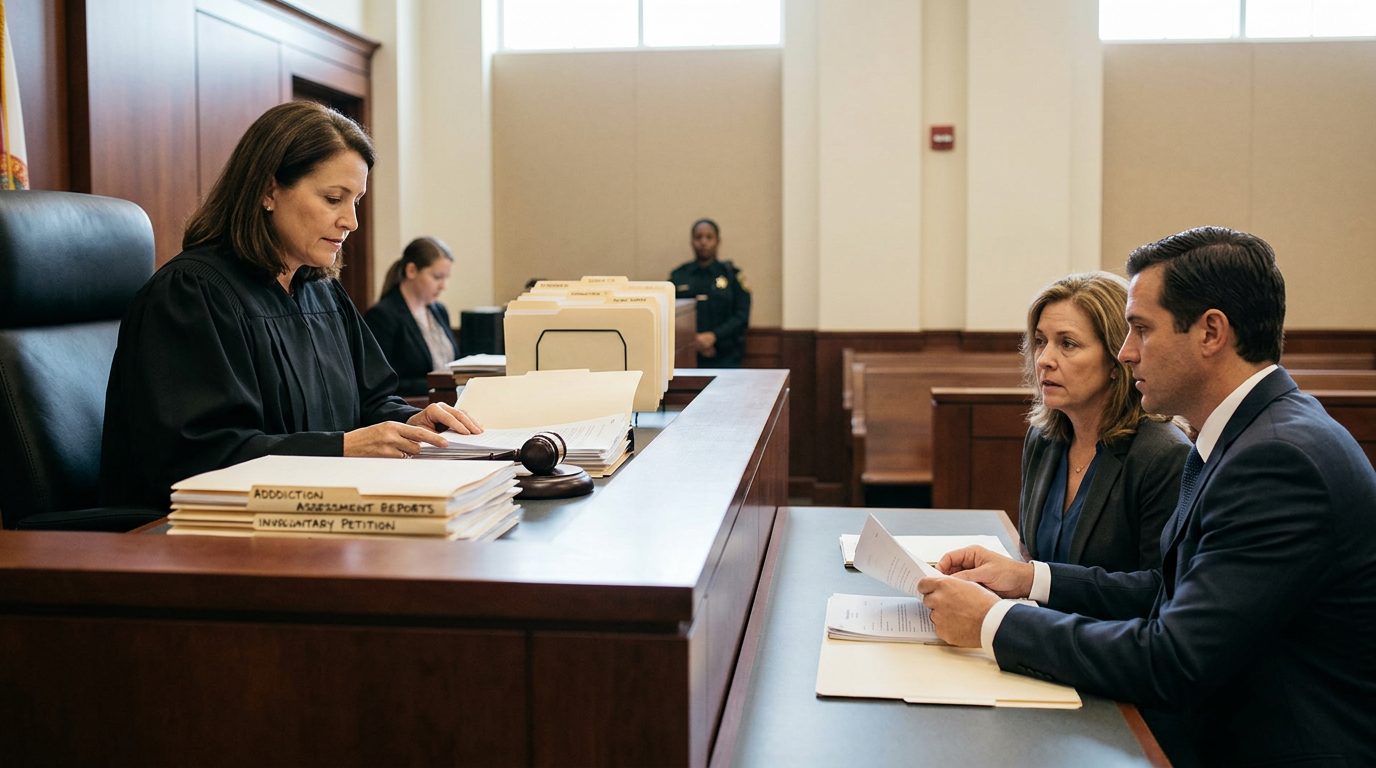
Florida Involuntary Commitment
Marchman Act vs. Baker Act: Understanding Hold Durations
Two distinct Florida laws govern involuntary commitment for addiction and mental health crises. Learn how hold lengths differ and which may apply to your situation.
By Richard J. Casey III, Esq. · Published October 05, 2026
Marchman Act vs. Baker Act in Florida: Hold Durations and Key Differences
Florida has two separate involuntary commitment laws—the Marchman Act for substance abuse and the Baker Act for mental health crises—each with different grounds, procedures, and hold lengths. Understanding which one applies to your situation is the first step toward getting the right help.
If you're weighing involuntary commitment options for a loved one struggling with addiction or mental health crisis in South Florida, reach out to discuss which path fits your circumstances. Talk it through with our team — the first consultation is free, confidential, and carries no obligation.

What Is the Marchman Act in Florida?
The Marchman Act is Florida’s statute governing involuntary commitment for substance abuse and addiction. It allows family members, healthcare providers, law enforcement, and the state attorney to petition a court for an order requiring a person to undergo evaluation and treatment when addiction has caused serious harm or poses a serious risk. Unlike the Baker Act, the Marchman Act always requires a court order; there is no emergency hold without judicial involvement.
The Marchman Act statute defines substance abuse as a condition in which a person has lost the power of self-control over substance use and either cannot make sound judgments about the need for treatment or poses a risk of serious bodily harm or death to themselves or others. The focus is strictly on alcohol and drug addiction, not mental illness.
What Is the Baker Act in Florida?
The Baker Act is Florida’s Mental Health Act, the statute governing involuntary commitment for mental health crises. It allows law enforcement, healthcare providers, and designated officials to initiate an immediate 72-hour emergency hold without a court order when a person is in acute mental health crisis. The Baker Act addresses mental illness—not substance abuse—as the grounds for commitment.
The key difference is speed: the Baker Act permits emergency intervention first, then court involvement if extended commitment is sought. This makes it the tool for acute, immediate danger.
How Long Can You Be Held on a Marchman Act?
A Marchman Act hold has two phases:
Initial evaluation hold: After a court grants a Marchman Act petition, the person may be held for up to 5 days for assessment and stabilization at a licensed facility. During this period, healthcare providers evaluate the person’s condition and treatment needs.
Extended treatment order: Following the 5-day evaluation, the court may order extended treatment for up to 60 additional days, either in an inpatient or outpatient setting. This means the total possible duration from initial petition to end of extended treatment is up to 65 days.
The actual length depends on the court’s findings, the treatment facility’s recommendations, and the individual’s clinical needs. The person held may petition for cancellation at any time; the court must hold a hearing within 5 days of that request.
How Long Can You Be Held on a Baker Act?
A Baker Act hold also has two phases, but the timeline is different:
Emergency hold: Law enforcement or a designated official may hold a person for up to 72 hours without a court order if the person meets the criteria (mental illness, danger to self or others, or grave disability).
Extended commitment: If involuntary commitment beyond 72 hours is sought, a court hearing must occur within 5 days. The court may then order inpatient or outpatient treatment for up to 6 months if grounds are met.
The Baker Act’s emergency hold is shorter initially (72 hours vs. 5 days), but extended commitment can last much longer (up to 6 months vs. 60 days).
Key Differences Between Marchman Act and Baker Act
| Aspect | Marchman Act | Baker Act |
|---|---|---|
| Grounds | Substance abuse/addiction | Mental illness; danger to self, others, or grave disability |
| Who initiates | Petition by family, provider, law enforcement, or state attorney | Law enforcement or designated official (emergency); court order (extended) |
| Court involvement | Required from the start | 72-hour hold possible without court; court order needed for extension |
| Initial hold | 5 days (evaluation) | Up to 72 hours (emergency) |
| Extended treatment | Up to 60 days | Up to 6 months |
| Cancellation | Person may request at any time; court hearing within 5 days | Person may request at any time; court hearing within 5 days |
Not sure what your next step is?
Talk it through with our team — the first consultation is free, confidential, and carries no obligation.
What Qualifies Someone for a Marchman Act Commitment?
The court must find clear and convincing evidence that:
- The person has a substance use disorder involving alcohol or drugs.
- The substance abuse has caused or is likely to cause serious bodily harm or death.
- The person is unable or unwilling to seek treatment voluntarily.
- No less restrictive means of providing care and treatment are available.
A petition may be filed by a family member, healthcare provider, law enforcement officer, or the state attorney. The court reviews the petition and evidence before issuing an order.
What Qualifies Someone for a Baker Act Commitment?
The criteria for a Baker Act hold are:
- The person has a mental illness.
- The person is a danger to themselves, a danger to others, or unable to care for themselves due to the mental illness.
- No less restrictive means of providing care and treatment are available.
For an emergency 72-hour hold, law enforcement or a designated official can act immediately if these conditions appear to be met. For extended commitment, a court must find clear and convincing evidence.
Can You Cancel a Marchman Act or Baker Act?
Yes. A person held under either statute may petition for cancellation at any time. The court must hold a hearing within 5 days of the cancellation request. The person has the right to present evidence and be heard. If the court finds that the grounds for the hold no longer exist, it must cancel the order.
Cancellation does not prevent a new petition from being filed if circumstances change and grounds are met again.
Is the Baker Act Only in Florida?
The Baker Act is specific to Florida law. Other states have involuntary commitment statutes for mental health crises, but they may use different names, procedures, and criteria. The Marchman Act is also unique to Florida. If you are in another state, you will need to consult that state’s mental health commitment laws.
What Happens After a Marchman Act or Baker Act Hold?
After Marchman Act evaluation (5 days): The court decides whether to order extended treatment (up to 60 days) or release the person. A treatment plan is developed based on the assessment.
After Baker Act emergency hold (72 hours): If no court order for extended commitment is sought, the person is released. If extended commitment is pursued, a court hearing occurs within 5 days, and the court may order treatment for up to 6 months.
In both cases, the person may be placed in inpatient or outpatient treatment depending on the court order and facility availability. The person retains the right to legal representation and to challenge the order.
If you're weighing involuntary commitment options for a loved one struggling with addiction or mental health crisis in South Florida, reach out to discuss which path fits your circumstances. Talk it through with our team — the first consultation is free, confidential, and carries no obligation.
When Should You Consider a Marchman Act Petition?
Consider a Marchman Act petition when:
- A family member or loved one is struggling with substance abuse or addiction.
- The addiction is causing serious harm or poses a risk of serious harm.
- The person refuses voluntary treatment.
- You need court authority to compel evaluation and treatment.
- You want a structured legal process with defined timelines and court oversight.
When Should You Consider a Baker Act Petition?
Consider a Baker Act petition when:
- A person is in acute mental health crisis.
- Immediate danger to self or others exists.
- Emergency intervention is needed without delay.
- The person cannot care for themselves due to mental illness.
- You need immediate protective custody rather than a longer legal petition process.
Frequently Asked Questions
Can a Marchman Act order be extended beyond 60 days?
A single Marchman Act order extends up to 60 days. A new petition and court order would be required for any further extension.
What is the difference between a 5-day Marchman Act hold and a 72-hour Baker Act hold?
The Marchman Act’s 5-day hold is for evaluation and assessment following a court order. The Baker Act’s 72-hour hold is an emergency hold that can occur without a court order in crisis situations.
Who can file a Marchman Act petition in Florida?
A family member, healthcare provider, law enforcement officer, or the state attorney may file a Marchman Act petition.
Can you be held on a Baker Act for 72 hours without a court order?
Yes. Law enforcement or a designated official can initiate a 72-hour emergency hold without a court order if the person meets the Baker Act criteria.
Do both the Marchman Act and Baker Act require a court hearing?
The Marchman Act requires a court order from the start. The Baker Act allows a 72-hour emergency hold without court, but extended commitment requires a court hearing within 5 days.

Understanding Your Options in Florida
The Marchman Act and Baker Act are two separate legal tools for two different situations. Choosing the right one depends on whether the primary issue is addiction (Marchman Act) or acute mental health crisis (Baker Act). Both involve court process, both protect the person’s rights, and both have defined timelines and cancellation procedures.
If you’re in the middle of a situation where a loved one needs involuntary commitment—whether for substance abuse or mental health crisis—understanding which statute applies and what timeline to expect can help you take the right legal step. An attorney familiar with both statutes can help you determine which applies to your circumstances and guide you through the process.
If you’re weighing involuntary commitment options for a loved one struggling with addiction or mental health crisis in South Florida, reach out to discuss which path fits your circumstances.
Hold Duration at a Glance
Marchman Act Hold
Initial court-ordered hold lasts up to 60 days for evaluation, assessment, and treatment of substance use disorders. Extension requires a new petition and court order.
Baker Act Hold
Emergency psychiatric hold lasts up to 72 hours for evaluation of mental health crises. Designed for immediate stabilization and assessment, not ongoing treatment.
Key Difference
Marchman Act addresses addiction and requires a court petition; Baker Act addresses acute mental health emergencies and can be initiated by law enforcement or medical personnel without a court order.
When Extension Matters
Marchman Act orders may be extended beyond 60 days through a separate legal proceeding. Baker Act holds typically conclude within 72 hours unless the individual is voluntarily admitted or another legal basis applies.
Why the Distinction Matters
Court Process Required
Marchman Act petitions involve filing with the court and presenting evidence. Baker Act holds can begin without court involvement in emergency situations.
Duration Determines Next Steps
A 60-day Marchman Act window allows time for treatment planning and assessment. A 72-hour Baker Act hold is a brief evaluation period, after which the individual may be released or admitted voluntarily.
Substance Use vs. Mental Health
Marchman Act is the civil commitment law for addiction. Baker Act applies to mental health crises, though co-occurring conditions may involve both laws.
Legal Protections
Both laws include due process protections and rights to counsel. Understanding which applies helps ensure the appropriate legal framework and protections are in place.
Time-Sensitive Decisions
Hold durations are fixed by Florida law. If you are considering a Marchman Act petition for a family member or need to understand Baker Act implications, timing and proper legal procedures are critical. The sooner you act, the sooner treatment and evaluation can begin.
Frequently Asked Questions
Can a Marchman Act order be extended beyond 60 days?
A single Marchman Act order extends up to 60 days. A new petition and court order would be required for any further extension.
What happens after a 72-hour Baker Act hold ends?
After 72 hours, the individual may be released, voluntarily admitted for ongoing care, or held under another legal basis if appropriate. The facility must document the outcome and next steps.
Can someone be held under both acts simultaneously?
Yes. An individual experiencing both a mental health crisis and substance use disorder may be subject to both Baker Act and Marchman Act proceedings, depending on the circumstances and what the court orders.
Who can file a Marchman Act petition?
A family member, physician, mental health professional, law enforcement officer, or other authorized person may petition the court. The petition must demonstrate that the person is abusing drugs or alcohol and poses a threat to themselves or others.