
Marchman Act & Guardianship | Miami-Dade and South Florida
Stop Enabling Adult Child Addiction: Know Your Options in Florida
Robinson Casey focuses on Marchman Act petitions and guardianship matters for families across South Florida and statewide. Learn how court processes can help when a loved one's addiction puts the whole family at risk.
Casey III, Esq. · Published November 7, 2026
When You Have Tried Everything and Your Child Is Still Getting Worse
To stop enabling an adult child’s addiction in Florida, change what you pay for and shield, and state those limits calmly. This page answers one question: which boundaries help before a Marchman Act petition is considered.
You have paid for treatment. You have covered rent, phone bills, and legal fees. You have pleaded, bargained, and said “this is the last time.” Then came another overdose, relapse, or arrest, and you’re back where you started.
That kind of exhaustion is real. Watching your child get worse while you can’t fix it is frightening. Your love did not cause this illness, and trying hard did not make you fail. Many parents in this position feel they have run out of options. This guide covers the limits you control and the legal process Florida families often ask about.
If you are carrying this crisis alone, you don't have to face the next step by yourself, so talk with our team about your child's situation. Talk it through with our team — the first consultation is free, confidential, and carries no obligation.
What Enabling Means and What a Boundary Does Not Mean
Enabling means any action that shields your adult child from the results of substance use. Paying for the fine, covering for missed work, or smoothing over a lie to the family are common examples. Each one can keep the consequences away from the person using.
The Partnership to End Addiction guidance explains how to tell supportive help from enabling. It also explains when to let an adult child feel the consequences of use.
A boundary is different. It is a decision about what you will do. It is not a punishment, and it does not say your child is beyond help. “I won’t pay the rent” describes your own conduct. It doesn’t say “you are on your own forever.”
Many parents fear that limits mean abandonment. They don’t have to. The same organization separates enabling from positive reinforcement, and it recommends staying connected while you step back from harmful behavior. You can set limits and still keep in touch. See its note on enabling versus positive reinforcement.
Boundaries That Commonly Help Stop Enabling
Clear, consistent limits usually help most. Start by deciding in advance what you will and won’t cover, such as rent, phone bills, fines, or legal fees. State that decision once, calmly, and then keep it.
Cash needs special care. If you believe money will fund substance use, stop giving it, and say so openly. Silent guessing leaves your child to fill the gaps with assumptions.
Consistency matters most. Your child should be able to predict what happens next. If you said you won’t cover a missed car payment, don’t cover it the next time. Follow through, even when it hurts.
Let your child feel the effects of the crisis they created. Don’t cover for missed work or lies. Keep the door open to treatment, too. Offer to research a program together or sit in on an intake call, while declining to fund unplanned use.
Boundaries That Can Backfire or Make Danger Worse
Some limits make things worse, especially when they are set at the wrong moment or with no plan behind them. A limit set during intoxication usually becomes an argument. An ultimatum you can’t enforce weakens every boundary after it.
The most serious risk is letting a child who is actively using stay in the home with no structure or plan. Overdose can happen fast. If your child is unresponsive, having trouble breathing, or may have overdosed, call 911 right away.
Cutting off all contact can backfire too. During a crisis, you may have no information about your child’s safety or location. Boundaries alone do not always stop escalating danger, and that is why some families look at a court process.
How to Set a Boundary Without an Ultimatum
A calm, stated limit tells your child what you will do. A threat tells your child what you will do to them. Calm limits are easier to keep because they describe your own actions.
Use short, specific words. Say what you will do, what you won’t do, and that you still want your child to get help. For example: “I won’t pay the phone bill. I will drive you to an intake appointment. I love you, and I want you to get help.”
Pick a calm moment, not a crisis, to talk. Expect pushback. Your child may argue, plead, or promise change. You can listen and still hold the limit you stated.
When Boundaries Are Not Enough: The Marchman Act in Florida
The Marchman Act is a Florida court process in Chapter 397 of the Florida Statutes.
For an adult, Fla. Stat. § 397.68112 allows a spouse or legal guardian, any relative, a service provider, or an adult with direct personal knowledge of the impairment and of the person’s prior course of assessment and treatment to file. The petition goes to the clerk in the county where the person is located, under Fla. Stat. § 397.681. In Miami-Dade, the Clerk’s Office handles adult petitions through its Probate Court.
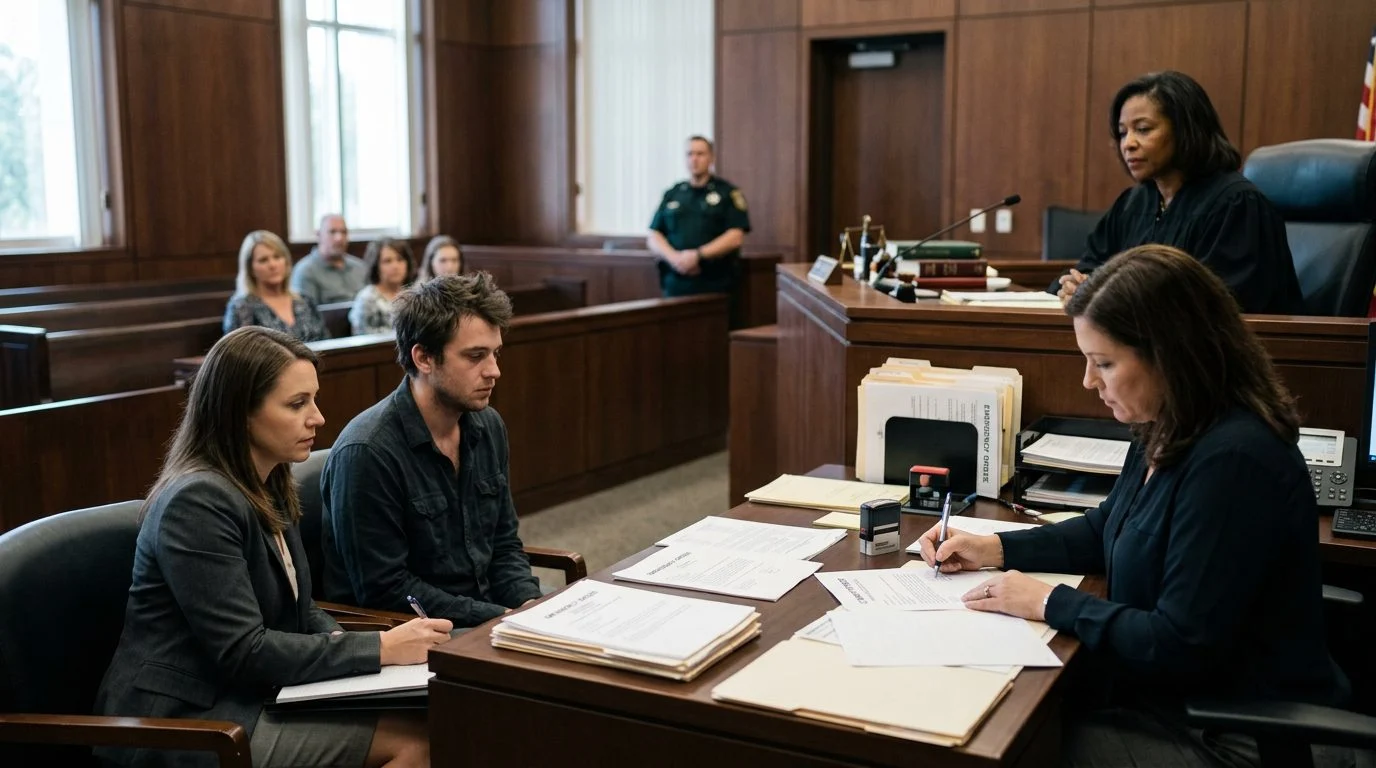
In an emergency, a judge may rely only on the petition and, without appointing an attorney, enter an order for your child’s involuntary assessment and stabilization while the hearing is pending, under Fla. Stat. § 397.6818. Whether a petition meets these standards depends on the facts.
Common Questions
Does my adult child have a right to a lawyer?
Yes. Does my adult child have a right to a lawyer? Yes. A respondent has the right to counsel at every stage of the proceeding. A respondent who wants counsel and cannot afford a private lawyer has the right to court-appointed counsel. The respondent may waive that right only if present and the court finds the waiver is knowing, intelligent, and voluntary, under § 397.681.
Where is the petition filed?
The Fifth District held that a petition belongs in the county where the respondent is physically located when filed, in J.P. v. J.N..
For an overview of how these petitions work, see our Marchman Act attorney guide.
Not sure what your next step is?
Talk it through with our team — the first consultation is free, confidential, and carries no obligation.
Talk With Robinson Casey About Your Child’s Situation
If you are managing this crisis alone, a conversation about your child’s facts can help you see your options. Robinson Casey limits its practice to Marchman Act petitions and guardianship matters in Florida, serving families across South Florida and statewide.
This page is the responsibility of Richard J. Casey III, Esq. We cannot predict how your child’s situation will end, but we can talk through the facts with you.
Call (561) 849-4700 or request a consultation. Your first consultation is free, confidential, and carries no obligation to continue.
How Robinson Casey Supports Families
Focused Practice
Robinson Casey focuses on Marchman Act and guardianship matters, so our work centers on the legal tools Florida families use when addiction and safety are at stake.
Clear Guidance on Filings
We explain the petition process, the paperwork involved, and what to expect at each step, so you can make informed decisions for your family.
Plain-Language Answers
We answer your questions directly, without legal jargon, so you understand the path ahead before you decide anything.
Compassion for Your Family
We understand that loving a family member through addiction is painful. We approach every case with respect for your family's privacy and wellbeing.
Confidential First Step
Your free initial consultation is confidential and comes with no obligation to continue.
A Common Warning Sign
Paying bills, covering for missed work, or making excuses for a loved one's substance use can unintentionally keep the cycle going. Recognizing this pattern is an important first step toward protecting your family.
Legal Options for Families in Florida
Marchman Act Attorney
The Marchman Act is Florida's law for court-ordered assessment and treatment of substance use disorders. Robinson Casey focuses on preparing and handling Marchman Act petitions for families across South Florida.
Involuntary Commitment for Addiction
Involuntary commitment for addiction is a court process that can address situations where an adult with a substance use disorder needs assessment or treatment and is unable to seek it voluntarily.
Guardianship Attorney
We help families understand the options and the process.
Emergency Temporary Guardianship
We explain how this urgent request works and what it involves.
Talk With Robinson Casey Confidentially. Call (561) 849-4700.
Related practice areas
- Marchman Act Step by Step for Florida Parents