
Marchman Act
Understanding the Marchman Act Petition Filing Process in Florida
A step-by-step guide to initiating involuntary commitment for addiction treatment
By Richard J. Casey III, Esq. · Published September 30, 2026
What Is the Process for Filing a Marchman Act Petition in Florida?
The Marchman Act filing process begins with preparing a petition and affidavit, filing them with your county circuit court, and attending a hearing—typically all within 5 to 10 business days. Florida Statute Chapter 397 allows family members, guardians, and certain other adults to petition a court for involuntary assessment and treatment of someone with a substance abuse disorder. The process is designed to move quickly because the law recognizes that delays can be dangerous.
Understanding each step helps you prepare strong documents and know what to expect in court. This guide walks you through the entire process, from initial preparation through the court hearing.

Not sure what your next step is?
Talk it through with our team — the first consultation is free, confidential, and carries no obligation.
Step 1: Prepare the Petition and Affidavit
The petition is a formal written request asking the court to order involuntary assessment. It must include the person’s name, age, and current location or address.
An affidavit—a sworn statement signed in front of a notary—must accompany the petition. This is the heart of your case. The affidavit describes specific, factual examples showing that the person has a substance abuse disorder and poses a threat to themselves or others, or cannot care for themselves.
Courts require concrete details, not general statements. Instead of writing “he abuses drugs,” describe what you have actually seen: dates, times, specific incidents, changes in behavior, and consequences. For example: “On March 15, he was found unconscious in his car with empty bottles. On March 18, he missed work and his employer called to say he was fired. He has lost 30 pounds in two months and admits he cannot stop using.”
The person filing the petition (the petitioner) must be willing to testify under oath about these facts at the hearing. You cannot file anonymously. Your identity and relationship to the person will be part of the court record.
Step 2: File the Petition with the Circuit Court
The petition and affidavit are filed with the circuit court clerk in the county where the person lives or is currently located. You can file in person, by mail, or—in some counties—electronically.
Filing fees vary by county but typically range from $100 to $300. Contact your county clerk’s office for the exact fee and accepted filing methods.
When you file, the clerk assigns a case number and schedules a hearing date. Florida courts typically set the hearing within 5 business days of filing. If your situation is urgent, you can request an emergency hearing, which may be scheduled within 24 hours.
Step 3: Notify the Person and Serve Required Parties
The person who is the subject of the petition must be notified of the filing and the hearing date. Notification is usually done in person or by certified mail, following Florida court rules.
The person has the right to know what is happening, to attend the hearing, and to have a lawyer represent them. If they cannot afford a lawyer, the court may appoint one.
Other parties—such as the person’s attorney or guardian—must also receive notice according to court rules.
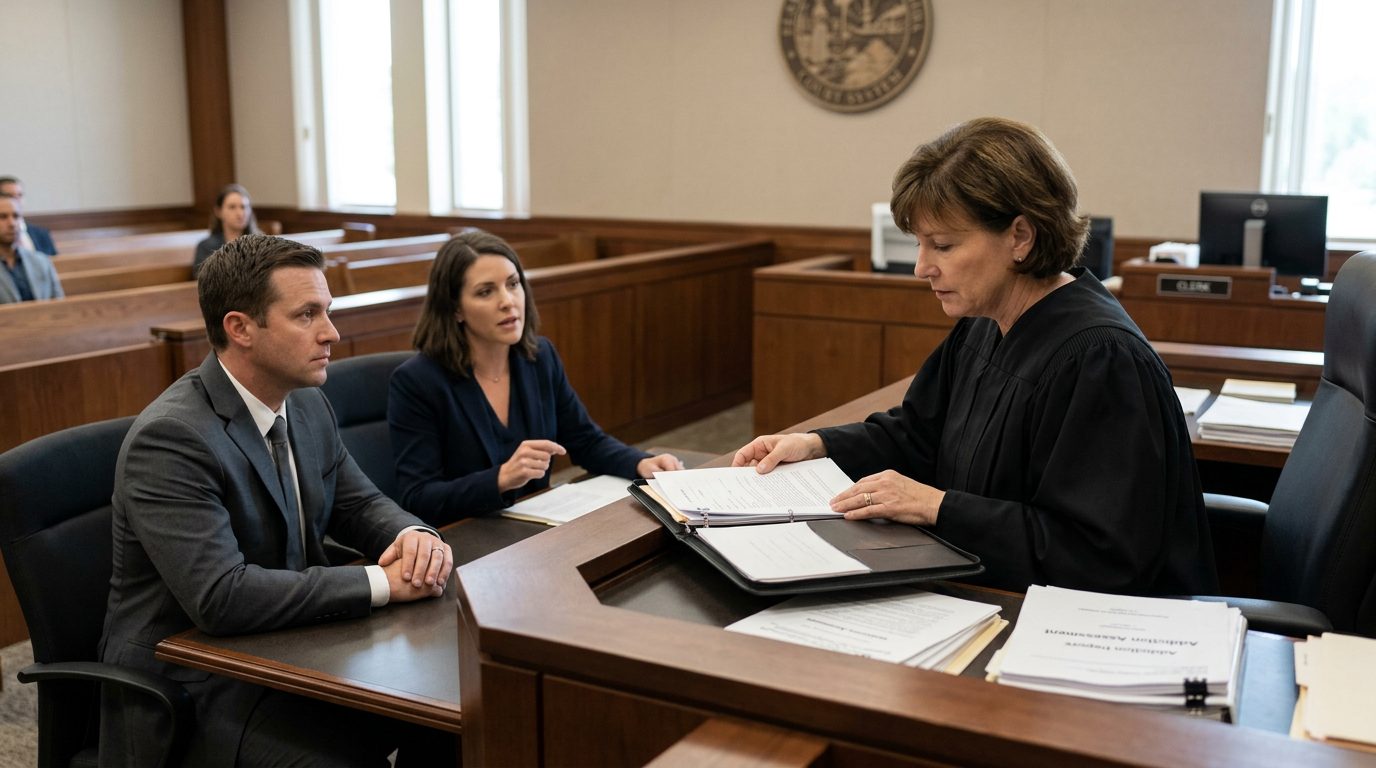
Step 4: Attend the Court Hearing
At the hearing, you (or your attorney) present the affidavit and testify about the facts. The judge listens to your evidence and asks questions.
The person who is the subject of the petition also has the right to be present, to speak, to present evidence, and to challenge what you say. This is not a one-sided process—the court hears both sides.
The hearing is usually brief, often 15 to 30 minutes. The judge’s job is to decide whether there is probable cause (a reasonable basis to believe) that the person meets the legal criteria: substance abuse disorder, plus a threat to self or others, or inability to care for themselves.
If the judge finds probable cause, a court order is issued. If not, the petition is dismissed and no further action is taken.
Step 5: Court Order and Assessment
If the judge issues a court order, it directs the person to submit to an assessment by a qualified substance abuse treatment provider or mental health professional. The assessment determines whether the person actually meets the legal criteria for involuntary treatment.
The assessment typically occurs within 1 to 3 days of the court order. If the assessment confirms the need for treatment, the court may order involuntary treatment for up to 60 days initially. The person is admitted to a licensed treatment facility.
If the assessment shows the person does not meet criteria for involuntary treatment, the court order is dismissed and the person is released.
Have questions about what happened?
Ask our team directly. The first conversation is free, confidential, and there is no obligation to continue.
How Long Does the Entire Process Take?
From filing to court order, the process can occur within 5 to 10 business days. In urgent situations, an emergency hearing can be scheduled and a court order issued within 24 hours.
This speed reflects Florida law’s intent to intervene quickly when substance abuse poses an immediate risk to the person or others.
What Is the 33-Day Rule in Florida?
After the initial 5-day evaluation period, if the person is admitted to treatment and the treatment provider determines they meet criteria for continued involuntary treatment, the court may order treatment for up to 60 days.
During this period, the person has the right to request a hearing to challenge the involuntary treatment order. This right to contest the order is a key protection built into Chapter 397.
Who Pays for the Marchman Act Assessment and Treatment?
The person undergoing assessment and treatment is typically responsible for the costs. If they cannot pay, the county may cover costs through public funds.
Some treatment facilities offer sliding-scale fees based on income. If the person has active health insurance, it may cover part or all of the assessment and treatment costs.
Filing fees for the court petition are your responsibility as the petitioner, though the amount is modest.
Key Documents You Will Need
- A completed petition form (available from the circuit court clerk or online)
- A notarized affidavit with specific, factual details about the person’s substance abuse and behavior
- Proof of the person’s residence or location in the county
- Supporting documentation (medical records, incident reports, photographs, witness statements) that strengthens your petition
- Your identification and proof of your relationship to the person
Want to know where you stand?
Tell us what happened and our team will walk you through the options available to you, at no cost.
Frequently Asked Questions
Can I file a petition anonymously?
No. The petitioner must be identified and willing to testify under oath about the facts in the affidavit.
What if the person refuses to appear for assessment?
The court order is enforceable. If the person refuses, law enforcement can assist in bringing them for assessment.
Can the person contest the petition?
Yes. They have the right to be heard at the hearing, to present evidence, and to challenge the petition.
What happens if the assessment shows the person doesn’t meet criteria for treatment?
The court order is dismissed, and the person is released. No involuntary treatment occurs.
Do I need a lawyer to file a petition?
You can file without a lawyer, but having an attorney familiar with Marchman Act cases strengthens your petition and helps you navigate the hearing.

When to Reach Out for Guidance
If you are researching the Marchman Act filing process, you are likely facing a difficult situation. You care about someone struggling with substance abuse, and you are uncertain whether this legal tool is right for your family or how to move forward.
Many families reach out at exactly this stage—they have heard about the Marchman Act, they understand something needs to change, and they want to know whether filing makes sense and what the next steps actually look like.
An attorney can review your specific circumstances, help you prepare a strong petition with specific, factual details, and guide you through the court hearing. Robinson & Casey handles Marchman Act petitions throughout South Florida and statewide. If you are ready to discuss your situation and explore whether a petition is the right option for your family, contact us today.
The Marchman Act Filing Process
Step 1: Prepare the Petition and Affidavit
A petition must be filed with the court along with an affidavit from the petitioner—typically a family member, healthcare provider, or other interested party—detailing specific facts showing the person's substance abuse and inability to manage care. The affidavit must be sworn under oath.
Step 2: File with the Court
The petition and affidavit are filed in the county circuit court where the respondent resides. Filing fees apply, and the court clerk will assign a case number and schedule an initial hearing.
Step 3: Temporary Assessment Order
The judge may issue a temporary assessment order, which directs law enforcement or a designated officer to bring the respondent to an approved facility for a professional substance abuse assessment within 24 hours.
Step 4: The Assessment and Hearing
A licensed professional evaluates the respondent and provides findings to the court. A hearing follows, where the petitioner and respondent can present evidence. The judge decides whether to order involuntary treatment.
Key Point: Petitioner Identification
The petitioner cannot file anonymously. You must be identified and willing to testify under oath about the facts supporting the petition. This ensures accountability and allows the respondent to confront the allegations.
What You Need to Know
Specific Factual Basis Required
The affidavit must include concrete examples of substance abuse behavior, not general concerns. Courts require detailed, verifiable facts to support the petition.
Court Orders Are Enforceable
If the respondent refuses to appear for assessment, the temporary assessment order is enforceable. Law enforcement can assist in bringing them to the designated facility.
Timeline Matters
Once a temporary assessment order is issued, the respondent must be brought for evaluation within 24 hours. The full hearing process typically follows within days.
Professional Assessment Is Mandatory
A licensed substance abuse professional must evaluate the respondent and provide written findings to the court before any involuntary treatment order is issued.