
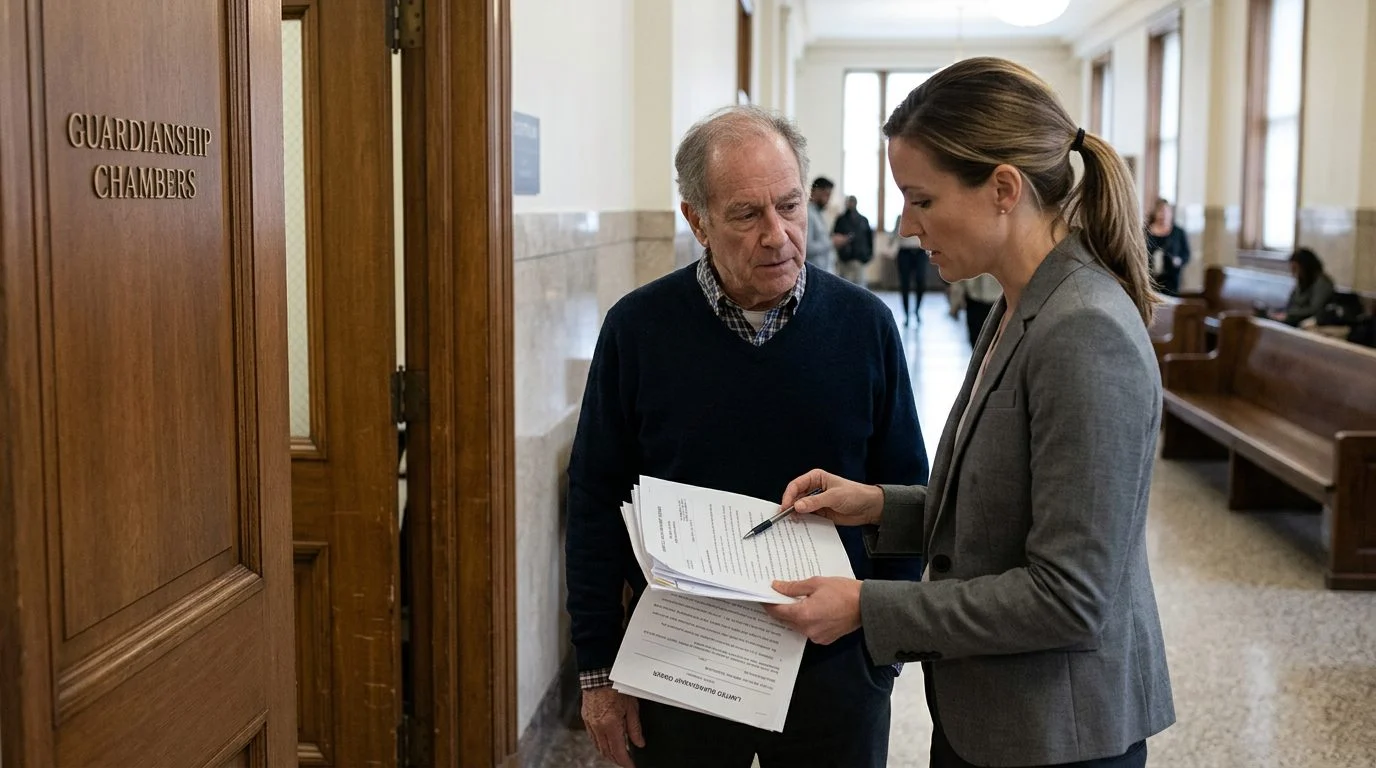
Guardianship & Mental Health
Court-Appointed Guardian for Mentally Ill: Duties & Rights
Understanding what guardianship means, what guardians can and cannot do, and how the court protects the ward's interests.
By Richard J. Casey III, Esq. · Published September 22, 2026
Court-Appointed Guardian for Mentally Ill: Duties & Rights in Florida
A court-appointed guardian for a mentally ill person is someone the court designates to make decisions on behalf of an adult who lacks the capacity to make decisions due to mental illness. The guardian operates under the authority granted by the court order and must act solely in the ward’s best interest, not their own.
This role carries significant legal responsibility. If you’re considering guardianship, already serving as a guardian, or trying to understand what a guardian can and cannot do, this guide explains the core duties, powers, and limitations under Florida law.

Not sure what your next step is?
Talk it through with our team — the first consultation is free, confidential, and carries no obligation.
What Is a Court-Appointed Guardian for a Mentally Ill Person?
A court-appointed guardian is a legal representative who makes decisions for an adult (called the “ward”) when the court finds that person lacks the capacity to make those decisions due to mental illness.
Unlike informal caregiving, guardianship is a formal court appointment. The court issues an order that gives the guardian legal authority to act on the ward’s behalf. This is different from a power of attorney (which the person signs while still capable) or a healthcare proxy (which covers only medical decisions). Guardianship is also distinct from Marchman Act involuntary commitment, which is a separate legal tool used to address substance abuse or addiction, not mental illness alone.
The Florida court system maintains ongoing oversight of every guardianship. The court appoints the guardian, reviews the guardian’s conduct through annual reports and accountings, and can remove the guardian if they breach their duties or act against the ward’s interests.
Core Duties and Responsibilities of a Court-Appointed Guardian
A guardian’s primary obligation is to act in the ward’s best interest. This is a fiduciary duty—a legal requirement to put the ward’s welfare ahead of the guardian’s own convenience or preferences.
Personal Care Decisions
The guardian decides where the ward lives, what daily living arrangements are made, and how personal care is provided. This might include choosing a residential facility, arranging transportation, or managing hygiene and nutrition. The guardian must encourage the ward’s independence and self-sufficiency wherever feasible, rather than making all decisions unilaterally.
Healthcare Decisions
The guardian consents to medical procedures, psychiatric treatment, and medication management. In mental health guardianship specifically, the guardian works with psychiatrists and therapists to ensure the ward receives appropriate treatment. The guardian may authorize hospitalization or residential mental health treatment when necessary.
Financial Management
If the court grants financial authority (which depends on whether the guardianship is plenary or limited), the guardian manages the ward’s money, pays bills, and makes financial decisions. The guardian cannot use ward funds for personal benefit and must keep detailed records.
Duty to Respect the Ward’s Preferences
Even though the guardian has authority, the ward’s preferences and values matter. The guardian must listen to what the ward wants and respect those wishes when it’s safe and legal to do so. This isn’t a one-way street where the guardian simply imposes decisions.
Legal Powers and Limitations of a Guardian
Not all guardianships grant the same authority. Florida law recognizes two main types.
Plenary Guardianship
Plenary guardianship gives the guardian full authority over both personal and financial matters. The court issues this when the ward’s incapacity is severe and comprehensive.
Limited Guardianship
Limited guardianship grants authority only in specific areas. For example, the court might authorize the guardian to make healthcare decisions but not financial decisions, or vice versa. Limited guardianship is used when the ward retains capacity in some areas but not others.
What a Guardian Cannot Do
A guardian cannot override the ward’s constitutional rights, act outside the scope of the court order, or make decisions the court hasn’t authorized. Guardians also cannot make end-of-life decisions (such as withdrawing life support) without specific court authorization.
Rights the Ward Retains
The ward keeps certain rights even under guardianship. These include:
- Right to vote (unless the court specifically removes it)
- Right to marry (with limitations; the guardian may need to consent)
- Right to refuse treatment in some circumstances, particularly if the ward is capable of expressing a clear preference
- Right to petition the court to modify or end the guardianship
The ward is not stripped of all autonomy. The guardianship protects the ward’s interests while preserving as much independence as possible.
Accountability and Court Oversight
Florida law builds in multiple safeguards to ensure guardians act properly.
Annual Accounting and Reporting
Guardians must file annual financial accounting reports with the court if they manage the ward’s money. These reports detail all income, expenses, and account balances. Guardians also file annual guardianship reports documenting the ward’s condition, where the ward lives, what care is provided, and any significant changes in the ward’s mental or physical health.
Court Review and Inspection
The court can investigate a guardian’s conduct at any time. The court has the power to inspect records, question the guardian, and speak with the ward.
Removal of Guardian
The court can remove a guardian who breaches fiduciary duties, acts against the ward’s interests, or exploits the ward. Removal is a serious consequence, but it exists to protect vulnerable people.
Ward’s Right to Petition
The ward can petition the court to modify or terminate the guardianship if circumstances change—for example, if the ward’s mental health improves and capacity is restored.
Specific Responsibilities in Mental Health Guardianship
When guardianship involves mental illness, the guardian has focused duties beyond general personal care.
Monitoring Psychiatric Treatment
The guardian ensures the ward receives ongoing psychiatric care and monitors how well treatment is working. This includes keeping track of medication, attending appointments when appropriate, and communicating with mental health providers.
Medication Compliance
The guardian may oversee whether the ward takes prescribed medications as directed. This is critical because medication non-compliance is a common reason mental health conditions worsen.
Communicating with Healthcare Providers
The guardian acts as a liaison between the ward and doctors, therapists, and psychiatrists. The guardian shares relevant information about the ward’s history, current symptoms, and any concerns.
Hospitalization and Residential Treatment Decisions
The guardian decides whether the ward needs psychiatric hospitalization or residential mental health treatment. These are significant decisions that require judgment about the ward’s safety and the level of care needed.
Balancing Autonomy and Protection
The guardian must balance the ward’s right to make choices with the need to protect the ward from harm. This tension is especially important in mental health cases, where overly restrictive decisions can undermine the ward’s dignity and recovery.
Documenting Mental Health Status
The guardian keeps records of the ward’s mental health, any changes in condition, and how treatment is progressing. This documentation supports annual court reports and helps the court understand whether the guardianship is still necessary.
Have questions about what happened?
Ask our team directly. The first conversation is free, confidential, and there is no obligation to continue.
The Guardian’s Fiduciary Duty
Fiduciary duty is the legal heart of guardianship. It means the guardian must act solely in the ward’s best interest, not the guardian’s own.
Prohibition on Self-Dealing
The guardian cannot use the guardianship for personal gain. For example, the guardian cannot:
- Borrow money from the ward’s estate
- Sell the ward’s property to themselves at below-market price
- Use ward funds to pay for the guardian’s own expenses
- Hire a family member at inflated rates to provide care
Conflict of Interest
If the guardian has competing interests—for example, if the guardian is also a beneficiary of the ward’s will—the guardian must disclose this to the court. The court may require the guardian to recuse themselves or take other protective measures.
Consequences of Breach
A guardian who breaches fiduciary duty can be held liable for damages, removed from the guardianship, and in serious cases (such as exploitation or theft), face criminal charges.
When a Court-Appointed Guardian May Be Necessary
Not every person with mental illness needs a guardian. Guardianship is appropriate when:
- The person’s mental illness significantly impairs their ability to make decisions about personal care, medical treatment, or finances
- The person cannot manage daily living or is at risk of harm without oversight
- Less restrictive alternatives—such as a power of attorney, healthcare proxy, or supported decision-making—are insufficient
The court will consider whether guardianship is the least restrictive means available to protect the person. If a less restrictive option would work, the court may choose that instead.
How to Establish or Modify a Guardianship in Florida
Establishing guardianship begins with filing a petition in the probate court. The petition must include medical evidence—typically a physician’s affidavit—documenting that the person lacks capacity due to mental illness.
The alleged incapacitated person has the right to be present at the court hearing and to be represented by an attorney. The court will consider evidence about the person’s condition and make a finding about capacity.
If circumstances change—for example, if the ward’s mental health improves—either the ward or the guardian can petition the court to modify or terminate the guardianship. The court will review new medical evidence and decide whether the guardianship should continue, be limited further, or be ended.
For detailed information about the guardianship process, see our guide on mental health guardianship.
Key Takeaways
A court-appointed guardian holds significant legal authority but also significant legal responsibility. The guardian’s primary obligation is always to the ward’s best interest, not convenience or cost savings.
Florida courts maintain ongoing oversight through annual reports, accountings, and the power to remove guardians who breach their duties. Guardianship is not permanent; it can be modified if the ward’s capacity improves or terminated if guardianship is no longer necessary.
The ward retains important rights—including the right to vote, marry, and refuse treatment in some circumstances—even while under guardianship. The goal is to protect a vulnerable person while preserving as much autonomy and dignity as possible.

Want to know where you stand?
Tell us what happened and our team will walk you through the options available to you, at no cost.
FAQ
Can a guardian make all decisions for the ward?
No. A guardian can only make decisions within the scope of the court order. Plenary guardians have broader authority, but limited guardians have authority only in specific areas. Even plenary guardians cannot override the ward’s constitutional rights or make decisions the court hasn’t authorized.
What happens if a guardian exploits or neglects the ward?
The ward or a concerned person can report the guardian to the court. The court can investigate, remove the guardian, and hold the guardian liable for damages. In cases of theft or serious misconduct, criminal charges may follow.
Can a ward refuse psychiatric treatment even with a guardian?
In some circumstances, yes. The ward may have the right to refuse treatment if they are capable of expressing a clear, informed preference. However, the guardian can petition the court for authority to override the refusal in certain situations.
How often must a guardian file reports?
Guardians must file annual financial accounting reports (if they manage money) and annual guardianship reports. The court may require additional reports if there are concerns about the guardian’s conduct.
Can a guardianship be terminated if the ward’s condition improves?
Yes. If medical evidence shows the ward has regained capacity, the ward can petition the court to terminate guardianship, or the guardian can petition if they believe guardianship is no longer necessary. The court will review the evidence and decide whether to end the guardianship.
If you’re caring for someone with severe mental illness and wondering whether guardianship is the right legal tool—or if you’re already a guardian trying to understand your obligations—the team at Robinson & Casey can help you understand your options and responsibilities. Families in your situation reach out regularly to discuss whether guardianship is necessary, how to establish it, or how to handle the duties it requires. Contact us to schedule a consultation.
Types of Guardianship & Their Scope
Plenary Guardianship
The court grants the guardian broad authority over the ward's personal, medical, and financial decisions. Even so, the guardian must act in the ward's best interest and cannot override constitutional rights or violate court orders.
Limited Guardianship
The court restricts the guardian's authority to specific areas—such as medical decisions or financial management—while the ward retains decision-making power in other matters. This preserves the ward's independence where possible.
Mental Health Guardianship
Focused on mental health treatment decisions, this form of guardianship allows the guardian to consent to psychiatric care, medication, and hospitalization when the ward cannot make safe decisions due to mental illness.
Emergency Temporary Guardianship
Appointed quickly when immediate danger or urgent need exists, this guardianship is temporary and designed to protect the ward until a full guardianship hearing can be held.
Core Duties & Responsibilities of a Guardian
Act in the Ward's Best Interest
The guardian's primary duty is to protect the ward's welfare, health, safety, and rights. Every decision must prioritize the ward's needs, not the guardian's convenience or financial gain.
Follow Court Orders
The guardian must comply with all terms of the guardianship order and report to the court as required. Guardians are accountable to the court and must document their actions.
Manage Medical & Personal Care
The guardian may consent to medical treatment, arrange housing, and make decisions about daily living. For mental health guardianship, this includes psychiatric treatment and medication decisions.
Handle Financial & Legal Matters
If authorized, the guardian manages the ward's money, pays bills, and handles property. Guardians must keep detailed records and may need court approval for major financial decisions.
Maintain Communication
The guardian should keep the ward informed, involve them in decisions where possible, and maintain relationships with family and support networks.
File Regular Accountings
Most guardianships require periodic reports to the court detailing the ward's status, care provided, and financial transactions. Failure to file can result in removal.
Guardian Liability & Oversight
Guardians are held to a high legal standard. If a guardian exploits, neglects, or abuses the ward, the court can remove them and hold them liable for damages. The ward retains certain constitutional rights that no guardian can override, including the right to vote (unless specifically removed by court order), the right to marry, and the right to due process.
Rights of the Ward
Right to Least Restrictive Care
Florida law favors limited guardianship over plenary guardianship when possible. The court will choose the least restrictive form that still protects the ward.
Right to Legal Representation
The ward has the right to an attorney during guardianship proceedings and can contest the guardianship or seek modification if circumstances change.
Right to Notice & Hearing
Before a guardianship is established, the ward must receive notice and have an opportunity to be heard in court. This ensures due process protection.
Right to Challenge Decisions
If a ward believes the guardian is acting improperly, they can petition the court for relief, including removal of the guardian or modification of the guardianship order.
When Guardianship for Mental Illness Is Necessary
Inability to Make Safe Decisions
When mental illness impairs judgment to the point that the person cannot safely manage medical care, finances, or daily living, guardianship may be appropriate.
Refusal of Necessary Treatment
If the person refuses psychiatric medication or hospitalization needed to prevent harm, a mental health guardian can authorize treatment the court deems necessary.
Vulnerability to Exploitation
Mental illness can leave a person vulnerable to financial abuse, neglect, or harmful relationships. Guardianship provides legal protection.
Need for Coordinated Care
A guardian can coordinate medical, psychiatric, and social services, ensuring the ward receives comprehensive care and that providers communicate effectively.
Guardianship vs. Other Options
Guardianship is not always the only path. Depending on the situation, a power of attorney, healthcare proxy, or representative payee arrangement may be less restrictive and still provide needed protection. Robinson & Casey can help evaluate whether guardianship is the right choice or whether alternatives better serve the person's needs.