
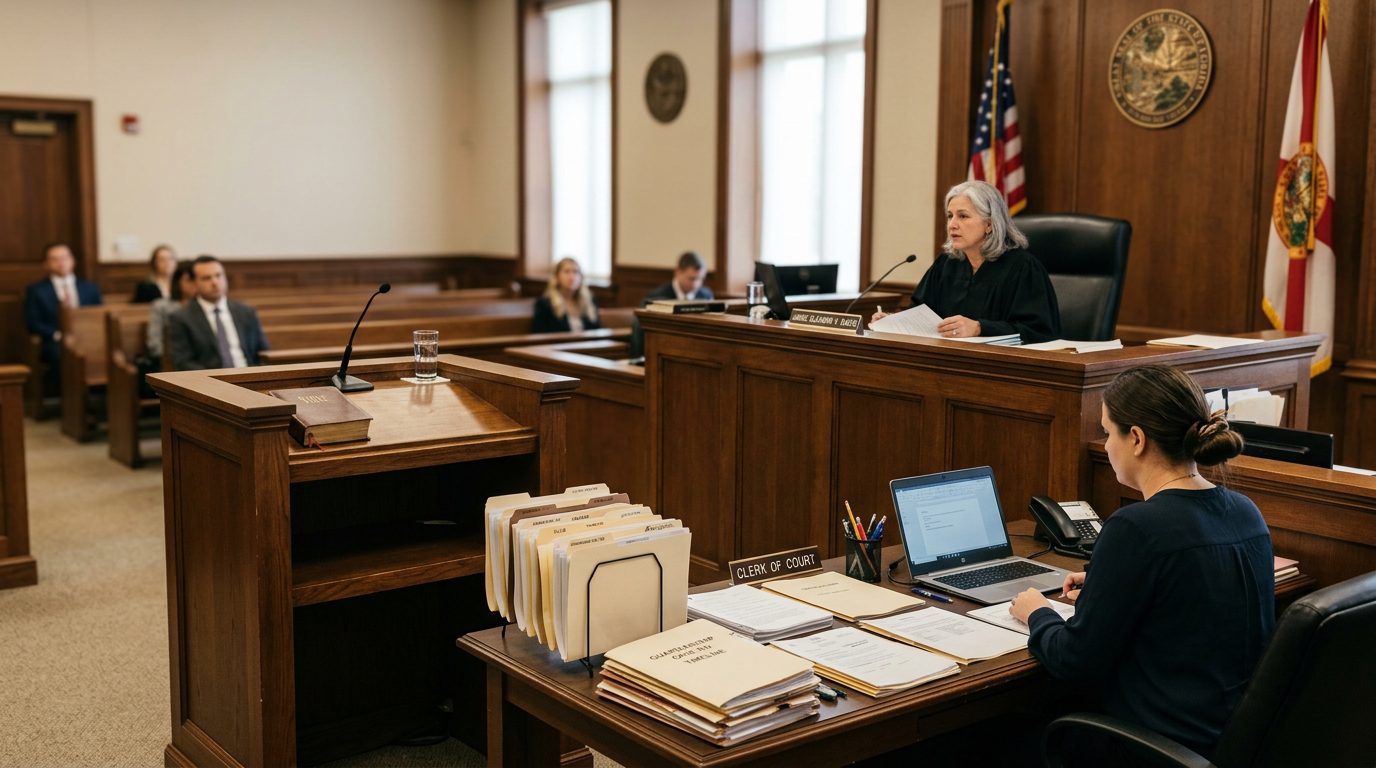
Plenary Guardianship | South Florida and Statewide
Plenary Guardianship in Florida: Understanding Each Step of the Timeline
Robinson Casey focuses on guardianship and Marchman Act matters. Learn how a plenary guardianship case typically moves through the court, and when to bring in a lawyer.
By Richard J. Casey III, Esq. · Published October 20, 2026
Why the timeline is hard to pin to one number
How long does it typically take to obtain plenary guardianship? The answer depends on the facts of each case.
If you’re reading this, a parent, spouse, or other relative may be losing the ability to manage money or make safe decisions. You may be trying to plan while your family is still deciding what comes next.
Under Fla. Stat. § 744.361, a guardian of an incapacitated person may exercise only the rights the court removed from the ward and delegated to the guardian; a guardian of a minor exercises the powers of a plenary guardian. That limit is why the court takes each step seriously.
Knowing the order of events helps you plan and ask better questions. Where the delays come from matters just as much as the total time.
If a family member's safety or finances are on your mind today, you don't have to work through these steps alone, and we're glad to talk with you. Talk it through with our team — the first consultation is free, confidential, and carries no obligation.

The stages from petition to appointment
The case moves from a verified petition, to notice, to an examining committee, to a hearing, and then to letters of guardianship.
Filing the verified petition
The petition must be verified. The petition must state, among other things, the person’s name, age, residence, and post office address, the nature of the incapacity, the name of the proposed guardian and why that person should be appointed, and the proposed guardian’s relationship and previous relationship to the person. Under Fla. Stat. § 744.334, a petition for the appointment of a guardian must state the extent of guardianship desired, either plenary or limited, and must include the names and addresses of the next of kin, if known to the petitioner. Gathering these facts before filing keeps the petition complete from the start.
Notice and the examining committee
Within 5 days after the petition is filed, the court must appoint a three-member examining committee. Under Fla. Stat. § 744.331, the comprehensive examination must include, if indicated, a physical examination, and each examining committee member files a written report of it. Notice of the petition and hearing must be read to the alleged incapacitated person. It must also go to that person’s attorney and to all next of kin named in the petition (same statute). The statute, Fla. Stat. § 744.331, describes this evaluation and the hearing that follows.
Hearing and letters of guardianship
The hearing decides whether the person is incapacitated. If the guardianship petition is heard when that hearing ends, the court hears it without further notice. A later hearing needs reasonable notice (Fla. Stat. § 744.3371). Letters of guardianship then issue. They must state whether the guardianship is plenary or limited (Fla. Stat. § 744.345).
Factors that lengthen or shorten each stage of plenary guardianship
Service, committee scheduling, the court’s calendar, and family disagreement cause most of the timing differences.
- Locating and serving people. Everyone named must receive notice, including next of kin. Finding people and serving them takes time.
- Committee reports. Each member of the examining committee must file his or her report with the clerk of the court within 15 days after appointment.
- Committee members. Members may not be related to or associated with one another, the petitioner, counsel for the petitioner or the proposed guardian, or the person. Committee members assess information provided by the attending or family physician, if any, together with the results of the comprehensive examination (same statute). Finding qualified members takes time.
- Court calendar. Hearing dates depend on each county’s docket.
- Disagreement. If relatives dispute the petition or the proposed guardian, the case takes longer than an uncontested one.
- Property details. The petition must state the nature and value of any property subject to the guardianship (Fla. Stat. § 744.334). Larger estates mean more to document.
Gathering addresses, next-of-kin details, and property records before filing helps keep the case moving.
How plenary guardianship differs from emergency and limited options
Emergency temporary guardianship is a faster, separate tool for immediate danger. Limited guardianship gives powers only in the areas the court lists.
An emergency temporary guardian can be appointed after a petition is filed. The court must specifically find that there appears to be imminent danger that the physical or mental health or safety of the person will be seriously impaired, or that the person’s property is in danger of being wasted, misappropriated, or lost, unless immediate action is taken (Fla. Stat. § 744.3031). That authority lasts 90 days after appointment or until a guardian is appointed, whichever comes first. It can be extended for another 90 days if emergency conditions still exist (same statute). Notice must be served at least 24 hours before the hearing, unless the petitioner shows that substantial harm would occur.
Limited guardianship follows a different path in its paperwork. The letters must state the powers and duties of a limited guardian (Fla. Stat. § 744.345). Talking through the facts with a lawyer helps sort out which type fits.
What a plenary guardian does and what follows appointment
The court’s timeline keeps running after the hearing.
Letters state whether the guardianship covers the person, the property, or both (Fla. Stat. § 744.345). A guardian is a fiduciary.
Within 60 days after the letters are signed, the guardian must file an initial report. For property, that report is a verified inventory (Fla. Stat. § 744.362). The inventory lists property, its location, claims, and all income sources, including social security and pensions (Fla. Stat. § 744.365). For the person, the initial report is an initial guardianship plan.
Annual filings continue. A guardian of the property files an annual accounting on or before April 1 each year, unless the court sets another basis (Fla. Stat. § 744.367).
If the ward is not a minor or totally incapacitated, the guardian shall review a copy of the annual report with the ward, to the extent possible (same statute as above).

Talking with a Florida guardianship lawyer about your family’s timeline
If you’re caring for a parent or relative right now, these timing questions are likely weighing on you.
Frequently asked questions
How long does it typically take to obtain plenary guardianship?
Florida law sets deadlines for individual steps. For example, each examining committee member must file his or her report with the clerk of the court within 15 days after appointment.
What does a plenary guardian do?
A plenary guardian is appointed when the court finds, under Fla. Stat. § 744.331(6), that the person is incapacitated with respect to all rights, and the guardian then exercises those rights on the person’s behalf.
Is the first consultation free?
Yes. Our first consultation is free, confidential, and carries no obligation to continue.
If a family member’s safety or finances are on your mind, you don’t have to sort out these steps alone. Call (561) 849-4149 or request a consultation with our team.
Responsible lawyer: Richard J. Casey III, Esq., Robinson Casey, serving Miami-Dade, South Florida, and families statewide. For the full process, read our plenary guardianship guide.
The Main Stages of a Plenary Guardianship Case
Petition and Filing
The process begins when a petition is filed with the circuit court asking for a determination of incapacity and the appointment of a guardian.
Examining Committee
The court appoints an examining committee to evaluate the alleged incapacitated person and report its findings to the court.
Notice and Hearing
Interested persons receive notice, and the court holds a hearing to review the evidence and the committee's reports before deciding the case.
Letters of Guardianship
If the court finds incapacity, it appoints the guardian and issues letters of guardianship, after which the guardian's duties begin.
What Families Can Expect When They Work With Robinson Casey
Confidential First Consultation
Your free first consultation is confidential and comes with no obligation to continue.
Clear Step-by-Step Guidance
We explain each filing, report and hearing so you know what comes next.
Plain-Language Answers
Court procedures can be confusing. We focus on answering your questions in terms you can understand.
Direct Access to Our Office
Call (561) 849-4149 to speak with our team about your family's situation.
Every Case Moves at Its Own Pace
Court calendars, examining committee reports and hearing dates can all affect how long a plenary guardianship case takes. Do not assume your timeline matches someone else's. Speak with our office about the specific facts of your case.