
Marchman Act & Guardianship | Miami-Dade and South Florida
When Your Adult Child Won't Go to Treatment for Fentanyl Addiction
Robinson Casey limits its practice to Marchman Act petitions and guardianship matters for families across South Florida and statewide. Your first consultation is free, confidential, and carries no obligation to continue.
By Richard J. Casey III, Esq. · Published October 19, 2026
If your adult child uses fentanyl and won’t go to treatment, Florida’s Marchman Act may offer a legal route. It lets a family ask a court to order an involuntary assessment and, if the legal criteria are met, involuntary treatment. The court makes that decision, not the family. This page explains the process in plain language. It is general information about Florida law, not advice about your family’s specific facts.
Where You Are Right Now
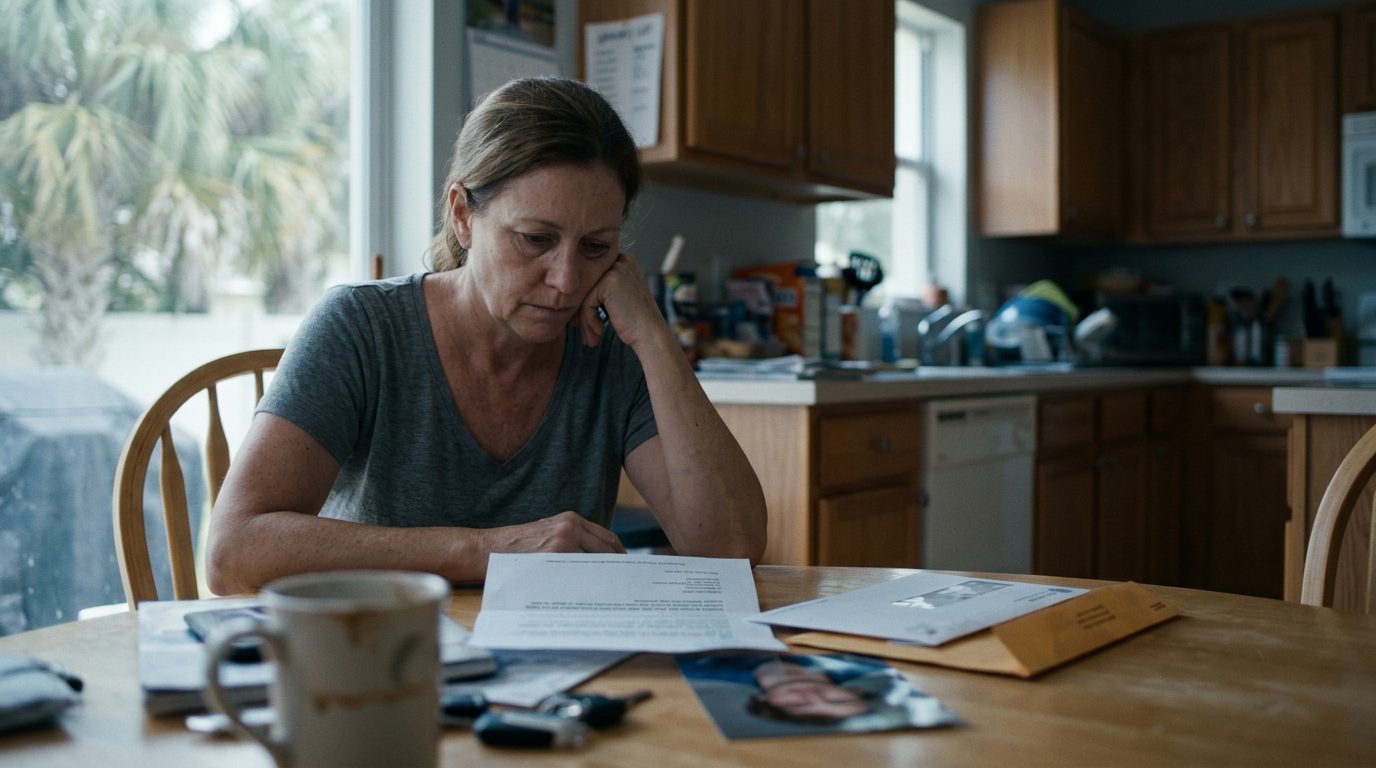
Most families in this spot are scared, worn out, and making choices they never expected to make. Your adult child may be using fentanyl and may have said no to help. You may be the one carrying every phone call and every sleepless night.
Looking up legal options is a normal step when a family feels out of control. You do not have to decide anything today. Read this page for an overview first, then decide what, if anything, comes next.
Keep in mind that Florida’s test looks at the person’s condition and choices, not only the family’s worry. That is why facts and dated records matter more than strong feelings. Start by writing down what you have already tried. A short list helps you think clearly when a crisis hits.
If your adult child is using fentanyl and turning down help, you don't have to sort out the legal options alone. Our team is ready to talk it through with you. Talk it through with our team — the first consultation is free, confidential, and carries no obligation.

Why Fentanyl Changes the Urgency
Fentanyl makes waiting risky, and Florida law pays close attention to real danger.
Families often describe not knowing what a pill or powder really contains. That uncertainty is one reason a family may feel they cannot wait.
Acting early also helps you gather facts while they are fresh. Thin facts can sink a petition. A Florida appeals court ordered a case dismissed where the petition did not give a good-faith reason to believe the statutory criteria were met (D.H. v. K.J.R.). So urgency is a reason to organize your facts now, not a reason to file in a rush.
Signs Your Adult Child May Need More Than Encouragement
The key signs are a loss of control over substance use and a refusal of help that comes from impaired judgment. It asks whether there is good faith reason to believe the person is substance abuse impaired or has a substance use disorder and a co-occurring mental health disorder and, because of that, has lost the power of self-control with respect to substance abuse, and whether either the person needs substance abuse services and impaired judgment makes them incapable of appreciating that need and of making a rational decision about it (although simply refusing services is not, by itself, evidence of lack of judgment) or, without care or treatment, the person is likely to neglect or refuse to care for themselves in a way that poses a real and present threat of substantial harm that it is not apparent can be avoided through the help of willing, able, and responsible family members or friends or the provision of other services, or there is substantial likelihood that the person has inflicted, threatened, or attempted to inflict, or is likely to inflict, physical harm on themselves or another (Fla. Stat. § 397.675).
Families often describe patterns like these:
- Repeated use despite problems at work, with money, or with health
- Secrecy about where your child goes or what they take
- Money that goes missing or is borrowed
- Changes in sleep, work, or school
- Promises to stop that do not hold
The statute also says that a mere refusal of services is not, by itself, evidence of impaired judgment. Fla. Stat. § 397.675 reads: “(b) Without care or treatment, is likely to suffer from neglect or refuse to care for himself or herself; that such neglect or refusal poses a real and present threat of substantial harm to his or her well-being; and that it is not apparent that such harm may be avoided through the help of willing, able, and responsible family members or friends or the provision of other services, or there is substantial likelihood that the person has inflicted, or threatened to or attempted to inflict, or, unless admitted, is likely to inflict, physical harm on himself, herself, or another.” You do not need to diagnose addiction. Clinicians and the court make their own assessments.
Keep a written log. For each event, write the date, the time, what you saw or heard, and who else was there. Stick to facts, not guesses. A petition must give the reasons for the petitioner’s belief, so specific notes are useful (Fla. Stat. § 397.68141).
How Florida’s Marchman Act Works for an Adult Child
The Marchman Act is Florida’s civil process for involuntary assessment and treatment for substance use impairment.
Many families don’t know they can file. For an adult, a petition may be filed by a spouse or legal guardian, any relative, a service provider, or an adult with direct personal knowledge of the impairment and prior treatment (Fla. Stat. § 397.68112). A parent is a relative, so a parent can file.
For an adult, a petition for involuntary treatment services may be filed by a qualifying person, and it goes to the clerk of the court in the county where the person is located (Fla. Stat. § 397.681). The clerk may not charge a fee to file it (Fla. Stat. § 397.681). A Florida appeals court has said that filing in the wrong county is a venue problem, not a loss of jurisdiction (J.P. v. J.N.).
After filing, the court decides whether the person needs a lawyer. It must set a hearing within 10 court working days unless a continuance is granted (Fla. Stat. § 397.68151).
The statute on counsel and hearings does not set the burden of proof; the court must schedule a hearing on the petition within 10 court working days unless a continuance is granted (Fla. Stat. § 397.68151). Under Fifth District decisions, a judge may not call and question the only witness when the petitioner is absent (J.C. v. State). The Fourth District has certified a conflict with that line of cases (J.J.J. v. D.G.), so treat that rule as Fifth District law.
What a Clinical Assessment Involves
A clinical assessment is an evaluation by a qualified professional, and the court generally needs one before it orders treatment. The court shall hear and review all relevant evidence, including the results of the assessment completed by the qualified professional, and the respondent must be present at the hearing unless he or she knowingly, intelligently, and voluntarily waives the right to be present or, upon receiving proof of service and evaluating the circumstances of the case, the court finds that his or her presence is inconsistent with his or her best interests or is likely to be injurious to self or others (Fla. Stat. § 397.6957).
The assessor’s report goes to the court. It must recommend a level of substance abuse treatment, if any, and note any co-occurring mental health needs.
An emergency ex parte order may be entered without appointing an attorney under Fla. Stat. § 397.6818, and it must be executed during the period when the hearing on the petition for treatment is pending. A provider may hold the person for no more than 72 hours of observation, unless a listed exception applies (Fla. Stat. § 397.6818).
Your role is to give accurate background. For the step-by-step detail, see the Marchman Act clinical assessment guide.
Privacy, Employers, and Insurers: Who Learns About the Case
Court petitions, orders, and related records are confidential. The clerk may not publish personal identifying information on a court docket or in a publicly accessible file (Fla. Stat. § 397.6760). Only listed people may receive copies, such as the petitioner, the respondent, and their attorneys.
Federal law adds another layer for certain treatment programs. Records that identify a patient in a federally assisted substance use program are confidential. They may be disclosed only as authorized, and generally may not be used against the patient in any civil, criminal, administrative, or legislative proceeding without the patient’s consent or an appropriate court order (federal substance use records law).
How any employer or insurer responds depends on the facts of each case and the records involved. For a fuller explanation, read the employer and insurer privacy guide.
Not sure what your next step is?
Talk it through with our team — the first consultation is free, confidential, and carries no obligation.
Other Florida Paths and When Guardianship Is a Different Question
Voluntary treatment is the least restrictive route. A person who wants treatment can apply to a service provider for voluntary admission. Within the financial and space capabilities of the service provider, a person must be admitted to treatment when sufficient evidence exists that the person is impaired by substance abuse and the person’s medical and behavioral conditions are not beyond the provider’s safe management capabilities (Fla. Stat. § 397.601). Some families encourage this step before or alongside a court petition.
Guardianship is a different legal question. It concerns a person who cannot manage personal or financial decisions because of incapacity. Florida’s petition to determine incapacity may be executed by an adult. Florida law requires the verified petition to identify, as far as the petitioner knows, which of the rights listed in section 744.3215 the person cannot exercise, and if the petitioner lacks enough experience to make that judgment, the petition must say so (Fla. Stat. § 744.3201).
A Marchman petition is about substance use impairment. If your main concern is a broader inability to manage daily affairs, that question belongs in a separate analysis.
Steps Families Take While the Legal Question Is Open
Safety comes first. Make a plan for emergencies. Decide who will call 911, where the phone numbers are posted, and who can stay with your child during a crisis. Florida residents can contact 988 for immediate crisis support (Florida Department of Health mental health resources).
Set clear boundaries about money and housing. Decide in advance what you will pay for and what you will not. Write those rules down, keep them lawful, and apply them the same way each time. Many families find that consistency is easier said than done, so put the plan on paper.
Caregiver stress is real. Protect your own sleep and health. Talk with someone you trust, and keep your log going. Looking after yourself helps you think clearly when decisions come up.
Questions to Prepare Before Speaking with a Florida Attorney
Bring a short list to your first conversation. Include the county where your adult child is located, the substance involved, any recent overdoses or emergencies, and prior treatment attempts. Bring your dated notes and any prior assessment or discharge papers you have.
Write down the questions you want answered. Ask what a petition would need to say in your situation. Ask what the timeline could look like after filing, who would be involved, and what privacy protections would apply.
Written notes and dates make the first conversation more productive. Facts are easier to work with than general worry.
Common Questions Families Ask
Can a parent file a Marchman Act petition for an adult child?
Yes. For an adult respondent, a petition for involuntary treatment services may be filed by the respondent’s spouse or legal guardian, any relative, a service provider, or an adult who has direct personal knowledge of the respondent’s substance abuse impairment and prior course of assessment and treatment (Fla. Stat. § 397.68112).
Does filing a Marchman Act petition cost a clerk fee?
No. The clerk may not charge a fee to file the petition (Fla. Stat. § 397.681).
Does my adult child have a right to a lawyer?
Yes. The respondent has the right to counsel at every stage of a judicial proceeding on an involuntary treatment petition, but the respondent may waive that right if the respondent is present and the court finds that such waiver is made knowingly, intelligently, and voluntarily.
Can a court act before the hearing?
In an emergency, a court may enter an ex parte order for assessment and stabilization before the hearing (Fla. Stat. § 397.6818).

Talking Through Your Family’s Situation with Robinson Casey
Richard J. Casey III, Esq. is the responsible lawyer for this page. Robinson Casey limits its practice to Marchman Act petitions and guardianship matters. The firm serves families across South Florida and statewide, including Miami-Dade.
If your adult child is using fentanyl and refusing help, you may be trying to understand what the law allows while also keeping your child safe. You do not have to work through that alone. The first consultation is free, confidential, and carries no obligation to continue. Call (561) 849-4149 or use the contact form to start the conversation.
This page is lawyer advertising. It is general information, not legal advice about your family’s facts.
Why Families Bring Their Situation to Robinson Casey
A Focused Practice
Robinson Casey focuses exclusively on Marchman Act petitions and guardianship matters, so every case is handled within those areas of law.
Free, Confidential First Consultation
Talk through your family's situation in a private setting. The first consultation is free and comes with no obligation to continue.
Serving South Florida and Statewide
The firm represents families in Miami-Dade and throughout South Florida, and assists clients across the state.
Speak With Our Team
Call (561) 849-4149 to reach the firm. Our team, including the support staff in the office, can help you understand the next step.
Fentanyl Overdose Can Happen Quickly
If your adult child is in immediate danger, is unresponsive, or has overdosed, call 911 right away. A legal petition is a separate step and should not replace emergency medical care.
Legal Paths Robinson Casey Handles
Marchman Act Petitions
Petitions for involuntary assessment and treatment of an adult with substance use impairment, including involuntary commitment for addiction.
Emergency Temporary Guardianship
Urgent court requests for temporary guardianship when a family member faces an immediate risk and needs prompt court involvement.
Limited or Plenary Guardianship
Guardianship options matched to the level of decision-making support a loved one needs, from limited to plenary arrangements.
Mental Health Guardianship
Guardianship matters for adults whose mental health condition affects their ability to make safe decisions about care and daily life.