
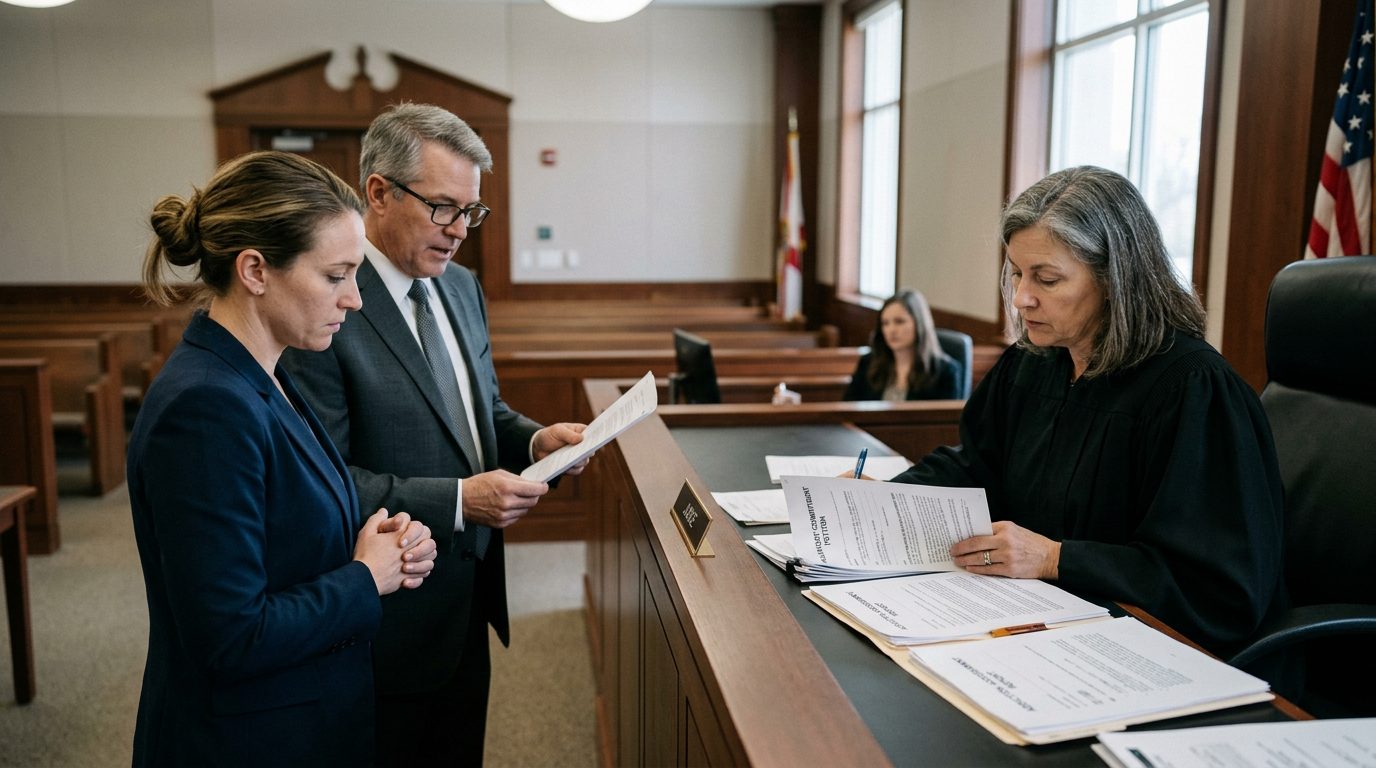
Involuntary Commitment
Challenge or Appeal an Involuntary Commitment Order
You have legal options to contest or modify an involuntary commitment. Robinson & Casey helps families navigate the appeal process and protect their rights.
By Richard J. Casey III, Esq. · Published September 22, 2026
Can an Involuntary Commitment Order for Addiction Be Challenged or Appealed in Florida?
Yes. An involuntary commitment order for addiction is not final or unchangeable. Florida law gives you specific procedural rights to challenge, appeal, or modify the order at multiple stages—during the initial hearing, through appeal to a higher court, or by petition for modification after the order is issued. Understanding these rights is essential to protecting your liberty and ensuring the court has accurate information before making its decision.
If you've received a Marchman Act petition or an involuntary commitment order for addiction, you have specific legal rights to respond—and people facing that decision can reach out to us to understand their options. Talk it through with our team — the first consultation is free, confidential, and carries no obligation.

Understanding Your Right to Challenge an Involuntary Commitment Order
An involuntary commitment order is not a permanent judgment carved in stone. Florida law recognizes that circumstances change, evidence can be challenged, and procedural errors can occur. The law provides respondents—the person subject to the petition—with multiple opportunities to contest or appeal the order.
You can challenge the commitment at three key points: first, at the initial hearing before the judge issues the order; second, by filing an appeal after the order is issued; and third, by petitioning the court to modify or terminate the order if your situation has changed. Each stage has its own legal standards, deadlines, and strategic considerations. Understanding where and how to raise your challenge significantly affects your ability to protect your rights.
Grounds for Challenging an Involuntary Commitment Order
Florida law allows you to challenge an involuntary commitment order on several grounds:
Lack of probable cause. The petitioner must prove that you meet the legal criteria for commitment. If the evidence doesn’t support that conclusion, the order should not be issued.
Insufficient evidence of addiction or substance use disorder. The petitioner must present credible, specific evidence of your substance use—not speculation or rumor. Vague or contradictory evidence can be challenged.
Procedural errors in filing or service. If the petition wasn’t properly filed, or if you weren’t properly notified of the hearing, those errors can be grounds for dismissal or appeal.
Violation of due process rights. You have the constitutional right to notice, to be present at the hearing, to have an attorney, and to present evidence and cross-examine witnesses. Denial of these rights is a serious violation.
Inappropriateness of the proposed facility. If the treatment facility named in the petition is unavailable, unsuitable, or unable to meet your medical needs, that’s a valid objection.
Failure to consider less restrictive alternatives. Florida law requires that less restrictive alternatives to involuntary commitment be considered before an order is issued. If the court or petitioner didn’t adequately explore outpatient treatment, voluntary admission, or other less intrusive options, that failure can be grounds for challenging the order.
The Initial Hearing: Your First Opportunity to Respond
The initial hearing is often your most direct and powerful opportunity to prevent or limit the commitment. Florida law requires a hearing within a specific timeframe after a Marchman Act petition is filed. At this hearing, you have the right to be present and represented by counsel.
The petitioner must present evidence supporting the commitment. This might include testimony from family members, medical records, statements about your substance use, or observations of your behavior. You then have the right to present your own evidence, testimony, and arguments against the order. You can call witnesses, present documents, and cross-examine the petitioner’s witnesses to challenge their credibility or accuracy.
The judge decides whether probable cause exists to issue the commitment order. This is not a trial—the standard is lower than “beyond a reasonable doubt.” But it is a real hearing where your voice and evidence matter. Many commitment orders are prevented or narrowed at this stage because the respondent’s attorney identifies weaknesses in the petitioner’s case or presents compelling evidence of less restrictive alternatives.
Appeal Rights After an Involuntary Commitment Order Is Issued
If the court issues an involuntary commitment order despite your objections, you have the right to appeal. Appeals must generally be filed within a specific timeframe set by Florida law. Missing the deadline can result in loss of your appeal rights, so timing is critical.
The appeal is heard by a higher court, which reviews the lower court’s decision. The appellate court examines whether the judge applied the law correctly and whether the evidence in the record supports the order. Grounds for appeal include legal errors, insufficient evidence, or procedural violations that occurred at the initial hearing.
Important: An appeal does not automatically stop the commitment. You may remain committed during the appeal process unless the court grants a stay (a temporary halt to the order). This is why modification petitions and legal representation are so important—they can address your situation more immediately while an appeal is pending.
Legal representation is strongly advisable for appeals. Appeals involve complex procedural and legal requirements, strict deadlines, and technical arguments that require experience and skill.
Modification or Termination of the Commitment Order
Even after an order is in place, you or your attorney can petition the court to modify or terminate it. You don’t have to wait for a formal appeal process. Grounds for modification include changed circumstances, successful treatment progress, new evidence, or a change in your condition that makes continued commitment unnecessary.
You can request a hearing to present evidence that commitment is no longer necessary or that a less restrictive form of commitment (such as limited guardianship instead of plenary guardianship) would be appropriate. Courts may reduce the scope of commitment or terminate it entirely based on this evidence. This path is often faster and more practical than a full appeal.
Not sure what your next step is?
Talk it through with our team — the first consultation is free, confidential, and carries no obligation.
The Role of Legal Representation in Challenging an Order
An attorney plays a critical role at every stage of challenging an involuntary commitment order. A lawyer can identify procedural errors or weaknesses in the petitioner’s case that you might not see. They prepare evidence and witnesses to present at the hearing, ensuring your defense is organized and credible.
Legal counsel ensures all procedural deadlines are met and all your rights are protected. Missing a deadline or failing to raise an issue at the right time can forfeit your right to raise it later. An attorney tracks these requirements carefully.
Representation is especially important in appeals, where technical legal arguments and proper briefing are critical. An attorney can negotiate with the petitioner or propose alternative arrangements that might resolve the matter without a full hearing or appeal. Having counsel present signals to the court that your rights are being taken seriously.
Timeline and Procedural Deadlines
Florida law sets strict timelines for filing petitions, holding hearings, and filing appeals. The initial hearing must occur within a certain number of days of the petition being filed. Appeals must be filed within a specific window after the order is issued. Petitions for modification can be filed at any time if circumstances have changed.
Missing a deadline can result in loss of important rights. An attorney can ensure all deadlines are tracked and met, protecting your ability to challenge the order at each stage.
What Happens During the Appeal Process
The appellate court reviews the record from the lower court hearing—the transcript, evidence, and documents from the initial proceeding. The court examines whether the judge applied the law correctly to the facts presented.
New evidence is generally not presented during appeal; the appeal focuses on legal and procedural issues that occurred at the lower court hearing. Both sides submit written briefs explaining their legal arguments. The court may schedule oral arguments where attorneys present their case to a panel of judges.
The appellate court issues a written decision affirming (upholding), reversing (overturning), or modifying the lower court’s order. This decision becomes part of the legal record and may be cited in future cases.
Key Protections for Respondents in Florida
Florida law provides you with essential protections:
- The right to notice of the petition and the hearing
- The right to be present at the hearing
- The right to legal representation
- The right to present evidence and cross-examine witnesses
- The right to appeal an unfavorable decision
- The right to petition for modification if circumstances change
- Constitutional protection against deprivation of liberty without due process
These rights exist to ensure that commitment orders are issued only when the legal criteria are genuinely met and that your voice is heard before your liberty is restricted.
When to Seek Legal Help
The best time to seek legal help is immediately upon receiving notice of a Marchman Act petition. Early intervention increases your options and strengthens your position. Before the initial hearing, an attorney can prepare your defense, identify weaknesses in the petitioner’s case, and organize evidence and witnesses.
If an involuntary commitment order has already been issued, an attorney can advise you on appeal rights, modification petitions, and other remedies. If you believe your rights were violated during the process, legal counsel can identify those violations and raise them at the appropriate stage.
If you've received a Marchman Act petition or an involuntary commitment order for addiction, you have specific legal rights to respond—and people facing that decision can reach out to us to understand their options. Talk it through with our team — the first consultation is free, confidential, and carries no obligation.

Frequently Asked Questions
Can I appeal an involuntary commitment order while still in treatment?
Yes. You can file an appeal or petition for modification at any time, whether you are in treatment or not. An appeal does not require you to leave the facility; it proceeds through the courts while you remain in care.
What if I miss the deadline to appeal?
Missing the appeal deadline can result in loss of your right to appeal. This is why immediate legal representation is critical. An attorney ensures all deadlines are tracked and met.
Can the commitment order be changed to a less restrictive form?
Yes. You can petition the court to modify the order from plenary guardianship to limited guardianship, or to impose other conditions that are less restrictive. Courts may grant modification if circumstances support it.
Do I have to pay for an attorney?
Robinson & Casey handles involuntary commitment cases. Contact us to discuss your situation and learn about representation options for your case.
If you’ve received a Marchman Act petition or an involuntary commitment order for addiction, you have specific legal rights to respond—and people facing that decision can reach out to us to understand their options. Contact Robinson & Casey today to schedule a consultation and discuss how we can help you challenge or appeal the order.
Time Matters
Deadlines apply to appeals and petitions for modification of involuntary commitment orders. Acting quickly preserves your legal options and ensures compliance with court procedures.
Your Appeal Options
Appeal the Original Order
Challenge the legal basis or findings of the involuntary commitment order through the appellate process. This path examines whether the court properly applied the law to your circumstances.
Petition for Modification
Request that the court modify or terminate the commitment order based on changed circumstances, new evidence, or your progress in treatment. This can happen while you remain in care.
Challenge Conditions or Duration
Contest specific terms of the commitment—such as the facility, treatment requirements, or the length of the order—without necessarily overturning the entire commitment.
Seek Early Release or Discharge
Present evidence to the court that continued commitment is no longer necessary and request that you be released from the facility or the order be terminated.
Why Robinson & Casey for Your Appeal
Focused Practice in Commitment Law
We focus exclusively on Marchman Act petitions, guardianship matters, and involuntary commitment cases. We know the statutes, the courts, and the procedures that govern these orders.
Protection of Your Rights
We advocate for fair treatment and due process. Your voice matters in court, and we work to ensure your position is heard and your legal options are fully explored.
Prompt Action on Tight Deadlines
Appeal and modification deadlines are strict. We move quickly to file the right motions and petitions on time, so you don't lose your opportunity to challenge the order.
Direct Access to Our Team
You reach our attorneys directly. We handle your case personally and keep you informed every step of the way.
Common Questions About Appeals
Can I appeal while still in treatment?
Yes. You can file an appeal or petition for modification at any time, whether you are in treatment or not. An appeal does not require you to leave the facility; it proceeds through the courts while you remain in care.
What if I miss the deadline?
Missing an appeal deadline can severely limit your options. That's why it's critical to contact an attorney as soon as you learn of the commitment order. We can advise you on whether relief is still available and what steps to take immediately.
What do I need to prove to win an appeal?
The grounds for appeal depend on the type of commitment and the specific order. Common challenges include procedural errors, lack of evidence, or changed circumstances. We review your case to identify the strongest legal arguments.
How long does an appeal take?
Timeline varies based on the court, the complexity of the case, and whether the other side contests your petition. We work efficiently to move your case forward while building the strongest possible argument.
Ready to Discuss Your Appeal Options?
Related practice areas
- Involuntary Commitment for Addiction in Florida
- Involuntary Commitment vs. Voluntary Addiction Treatment in Florida
- Involuntary Commitment Hearing for Addiction in Florida