
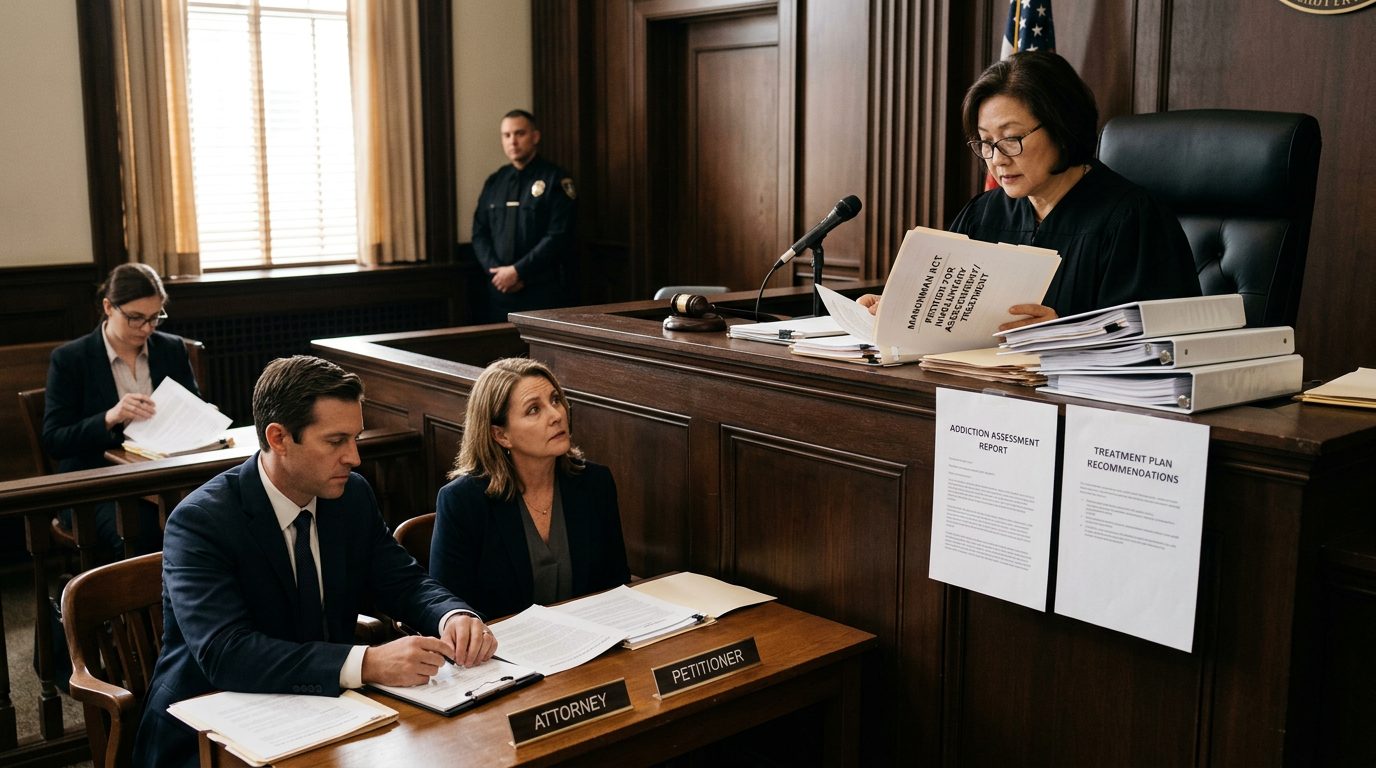
Marchman Act & Involuntary Commitment
How Long Does Involuntary Commitment for Addiction Last in Florida?
Understanding commitment duration, renewal options, and what happens when treatment is complete.
By Richard J. Casey III, Esq. · Published September 21, 2026
How Long Does Involuntary Commitment for Addiction Last in Florida? Duration and Renewal Explained
Under Florida’s Marchman Act (Chapter 397, Florida Statutes), an initial involuntary commitment for addiction typically lasts up to 6 months from the date the court enters the commitment order. However, the actual duration depends on the individual’s clinical needs, treatment progress, and the court’s findings—and families need to understand what happens when that period ends, whether renewal is possible, and how to plan ahead.
This guide walks you through the full timeline of involuntary commitment for addiction in Florida, from the initial order through renewal decisions, so you know what to expect at each stage.
If you're facing the end of a commitment period and wondering whether renewal makes sense for your family member's recovery, our team can walk you through your options and the court process ahead. Talk it through with our team — the first consultation is free, confidential, and carries no obligation.

Initial Duration of Involuntary Commitment for Addiction in Florida
The court may order involuntary commitment for up to 6 months when it finds that a person is unable or unwilling to seek treatment and poses a threat to themselves or others due to substance use.
The specific length of the initial commitment order is not automatic. The court considers clinical evidence, treatment provider recommendations, the severity of the addiction, and the individual’s circumstances when setting the duration. One person might receive a 3-month order; another might receive the full 6 months. The judge has discretion to tailor the length to what the evidence supports.
It’s important to understand that the commitment period begins on the date the court signs the order, not the date the person enters a treatment facility. If the court enters an order on Monday but the person doesn’t arrive at the facility until Wednesday, the 6-month clock starts on Monday.
Emergency Temporary Commitment vs. Full Commitment
Many families encounter an emergency ex parte commitment first. This is a temporary hold that can last up to 5 days without the person present at a hearing. During those 5 days, the court must hold a full hearing to decide whether to issue a longer-term commitment order. If the court finds grounds exist, it may then issue a full commitment order lasting up to 6 months. These are two separate legal steps, and understanding the difference helps families avoid confusion about timelines.
What Happens When the Initial Commitment Period Ends
As the commitment period nears its end, the treatment facility must begin discharge planning and reassessment. The facility evaluates whether the person has made progress, whether they remain a danger to themselves or others, and whether continued commitment is clinically necessary.
The commitment does not automatically renew. When the 6-month period expires, the person is discharged unless a new petition for renewal has been filed and approved by the court before that date. Many families are surprised to learn that they must take action—they cannot simply assume the commitment will continue.
At this stage, the individual may transition to voluntary treatment, outpatient care, or aftercare programs. Some people choose to remain in treatment voluntarily after the commitment ends. Others may need additional support through community resources, counseling, or support groups. The treatment facility typically helps coordinate this transition and may refer the person to ongoing services.
Renewing or Extending Involuntary Commitment for Addiction
If the individual still poses a danger to themselves or others and remains unwilling or unable to seek treatment, family members, treatment providers, or other interested parties may petition the court to renew the commitment before the initial order expires.
The renewal petition must be filed before the commitment period ends. The court will not automatically extend commitment without a new petition and hearing. This means families need to coordinate with the treatment facility and their attorney well in advance—typically 30 to 60 days before expiration—to gather the clinical evidence and file the renewal petition on time.
At the renewal hearing, the petitioner must present evidence that the grounds for commitment still exist: that the person remains unable or unwilling to seek treatment and continues to pose a danger to self or others. The court hears testimony from the treatment provider, the individual, family members, and others with relevant knowledge. The individual has the right to be present, to have an attorney, and to contest the renewal.
Duration of Renewed Commitment Orders
A renewed commitment order may also last up to 6 months, though the court has discretion to order a shorter or longer period based on the clinical evidence presented at the renewal hearing. Some renewals are for 3 months; others span the full 6 months. The court considers whether progress is being made, whether the person is engaging in treatment, and what the treatment provider recommends.
Florida law does not specify a maximum number of times commitment can be renewed. If grounds continue to exist at the end of each renewal period, the court may order successive renewals. However, each renewal requires a new petition, a new hearing, and new evidence—the court does not grant automatic, indefinite commitment.
This means families may face multiple renewal decisions over months or years, depending on the individual’s progress and willingness to engage in treatment.
Factors the Court Considers in Duration and Renewal Decisions
When setting the length of an initial or renewed commitment order, the court weighs several factors:
- Progress in treatment. Has the person engaged in therapy, counseling, or medical treatment? Are they showing signs of recovery or relapse?
- Current substance use or relapse history. Has the person used drugs or alcohol during the commitment period? Do they have a pattern of returning to use?
- Likelihood of danger to self or others. Does the evidence show ongoing risk, or has the risk diminished?
- Willingness to engage in voluntary treatment. Would the person agree to continue treatment without a court order?
- Clinical and medical recommendations. What does the treatment provider, physician, or mental health professional recommend regarding continued commitment?
The court also considers whether substance use disorder is present. The National Institute on Drug Abuse (NIDA) recognizes substance use disorder as a medical condition affecting the brain’s reward, motivation, and control systems. Courts understand that recovery is often a long-term process and that relapse does not necessarily mean commitment has failed—it may mean more time or a different treatment approach is needed.
Not sure what your next step is?
Talk it through with our team — the first consultation is free, confidential, and carries no obligation.
Early Termination or Modification of Commitment
Commitment does not have to last the full ordered period if circumstances change significantly. The individual, family members, or the treatment facility may petition the court to terminate commitment early or modify its terms if:
- The person has made substantial progress and no longer poses a danger to self or others.
- The individual agrees to voluntary treatment and the court finds the danger has been reduced.
- New evidence shows that the grounds for commitment no longer exist.
The court has authority to modify the commitment order—for example, by shortening the duration, changing the treatment facility, or adjusting the conditions. However, early termination is not automatic. The petitioner must present evidence to the court, and the judge must find that modification is appropriate.
Planning Ahead: What Families Should Know About Commitment Duration
Understanding the full timeline before petitioning for involuntary commitment helps families make informed decisions and prepare for what comes next.
Before filing a petition, discuss the likely commitment duration and renewal process with your attorney. Ask the treatment facility how long they recommend commitment and what their discharge planning process looks like. Understand that you may need to decide whether to pursue renewal months down the road, and that decision will depend on your family member’s progress and clinical needs at that time.
During the commitment period, keep detailed records of your family member’s treatment participation, any relapses or concerning behavior, and communications with the treatment facility. These records become critical evidence if renewal is necessary. Stay in regular contact with the treatment provider and your attorney, especially as the commitment period nears its end.
Well before the expiration date—ideally 60 days before—begin conversations with the treatment facility about whether renewal appears necessary. If yes, work with your attorney to file the renewal petition on time. If no, plan for your family member’s transition to voluntary treatment or aftercare.

Frequently Asked Questions
Can involuntary commitment be extended beyond 6 months in Florida?
The court may order an initial commitment or renewal for up to 6 months. The court has discretion to order shorter periods, but 6 months is the maximum for a single order under the Marchman Act.
What happens if my family member completes treatment before the commitment ends?
Completion of treatment does not automatically end the commitment. The court order remains in effect until the expiration date unless the individual, family, or treatment provider petitions for early termination and the court agrees.
Who can file a renewal petition?
Family members, treatment providers, the facility administrator, or any other interested party may petition the court to renew commitment before the initial order expires.
Is there a deadline for filing a renewal petition?
Yes—the renewal petition must be filed before the initial commitment period ends. The court will not extend commitment retroactively or after expiration without a timely petition.
What if my family member objects to renewal?
The individual has the right to contest renewal at a hearing. They can present evidence, have an attorney, and argue against renewal. The court must find that grounds for commitment still exist before ordering renewal.
If you’re facing the end of a commitment period and wondering whether renewal makes sense for your family member’s recovery, our team can walk you through your options and the court process ahead. Families in this situation can reach out, and we’re here to help you understand what’s possible under Florida law. Contact us to discuss your circumstances.
Key Point
Under Florida's Marchman Act, a court may order an initial commitment or renewal for up to 6 months. The court has discretion to order shorter periods, but 6 months is the maximum for a single order. Commitment is not indefinite—it is time-limited and subject to judicial review.
What Determines Commitment Length
Initial Court Order
The court sets the commitment period based on the evidence presented, the individual's condition, and the treatment plan. This initial period may last days, weeks, or up to 6 months.
Renewal Petitions
If continued commitment is necessary, the court may renew the order for another period of up to 6 months. Each renewal requires a new petition and judicial determination.
Early Discharge
If the individual completes treatment, stabilizes, or no longer meets commitment criteria before the order expires, the court may discharge them early or the commitment may end upon its stated expiration date.
Judicial Review
The individual has the right to challenge the commitment and request modification or discharge. The court reviews whether commitment remains necessary and appropriate.
How Robinson & Casey Can Help
Petition Preparation
We prepare and file Marchman Act petitions with accurate, detailed information about the individual's condition and need for commitment.
Court Representation
We represent families in commitment hearings, present evidence to the court, and advocate for appropriate treatment and duration.
Renewal & Modification
If commitment needs to be renewed or modified, we handle the legal process and keep you informed at every step.
Clear Guidance
We explain the Marchman Act process, what to expect, and how commitment duration is determined by the court.
Ready to Take Action?
Related practice areas
- Involuntary Commitment for Addiction in Florida