
Marchman Act Attorney | Miami-Dade and South Florida
Helping Families Act When an Elderly Parent Needs Treatment and Protection
Robinson Casey focuses on Marchman Act petitions and guardianship matters, guiding adult children through court steps with clear answers and steady support.
Casey III, Esq. · Published November 8, 2026
Florida’s Marchman Act lets a close relative ask a court to order an assessment and, if the legal tests are met, involuntary substance abuse treatment for an adult who refuses help. That is the core answer to how to get elderly parent into rehab against his will florida. This page explains the process and when guardianship may be a separate or added route.
Where You Are Right Now: A Parent Who Will Not Accept Help
Maybe your mother or father drinks or uses drugs almost every day. Every talk about treatment ends in anger or silence. You have watched the damage grow: missed medications, unpaid bills, a fall, unsafe driving, and one more trip to the emergency room.
You may fear irreversible harm, money being taken, dangerous decisions, or another crisis and hospital stay. Those fears are reasonable, and they are why you are searching now.
This page covers the legal options Florida gives families when a parent refuses voluntary treatment. It is general information about Florida law, not advice on your parent’s case. Richard J. Casey III, Esq. is the responsible lawyer for this page.
Not sure what your next step is?
Talk it through with our team — the first consultation is free, confidential, and carries no obligation.

What the Marchman Act Is and Who It Covers
The Marchman Act is the Florida law for involuntary treatment of people with substance abuse impairment. Whether a loved one’s alcohol or drug use fits this process is a question to review with a lawyer.
Because the law centers on substance use, it fits a parent whose core problem is drinking or drugs. Memory loss, money confusion and unsafe living may also matter, but the Marchman case itself asks about substance use.
The parent is named as the respondent, and the person who files is the petitioner. Fla. Stat. § 397.681 names the alleged impaired person as respondent.
How a Marchman Act Petition Gets Started
A relative can file.
The petition goes to the clerk of court in the county where the parent is located. The clerk may not charge a fee to file it. If your parent is in a facility in another county, the petition is filed in the county where your parent is located.
It must explain why you believe your parent has lost self-control over substance use.
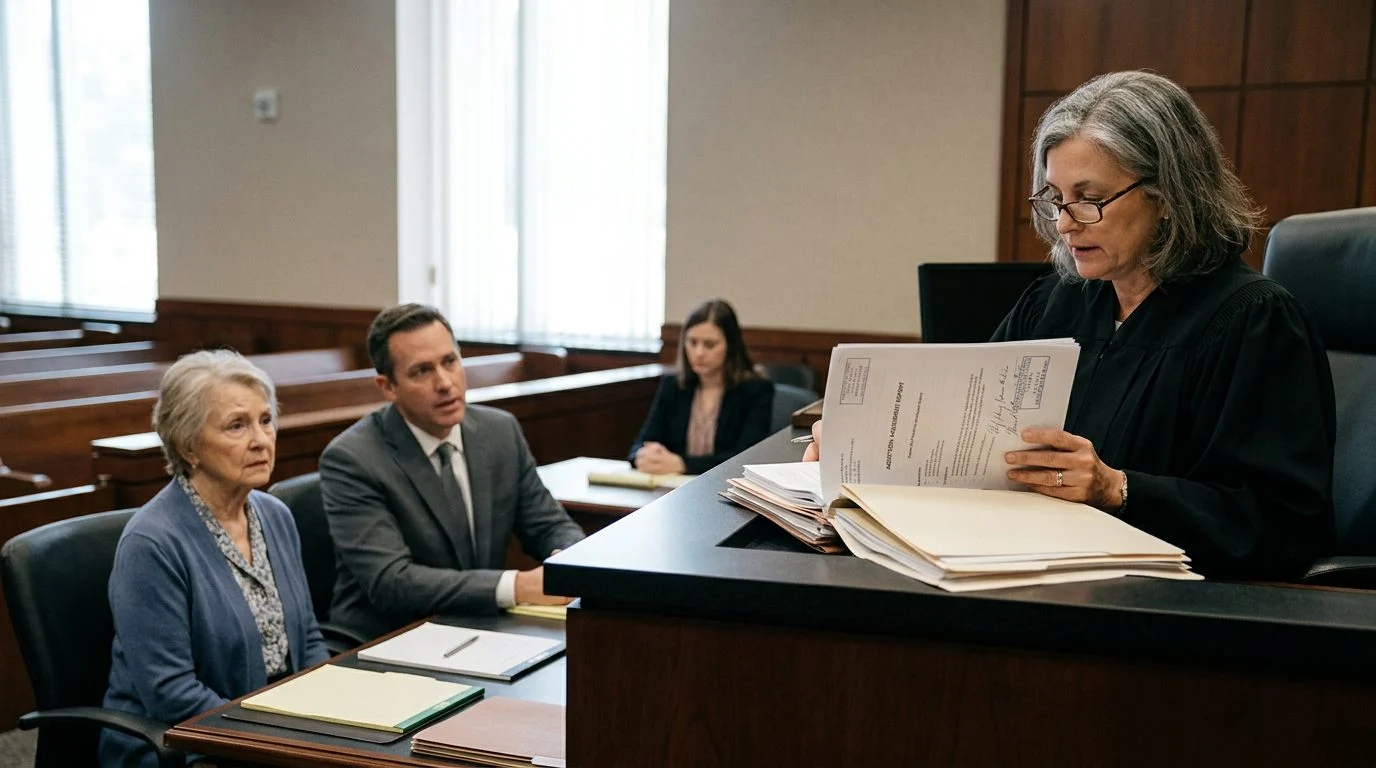
Start with a dated timeline. Write the date, what happened, who saw it, and any hospital or police record. A petition that only says “my mother drinks” gives a judge little to check. Specific incidents give the court something to weigh. Family testimony counts, too. The court must hear and review all relevant evidence, which can include testimony from family members familiar with your parent’s history. Fla. Stat. § 397.6957 Fla. Stat. § 397.6957
What Happens at the Hearing and After
If the court issues an assessment order, the treatment hearing may be continued for no more than 10 court working days. Your parent must receive a copy of the petition and the notice of hearing. Fla. Stat. § 397.68151
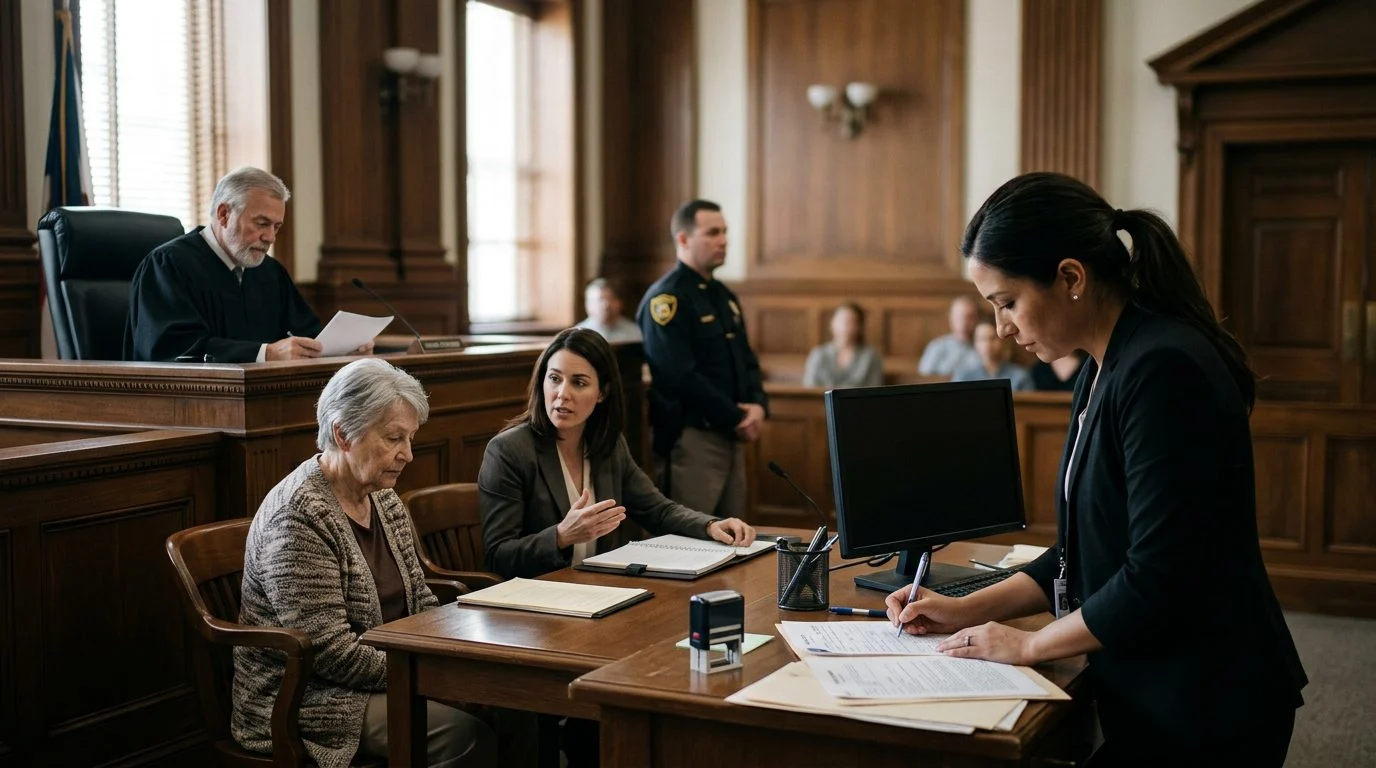
The court must immediately decide whether your parent already has a lawyer or whether appointing one is appropriate, and an attorney representing your parent has access to the person, witnesses, and records relevant to the case. The court must immediately decide whether your parent has an attorney or whether appointing one is appropriate, and the clerk notifies the office of criminal conflict and civil regional counsel of any appointment. A respondent has the right to counsel at every stage of a judicial proceeding relating to a petition for involuntary treatment for substance abuse impairment; however, your parent may waive that right if present and the court finds the waiver is made knowingly, intelligently, and voluntarily.
The exception to the clinical-assessment requirement in § 397.6957(1)(b) applies when your parent is present and expressly waives it. Fla. Stat. § 397.6957
Outcomes depend on the facts. The court, not the family, makes the final decision.
When Guardianship May Be the Right Route Alongside or Instead
Guardianship is a separate process under Chapter 744. Marchman asks about substance use. Guardianship asks whether a person can no longer make safe decisions about health care, money, housing or daily life. One member must be a psychiatrist or other physician. Fla. Stat. § 744.331
The court must appoint counsel for the alleged incapacitated person.
Fla. Stat. § 744.3215 Rights that may be removed from a person by an order determining incapacity and delegated to the guardian include contracting, managing property, making health care decisions and determining where the person lives. Even when rights have been removed from the ward and delegated to the guardian, without first obtaining specific authority from the court a guardian may not take certain steps, such as committing the ward to a facility, institution, or licensed service provider without a formal placement proceeding. A limited guardian receives only the authority the court names.
A guardian must act in good faith and in the ward’s best interests. Fla. Stat. § 744.3215 The ward keeps the right to be treated humanely, with dignity and respect, and to be protected against abuse, neglect and exploitation. Fla. Stat. § 744.3215
Under Fla. Stat. § 744.3215, without first obtaining specific authority from the court, as described in s. 744.3725, a guardian may not commit the ward to a facility, institution, or licensed service provider without formal placement proceeding, pursuant to chapter 393, chapter 394, or chapter 397. For substance treatment, that proceeding runs under chapter 397. The facts decide which fits, and the court’s findings control the result.
What to Gather Before You Speak With an Attorney
Gather these records before you meet with a lawyer:
- A dated log of incidents, with the names of anyone who saw each one
- Medication lists and pharmacy records
- Bank or bill notices that suggest money is missing or misdirected
- Hospital discharge papers and police reports
- Names and phone numbers of doctors, caregivers and witnesses
Organized records help a lawyer judge whether a Marchman petition, a guardianship petition, or both may fit. The petition must state specific facts, and records make those facts easier to state.
If your parent is in immediate danger, call 911 first. Safety comes before paperwork.
Not sure what your next step is?
Talk it through with our team — the first consultation is free, confidential, and carries no obligation.
Take the Next Step Toward Protecting Your Parent
Watching a parent refuse help while their safety and money slip away is exhausting. Fear makes it harder to think clearly. You searched for how to get elderly parent into rehab against his will florida because you need a lawful path, and you deserve clear answers.
Can you force an elderly parent into rehab in Florida?
Does my parent have to attend the hearing?
Generally, yes. The court may excuse attendance only if it finds a knowing waiver, or that attending is inconsistent with your parent’s best interests or likely to be harmful.
Can I start a guardianship case for my parent?
The court then appoints an examining committee to evaluate the person.
If your parent’s drinking or drug use is putting them and their money at risk, talk with Robinson Casey before you decide your next step. Call (561) 849-4700 or use our contact form. Your first consultation is free, confidential, and carries no obligation to continue.
Why Families Contact Robinson Casey
Focused Practice
Our practice focuses on Marchman Act petitions and guardianship matters, so your case is handled by a firm that concentrates on these proceedings every day.
Clear Guidance on Court Steps
We explain each filing, hearing and report in plain language, so you know what to expect before the next step arrives.
Responsible Lawyer
Richard J. Casey III, Esq. is the lawyer responsible for this page. Our support staff keeps your case organized and your calls returned.
Free, Confidential First Consultation
Your first consultation is free, confidential and carries no obligation to continue. Talk with us about your parent's situation before you decide anything.
If Your Parent Is in Immediate Danger
If your parent is at risk of harm right now, call 911 or go to the nearest emergency room. Legal steps can be discussed afterward, and we are ready to help once your parent is safe.
Matters We Handle for Families
Marchman Act Petitions
Petitions asking the court to address substance use and related safety concerns for a family member, with attention to the process and paperwork involved.
Emergency Temporary Guardianship
Urgent requests for temporary court authority when an elderly parent needs immediate decisions about care, housing or finances.
Plenary and Limited Guardianship
Full or narrower guardianship options, reviewed carefully so the court's authority matches the actual needs of your parent.
Mental Health Guardianship and Involuntary Commitment
Guardianship and commitment matters involving mental health or addiction, handled with attention to your parent's dignity and well-being.