
Marchman Act & Guardianship | South Florida
Your Parent Is Drinking and Refusing Help. You Still Have Options.
Robinson Casey focuses exclusively on Marchman Act petitions and guardianship matters for families in Miami-Dade and across South Florida. Start with a free, confidential first consultation, with no obligation to continue.
Why Families Call Robinson Casey
Free
First consultation
Confidential
No obligation to continue
Statewide
Serving Florida families
By Richard J. Casey III, Esq. · Published October 17, 2026
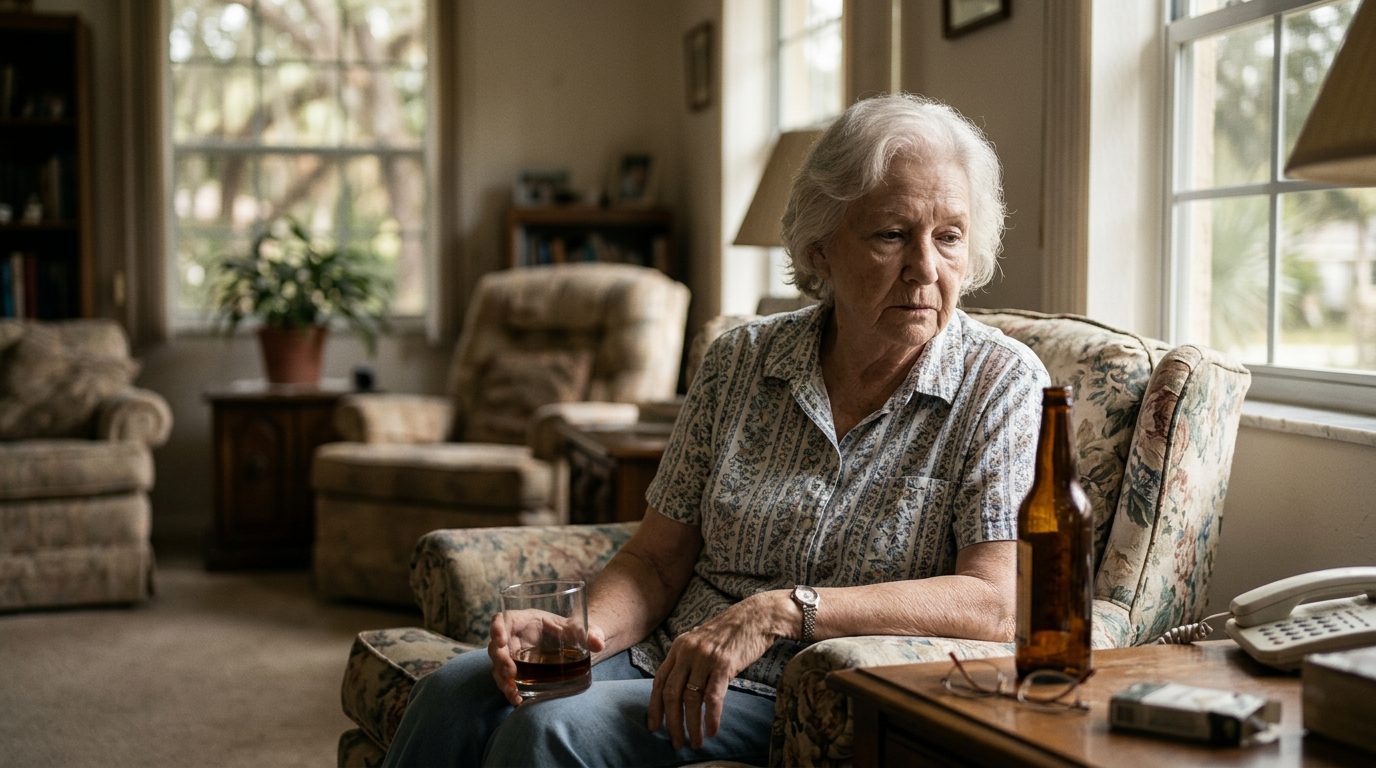
Elderly Parent Drinking, Refuses Treatment: Florida Law Options
If your parent is drinking heavily and turning down help, you don't have to weigh a court petition alone. Contact us to talk through the facts of your situation. Talk it through with our team — the first consultation is free, confidential, and carries no obligation.

When a Parent Drinks and Refuses Help: What the Law Means for You
A parent’s refusal does not end your options in Florida. The Marchman Act lets a court order an assessment when substance abuse impairment meets the statute’s standards. Guardianship under Chapter 744 addresses a different problem: incapacity. Each path asks different questions, so the facts you gather matter.
Many families fear that a “no” from the parent settles everything. Florida’s involuntary admission standard says otherwise. Under Fla. Stat. § 397.675, mere refusal to receive substance abuse services does not constitute evidence of lack of judgment about the need for those services. The court looks at the whole picture, not one answer.
This page explains both paths in plain language. It covers the warning signs, the steps to take with your parent, how a Marchman Act case moves through court, and which court hears it. Robinson Casey limits its practice to Marchman Act petitions and guardianship matters. Richard J. Casey III, Esq. is the lawyer.
Signs That an Older Parent’s Drinking Has Become a Problem
Warning signs usually show up as a pattern over weeks or months, not as one bad evening. Look for drinking alone, hidden bottles, missed medications or medical appointments, unexplained falls or bruises, and unpaid bills or a messy home. These are the details a court can weigh.
Drinking patterns in older adults often change for reasons tied to life events. A spouse’s death, retirement, a new health problem, or growing isolation can each push a parent to drink more. Pain medicine mixed with alcohol can raise the risk of falls and confusion.
Write things down as they happen. A dated note such as “March 3: found him on the kitchen floor, cut on his forehead, smelled of liquor” is far more useful than “he’s drinking too much.” Record the date, what you saw, who else was there, and what your parent said.
A medical evaluation also helps. A doctor’s records can document the health effects of drinking for the family and for any court. A petition may include a report from a qualified professional who examined the parent within 30 days before filing.
Why Many Older Adults Deny Having a Drinking Problem
Denial is a common feature of alcohol use. It can look stronger in older adults who feel their independence is threatened. A parent may believe that asking for help means losing control of their home, money, or daily life.
Denial often takes familiar forms. Your parent may blame stress, pain, sleep problems, or a medication for the drinking. They may say they have “only had a couple” or refuse to talk about it at all. Some parents get angry the moment the subject comes up.
Those reactions are painful, but they do not settle the legal question by themselves. The Marchman Act’s standards look at impaired judgment and the risk of harm. Under Fla. Stat. § 397.675, a person may also meet the standard if, without care, the person is likely to neglect themselves. That neglect must pose a real and present threat of substantial harm. The statute also asks whether that harm could be avoided through willing, able, and responsible family members or friends, or through other services.
That last point matters for you. The family’s own role, and what help they can realistically give, becomes part of the story.
Steps to Take With Your Parent Before Any Court Filing
Start by admitting the problem to yourself. Many families hope the drinking will fade on its own. Writing down the facts makes the situation clearer, and it helps you choose a calm time to talk.
Pick a sober moment, not the middle of an argument. Guilt-based pressure often hardens refusal. Focus on specific behaviors you saw and your concern for your parent’s safety. Say, “I found the stove on last Tuesday,” rather than “You’re ruining your life.”
Offer concrete help. You might drive your parent to a medical appointment, set up a pill organizer, or handle the grocery run. Concrete help shows you’re on their side, and it reveals whether your parent will accept support at all.
Look at the money. If the family has been paying for alcohol, giving cash, or covering household costs in a way that feeds the drinking, consider changing that pattern. This is a hard step, but it is often the one that stops the enabling.
Start with the doctor. Physical health concerns are often easier to discuss than drinking itself. Ask the parent’s physician to check liver function, medication interactions, and fall risk. A doctor’s concern can carry weight that a child’s concern sometimes does not.
Keep a written log. Record incidents, conversations, offers of help, and every refusal. This log is your family’s own record, and it is the foundation for any later decision.
What the Marchman Act Allows in Florida
The Marchman Act is Florida’s court process for people who are severely impaired by substance abuse.
To reach involuntary treatment, the court looks at the standards in Fla. Stat. § 397.675. A person must be substance abuse impaired, or have a substance use disorder with a co-occurring mental health disorder. Because of that impairment, the person must have lost the power of self-control with respect to substance abuse. The person must also meet one of two further standards about need for services, or risk of harm.
An adult child can usually file. Under Fla. Stat. § 397.68112, a petition for an adult may be filed by the respondent’s spouse or legal guardian, any relative, a service provider, or an adult with direct personal knowledge of the substance abuse impairment and prior treatment.
Emergencies can move faster. Under Fla. Stat. § 397.6818, when emergency circumstances exist, the court may enter an ex parte order for assessment and stabilization without first appointing an attorney. A Florida appeals court has also held that such an order must rest on petition facts that give a good-faith reason to believe the statutory criteria are met. In D.H. v. K.J.R., the court ruled that the trial court erred when the petition did not meet that standard.
Whether the Marchman Act fits a particular parent depends on the facts of the drinking, the parent’s behavior, and the evidence you can gather.
Not sure what your next step is?
Talk it through with our team — the first consultation is free, confidential, and carries no obligation.
When Guardianship Under Chapter 744 Is the Question Instead
Guardianship asks a different question. Drinking may be part of the picture, but the core issue is whether the person can make decisions.
A petition to determine incapacity must be verified. Within 5 days after filing, the court appoints an examining committee of three members, and one must be a psychiatrist or other physician, under Fla. Stat. § 744.331.
A person determined incapacitated keeps important rights. A guardian also may not commit the ward to a facility without the court’s specific authority and a formal placement proceeding.
Guardianship can be tailored. A court can remove some rights and leave others in place, so the scope of any order depends on what the person can and cannot do. Mental health guardianship addresses a different kind of impairment, so families sometimes need to weigh more than one path.
When a delay could cause serious harm, emergency temporary guardianship may be considered. Under Fla. Stat. § 744.3031, the court must find imminent danger that the person’s health or safety will be seriously impaired, or that property is in danger, unless immediate action is taken. That authority expires 90 days after appointment or when a guardian is appointed, whichever comes first. The court must appoint counsel for the alleged incapacitated person.
How a Marchman Act Case Generally Moves Through Court
A Marchman Act case starts with a petition filed with the clerk of the court. The court then decides whether an attorney should be appointed and schedules a hearing. Under Fla. Stat. § 397.68151, the court must set the hearing within 10 court working days unless a continuance is granted. A copy of the petition and notice must go to the respondent and other listed people.
If the court orders emergency assessment, the parent can be held for evaluation.
At the hearing, the parent generally must be present. Under Fla. Stat. § 397.6957, the court hears all relevant evidence. That includes testimony from family members who know the parent’s history, and the results of the clinical assessment. The court also cannot order involuntary treatment without a clinical assessment, unless the parent is present and expressly waives it.
The evidence that usually matters includes your dated log, witness observations, and medical records. The parent may contest the petition. The result depends on the evidence and the court’s findings, not on how strongly the family feels.
If the court finds the conditions proven by clear and convincing evidence, it may order involuntary treatment for up to 90 days. Under Fla. Stat. § 397.697, the court keeps jurisdiction after the order and can monitor compliance. The timing and steps vary with each case and each court.
Which Court Hears the Case and Who May File
Marchman Act petitions go to the circuit court. They must be filed with the clerk of the court in the county where the person is located, under Fla. Stat. § 397.681. For a Miami-Dade parent, that means the county where the parent is physically located at filing. The same statute says the clerk may not charge a fee to file the petition.
Location matters. In J.P. v. J.N., a Fifth District case, the court held that filing in the wrong county did not divest the circuit court of jurisdiction. The case concerned a petition filed where the respondent was physically located. Still, the choice of county should be made carefully. A parent in a facility or moving between counties makes the question harder.
The parent may waive that right only in person, and only if the court finds the waiver is knowing, intelligent, and voluntary. A parent who cannot afford private counsel can receive court-appointed counsel.
A filer should understand the duties involved. The petition must state the reasons for the belief in impairment, the loss of self-control, and the risk of harm. Our companion guide on which court hears a Marchman Act petition in Florida covers the court choice in more detail.

If You Are Deciding Whether to File: Take the Next Step
You may be sitting with a parent who drinks, refuses help, and leaves you unsure whether to go to court. The question in front of you is whether the drinking, the refusals, and the safety concerns meet Florida’s standards. You also need to decide whether the Marchman Act or guardianship fits better.
Richard J. Casey III, Esq. limits his practice to Marchman Act petitions and guardianship matters. Talking through the facts is the most useful first step. Bring your log, any medical records, and a list of the people who have seen the drinking firsthand.
Can a court force my elderly parent into treatment in Florida? A court may order involuntary assessment under the Marchman Act if the statutory criteria are met. The court must rely on clear and convincing evidence before ordering treatment.
Does my parent’s refusal stop a Marchman Act case? No. Under the statute, mere refusal to receive services is not, by itself, evidence of lack of judgment.
Does my parent get a lawyer? Yes. The respondent has the right to counsel at every stage, and the court can appoint one if the parent cannot afford it.
A free first consultation is confidential and carries no obligation to continue. Call (561) 849-4149 or request a consultation online to talk through your parent’s situation.
How We Approach Your Family's Situation
Clear Review of the Facts
We look closely at your parent's condition, history, and recent events so you understand which legal path fits your situation.
Plain-Language Guidance
We explain each step, the questions a court may ask, and what to expect, without legal jargon.
Focused on Families
Our practice concentrates on Marchman Act and guardianship cases, so your matter is handled by a team that works in these areas every day.
Respect for Your Parent
We treat your parent with dignity while working to protect their health and safety.
Do Not Wait Until It Becomes a Crisis
If your parent's drinking is putting their health, safety, or finances at immediate risk, speak with an attorney now. Waiting until an emergency can leave fewer choices and more pressure on your family.
Matters We Handle
Marchman Act Petitions
Petitions asking a court to order an assessment and treatment for a loved one whose substance abuse impairment meets the statute's standards.
Involuntary Commitment for Addiction
Guidance on the court process for involuntary admission when a family member's addiction creates serious danger.
Emergency Temporary Guardianship
Fast court action for urgent situations in which an adult needs immediate protection while the case moves forward.