
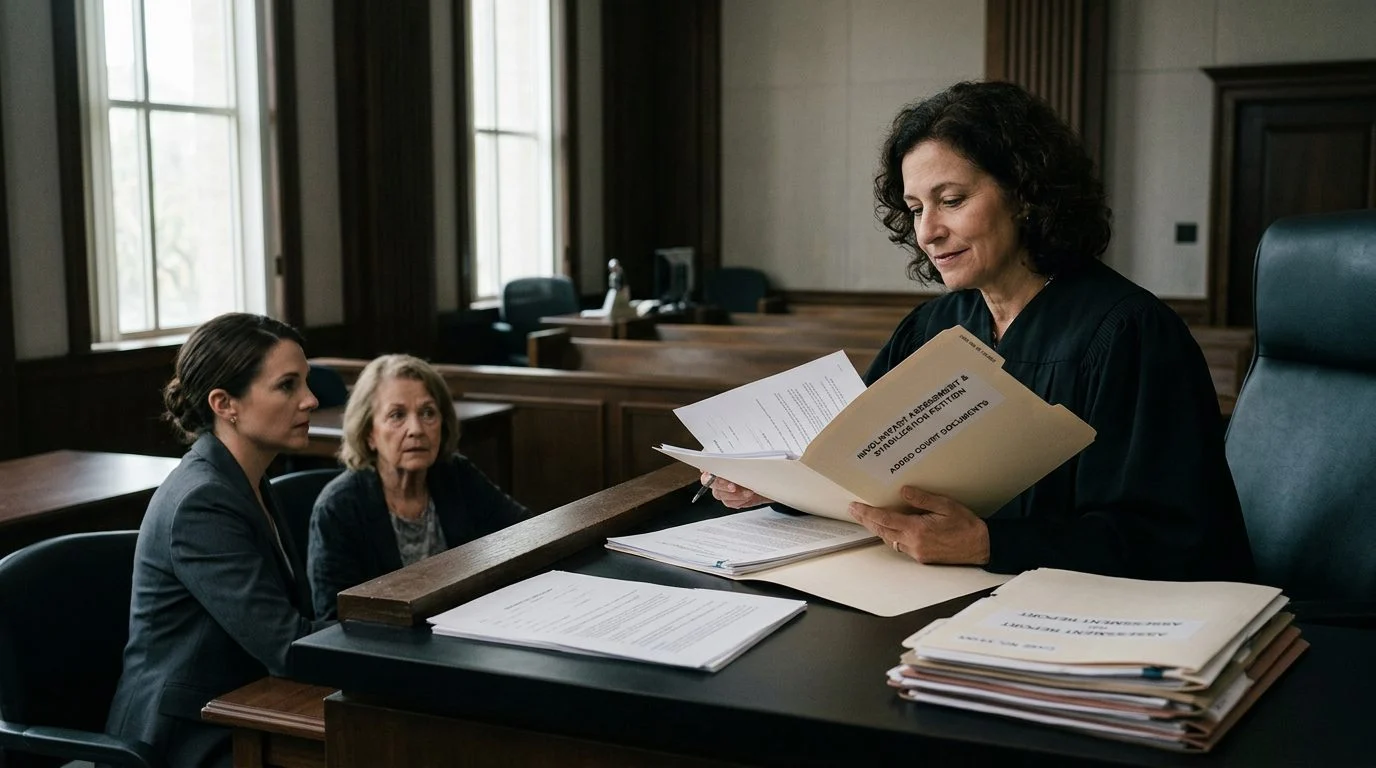
Marchman Act & Guardianship | Miami-Dade and South Florida
A Marchman Act Lawyer to Help Your Family Take the Next Step
Robinson Casey focuses on Marchman Act petitions and guardianship matters for families across South Florida and statewide. Richard J. Casey III, Esq. leads this page's practice, and our team guides you through each step with clear, careful communication.
Why Families Turn to Robinson Casey
A Focused Practice
Our firm concentrates on Marchman Act petitions and guardianship matters, so your case is handled by lawyers who work in these areas every day.
Compassion for Hard Decisions
A loved one's health and safety are at stake. We listen closely, explain your options in plain language, and respect the family you are trying to protect.
Clear, Direct Communication
Our team keeps you informed about the process, the paperwork, and what to expect at each stage, so you are never left guessing.
South Florida and Statewide
We serve families in Miami-Dade and across South Florida, and we represent clients in matters throughout the state.
By Richard J. Casey III, Esq. · Published November 1, 2026
You have paid for treatment, tried interventions, and held firm on boundaries, yet your adult child keeps getting worse. A lawyer can help a Florida family file a Marchman Act petition, which asks a court to order assessment and treatment for an adult with substance use problems. If you are looking for a lawyer to help family file marchman act florida papers, this page explains how the process works in plain terms.
Where You Are Right Now: Your Adult Child Is Getting Worse
Many parents reach this point after a recent overdose, relapse, hospital stay, arrest, or disappearance. You may feel you have run out of options. Your fears are real: an overdose, jail, homelessness, or losing hope that anything will work. The sections below answer those fears directly. Every family’s facts are different, so no outcome can be promised.
Not sure what your next step is?
Talk it through with our team — the first consultation is free, confidential, and carries no obligation.

What the Marchman Act Is and Who It Covers
The Marchman Act is the part of Florida’s Chapter 397 that lets a court order involuntary treatment for a person impaired by substance use. A person may meet the criteria for involuntary admission when there is good faith reason to believe the person is substance abuse impaired, or has a substance use disorder and a co-occurring mental health disorder, and has lost the power of self-control with respect to substance abuse.
The petitioner must prove by clear and convincing evidence that the respondent is substance abuse impaired and has a history of lack of compliance with treatment for substance abuse, and is unlikely to voluntarily participate in the recommended services or is unable to determine for himself or herself whether services are necessary, and either is incapable of appreciating the need for care, or is likely to neglect himself or herself, posing a real and present threat of substantial harm, and there is a substantial likelihood of serious bodily harm to self or others in the near future, as evidenced by recent behavior.
For an adult, a petition may be filed by a spouse or legal guardian, any relative, a service provider, or an adult with direct personal knowledge of the impairment and prior treatment (Fla. Stat. § 397.68112). As a parent, you are a relative who may file. The petition asks a judge to decide the question.
What Legal Help for a Family Petitioner Covers
A lawyer to help family file marchman act florida petitions reviews the facts, prepares the filing, and guides you through the hearing. Support covers these areas:
- Fact review: recent events, prior treatment, and your child’s current situation.
- Petition contents: the petition names both of you, states your relationship, and gives the facts behind your belief that your child is impaired and has lost self-control.
- Sworn statement: if a document must be verified, it may be verified by a written declaration made under penalties of perjury, signed by the person making the declaration.
- Hearing timing: the court must schedule a hearing within 10 court working days unless a continuance is granted (Fla. Stat. § 397.68151).
- Court process: explanation of notice, the hearing, and the orders the court may enter.
For how to start that conversation with your child, read our guide on telling a loved one about a Marchman Act petition.
How the Process Works, Step by Step
A Marchman Act case runs from a consultation to a filing, a hearing, and a court order. The steps run in this order.
- Consultation: we review your child’s history and whether a petition fits your situation.
- Records: you gather hospital, treatment, and arrest records and build a dated timeline.
- Filing: the petition goes to the clerk in the county where your child is physically located. The clerk may not charge a filing fee (Fla. Stat. § 397.681). A Florida appeals court held that filing in the wrong county is a venue problem, not a loss of jurisdiction (J.P. v. J.N.).
- Hearing: the court reviews the clinical assessment, and your child must be present at the hearing unless the court finds he or she knowingly, intelligently, and voluntarily waives the right to be present or, after receiving proof of service and evaluating the circumstances, that presence is inconsistent with his or her best interests or is likely to be injurious to self or others (Fla. Stat. § 397.6957).
- Order: if the court finds the conditions proved by clear and convincing evidence, it may order up to 90 days of involuntary treatment (Fla. Stat. § 397.697). A renewal for up to another 90 days is possible (Fla. Stat. § 397.6975).
How long each step takes depends on the court’s schedule, so no timeline can be promised.
Evidence and Records the Court Looks At
The court hears all relevant evidence, including testimony from family members who know your child’s history. It also reviews the clinical assessment and may order drug tests (Fla. Stat. § 397.6957). Good records make that testimony concrete.
- Medical records: emergency visits, hospital stays, and the crisis that prompted the petition.
- Treatment history: each program, its dates, and why it ended.
- Witness accounts: what family members and others saw, told in their own words.
- A written timeline: dated events kept in one place.
The clinical report must reach the clerk by the close of business the day before the hearing. A report without a treatment recommendation leads to dismissal of the petition (Fla. Stat. § 397.6957).
When a Treatment Program Refuses or Discharges Your Child
A refusal or discharge can leave a family with no safe next step while the crisis continues. Florida law lets a provider seek discharge when its director determines a person is beyond the provider’s safe management capabilities (Fla. Stat. § 397.6971).
When a qualified professional finds early release applies, the provider must discharge the person and notify the persons the court named in its original order. Keep every refusal letter and discharge paper with your timeline. These records show the court the recent history.
Not sure what your next step is?
Talk it through with our team — the first consultation is free, confidential, and carries no obligation.
Why Families Work With Robinson Casey on a Marchman Act Matter
Robinson Casey limits its practice to Marchman Act petitions and guardianship matters for families across South Florida and statewide. Its focus stays on the court process your family faces.
- Responsible lawyer for this page: Richard J. Casey III, Esq.
- Support staff: our team includes support staff who help families stay organized with scheduling and documents.
No outcome can be promised, but each consultation starts with your family’s facts.
Frequently Asked Questions
Can a parent file a Marchman Act petition for an adult child?
Yes. Any relative may file a petition for an adult under the statute (Fla. Stat. § 397.68112).
Will my adult child go to jail?
The statute’s orders focus on treatment. If the court finds it necessary, it may direct a sheriff to take the respondent into custody and deliver him or her to a treatment provider (Fla. Stat. § 397.697).
What if my adult child refuses to cooperate?
Does my adult child have a right to a lawyer?
Yes. A respondent has the right to counsel at every stage of a judicial proceeding on a petition for involuntary treatment for substance abuse impairment, unless the respondent is present and the court finds that the respondent knowingly, intelligently, and voluntarily waives that right. A respondent who wants counsel and cannot afford private counsel has the right to court-appointed counsel, and if the court believes the respondent needs or desires counsel, the court shall appoint such counsel without regard to the respondent’s wishes.
Does the Marchman Act cover every substance?
The statutory criteria decide whether it fits your child’s situation.
How much does a first consultation cost?
The first consultation is free, confidential, and carries no obligation to continue.

Talk With Robinson Casey About Your Family’s Situation
If a recent overdose, relapse, or discharge has left you without a safe next step, you can talk through the facts with us first. You may still be deciding whether a petition fits. You don’t have to work through that decision alone. When you’re ready, schedule a consultation or call (561) 849-4700 to talk with Robinson Casey about your family’s situation.
Matters We Handle
Marchman Act Petitions
Guidance for families seeking court-ordered assessment and treatment for a loved one struggling with substance use under the Florida Marchman Act.
Emergency Temporary Guardianship
Urgent court relief when a person needs immediate protection and decisions cannot wait for a full hearing.
Plenary and Limited Guardianship
Guardianship options that range from broad authority over a person's affairs to narrower powers tailored to specific needs.
Mental Health Guardianship and Involuntary Commitment for Addiction
Legal support for families facing serious mental health or addiction crises, from petition through court proceedings.
Don't Wait Alone With an Urgent Situation
If a loved one's safety is at risk, you do not have to sort out the legal process by yourself. Contact our office to learn what options may be available.