
Marchman Act & Guardianship | Miami-Dade & South Florida
Helping Your Family Get a Loved One the Help They Need, Even From Out of State
Robinson Casey focuses on Marchman Act petitions and guardianship matters for families in Miami-Dade, across South Florida and throughout Florida. Our free first consultation is confidential and carries no obligation to continue.
By Richard J. Casey III, Esq. · Published October 31, 2026
Your Child Is in Florida and You Are Far Away: Can a Florida Court Still Help?
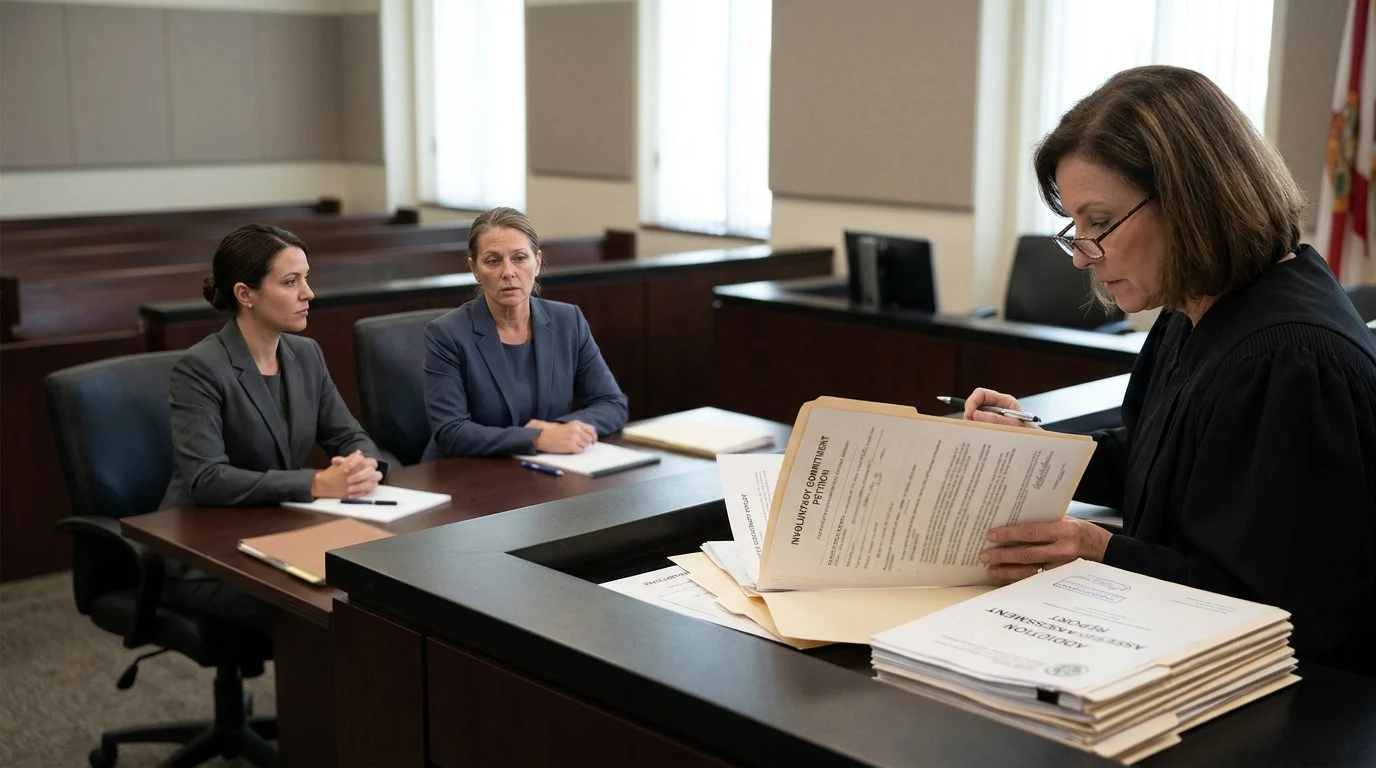
Yes. A Marchman act for loved one living out of state case can go forward in Florida. The law lists who may file a petition, and that list does not limit filers to people who live in Florida. The court that hears the case is in the county where your loved one is located.
The call may have come from a hospital social worker, a detox nurse, or a police officer. You could not get on a plane fast enough. Now you are calling, texting, and waiting, unable to be there in person.
You may fear the next call will be worse. Overdose, death, jail, and homelessness are real risks for someone in active addiction. Losing hope is real too. A court process is one legal option. Whether it fits your family depends on the facts.
If your child is in immediate crisis, the Florida Department of Health points families to 988 for crisis support. Florida Department of Health mental health resources
For background on the basics, read our Marchman Act for an adult child guide.
If your adult child in Florida is in crisis and you are watching from another state, you do not have to work out the court process alone; our team can talk it through with you. Talk it through with our team — the first consultation is free, confidential, and carries no obligation.

What the Marchman Act Covers and Who Can File a Petition
The Marchman Act is Florida’s court process for ordered assessment and treatment of a person with a substance use impairment. The judge decides based on the criteria in the statute, not on how worried the family feels.
For an adult, a petition may be filed by a spouse or legal guardian, any relative, a service provider, or an adult with direct personal knowledge of the impairment and the person’s prior assessment and treatment. A parent or sibling of an adult respondent is a relative who may file a petition. The list does not mention where the petitioner lives.
The court must find a good faith reason to believe the person is substance abuse impaired. The person must also have lost the power of self-control over substance use. The involuntary admission criteria also require a real and present threat of substantial harm to the person’s well-being, where the basis is neglect or refusal to care for oneself.
Key terms you will see:
- Petition: the written request filed with the court.
- Petitioner: the person who files it.
- Respondent: the person named in the petition, your loved one.
- Assessment and stabilization: a court order for evaluation and care.
- Treatment: involuntary treatment services ordered after a hearing.
Our attorneys handle this process and the related area of involuntary commitment for addiction.
Filing from Another State: The County, the Petition, and the Court Process
The petition is filed with the clerk of the court in the county where your loved one is located. Fla. Stat. § 397.681 The clerk may not charge a fee for filing it. Where you live does not control this step.
Filing in the wrong county is a venue problem. In J.P. v. J.N., the Fifth District held that filing in the wrong county did not take away the circuit court’s jurisdiction. J.P. v. J.N. Even so, the location still matters for timing, so get it right at the start.
Here is the typical sequence:
- Gather your loved one’s full name, your name, and your relationship to them.
- Write the factual reasons you believe the criteria are met, with dates and events.
- Note any attorney your loved one has, if known.
- Attach a professional’s report if one exists.
- File with the clerk in the county where your loved one is located.
- The court schedules a hearing within 10 court working days, unless a continuance is granted.
Living far away does not stop you from taking part. Witnesses may attend remotely and testify under oath by audio-video technology.
Evidence, Records, and Witnesses You Can Gather from Afar
The court hears all relevant evidence. That includes testimony from family members who know the person’s history.
Start with what you already have:
- Dates, times, and places of each overdose, relapse, or hospital visit.
- Discharge papers, letters, and bills from past treatment.
- Text messages and call logs that show the pattern.
- Police or incident reports you have copies of.
- Names of people who saw the events firsthand.
The common mistake is waiting until things are documented. Write down events while they are fresh. Vague statements like “he is always using” carry less weight than specific dates.
Professional records often carry a lot of weight. A clinician who examined your loved one may be a key witness.
Your loved one has rights too. A respondent has the right to counsel at every stage. A person who cannot afford private counsel may receive court-appointed counsel. Fla. Stat. § 397.68151 An attorney that represents the person named in the petition shall have access to the person, witnesses, and records relevant to the presentation of the person’s case. Hillsborough County v. Albrechta
What Happens After the Order: Timelines and Treatment Placement
A typical path looks like this:
- First consultation: you review what happened and what documents you have.
- Filing: the petition goes to the clerk in the county where your loved one is located.
- Hearing: set within 10 court working days, unless continued.
- Assessment: a clinical assessment is required before involuntary treatment, unless the respondent is present and expressly waives it.
- Order and placement: the court may direct that your loved one go to a licensed provider it names, or the nearest appropriate one.
- Ongoing oversight: the court keeps jurisdiction to monitor compliance.
An order is not the end of the case. The person must be released when the conditions for treatment no longer exist. Keep copies of every order and every notice you receive.
Why Families Outside Florida Work with Robinson Casey
Robinson & Casey limits its practice to Marchman Act petitions and guardianship matters. The firm serves families across South Florida and statewide, including Miami-Dade County.
Richard J. Casey III, Esq. is the responsible lawyer for this page. Our team focuses on explaining each step in plain terms, so you know what comes next.
Distance does not have to keep you out of the process. You can reach our office by phone and talk through your family’s facts before deciding on a filing.
We limit our work to these matters. That focus means our team spends its time on Marchman Act petitions and guardianship cases, not a broad mix of practice areas.
Not sure what your next step is?
Talk it through with our team — the first consultation is free, confidential, and carries no obligation.
Frequently Asked Questions
Short answers to the questions families outside Florida ask most.
Can I file a Marchman Act petition if I live in another state?
Florida law lists who may file, and that list includes any relative. The petition goes to the county where your loved one is located.
Does my adult child need to be in Florida?
Yes, the petition is filed in the county where the person is located. Filing in the wrong county is a venue issue, not a loss of the court’s power.
Will my child have a lawyer?
Your child has a right to counsel at every stage, but that right may be waived only if the child is present and the court finds the waiver is made knowingly, intelligently, and voluntarily. A person who cannot afford a lawyer may receive a court-appointed one.
How long does the process take?
The hearing is set within 10 court working days, unless a continuance is granted. A treatment order can last up to 90 days.
Can I testify by video from out of state?
Witnesses may testify remotely under oath by audio-video technology. Scheduling varies by court.
What if my child was recently arrested or placed in protective custody?

Talk With a Florida Marchman Act Attorney About Your Child
If your adult child is in Florida and you are watching from another state, you can talk with a Marchman Act attorney before you decide what to file. A hospital discharge, a missed check-in, or a new arrest can make the next step feel urgent. You do not have to work out the court process alone.
Call (561) 849-4700 or request a consultation to review your family’s facts. Your first consultation is free, confidential, and carries no obligation to continue.
Responsible lawyer: Richard J. Casey III, Esq., Robinson & Casey.
How Robinson Casey Supports Families
Focused Practice Area
Our practice limits its work to Marchman Act petitions and guardianship matters, so our attention stays on the legal steps these cases require.
Support for Families Far Away
Many families we work with are coordinating from another state. We explain each step clearly so you can stay informed while you are apart from your loved one.
Clear Communication
We take time to explain your options in plain language, so you know what to expect before deciding how to move forward.
Confidential First Consultation
Your free first consultation is confidential, and there is no obligation to continue with our firm after we meet.
Don't Wait Until the Situation Becomes an Emergency
If you are worried about a loved one's safety or health, reach out early. Speaking with our team sooner gives you more time to understand the options available to your family.
Matters We Handle
Marchman Act Petitions
Guidance and representation for families filing a Marchman Act petition to seek help for a loved one struggling with substance use.
Involuntary Commitment for Addiction
Legal support for families navigating involuntary commitment proceedings connected to addiction.
Guardianship Matters
Help with plenary, limited and mental health guardianship, so families can understand which option fits their situation.
Emergency Temporary Guardianship
Assistance with urgent requests when a loved one needs immediate protection while a longer process unfolds.
Talk With Robinson Casey About Your Family's Situation. Your First Consultation Is Free, Confidential and Carries No Obligation to Continue.
Related practice areas
- Involuntary Commitment for Addiction in Florida
- Emergency Marchman Act Attorney Miami-Dade | Robinson Casey