
Marchman Act Guide · Miami-Dade & South Florida
Your Adult Child Is Struggling. You Don't Have to Figure Out the Court Process Alone.
Robinson Casey focuses on Marchman Act petitions and guardianship matters for families across South Florida and statewide. Learn how the process works and what your options are.
By Richard J. Casey III, Esq. · Published October 28, 2026
Your Adult Child Keeps Getting Worse, and You Are Looking for Another Way
Florida’s Marchman Act lets a parent ask a court to order assessment and treatment for an adult child with substance use impairment. This page explains how a Marchman Act case for an adult child works, in plain words.
You may have spent years paying for treatment. You may have tried interventions and set firm boundaries. Then came an overdose, a relapse, a hospital stay, an arrest, or a day when your child simply disappeared.
Your fears are real. You worry your child could overdose or die. You worry about jail, about homelessness, and about losing hope that anything will work. This page does not promise any result. It explains the legal option so you can decide your next step.
If your adult child's crisis has already reached the courts or the hospital, you do not have to face the next step alone, so call Robinson Casey at (561) 849-4149 to talk it through. Talk it through with our team — the first consultation is free, confidential, and carries no obligation.

What the Marchman Act Is and Who Can File
The Marchman Act is Florida’s court process for substance use impairment. For an adult, a petition for involuntary treatment services may be filed by the person’s spouse or legal guardian, any relative, a service provider, or an adult with direct personal knowledge of the impairment and prior treatment.
That means a parent can file. Florida law addresses minors separately in Fla. Stat. § 397.6798, which allows an addictions receiving facility to admit a minor for involuntary assessment and stabilization upon an application by the minor’s parent, guardian, or legal custodian.
The Baker Act is a separate Florida law with its own process. It is usually discussed for mental health conditions. Guardianship is also separate. Baker Act guide from Florida Courts
What a Court Looks At Before It Acts
A petition for involuntary services must allege the reason for the petitioner’s belief that the respondent is substance abuse impaired and has lost the power of self-control with respect to substance abuse. The statute also requires one more showing.
For a minor, the application must establish the need for involuntary assessment and stabilization based on the criteria for involuntary admission in s. 397.675. So a parent’s worry or a child’s “no” is not enough. The court looks at a pattern over time. Dated events, medical records, and prior treatment help show that pattern.
A petition must explain why you believe the person is impaired. It must also explain why the person has lost self-control, and either why harm is likely or why the person’s refusal of services is based on judgment so impaired by reason of substance abuse that the person cannot appreciate the need for care. Fla. Stat. § 397.68141 The petition must set out facts showing substance abuse impairment, the loss of power of self-control, and either a risk of physical harm or judgment so impaired that the respondent cannot appreciate the need for care. Section 397.68141 addresses petitions for involuntary services for substance abuse impairment.
Common mistakes families make include waiting for a single crisis and keeping no written record. Another is assuming the child’s agreement decides the case. Clear facts, not general frustration, are what the petition needs.
How the Process Unfolds, Step by Step
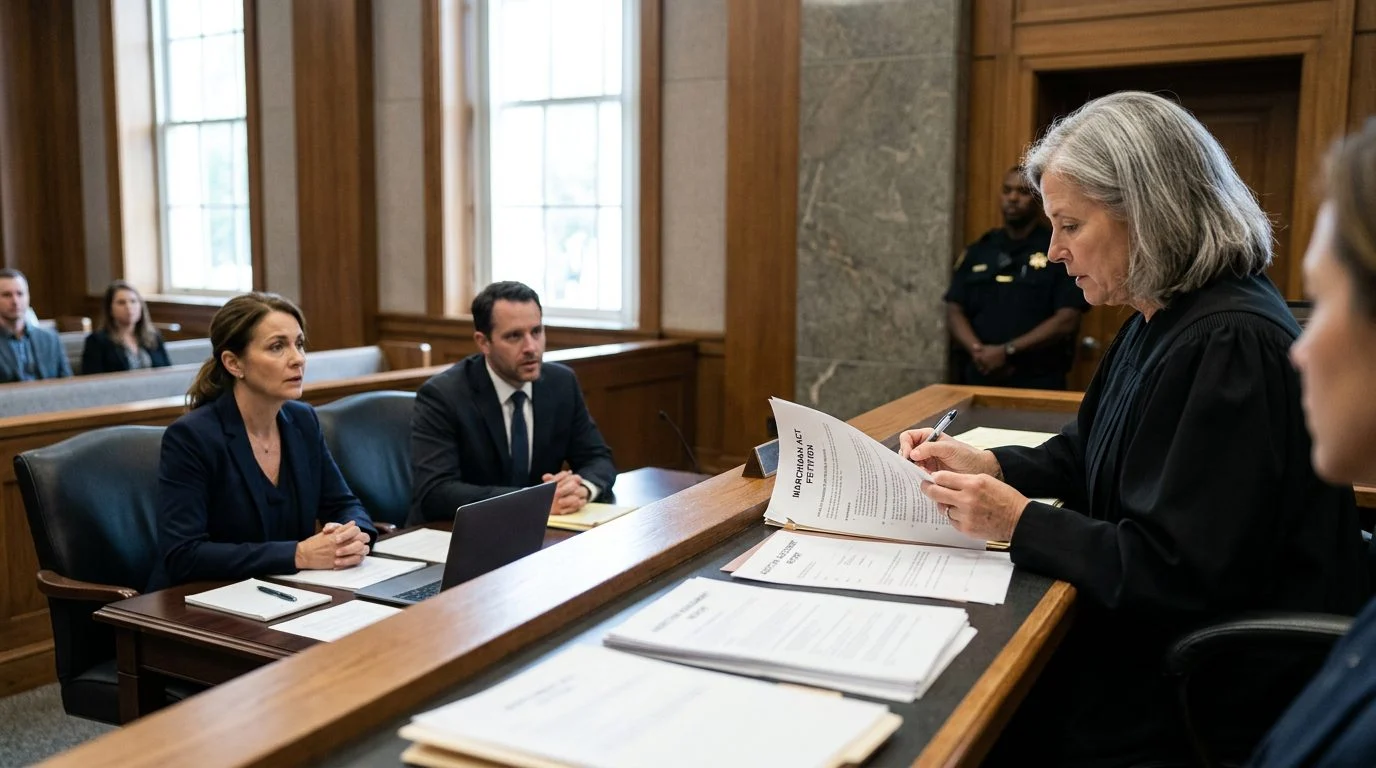
A Marchman case moves from petition to hearing to a possible order. Each county’s court moves at its own pace, and each case has its own timeline. Here is the usual sequence.
- Consultation and review. You share dates, records, and your concerns. The firm reviews the facts against the statute.
- Filing in the right county. Section 397.68141 lists what a petition for involuntary services must contain; it does not specify which county’s clerk receives the petition. Filing in the wrong county may raise a venue question, which is a separate issue from jurisdiction.
- Emergency orders, if needed. When an emergency exists, the court may rely on the petition and enter an ex parte order for assessment and stabilization. Fla. Stat. § 397.6818 A provider may not hold the person for more than 72 hours of observation unless a listed exception applies.
- The hearing. If the respondent does not appear at the hearing for any reason, and the court reasonably believes the respondent meets the commitment criteria and that a substance abuse emergency exists, and the respondent’s location is known, the court must continue the case for no more than 10 court working days. Fla. Stat. § 397.68151 The court must schedule a hearing on the petition within 10 court working days unless a continuance is granted. Fla. Stat. § 397.6957 The court must hear and review the results of the assessment completed by a qualified professional before deciding the petition.
- The order. At the end of the hearing, the court must either dismiss the petition or order the respondent to receive involuntary treatment services from his or her chosen licensed service provider if possible and appropriate. Any treatment order must include findings regarding the respondent’s need for treatment and the appropriateness of other less restrictive alternatives. Fla. Stat. § 397.6977 At the conclusion of the 90-day period of court-ordered involuntary services, the respondent is automatically discharged unless a motion for renewal of the involuntary services order has been filed with the court pursuant to s. 397.6975.
Evidence Families Gather Before Filing
Records that show a clear pattern of impairment and failed care usually matter most. Start with what you already have. Then keep a dated written record from today forward.
- Emergency room, overdose, and hospital discharge records
- 911 call logs and police reports tied to substance use
- Arrest and booking records, plus any related court papers
- A dated log of incidents, missed appointments, refused care, and your efforts to help
- Records of past treatment programs and detox stays
- Any written or recorded statements about refusing care
A qualified professional’s report, from an exam within 30 days before filing, can go with the petition. Fla. Stat. § 397.68141 If your child was not assessed, the petition must say so. Keep copies of every record, not originals. The firm helps you decide which records matter most and how to present them.
What a Marchman Act Attorney Handles for Parents
A Marchman Act attorney explains the process, prepares and files the petition, and presents the case at the hearing. Under Florida law, the court decides whether your adult child already has a lawyer or whether appointing counsel is appropriate.
- Explaining the petition, the hearing, and your child’s rights in plain language
- Drafting the petition with the required contents
- Filing it and coordinating with the court and the assessment provider
- Representing the petitioner at the hearing and responding to your child’s lawyer
- Helping families outside Florida who need to start a case for a child in a Florida county, as described on our out-of-state families page
Robinson Casey serves Miami-Dade, South Florida, and families statewide. Richard J. Casey III, Esq. is the responsible lawyer for this page. Our team handles scheduling and documents, so you have one place to send questions.
Not sure what your next step is?
Talk it through with our team — the first consultation is free, confidential, and carries no obligation.
Common Questions Parents Ask
Will my child be arrested?
The court can order a law enforcement officer or another designated agent of the court to take the person into custody and deliver them to the nearest appropriate licensed service provider or one designated by the court for evaluation.
Do I need my child’s agreement?
No. Your child’s refusal alone does not decide the case. The court still must find the statutory criteria proved.
Can I file if I live outside Florida?
Is this the same as guardianship?
What does the first consultation cost?
The first consultation is free, confidential, and comes with no obligation to continue.

Talk With Robinson Casey About Your Child’s Situation
If your adult child is in crisis after an overdose, relapse, or arrest, you do not have to work out the legal path alone. A conversation can show whether the Marchman Act fits your family’s facts. Call (561) 849-4149, or send your request through our contact page.
Why Families Contact Robinson Casey
Focused Practice
Our practice focuses on Marchman Act petitions and guardianship matters, so your case is handled by attorneys who work in these areas every day.
Clear Explanations
We explain each step of the process in plain language, from filing a petition to what happens at the hearing.
Support for Families
Our team works with parents and family members who are facing a difficult decision about an adult child's health and safety.
Free, Confidential First Consultation
Your first consultation is free, confidential, and comes with no obligation to continue.
Don't Wait Until a Crisis Forces the Decision
Asking questions early gives you more time to understand your options. Contact our office to talk through your family's situation before the next emergency.
Matters We Handle
Marchman Act Petitions
Guidance on filing a petition under Florida's Marchman Act for an adult child who needs substance use assessment and treatment.
Involuntary Commitment for Addiction
Help understanding how the court may order evaluation and treatment when an adult child refuses voluntary care.
Guardianship Matters
Representation in plenary, limited, and emergency temporary guardianship proceedings for adults who cannot manage their own affairs.
Mental Health Guardianship
Support for families seeking court-supervised guardianship when an adult family member's mental health affects their safety or well-being.