
Marchman Act Petitions | Florida Guardianship
Your Spouse's Addiction Has Made Home Unsafe. You Do Not Have to Face It Alone.
Robinson Casey focuses on Marchman Act petitions and guardianship matters for families in Miami-Dade, South Florida and across Florida. Richard J. Casey III, Esq. is responsible for this page. Call to talk through your situation.
By Richard J. Casey III, Esq. · Published October 28, 2026
When Your Spouse’s Addiction Has Made Home Unsafe
A spouse can file a Marchman Act petition in Florida. The petition asks a court to order an assessment and, if the legal criteria are met, treatment for a person with a substance use problem. The Fla. Stat. § 397.68112 statute names the spouse as someone who may file.
Maybe you are living this now. Money is tight. Your spouse’s behavior is hard to predict. You lie awake worrying about the children. A hospital stay or a frightening night has made you feel that things cannot go on this way.
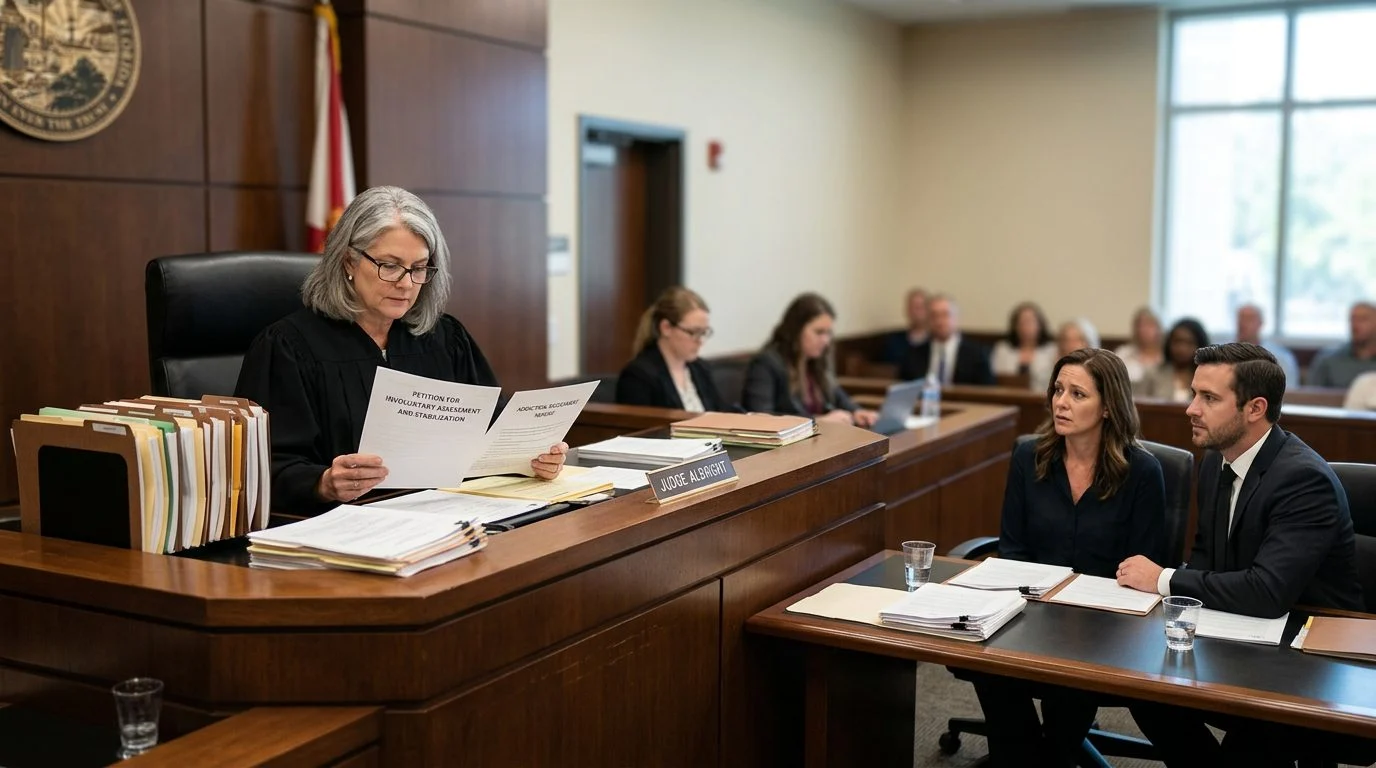
The Marchman Act is Florida’s Chapter 397 process for court-ordered help. It covers involuntary treatment for substance abuse impairment, including involuntary commitment for addiction. It is a court case. A judge decides after a hearing, based on evidence. It is not an informal intervention.
The process is built for people who may not seek help on their own. It cannot make a marriage work, and it cannot promise recovery. What it can do is put the question in front of a judge.
If your spouse's addiction has left your household feeling unsafe, you don't have to work out the Marchman Act alone. Contact us to talk through your family's situation. Talk it through with our team — the first consultation is free, confidential, and carries no obligation.

Who Can File a Marchman Act Petition, Including a Spouse
A spouse can file. For an adult respondent, the statute allows a petition from the spouse or legal guardian, any relative, a service provider, or an adult with direct personal knowledge of the impairment and the person’s prior assessment and treatment. The statute lists the spouse as a petitioner.
Location matters. The petition is filed with the clerk of the court in the county where the person is located. The clerk may not charge a fee for filing. See Fla. Stat. § 397.681. In J.P. v. J.N., the Fifth District held that filing in the wrong county is a venue defect, not a lack of jurisdiction. Miami-Dade filings go to the Miami-Dade Clerk’s mental health court page, which directs adult substance abuse petitions to the Clerk’s Office Probate Court.
Your own location matters less than the person’s. Ask where your spouse is physically staying when you file, because that is the county that counts.
What the Court Needs to See: Building the Petition Evidence
The court needs facts, not a general description of a hard marriage. The petition must name the respondent and the petitioner, state their relationship, give the name of the respondent’s attorney if known, and list the factual allegations. Under Fla. Stat. § 397.68141, the factual allegations in a Marchman Act petition for involuntary services must demonstrate the petitioner’s reason for believing that the respondent is substance abuse impaired, the reason for believing that because of that impairment the respondent has lost the power of self-control with respect to substance abuse, and either that the respondent has inflicted or is likely to inflict physical harm, or that the respondent’s refusal of care is based on impaired judgment.
- Why you believe the person is substance abuse impaired.
- Why you believe the person has lost power of self-control with respect to substance use.
- Why you believe the person has harmed or is likely to harm themselves or others, or refuses care because impaired judgment blocks any real choice about care.
Useful evidence includes dated incidents, overdoses, emergency visits, police reports, and messages. It also includes any treatment records you already hold. Events involving the children belong on the list, with dates and details.
Build a written chronology. For each event, write the date, the place, what happened, and who saw it. Include witness names and contact information. The petition may also attach a professional’s report from within 30 days before filing. If there is none, the petition must say so.
How a Marchman Act Case Moves Through Florida Courts
A case moves from petition to hearing to a court order, with set time limits along the way. The timing of each step depends on the court’s calendar and the facts. In plain steps:
- Consultation and fact review. You and the firm go over the chronology and documents.
- Filing. The petition goes to the clerk in the county where the person is located.
- Emergency order, if needed. When emergency circumstances exist, the court may rely on the petition and enter an ex parte order for assessment and stabilization, as Fla. Stat. § 397.6818 allows.
- Hearing date. If the respondent does not appear at the hearing and the court reasonably believes the commitment criteria are met and a substance abuse emergency exists, it may issue or reissue an ex parte assessment and stabilization order valid for 90 days; if the respondent’s location is known, the court must continue the case for no more than 10 court working days.
- Assessment. Under Fla. Stat. § 397.6818, when emergency circumstances exist, the court may rely solely on the contents of the petition and, without appointing an attorney, enter an ex parte order for the respondent’s involuntary assessment and stabilization.
- Hearing. The court hears relevant evidence, including testimony from family members about the person’s history. Testimony is under oath.
- Order. If the conditions are proved by clear and convincing evidence, the court may order treatment for up to 90 days, under Fla. Stat. § 397.697.
Your role is to provide accurate facts and attend hearings when asked. In J.C. v. State, the Fifth District wrote that the court failed to follow the applicable statute by essentially functioning as the absent petitioner. Another district has reached a different result, so it is not settled statewide.
Protecting the Children and the Household While the Case Is Pending
Plan for safety now, before any hearing. Protecting the household is part of the process, not a separate task.
- Children’s safety plan. Decide where the children go during a bad night. Name a safe adult.
- Emergency contacts. List doctors, the person’s treatment providers, neighbors, and relatives. Keep the list on paper.
- Crisis plan. Write down what to do during an episode. Call 911 when someone is in immediate danger.
- Financial records. Gather shared bank statements, bills, income records, and debt notices. Money problems are part of the picture the court may hear about.
- Your own log. Keep a current, dated record of events. Avoid confrontations that could escalate the situation.
A Marchman Act petition asks for assessment and treatment for the person named. It is not a divorce or a property case. Questions about the marriage and finances need their own advice.
Your Questions About Filing as a Spouse, Answered
Do I need a lawyer to file?
Under Fla. Stat. § 397.681, the person named as respondent in a petition for involuntary treatment for substance abuse impairment is entitled to counsel at every stage of the judicial proceeding. The respondent may waive that right only if present and the court finds the waiver knowing, intelligent and voluntary. A respondent who wants counsel but cannot afford a private attorney is entitled to court-appointed counsel. A consultation can help you understand your options before you file.
Will my spouse have to agree to the assessment?
No. To qualify for involuntary outpatient treatment, the respondent must be supported by a social worker or case manager of a licensed service provider, or by a willing, able, and responsible individual appointed by the court; unless the respondent has been involuntarily ordered into inpatient treatment under this chapter at least twice during the last 36 months, or demonstrates the ability to substantially comply with the outpatient treatment while waiting for residential placement to become available, the respondent must also receive an assessment from a qualified professional or licensed physician expressly recommending outpatient services; such services must be available in the county where the respondent is located; and it must appear likely that the respondent will follow a prescribed outpatient care plan.
Will the children be involved in the case?
Whether they are involved depends on the facts. Family members can testify about the person’s history, so plan with that in mind.
Is this different from a guardianship?
Yes. The Marchman Act is a Chapter 397 process for substance abuse impairment. Guardianship is a separate legal matter, and the firm handles both.
Does the Marchman Act apply outside Florida?
The petition is filed in the Florida county where the person is located. The process is tied to Florida law.
What does a first consultation involve?
The free first consultation is confidential and carries no obligation to continue.
Not sure what your next step is?
Talk it through with our team — the first consultation is free, confidential, and carries no obligation.

Why Robinson Casey Limits Its Practice to These Matters
Robinson Casey limits its practice to Marchman Act petitions and guardianship matters. The firm serves families in Miami-Dade, across South Florida, and statewide.
Richard J. Casey III, Esq. is the responsible lawyer for this page. The firm’s support staff help families with intake and scheduling, so your first call reaches people who know the process.
You are not required to know the law before you call. Bring your chronology, your documents, and your questions. A consultation is a good place to sort out what fits your household. If you are ready to talk, call (561) 849-4149 or request a free consultation today.
How Robinson Casey Can Help Your Family
A Confidential First Conversation
Your free first consultation is confidential and carries no obligation to continue. You can describe your situation and ask questions before you decide anything.
Focused Practice Area
Our practice focuses on Marchman Act petitions and guardianship matters, so the work you bring to us is the work we handle every day.
Support for the Whole Family
Our team, including our support staff, helps families organize documents, understand each step and stay informed as the matter moves forward.
Attention to Your Family's Safety
We listen first.
If Someone Is in Immediate Danger
If you or your children are in immediate danger, call 911 first. A legal petition is not a substitute for emergency help.
Matters Our Practice Handles
Marchman Act Petitions
Petitions under Florida's Marchman Act asking a court to order an assessment and, where legal criteria are met, treatment for a person with a substance use problem.
Involuntary Commitment for Addiction
Guidance on the court process for involuntary commitment for addiction under Florida law.
Emergency Temporary Guardianship
Help with urgent requests for temporary guardianship when a person needs protection quickly.
Plenary and Limited Guardianship
Guardianship options ranging from broad plenary guardianship to more limited arrangements tailored to the person's needs.
Mental Health Guardianship
Guardianship matters involving a loved one's mental health needs and the decisions that follow.