
Marchman Act Petitions | Miami-Dade, South Florida and Statewide
Marchman Act Petitions, Handled with Care Across Florida Counties
Robinson Casey focuses on Marchman Act petitions and guardianship matters, helping families in Miami-Dade, South Florida and throughout the state through difficult decisions.
By Richard J. Casey III, Esq. · Published November 1, 2026
Your Child, Another County, and the Petition You Need
A Marchman Act petition is filed in the county where your adult child is physically located, which may not be the county where you live. That one rule shapes almost every step that follows.
You have probably tried a lot already. Treatment, interventions, and firm boundaries may not have changed much. Then came a recent overdose, relapse, hospital stay, arrest, or disappearance, and you started looking for another way. You shouldn’t have to manage that crisis alone.
Robinson Casey limits its practice to Marchman Act petitions and guardianship matters. The firm serves families across South Florida and statewide. Richard J. Casey III, Esq. is the responsible lawyer for this page.
If your child is in one county and you are in another, the court path still starts where your child is located. This page explains how these petitions work, where they are filed, and what a first conversation can cover.
If your adult child's latest crisis has you wondering which county's court to use, you don't have to sort that out alone. We can talk it through with you. Talk it through with our team — the first consultation is free, confidential, and carries no obligation.

What a Marchman Act Petition Is and Who Can File One
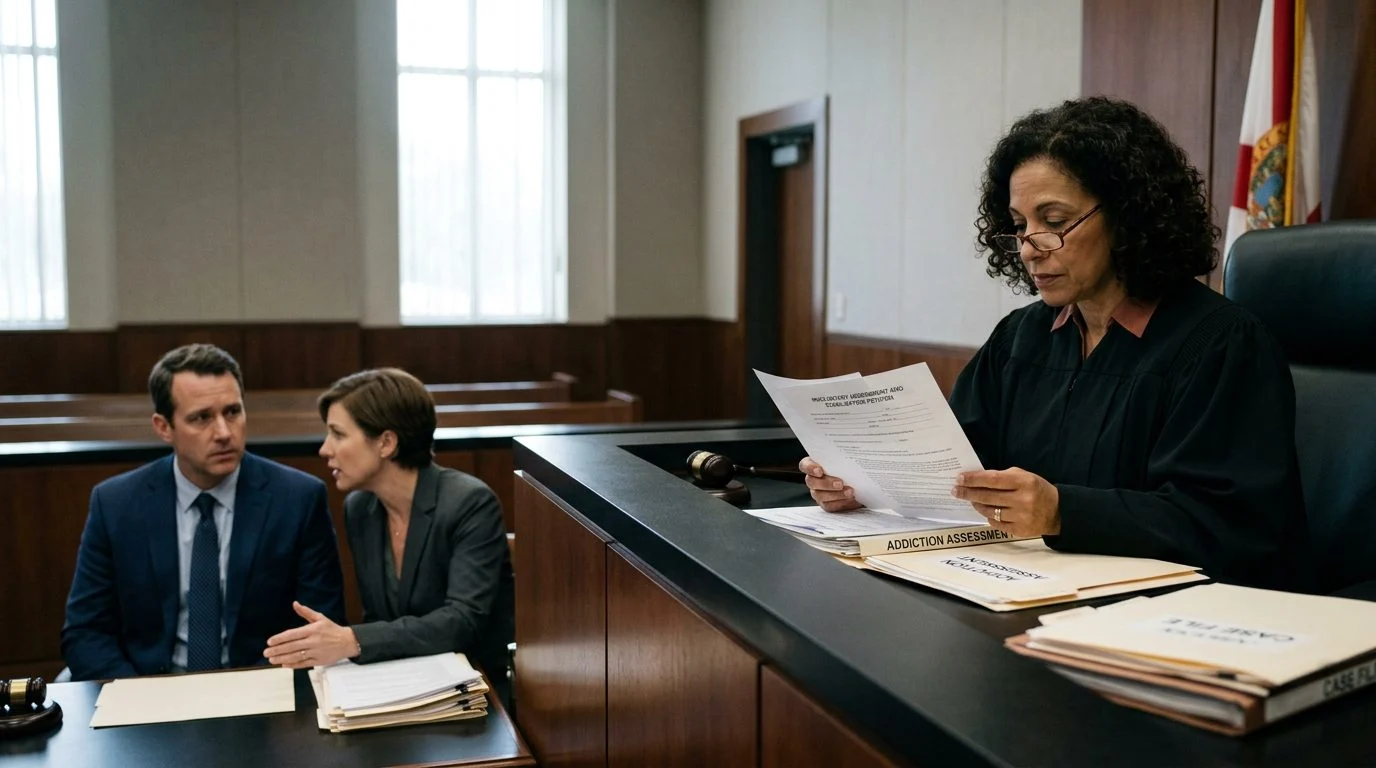
A Marchman Act petition is a court filing that asks a judge to order involuntary assessment and, where the law allows, involuntary treatment for an adult with a substance use problem. The process is governed by Florida Statutes chapter 397.
Under Fla. Stat. § 397.68112, a petition for an adult may be filed by a spouse or legal guardian, any relative, a service provider, or an adult with direct personal knowledge of the person’s impairment and treatment history. A parent is a relative, so a parent can file.
The judge needs more than worry. Under Fla. Stat. § 397.675, there must be a good-faith reason to believe the person is substance abuse impaired, or has a substance use disorder and a co-occurring mental health disorder, and that because of this the person has lost the power of self-control over substance use. The person must also be unable to see the need for help, or be likely to neglect themselves or to harm themselves or others. Fla. Stat. § 397.675 reads: “(b) Without care or treatment, is likely to suffer from neglect or refuse to care for himself or herself; that such neglect or refusal poses a real and present threat of substantial harm to his or her well-being; and that it is not apparent that such harm may be avoided through the help of willing, able, and responsible family members or friends or the provision of other services, or there is substantial likelihood that the person has inflicted, or threatened to or attempted to inflict, or, unless admitted, is likely to inflict, physical harm on himself, herself, or another.”
Refusing treatment alone does not show impaired judgment. Under § 397.675, the person must be incapable of appreciating their need for services and of making a rational decision about them because of substance abuse impairment, though mere refusal of services is not evidence of that. Fla. Stat. § 397.675 reads: “(b) Without care or treatment, is likely to suffer from neglect or refuse to care for himself or herself; that such neglect or refusal poses a real and present threat of substantial harm to his or her well-being; and that it is not apparent that such harm may be avoided through the help of willing, able, and responsible family members or friends or the provision of other services, or there is substantial likelihood that the person has inflicted, or threatened to or attempted to inflict, or, unless admitted, is likely to inflict, physical harm on himself, herself, or another.” The petition must set out specific facts supporting this (§ 397.68141).
Why the County Matters: Where a Petition Is Filed
The petition is filed with the clerk of the court in the county where the person is located, under Fla. Stat. § 397.681. The rule points to where the person is, not where the family lives.
County clerks explain this routing on their own sites. The Miami-Dade Clerk mental health court page directs adult petitions to the Clerk’s Office Probate Court. The Lake County Clerk Marchman Act guidance explains that a judge may order law-enforcement transport to an appropriate treatment facility.
Location errors can matter. In J.P. v. J.N., the Fifth District held that a petition filed in the wrong county did not take away the circuit court’s jurisdiction. The court treated the problem as a venue issue. Venue means the right place for the case, not whether any court can hear it.
For a family with a child in one county and parents in another, the consultation can review both locations. The goal is a clear path before anything is filed.
What Our Representation Covers
Our team covers the petition, the emergency steps, and the preparation a family needs for the hearing. Here is what that includes:
- Fact review: the overdose, relapse, hospital visit, arrest, or disappearance that started the search, plus prior treatment and assessments.
- Petition drafting: a petition must name both parties, state their relationship, and set out the facts behind the request (§ 397.68141). It may include an assessment done within 30 days before filing.
- Emergency requests: if there is an emergency, the petition must describe the exigent circumstances and may ask for an ex parte assessment and stabilization order.
- Hearing preparation: testimony is taken under oath, and family members who know the person’s history can testify (§ 397.6957).
- Guardianship matters within the firm’s practice areas, when a family’s situation calls for them.
Your child also has rights. Under § 397.681, the respondent has a right to counsel at every stage, which the respondent may waive only if present and the court finds the waiver is knowing, intelligent, and voluntary.
How the Process Works, Step by Step
The process moves from a first consultation to filing, notice, assessment, and a hearing. Several steps have set time limits.
- Consultation. Bring a timeline of recent events, where your child is now, and any prior assessments.
- Eligibility. A person may be the subject of a petition if they reasonably appear to meet the criteria, were under protective custody or an emergency admission within 10 days, or were assessed by a qualified professional within 30 days (§ 397.68111).
- Filing. The petition goes to the clerk in the county where the person is located.
- Hearing date. The court must schedule a hearing within 10 court working days unless a continuance is granted (§ 397.68151).
- A service provider may not hold the person for more than 72 hours of observation unless a statutory exception applies (§ 397.6818).
- The appellate opinion in J.C. v. State is available for readers who want to review the court’s reasoning. Treatment may last up to 90 days if the conditions are proved by clear and convincing evidence (§ 397.697).
A petition built on specific facts is stronger than one built on general worry. A renewal must be requested before the services period ends (§ 397.6975).
Why Robinson Casey: How the Practice Is Built
Robinson Casey limits its practice to Marchman Act petitions and guardianship matters. That keeps the work within one defined area.
The practice areas include:
- Marchman Act attorney services
- Involuntary commitment for addiction
- Guardianship attorney services
- Emergency temporary guardianship
- Plenary and limited guardianship
- Mental health guardianship
Our support staff, including assistants and office staff, help families with communication and scheduling. That support matters when a family is juggling a crisis, work, and court dates.
Florida’s rights statute for people in substance abuse services also matters here. Under Fla. Stat. § 397.501, the dignity of each person served must be respected at all times.
If a matter needs help outside these practice areas, we will tell you. Another lawyer or firm may need to handle it.
Not sure what your next step is?
Talk it through with our team — the first consultation is free, confidential, and carries no obligation.
Questions Families Ask Before Calling
The first consultation is free, confidential, and carries no obligation to continue.
Does it cost anything to file?
The clerk may not charge a fee to file a Marchman Act petition (§ 397.681). For an indigent petitioner, the court may prohibit, or a law enforcement agency may waive, service of process fees (§ 397.68112).
Does my child have to attend the hearing?
Generally, yes. The respondent must be present unless the court makes the findings the statute allows (§ 397.6957).
Can I file if my child is in another county?
Yes. Under § 397.681, the petition must be filed with the clerk of the court in the county where your child is located.
How long can a court order last?
A court may order treatment for up to 90 days once the conditions for involuntary treatment are proved by clear and convincing evidence (§ 397.697). A renewal petition must be filed before that period ends (§ 397.6975).
Does a petition send my child straight to a facility?
Not automatically. An emergency order can allow assessment before the hearing, but the judge decides the case after a hearing (§ 397.6818).

Next Step: Talk Through Your Family’s Situation
If your child’s latest crisis has you asking whether a Marchman Act petition is the right next step, a conversation is a practical place to start.
You may be weighing a hospital discharge, a recent arrest, or a disappearance. We can review the county, the facts, and the timing with you, so you know what a petition would need.
Reach out through our contact form or call (561) 849-4700 to schedule your free, confidential first consultation. You don’t have to decide everything before you call.
Why Families Work With Robinson Casey
A Focused Practice
Our practice focuses on Marchman Act petitions and guardianship matters, so the cases we take on are the ones we handle every day.
Miami-Dade, South Florida and Statewide
We represent families across Miami-Dade and South Florida and in counties throughout Florida.
Confidential Free Consultation
Your first consultation is free, confidential and comes with no obligation to continue.
Compassion Under Pressure
Families facing addiction or a mental health crisis need clear answers. Our team explains each step in plain language.
Support From Our Team
Our team of assistants and office staff helps keep your paperwork, hearing details and communication organized.
Advocacy for Your Loved One
We press for the protection and care your family needs, and we keep you informed at every stage.
Don't Wait for the Situation to Escalate
Questions about a loved one's safety, substance use or mental health should not wait for a crisis. Speaking with a Florida attorney early helps you understand your options before events move quickly.
Matters We Handle
Marchman Act Attorney
We prepare and file Marchman Act petitions for families seeking help for a loved one struggling with substance use.
Involuntary Commitment for Addiction
We guide families through the involuntary commitment process for addiction under Florida law.
Guardianship Attorney
We handle plenary, limited and mental health guardianships for adults who need a court-supervised decision-maker.
Emergency Temporary Guardianship
When immediate protection is needed, we pursue emergency temporary guardianship petitions with urgency and care.