
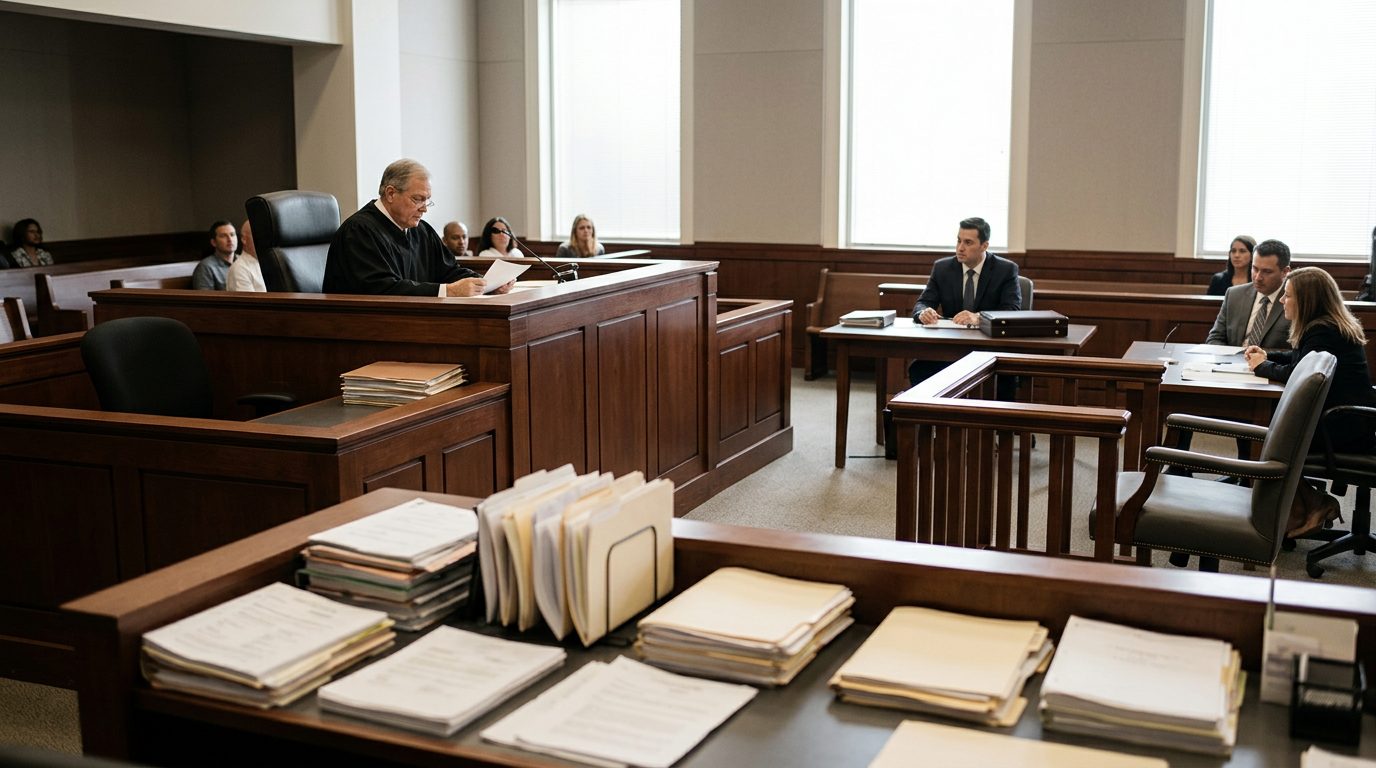
Judge's bench and witness stand in empty Florida courtroom during guardianship hearing.

Marchman Act

Grounds for Involuntary Commitment in Florida

Understanding the legal criteria courts use to order treatment for substance use disorders

· Published September 19, 2026

Marchman Act Grounds for Involuntary Commitment in Florida

Florida courts cannot order involuntary commitment for substance abuse based on addiction alone. The law sets specific, narrow grounds that a petition must establish before a court may order involuntary commitment. Understanding these grounds helps families know whether a Marchman Act petition has a legal foundation and when professional guidance is needed.

If someone you care about is struggling with substance abuse and you’re wondering whether involuntary commitment might be appropriate, you may want to learn about the legal options and the grounds the Marchman Act sets out. An attorney can help you talk through your situation.

Wooden gavel on round surface with folders on courtroom table, overhead view.

What the Marchman Act Requires: The Legal Grounds for Commitment

The Marchman Act (Fla. Stat. § 397.675) establishes specific criteria a court must find before ordering involuntary commitment. The law does not permit commitment based on addiction or substance use standing alone. Instead, the statute requires proof of one or more defined grounds that go beyond the fact of addiction itself.

This legal framework exists because civil commitment is a serious deprivation of liberty. Courts must have clear, factual grounds rooted in medical and safety criteria, not in family frustration or moral judgment. Understanding these grounds helps families prepare a petition that addresses what the court will actually consider and clarifies when a Marchman Act petition is legally appropriate.

The Core Criterion: Likelihood of Serious Harm

The primary ground for commitment is that the person is likely to suffer serious bodily injury or death if not committed. The focus is on evidence of likely serious harm to the person, rather than general concern about their situation.

Serious harm includes overdose, organ damage from continued substance use, dangerous behavior while intoxicated, or medical crises triggered by withdrawal or use. Courts may consider evidence of repeated overdoses, medical emergencies, or behavior that places the person in immediate danger.

The court weighs several factors when evaluating this ground:

  • Past behavior and medical history: Prior overdoses, emergency room visits, or hospitalizations related to substance use.
  • Current substance use patterns: Escalating use, mixing of substances, or use of particularly dangerous drugs.
  • Medical condition: Underlying health problems worsened by addiction, such as liver disease, heart problems, or respiratory issues.
  • Documented incidents: Specific events showing imminent risk—a recent overdose, a suicide attempt, or dangerous conduct while intoxicated.

The court will not find this ground on speculation or family concern alone. The evidence must establish a real, substantial risk of serious harm based on facts known to those with direct knowledge of the person’s behavior and condition.

Inability to Consent to Treatment

Substance abuse can impair judgment, insight, and the ability to understand the nature and consequences of one’s condition.

The court considers whether the person understands:

  • The nature and severity of their substance use disorder.
  • The risks and consequences of continued use.
  • The need for treatment.
  • The benefits and risks of available treatment options.

Repeated refusal of treatment, despite clear evidence of harm, may support a finding of incapacity to consent. The law recognizes that some individuals will not seek help voluntarily, even as their situation worsens. This ground does not mean the person is incompetent in all respects—only that addiction has impaired their ability to make sound decisions about their own treatment.

How Decline and Refusal of Help Are Considered

Courts may also consider the person’s overall condition and any prior efforts to help, as the evidence bears on the statutory grounds. Evidence of escalating substance use, worsening health, job loss, family breakdown, or social decline may bear on the court’s assessment of a petition.

Documented attempts to help are relevant and important:

  • Offers of counseling or treatment that have been rejected.
  • Prior treatment attempts that failed or were abandoned.
  • Interventions by family or friends that were refused.
  • Professional recommendations for care that the person has ignored.

The law recognizes that deterioration coupled with resistance to help—especially when help has been offered and refused—may indicate a need for involuntary intervention. This is not punishment; it reflects the reality that addiction can prevent someone from accepting the help they need, even as their condition worsens.

The Role of Medical and Factual Evidence

Petitions must be supported by credible evidence, not assumptions or fears. A physician’s affidavit or testimony about the person’s medical condition and risk may be considered by the court, depending on the circumstances of the case.

Strong evidence includes:

  • Medical records: Emergency room visits, hospitalizations, overdose incidents, or diagnoses related to substance use.
  • Physician statement: A doctor’s assessment of the person’s medical condition, risk of serious harm, and need for treatment.
  • Behavioral documentation: Specific incidents showing deterioration, dangerous conduct, or escalating use.
  • Witness testimony: Statements from family, friends, employers, or others with direct knowledge of the person’s behavior and condition.

The court will not order commitment on speculation or family concern alone. The grounds must be established by fact. Knowing what evidence the court may consider is a useful place to start.

Not sure what your next step is?

An attorney can help you talk through your situation.

What Does Not Constitute Grounds for Commitment

Get a consultation

What Does Not Constitute Grounds for Commitment

Understanding what does not meet the legal standard is equally important. Courts cannot order commitment based on:

These distinctions matter because they clarify that commitment is not a tool for coercing people into treatment simply because family members wish they would change. It is a legal remedy available only when specific statutory grounds are met.

How Courts Evaluate the Grounds

Judges apply a clear and convincing evidence standard—a high threshold requiring substantial proof. This is more demanding than a “preponderance of the evidence” (more likely than not) but less demanding than proof “beyond a reasonable doubt.”

The court considers the totality of circumstances:

Testimony from those with direct knowledge of the person’s behavior and condition may be considered by the court.

Why Understanding the Grounds Matters

Knowing the legal standard helps families prepare a petition that addresses what the court will actually consider. It clarifies that commitment is not punitive but is based on medical and safety criteria grounded in Florida law.

Understanding the grounds also helps families recognize when their situation may meet the legal threshold. If someone you care about is showing signs of imminent serious harm, lacks capacity to consent to treatment, and is resisting help despite documented attempts to intervene, a Marchman Act petition may be legally appropriate. Conversely, if the situation involves lifestyle concerns or refusal of help without evidence of serious harm or incapacity, the legal grounds may not be met.

An attorney can review the facts of your situation and advise whether a petition may be legally and practically appropriate. An attorney’s review may also help families understand the kinds of evidence the court may consider.

Wooden gavel on desk with legal folders in courtroom setting.

Frequently Asked Questions

Can someone be committed under the Marchman Act just for using drugs or alcohol?

No. Addiction or substance use alone is not grounds for commitment. Courts must find that the person is likely to suffer serious bodily injury or death, lacks capacity to consent to treatment, or meets other statutory criteria.

What is the “clear and convincing evidence” standard?

It is a high legal threshold requiring substantial proof—more demanding than “more likely than not” but less demanding than “beyond a reasonable doubt.” The evidence must clearly and convincingly establish the grounds for commitment.

Do I need a doctor’s statement to file a Marchman Act petition?

A physician’s affidavit or testimony may be presented at the hearing, depending on the case. Medical evidence about the person’s condition and risk may be relevant to the statutory grounds.

What if someone refuses treatment after being committed?

Refusal of treatment after commitment may not end the commitment; the court order may remain in effect, and the treatment facility may work with the person to engage them in care. Continued refusal may lead to further legal proceedings, and whether the initial commitment order remains in effect is up to the court’s discretion.


If someone you care about is struggling with substance abuse and you’re wondering whether involuntary commitment might be appropriate, you may want to learn about the legal process and your options. Contact us to schedule a consultation or call (561) 849-4149. The information on this website is for general informational purposes only and does not constitute legal advice or create an attorney-client relationship. Results in prior cases do not guarantee similar outcomes in future matters. Please consult a licensed Florida attorney for advice specific to your situation.

Addiction Alone Is Not Enough

Under Florida law, substance use or addiction by itself does not meet the grounds for involuntary commitment. A court must find that the person meets specific statutory criteria—such as likelihood of serious bodily injury or death, or lack of capacity to consent to treatment—before ordering commitment.

The Legal Grounds for Marchman Act Commitment

Likelihood of Serious Bodily Injury or Death

The court may order commitment if the person's substance use disorder creates a substantial likelihood they will suffer serious bodily injury or death without treatment.

Lack of Capacity to Consent

If the person cannot understand the nature of their condition or the need for treatment due to substance use, they may meet grounds for commitment even if they refuse voluntary treatment.

Deterioration Without Treatment

Courts consider whether the person's physical or mental health will deteriorate substantially without intervention, or whether they pose a danger to themselves or others.

Clear and Convincing Evidence Standard

Petitioners must present evidence that meets the ‘clear and convincing’ standard, a high legal threshold requiring substantial proof.

How Robinson & Casey Helps

Petition Preparation

We help prepare Marchman Act petitions that set out the statutory grounds for commitment, supported by relevant facts and circumstances.

Legal Representation

We represent families and concerned parties through the commitment process, including hearings before the court.

Guidance on Evidence

We advise on what evidence and testimony may be relevant under the legal standard and explain how courts evaluate grounds for commitment.

Emergency Temporary Guardianship

We can discuss whether emergency temporary guardianship may be an option alongside or instead of Marchman Act commitment, depending on the circumstances and the court’s discretion.

Ready to Discuss Your Options?

Related practice areas

Call Now — Free Consultation (561) 849-4149