
Marchman Act Hearings | Florida Family Guide
Testifying at a Marchman Act Hearing: What Florida Families Should Know
Robinson Casey focuses exclusively on Marchman Act petitions and guardianship matters. This guide explains what testimony at a hearing may involve and how to prepare. Richard J. Casey III, Esq. is the responsible lawyer.
By Richard J. Casey III, Esq. · Published October 14, 2026
Family members can testify at a Marchman Act hearing in Florida, and the judge decides what evidence to consider. Under Fla. Stat. § 397.6957, the court hears and reviews relevant evidence, including testimony from family members who know the person’s history. This guide explains what that testimony involves and how to prepare. It is general information, not legal advice.
What a Marchman Act Hearing Is
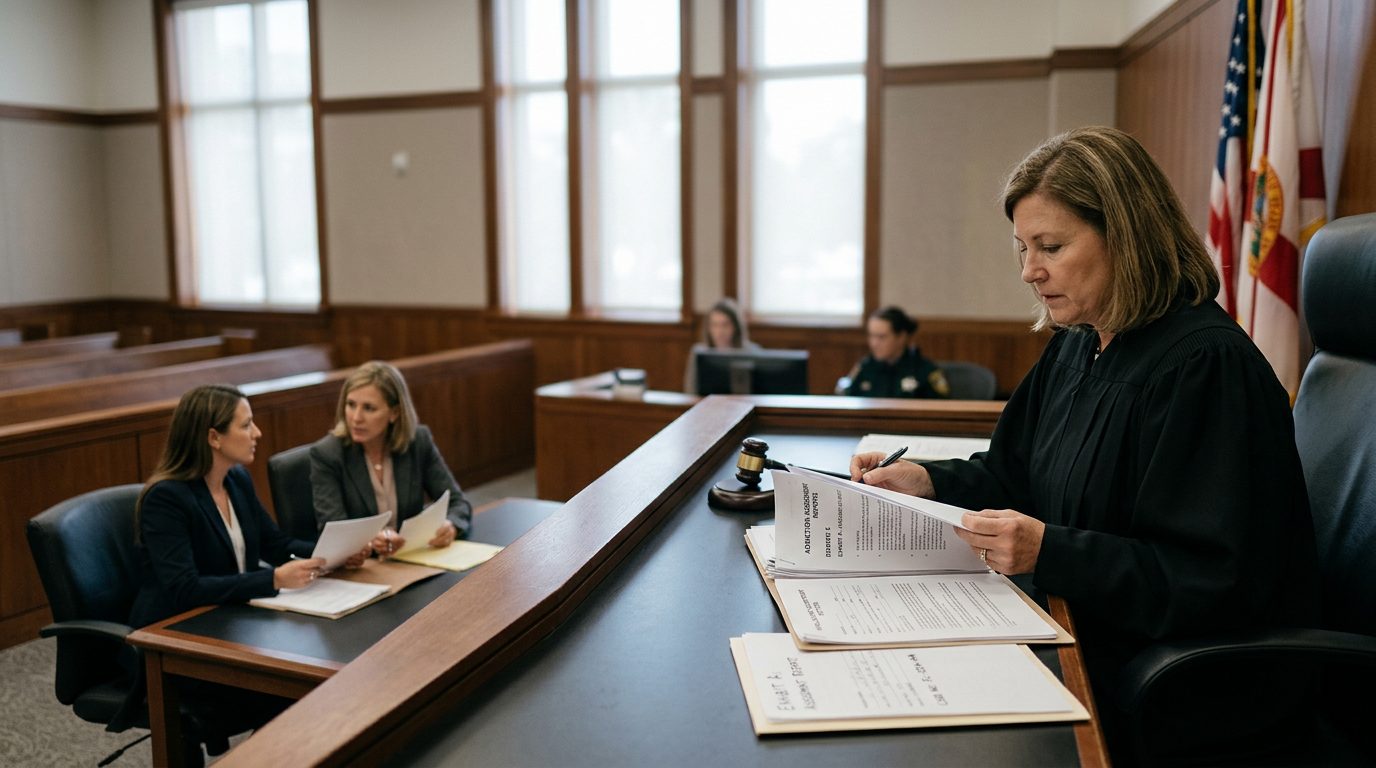
A Marchman Act hearing is a court proceeding on a petition asking a judge to order involuntary treatment services for someone with substance abuse impairment. At the hearing, the judge hears evidence and decides whether the legal requirements are met.
The core hearing rules come from § 397.6957. Testimony must be taken under oath, and the proceedings must be recorded. The person named in the petition, called the respondent, may refuse to testify. The court may also order drug tests.
Before ordering treatment, the statute says a clinical assessment generally must occur. The respondent can waive it only by being present in court and expressly waiving it. Other requirements may also apply, and the court decides.
For the bigger picture, read our involuntary commitment for addiction guide.

If you're facing a hearing and feel unsure what to say, you don't have to work through it alone. Talk it through with our team — the first consultation is free, confidential, and carries no obligation.
Who Can File and What the Court Considers
For an adult, § 397.68112 lists persons who may file, including a spouse or legal guardian, any relative, a service provider, and an adult who has direct personal knowledge of the person’s substance abuse impairment and of his or her prior course of assessment and treatment; other requirements may apply, and the court decides. Other requirements may apply, and the court makes the final determination.
The petition itself has rules. § 397.68141 requires the petition to name the respondent and petitioner, state their relationship, and include factual allegations supporting the need for services.
The petitioner starts the case. A family witness is a different role. You don’t have to be the petitioner to testify, because the statute names family members among the people the court hears from.
The court must also decide whether the person has a lawyer or whether appointing one is appropriate (§ 397.68151). The respondent has a right to counsel at every stage of the proceeding (§ 397.681).
What Family Testimony Usually Covers
Family testimony is most useful when it describes what you saw and heard yourself, with dates and places. The statute tells the court to consider family knowledge of the person’s prior history and how it relates to the current condition.
Useful topics often include:
- Specific events you saw or heard, with approximate dates and locations
- Changes in health, work, school, money, or daily routine
- Safety concerns, such as driving, falls, or threats, described plainly
- Past attempts to get help, and how each one ended
Separate what you saw from what you think. “I found three empty pill bottles on the kitchen counter on June 3” is a fact. A guess about why it happened is an opinion, and the judge decides how much weight it gets.
Stay factual and consistent. Exaggeration or changing details can hurt your credibility.
How to Prepare Your Testimony
Preparing means writing down what you observed, gathering records you can lawfully use, and reading the petition closely. Here is a practical checklist:
- Build a dated timeline. Note each incident, who else saw it, and any texts or photos tied to it.
- Collect documents. Messages, emails, and records you’re allowed to access may help. The court decides what it admits.
- Read the petition and every notice. Check which facts you’re asked about, and flag anything that seems wrong.
- Practice short, direct answers. Rehearse the facts, not a script. It’s fine to say “I don’t know” or “I don’t remember.”
- Plan for remote testimony if needed. A witness who attends remotely must give the parties all relevant documents by the close of business the day before the hearing (§ 397.6957).
Expect follow-up questions from the judge or lawyers. Write your own questions for a lawyer before the hearing.
Not sure what your next step is?
Talk it through with our team — the first consultation is free, confidential, and carries no obligation.
What to Expect at the Hearing and How Long It Takes
The hearing follows the petition and notice, but timing depends on the court’s schedule and discretion. Here is the general sequence:
- The petition is filed with the clerk in the county where the person is located (§ 397.681).
- The court decides whether the respondent has counsel.
- The statute says the court shall schedule the hearing within 10 court working days unless a continuance is granted (§ 397.68151). The actual date can change.
- Witnesses testify under oath, and the hearing is recorded.
- The judge rules.
If the judge finds the conditions were proved by clear and convincing evidence, the statute allows an order for services for up to 90 days (§ 397.697). The judge still decides whether to enter that order, based on the evidence.
The petitioner carries the burden of proof. How a court applies this burden of proof depends on the evidence and the circumstances of each case, so ask a lawyer how it applies to your situation.
Common Questions About Testifying
Here are short answers to common questions. The court decides each matter on its own facts.
Can I testify if I’m not the petitioner?
Yes. The statute says the court hears testimony from individuals such as family members. The court still decides what evidence it considers.
Do I need a lawyer to testify?
Hiring a lawyer is your choice. The respondent has a right to counsel, and a lawyer can explain how witnesses are handled in the process.
Will my testimony stay private?
Petitions, court orders, and related records are confidential under § 397.6760. Hearings are recorded, so ask a lawyer how confidentiality applies to your statements.
What if I’m worried about my loved one’s reaction?
Raise that concern with a lawyer early. It can be addressed before the hearing, not after.
How do I start?
A first conversation about your facts is a practical next step.

Have questions about what happened?
Ask our team directly. The first conversation is free, confidential, and there is no obligation to continue.
Talking With Robinson Casey About Your Hearing
Robinson Casey focuses on Marchman Act petitions, involuntary commitment for addiction, and guardianship matters in Florida. If you’re named in a petition or may be asked to testify, a conversation can help you understand your role before the hearing.
A matter may be referred to another lawyer or firm, and we’ll tell you if that applies to yours.
You may also read Adult son won’t get help for drugs, help someone with fentanyl who refuses treatment, or does the Marchman Act affect gun rights.
If you’re facing a hearing and feel unsure what to say, you don’t have to work through it alone. Call (561) 849-4149 or request a consultation with Robinson Casey.
Focused Practice
Robinson Casey limits its practice to Marchman Act petitions and guardianship matters, so every matter we handle falls within these areas.
Confidential Consultation
Your first consultation is free, confidential, and carries no obligation to continue.
Support for Your Family
Our team helps families understand the process, organize their questions, and prepare for what may come up at a hearing.
Clear Explanations
We explain the statute, the hearing format, and the court's role in plain language so you can make informed decisions.
Before You Testify
Testimony at a Marchman Act hearing is given under oath and may be used by the court. Other requirements may apply, and the court decides what evidence to consider. Speaking with a lawyer about your situation before the hearing can help you understand your options.
Preparing to Testify
Know What the Petition Says
Review the petition and the facts it describes so your testimony stays accurate and consistent with what you know.
Gather Your Own Observations
Think about specific events, dates, and conversations you personally witnessed rather than what you have heard from others.
Plan for Questions
Attorneys for the parties may ask questions on direct and cross examination. Practicing clear, honest answers can make the process less stressful.
Ask for Guidance
A lawyer can explain how witnesses are handled, what the statute provides, and how the court may approach the hearing.