
Marchman Act Attorney | Miami-Dade & South Florida
Marchman Act Hearing Support for Your Family in Florida
Robinson Casey focuses on Marchman Act petitions and guardianship matters for families in Miami-Dade, across South Florida and statewide. Richard J. Casey III, Esq. is responsible for this page.
By Richard J. Casey III, Esq. · Published October 22, 2026
Marchman Act Hearing Support Florida: Preparation, Witnesses, and Representation
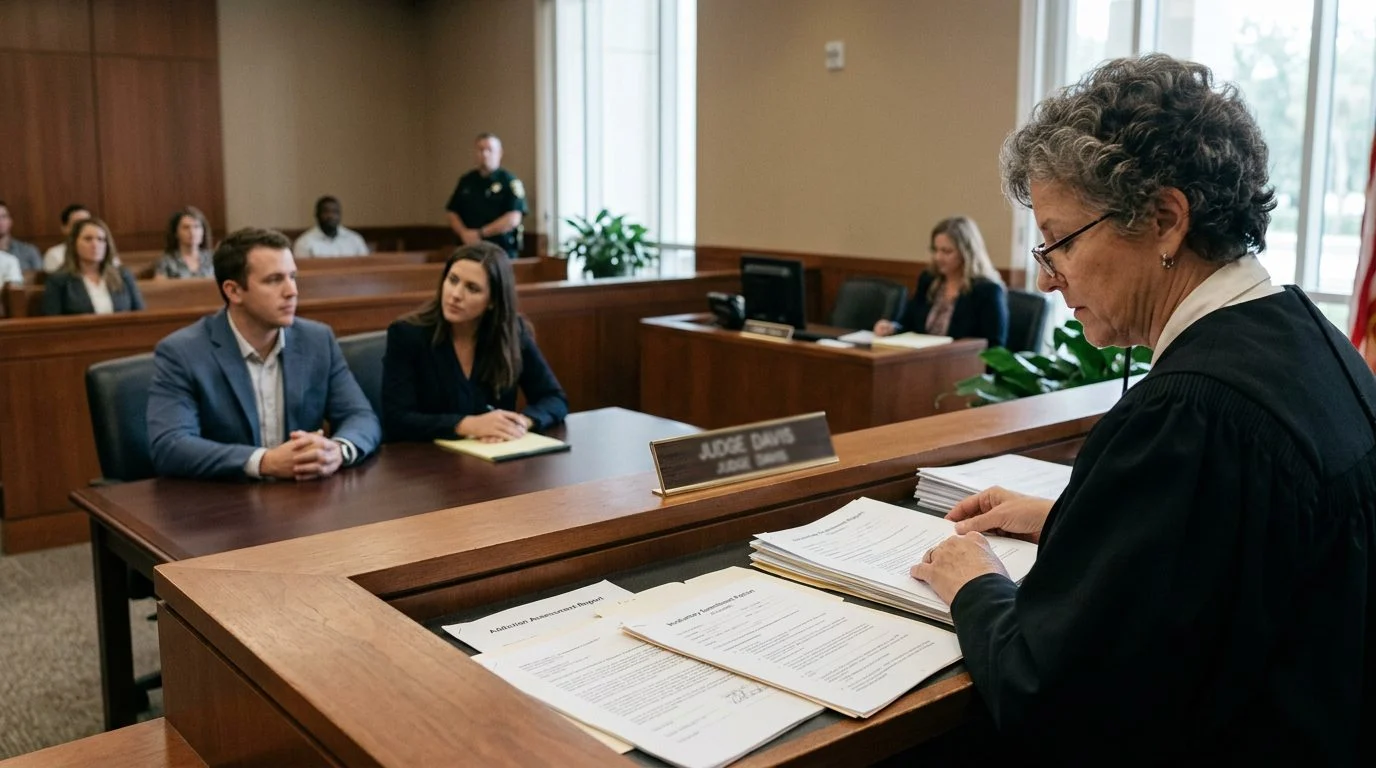
A Marchman Act hearing is the court date when a judge decides whether a person should receive involuntary treatment for substance abuse. Marchman Act hearing support Florida families can use means practical help getting ready for that date. It is not a promise about how the court will rule.
Robinson Casey focuses on Marchman Act and guardianship matters. We serve families in Miami-Dade, South Florida, and statewide. For the bigger picture, read our involuntary commitment for addiction guide.
If a Marchman Act petition has been filed for someone you love, or you were served with papers and a hearing date is close, you don't have to prepare alone. Reach out to us today. Talk it through with our team — the first consultation is free, confidential, and carries no obligation.

What Marchman Act Hearing Support Covers and Who It Is For
Hearing support covers the family’s side of a case that is in court or about to be. It includes reviewing the petition, organizing the facts, planning witnesses, and representing the family at hearings.
The Marchman Act is part of Chapter 397 of the Florida Statutes, the state law on substance abuse treatment. Under that law, a petition for an adult may be filed by the person’s spouse or legal guardian, any relative, a service provider, or an adult with direct personal knowledge of the impairment and treatment history (Fla. Stat. § 397.68112).
So families reach this page in two ways. Some filed a petition. Others were served with one. The person named in the petition is the respondent, and the steps look a little different for each role.
Preparing the Family’s Case Before the Hearing
Preparation starts with the papers. Read the petition and every notice with the family, and write down each date.
A petition must name the respondent and the petitioner and state their relationship. The petition must note the lack of assessment or a refusal to be evaluated if the person was not assessed before filing or refused to submit to an evaluation (Fla. Stat. § 397.68141).
Time moves fast. The court must schedule the hearing within 10 court working days unless a continuance is granted (Fla. Stat. § 397.68151). Preparation cannot wait for the last week.
Check the county on the papers. A petition is filed in the county where the person is located, and the clerk may not charge a fee to file it (Fla. Stat. § 397.681). A Florida appeals court has held that filing in the wrong county is a venue problem, not a loss of the court’s power to hear the case (J.P. v. J.N.). However, the filing of the petition in the wrong county did not divest the circuit court in Putnam County of jurisdiction (J.P. v. J.N.).
Next, gather the family’s records. Collect treatment or medical records the family can lawfully get, prior assessments, and a written timeline of key events. The evidence guide covers the types of proof courts review.
Witness and Evidence Planning
The court must hear and review all relevant evidence. That includes testimony from family members who know the person’s history and how it relates to the current condition (Fla. Stat. § 397.6957).
Make a witness list with three groups:
- Family members with first-hand knowledge of the person’s history.
- Treatment providers or other professionals who assessed the person.
- People who saw recent events firsthand.
A fact witness tells what they saw or lived through. A professional gives a view based on an assessment. The family needs both kinds of testimony to tell a clear story.
Every witness testifies under oath, and the proceedings are recorded. The court may also order drug tests (Fla. Stat. § 397.6957). A witness who testifies remotely by audio-video must give all relevant documents to the parties by the close of business the day before the hearing. Missing that deadline is avoidable with a simple checklist.
The clinical assessment has its own deadline. It must reach the clerk by the close of business the day before the hearing. It must also recommend a level of treatment. A report without a treatment recommendation, or one recommending no treatment, leads to dismissal of the petition (Fla. Stat. § 397.6957).
Not every conversation with a therapist stays private. The privilege does not apply to communications relevant to an issue in a proceeding to compel hospitalization when the therapist has reasonable cause to believe the patient needs hospitalization (Fla. Stat. § 90.503). Court records in these cases are confidential and go only to listed people (Fla. Stat. § 397.6760).
What Representation Includes at the Hearing
Representation means a lawyer acts for the family in court. It covers the Marchman Act petition itself. Our team also helps with scheduling, filings, and document organization.
Who carries the proof matters. In doing so, the court failed to follow the applicable statute by essentially functioning as the absent petitioner (J.C. v. State). A judge who calls and questions the only witness when the petitioner is absent has functioned as the absent petitioner, and the order was reversed (J.C. v. State). The trial court failed to follow the governing statute when, in the absence of the petitioner, it called and questioned the health care professional who executed the involuntary services certificate (C.W.R.K. v. Stewart Marchman Act Behavioral Healthcare).
The person named in a petition has the right to counsel at every stage. They may waive it only if present and the court finds the waiver knowing, intelligent, and voluntary (Fla. Stat. § 397.681). If they cannot afford private counsel, they may receive court-appointed counsel.
Matters outside the petition, such as a guardianship case, fall under separate scope. That scope is confirmed at consultation. If another lawyer or firm may be a better fit for your matter, we will tell you.
How the Process Moves From First Call to Hearing
The process runs in five steps, from first review through follow-up after the hearing. The court’s calendar sets the exact dates, so no fixed timeline is promised.
- Consultation. We review the petition, any papers served, and the family’s questions.
- Deadline and document review. You get a written list of dates and documents to gather.
- Evidence and witness planning. We organize each witness’s account and the deadlines that apply to them.
- Hearing preparation. We walk through the courtroom process and the questions the family may face.
- Hearing and follow-up. We review any order and what it requires of the family.
Emergencies move faster. The court may enter an assessment order based on the petition alone, without appointing an attorney (Fla. Stat. § 397.6818). If the court orders involuntary treatment, the order can last up to 90 days, and a renewal may be requested before the 90 days end if the conditions are expected to continue (Fla. Stat. § 397.697). Early release is possible on several grounds, for example when the person no longer meets the criteria and consents to voluntary treatment, the likelihood of harm no longer exists, or the person no longer needs treatment services (Fla. Stat. § 397.6971).
Not sure what your next step is?
Talk it through with our team — the first consultation is free, confidential, and carries no obligation.
Why Families Work With Robinson Casey
Robinson Casey limits its practice to Marchman Act petitions and guardianship matters. That focus keeps our work centered on these two areas.
Richard J. Casey III, Esq. is the responsible lawyer for this page. Our support staff helps with filings, scheduling, and organizing documents. We serve Miami-Dade, South Florida, and statewide.
Questions about treatment costs are covered on our insurance coverage page. Talking with a loved one before a hearing is hard. Our family conversation guide covers that step.
Common Questions About Marchman Act Hearing Support Florida
Can a family member attend the hearing?
Family members who know the person’s history can testify, and the court hears all relevant evidence. Your role depends on how the case is set up.
Does Marchman Act hearing support Florida include guardianship?
Guardianship is a separate area we focus on. Your scope is confirmed during consultation.
What should I bring to the first consultation?
Bring the petition, any notices or service papers, and a short written timeline of events.
Is there a filing fee?
The clerk may not charge a fee to file a petition under this section (Fla. Stat. § 397.681).
Is the first consultation free?
Yes. The first consultation is free, confidential, and without obligation to continue.

Talk With Robinson Casey About Your Family’s Hearing
If a petition has been filed for someone you love, or you were served and the hearing date is close, you can talk through your options now. Call (561) 849-4149 or request a consultation through our contact page.
Why Families Contact Robinson Casey
A Focused Practice
Our firm focuses on Marchman Act petitions and guardianship matters, so the families we help work with lawyers who concentrate on these issues.
Clear Explanations
We explain the hearing process, the people involved and the options available so you know what to expect before you make decisions.
Support for Family Members
Our team helps families who are worried about a loved one's health, safety and day-to-day care, and we keep communication straightforward.
Free First Consultation
Your first consultation is free, confidential and comes with no obligation to continue.
Act Thoughtfully Before Court Dates
Every family's situation is different, and court procedures can move quickly. Speak with Robinson Casey before you file papers or appear at a hearing so you understand how your case is set up.
Matters We Handle
Marchman Act Petitions
Guidance on Marchman Act petitions for a family member who needs substance use treatment, and support through the hearing process.
Involuntary Commitment for Addiction
Help understanding involuntary commitment for addiction and what the court proceeding may involve for your family.
Emergency Temporary Guardianship
Assistance with emergency temporary guardianship requests when a person needs immediate protection while the court reviews the situation.
Guardianship Matters
Support with plenary, limited and mental health guardianship, so you can discuss which approach fits your loved one's needs.