
Marchman Act Petitions | South Florida and Statewide
Filing a Marchman Act Petition When Your Loved One Lives in Another County
Robinson Casey focuses on Marchman Act petitions and guardianship matters for families across South Florida and statewide. Call (561) 849-4149 or schedule your free, confidential first consultation.
By Richard J. Casey III, Esq. · Published October 24, 2026
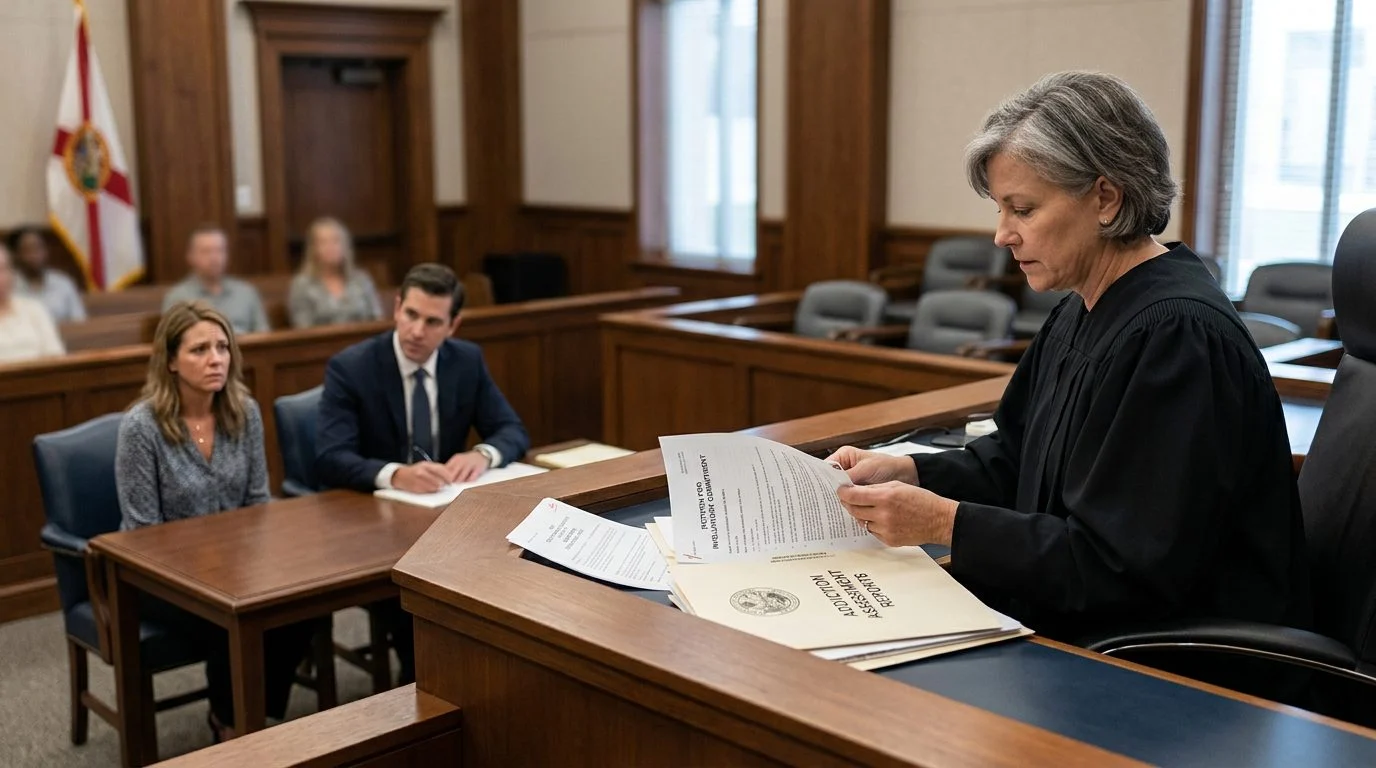
If your loved one lives in another Florida county, you can still ask a court for help. Filing a Marchman Act for a loved one in another Florida county starts with one question: where is that person located? Florida’s Marchman Act lets certain family members and others petition a judge for assessment and, when the legal criteria are met, treatment. The petition goes to the clerk in the county where the person is located, not necessarily where you live. This page explains each step. Robinson Casey limits its practice to Marchman Act petitions and guardianship matters, serving families across South Florida and statewide.
What the Marchman Act is and who it is for
The Marchman Act is Florida’s court process for substance use. It is found in Chapter 397, Florida Statutes. A petition asks a judge to order an assessment and, if the criteria are met, treatment.
Is the Marchman Act involuntary? Yes. The process is court-ordered, so it does not depend on the person agreeing to it.
The judge must find a good faith reason to believe the person is substance abuse impaired. The person must also have lost the power of self-control with respect to substance use. Fla. Stat. § 397.675 sets out that test and the further conditions that apply. The law also says a simple refusal of help does not, by itself, show a lack of judgment.
Who is it for? Families worried that substance use is causing serious harm. That includes cases where the person denies there is a problem.
Tough love and family intervention can help some families. Others reach a point where those approaches have not worked. A court process gives them another option, with rules and protections of its own.
If your loved one is in another county and you're unsure where a petition begins, our team can talk it through with you. You don't have to sort it out alone. Talk it through with our team — the first consultation is free, confidential, and carries no obligation.

Filing from another county: where the petition goes
The petition is filed with the clerk of the court in the county where the person is located. Fla. Stat. § 397.681 sets this rule for involuntary treatment petitions. The clerk may not charge a fee for filing. Service fees can still arise, and the court may prohibit, or a law enforcement agency may waive, any service of process fees if a petitioner is determined to be indigent under § 397.68112.
Filing in the wrong county is a venue problem, not a jurisdiction problem. Venue means the right location for the case. In J.P. v. J.N., a Fifth District court held that a petition filed in the wrong county did not take away the circuit court’s jurisdiction. Even so, filing the petition in the wrong county did not strip the Putnam County circuit court of its jurisdiction (J.P. v. J.N.).
Before filing, gather the loved one’s current address, the county where they are staying, and any facility where they are held. Location decides which clerk and court handle the case. The Miami-Dade Clerk directs adult requests for involuntary alcohol or drug abuse treatment to its Probate Court. Families in Miami-Dade or Palm Beach often ask whether their own county matters. Under § 397.68112, for an adult respondent, a petition may be filed by the respondent’s spouse or legal guardian, any relative, a service provider, or an adult with direct personal knowledge of the respondent’s substance abuse impairment and prior course of assessment and treatment. Where the person is located controls which clerk and court handle the case, so start there.
The filing process, step by step
The case moves in stages, from first call to hearing. This is the general order.
- Consultation. We review the facts, the loved one’s location, and what your family hopes to achieve. The first consultation is free, confidential, and carries no obligation to continue.
- Drafting the petition. The petition must name the respondent (the person named in the case) and the petitioner. It must state their relationship and the factual allegations. § 397.68141 lists these items, plus the name of the respondent’s attorney, if known, and the factual allegations showing the need for involuntary services.
- Filing. The court decides whether the respondent has a lawyer or needs one. It sets a hearing within 10 court working days unless a continuance is granted. See § 397.68151.
- Notice and service. The respondent and other named people receive the petition and hearing notice. The clerk sends the summons to law enforcement within 6 hours after it is issued, unless the chief judge authorizes disinterested private process servers.
- See § 397.6957.
Emergencies move faster. A provider may not hold the person for more than 72 hours of observation, unless specified exceptions apply (§ 397.6818). If the court finds the criteria proven by clear and convincing evidence, it may order treatment for up to 90 days (§ 397.697).
Timing depends on the facts and the court calendar. No single timeline fits every family.
What the petition needs and how families take part from a distance
A strong petition relies on specific facts. Dates, recent incidents, and documented harm to the person or to others give the court something concrete. The petition must give the reasons the petitioner believes the person is impaired and has lost self-control, and must also give either the reason the petitioner believes the respondent has inflicted or is likely to inflict physical harm on himself, herself, or others unless the court orders involuntary services, or the reason the petitioner believes the respondent’s refusal of care is based on impaired judgment. A qualified professional’s report from the 30 days before filing may be attached (§ 397.68141).
A witness may testify remotely by audio-video technology, under oath. That witness must give the parties all relevant documents by the close of business the day before the hearing (§ 397.6957).
The petitioner carries the burden of proof. See also J.J.J. v. D.G..
Court petitions, orders, and related records are confidential under § 397.6760.
Why families work with Robinson Casey on Marchman Act matters
Robinson Casey limits its practice to Marchman Act petitions and guardianship matters. That focus keeps our work on the procedures that govern these cases. Our team handles:
- Marchman Act petitions and involuntary commitment for addiction
- Guardianship, including emergency temporary guardianship, plenary guardianship, limited guardianship, and mental health guardianship
We serve families across South Florida and statewide. Richard J. Casey III, Esq. is the responsible lawyer for this page. Our team helps you gather the facts a petition needs and explains each step in plain terms.
Frequently asked questions
Does my adult child have to agree to be assessed?
No. The Marchman Act is court-ordered, so the process does not depend on the person agreeing. The judge still needs proof that the legal criteria are met.
Does refusing help mean my child does not qualify?
Not by itself.
Can a judge send someone to rehab in Florida?
A judge can order assessment and, when the criteria are met, involuntary treatment through a court hearing. Read more in our guide on whether a judge can send someone to rehab.
Can I file if I live in a different county from my loved one?
Yes, relatives are among those who may file under § 397.68112. The petition still goes to the county where your loved one is located.
Not sure what your next step is?
Talk it through with our team — the first consultation is free, confidential, and carries no obligation.

Talk through your situation with Robinson Casey
Watching someone you love struggle with substance use is hard, especially from another county. The next step can feel unclear and urgent at the same time. A short conversation can show you what the court process would look like for your family. Call (561) 849-4149 or schedule a consultation to start.
Why Families Work With Robinson Casey
A Focused Practice
Our firm focuses on Marchman Act petitions and guardianship matters, so every case is handled by lawyers who concentrate on these issues.
Statewide Reach
We represent families across South Florida and throughout Florida, including situations where the loved one lives in a different county.
Free, Confidential First Consultation
Your initial consultation is free, confidential, and carries no obligation to continue.
Support Staff Who Keep You Informed
Our team of assistants and office staff helps families stay organized and understand each step of the process.
Ask Before You File
Court procedures can differ from one county to another. Speaking with a lawyer before you file helps make sure the petition is prepared and presented correctly from the start.
Common Concerns When the Loved One Is in Another County
Where the Petition Is Filed
Questions about the correct court often depend on where your loved one is located and where the family lives. We review those facts with you during your consultation.
Coordinating Across Counties
Families sometimes need to work with courts, facilities, and family members in more than one county. We help you understand what to expect and who needs to be involved.
Gathering Your Information
Clear documentation and a timeline of events can make the process smoother. We explain what information is useful to bring to your first meeting.
Urgent Situations
When a loved one's safety is at risk, time matters. Call our office to talk through your situation and learn how we can help you move forward.