
Marchman Act & Guardianship | South Florida
Can a Judge Send Someone to Rehab in Florida?
Robinson Casey focuses exclusively on Marchman Act petitions and guardianship matters for families across South Florida and statewide. Get clear answers about the process.
By Richard J. Casey III, Esq. · Published October 18, 2026
The short answer: yes, but only through a court process in Florida
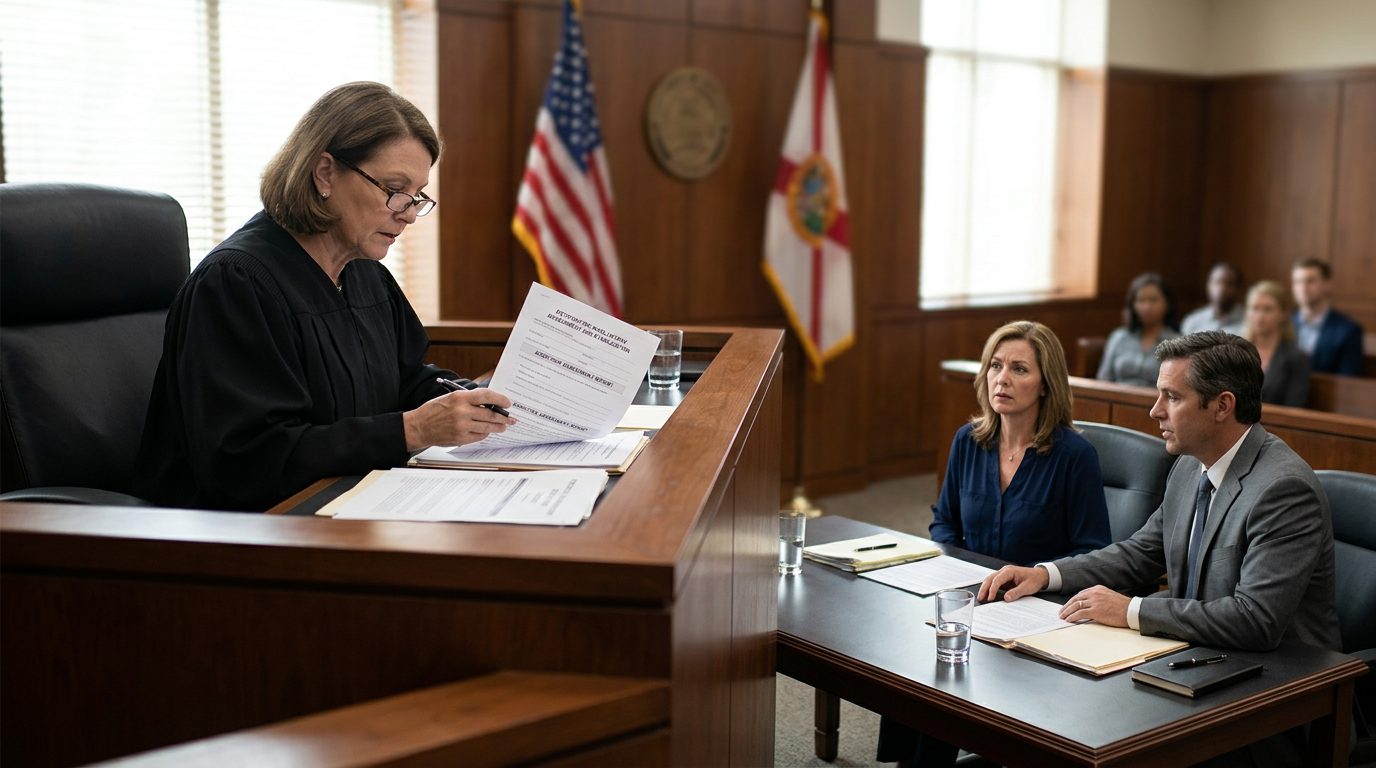
Yes. A Florida judge can order involuntary substance use treatment, but only through a court case under the Marchman Act. A judge doesn’t act just because a family asks for help. Someone must file a petition, the person must get notice, and a hearing must happen before any order is made.
Many families expect a fast order. The process is slower and more careful than that. The judge must find that the legal criteria are met, and the person keeps important rights along the way.
Robinson Casey limits its practice to Marchman Act petitions and guardianship matters. The firm serves families across South Florida and statewide. Knowing the order of events helps a family understand what the court needs to see. This page walks through those steps, the voluntary path, and the guardianship questions that sometimes come up.
If someone you love is struggling with substance use and you're unsure what a court can do, we're glad to talk it through with you. Talk it through with our team — the first consultation is free, confidential, and carries no obligation.

What the Marchman Act is and what it covers
It gives families a route to ask a court for assessment, stabilization, and treatment. The law aims to provide services in the least restrictive setting that promotes long-term recovery, according to Fla. Stat. § 397.305. The same statute calls substance abuse impairment a disease that affects the whole family.
The court needs a good-faith reason to believe the person is substance abuse impaired. The person must also have lost the power of self-control with respect to substance use.
They must need services but be unable to see that need or make a rational choice about it. Or they must face a real and present threat of substantial harm from neglect. Or they must have harmed, or threatened to harm, themselves or others.
One point matters a lot. Simply refusing treatment is not, by itself, proof of lack of judgment. A petition needs facts, not just a family’s disagreement with a loved one’s choices.
Who can file a Marchman Act petition
For an adult, a petition can be filed by a spouse or legal guardian, any relative, a service provider, or an adult with direct personal knowledge of the person’s substance use and past treatment, under Fla. Stat. § 397.68112. For a minor, a parent, legal guardian, or service provider may file.
The petition has required content. It must name the person and the petitioner, and state how they are related. It must name the person’s attorney if known. It must also lay out the facts showing why services are needed, as set out in Fla. Stat. § 397.68141. Specific dates, events, and what was seen or reported make those facts clearer.
A petition may include an assessment by a qualified professional done within 30 days before filing. If the person was never assessed, or refused one, the petition must say so.
The petition goes to the clerk of court in the county where the person is located. The clerk may not charge a filing fee, under Fla. Stat. § 397.681. A Fifth District decision, J.P. v. J.N., treats filing in the wrong county as a venue problem, not a lack of jurisdiction. As the appellate court explained in J.P. v. J.N., the filing of the petition in the wrong county did not divest the circuit court in Putnam County of jurisdiction. Eligibility and filing details depend on the facts.
Can you ask a judge to send you to rehab?
A person who wants treatment doesn’t need a judge. Under Florida law, a person may apply directly to a service provider for voluntary admission, as Fla. Stat. § 397.601 provides. When the evidence shows substance abuse impairment, and the provider can safely manage the person’s condition, the provider must admit the person within its capacity. The provider must also favor the least restrictive setting that fits the person’s needs.
Voluntary admission and court-ordered treatment are separate paths. The court path is built for a person whose impairment keeps them from making that choice for themselves. A family can’t simply ask a judge to send a loved one to rehab. The case must start with a petition, supported by facts, and a hearing must follow.
For minors, consent to voluntary substance abuse services has the same effect as an adult’s consent. That consent is not later undone because of the minor’s age.
Is there a legal way to force someone into rehab?
Yes. Florida law allows a judge to order involuntary treatment after a petition, notice, and a hearing. The steps follow a set order.
First, the court decides whether the respondent has a lawyer or needs one appointed. It must schedule a hearing within 10 court working days unless a continuance is granted, under Fla. Stat. § 397.68151. The respondent has a right to counsel at every stage, according to Fla. Stat. § 397.681. The Second District has held that this right is constitutional, in Hillsborough County v. Albrechta.
Second, the respondent generally must attend the hearing. A person can’t be ordered into treatment without a clinical assessment, unless they are present and expressly waive it. Testimony is taken under oath.
Third, the judge must find the conditions proved by clear and convincing evidence. If so, treatment may last up to 90 days. The judge may direct the sheriff to take the person into custody and deliver them to a provider, under Fla. Stat. § 397.697.
In an emergency, the court may rely on the petition alone. Without appointing an attorney, it may enter an ex parte order for assessment and stabilization, under Fla. Stat. § 397.6818. The Second District has also held that the petition must give a good-faith reason to believe the statutory criteria are met, in D.H. v. K.J.R..
When guardianship questions come up
It can come up when a loved one’s condition affects their ability to make decisions, not only their substance use. Robinson Casey handles guardianship matters, including emergency temporary guardianship, plenary guardianship, limited guardianship, and mental health guardianship.
The two proceedings are different. A Marchman Act case asks whether a person needs involuntary substance use treatment. A guardianship case asks whether a court should appoint someone to make certain decisions for a person. Some families face both issues at once.
When both issues appear, the facts must be reviewed for each one. Ask what decisions are at stake, what the person’s health and safety needs are, and whether treatment is part of the picture.
Not sure what your next step is?
Talk it through with our team — the first consultation is free, confidential, and carries no obligation.
How to help someone who refuses help
Start with the facts. A petition must describe the reasons for the concern. A written, dated record helps a family explain what is happening. Note specific events, what was said or done, and who saw it. Keep copies of relevant messages, missed appointments, and incidents that involved police or medical care.
Learn the voluntary options too. Some people agree to treatment when the choice feels like their own. A calm conversation, or one held with a professional present, can sometimes open that door. Avoid covering for the behavior or making excuses that hide its impact on the person and the family.
Safety comes first. If someone is in immediate danger to themselves or others, call 911 or local emergency services right away.

Where to go from here
Many people reading this are watching someone they love struggle with alcohol or drugs. Few families expect to consider a court case, and the decision can feel heavy. You don’t have to settle everything at once.
Can a judge order rehab in Florida?
Yes. A Florida judge can order involuntary substance use treatment after a Marchman Act petition, notice, and a hearing.
Who can file a Marchman Act petition?
For an adult, a spouse, legal guardian, relative, service provider, or an adult with direct knowledge can file. The rules for minors differ.
Does the person have a right to a lawyer?
Yes. The respondent has the right to counsel at every stage of the proceeding.
How long can an involuntary treatment order last?
An order can last up to 90 days. A renewal may be requested before that period ends.
If you’re weighing a Marchman Act petition for someone you love, we invite you to talk with us. Call (561) 849-4149 or visit our contact page. Our first consultation is free, confidential, and carries no obligation to continue. Richard J. Casey III, Esq. is the lawyer responsible for this page.
Why Families Start with Robinson Casey
A Focused Practice
Robinson Casey limits its practice to Marchman Act petitions and guardianship matters, so every case is handled within a narrow, well-defined area of Florida law.
Careful, Step-by-Step Process
Court involvement in these matters is deliberate. We explain each stage, from filing through notice and hearing, so you know what to expect.
Built Around Families
These cases affect the whole household. We focus on clear communication and on the practical concerns that matter most to you and your loved one.
Free, Confidential First Consultation
Your first consultation is free, confidential, and comes with no obligation to continue.
Don't Wait Until the Situation Becomes an Emergency
Early questions lead to better preparation. If you are worried about a loved one's substance use, talk with Robinson Casey before a crisis forces fast decisions.
Legal Matters Robinson Casey Handles
Marchman Act Attorney
Petitions for involuntary substance use treatment under Florida's Marchman Act, from initial filing through hearing.
Involuntary Commitment for Addiction
Representation for families seeking a court-ordered treatment process for a loved one who is struggling with addiction.
Guardianship Attorney
Guardianship petitions and proceedings for families who need court authority to protect an adult who cannot manage their own affairs.
Emergency Temporary Guardianship
Urgent petitions for temporary protection when a delay could put a vulnerable person at risk.
Plenary and Limited Guardianship
Guardianship options tailored to the level of support an incapacitated person needs, from full to limited authority.
Mental Health Guardianship
Guardianship matters involving mental health needs, handled with attention to the person's well-being and dignity.