
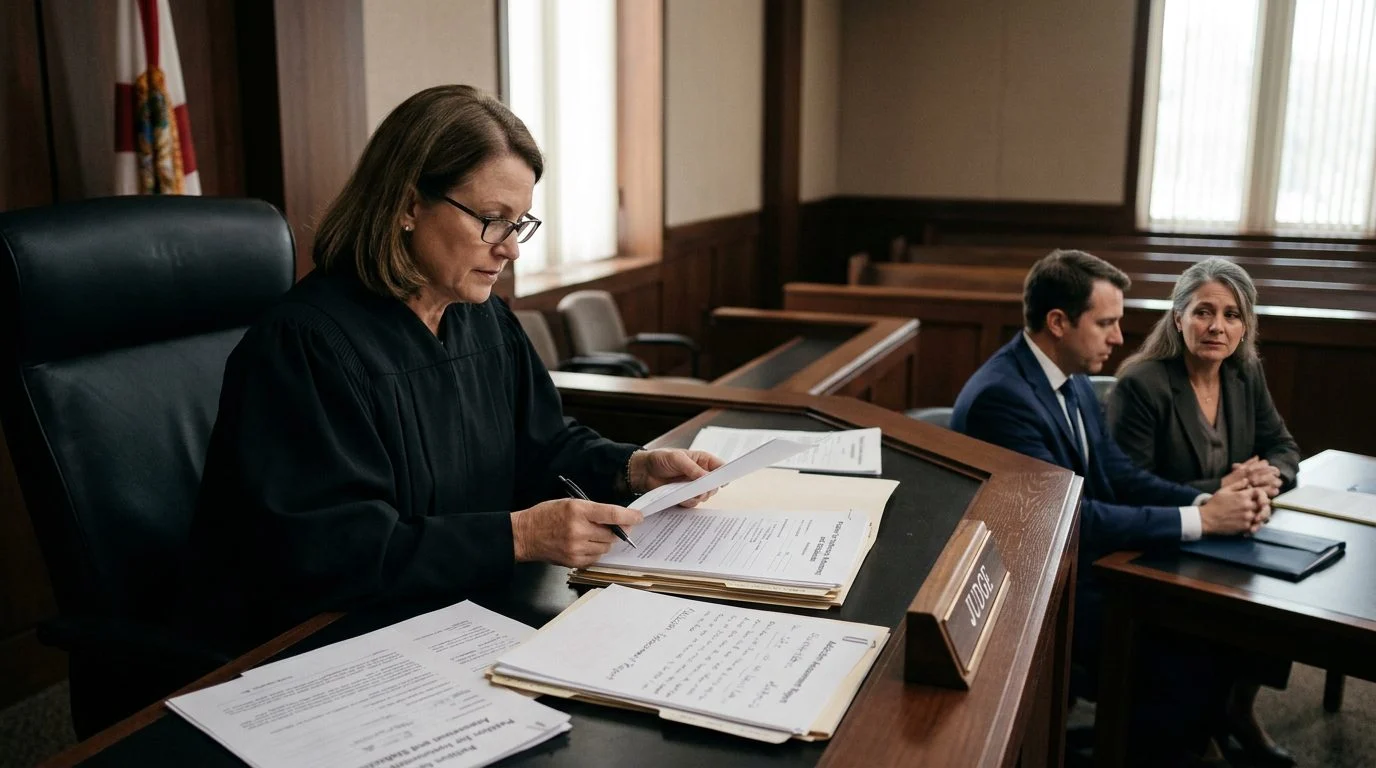
Marchman Act & Guardianship | South Florida
When Your Adult Son Is Homeless and Needs Help, Families Can Act
Robinson Casey focuses on Marchman Act petitions and guardianship matters for families in Miami-Dade and across South Florida. Learn how the process works, then call (561) 849-4149 for a free, confidential first consultation with no obligation to continue.
By Richard J. Casey III, Esq. · Published October 30, 2026
If your adult son is homeless, using drugs and turning down help, a Marchman Act petition may be a legal option in Florida. The Marchman Act lets a court order assessment, stabilization and treatment for an adult whose substance abuse has taken away his power of self-control. This guide explains how a Marchman Act homeless adult son Florida case works, what the petition needs, and what the law does not do. You don’t have to work out every step on your own.
What Is the Marchman Act, and Who Can File?
The Marchman Act is Florida’s civil process for court-ordered help when substance abuse impairs a person’s ability to make safe choices. The Florida Department of Children and Families describes it as a way for a court to order involuntary assessment, stabilization and treatment for adults and youth severely impaired by substance abuse.
For an adult, a petition may be filed by a spouse or legal guardian, any relative, a service provider, or an adult with direct personal knowledge of the impairment and prior treatment. Fla. Stat. § 397.68112 sets out that list.
Your son may be sleeping outside or in unsafe places, using drugs daily, skipping meals and refusing help. You may fear an overdose, an assault, an untreated infection or someone taking his money. You may also be tired of the cycle of crisis, hospital, release and the street again.
If your son is sleeping outside and using drugs, you don't have to decide the legal path alone, and our team offers a free, confidential first consultation to talk through your options. Talk it through with our team — the first consultation is free, confidential, and carries no obligation.

How the Marchman Act Process Works, Step by Step
For a Marchman Act homeless adult son Florida case, the petition goes to the clerk of court in the county where he is physically located. The court then controls the schedule.
- Consultation and fact review. We go over what has happened, when, where, and what has already been tried.
- Sworn petition filed. The clerk may not charge a filing fee for the petition (Fla. Stat. § 397.681). Under Fla. Stat. § 397.681(1), a petition must be filed with the clerk of the court in the county where the person is located. An earlier Putnam County decision addressed a petition filed in the wrong county and held that the circuit court there still had jurisdiction (J.P. v. J.N.). That holding turned on its own facts and does not change the filing requirement, so the county where the person is located should be treated as the required filing location.
- Counsel and hearing date. The respondent has the right to counsel at every stage of the proceeding, which he may waive if he is present and the court finds the waiver is made knowingly, intelligently, and voluntarily; a respondent who desires counsel and cannot afford a private lawyer has the right to court-appointed counsel. The court appoints counsel if it believes he needs or desires it, whatever his wishes. The court must schedule a hearing within 10 court working days unless a continuance is granted (Fla. Stat. § 397.68151).
- Emergency orders. If emergency circumstances exist, the court may rely on the petition alone and enter an ex parte order for assessment and stabilization (Fla. Stat. § 397.6818).
- Hearing. Testimony is taken under oath. The court hears and reviews all relevant evidence. If the respondent does not appear at the hearing, the court may, upon reviewing the petition, testimony, and evidence presented, reissue an ex parte assessment and stabilization order valid for 90 days if it reasonably believes the respondent meets the commitment criteria and a substance abuse emergency exists.
- Court order. If the court finds the conditions proved by clear and convincing evidence, it may order up to 90 days of treatment (Fla. Stat. § 397.697). A renewal petition must be filed before the court-ordered period ends, either by the service provider or by the original petitioner with supporting documentation from the service provider (Fla. Stat. § 397.6975).
What Your Petition Needs: Facts, Dates and Records
The petition must name both people, state your relationship, and set out specific facts showing why he needs services. The statute asks for the respondent’s name, the petitioner’s name, the relationship between you, his attorney if known, and the factual allegations. Those facts must explain why you believe he is substance abuse impaired, has lost power of self-control, and either has inflicted or is likely to inflict physical harm on himself or herself or others unless the court orders services, or refuses care because his judgment is so impaired by substance abuse that he cannot appreciate his need for care or make a rational decision about it (Fla. Stat. § 397.68141).
Start gathering these items now:
- Dates and places where he was found, such as a park, a shelter or a doorway.
- Overdoses, emergency room visits, police contacts or ambulance runs.
- Past detox, treatment and assessments. If he refused an assessment, the petition must say so.
- Names of people with firsthand knowledge, such as a shelter worker, neighbor or service provider.
- Missing checks, unpaid bills or taken property, if they connect to his safety.
A common mistake is describing a loved one as “out of control” without dates. Specific, dated facts give the court more to weigh. A report from a qualified professional who examined him within 30 days before the petition was filed may also accompany the petition.
What the Marchman Act Covers, and Its Limits
The Marchman Act covers court-ordered assessment, stabilization and treatment for substance abuse impairment, not every decision in a person’s life. A person meets the criteria for involuntary admission if there is good faith reason to believe that the person is substance abuse impaired, or has a substance use disorder and a co-occurring mental health disorder, and that, because of such impairment or disorder, the person has lost the power of self-control with respect to substance abuse. The court must also find impaired judgment or a real threat of harm without care. Mere refusal of services is not, by itself, evidence of lack of judgment.
Those questions may call for a guardianship analysis, such as emergency temporary, plenary or limited guardianship. That is a separate question with its own analysis.
Florida appeals courts disagree on how far a judge may question witnesses when the petitioner is absent. In the Fifth District, a court may not call and question the professional in that situation (C.W.R.K.). For questions about parents and grandparents filing, see our parent guide.
Why Families Work With Robinson Casey
Richard J. Casey III, Esq. is the responsible attorney for this page.
Our team includes support staff who help families organize records, track filing steps and keep hearing dates straight. You won’t be left to manage the paperwork alone. Every matter the firm handles falls within these two areas, so the guidance stays focused on them.
We explain the petition, the timeline and the limits in plain terms before you decide anything.
Frequently Asked Questions About Marchman Act Petitions
What are the basic requirements for a Marchman Act petition in Florida?
The petition must name both people, state your relationship, and give specific facts showing impairment and the need for services.
Can my adult son be petitioned if he refuses help?
Refusal alone is not enough, because mere refusal is not evidence of lack of judgment. The petition must show the other facts the law requires.
Does filing a Marchman petition cost money?
The clerk may not charge a fee to file the petition.
Is a Marchman Act the same as guardianship?
No. The Marchman Act deals with substance abuse impairment and court-ordered treatment. Guardianship deals with ongoing decisions about money, medical care and daily life.
Does my son have a right to a lawyer?
Will this solve his housing problem?
Not sure what your next step is?
Talk it through with our team — the first consultation is free, confidential, and carries no obligation.

Talk With Robinson Casey About Your Family’s Situation
If your loved one is on the street and you don’t know what comes next, a free first consultation can help you sort out your options. You may be waiting by the phone, dreading the next call while you worry about his next night outside. You don’t have to face that decision by yourself.
Our first consultation is free, confidential, and comes with no obligation to continue. Call (561) 849-4149 or request a consultation to talk through your son’s situation.
How Robinson Casey Supports Families
Marchman Act Petitions
We help families prepare petitions that set out the relationship between the parties and the specific facts showing impairment and the need for services.
Guardianship Matters
Our team handles emergency temporary, plenary, limited, and mental health guardianship matters for adults who cannot make some or all decisions for themselves.
Compassion for Families
Our attorneys understand that a family's concern for a loved one is often mixed with fear and exhaustion, and we explain each step in plain language.
Clear Communication
We keep you informed about what to expect, what information we need, and what questions to bring to the court process.
Do Not Wait Until the Situation Becomes a Crisis
Gather dates, places, and specific incidents now, including any concerns about your son's health, safety, or ability to manage basic needs. Detailed facts make a clearer picture for the attorney reviewing your situation.
Matters We Handle
Marchman Act Attorney
Petitions for involuntary assessment, stabilization, and treatment for adults with substance use or co-occurring mental health concerns.
Involuntary Commitment for Addiction
Guidance on the petition process for families seeking court-ordered services for a loved one who refuses voluntary treatment.
Guardianship Attorney
Help with guardianship petitions, including emergency temporary, plenary, limited, and mental health guardianships.
Free First Consultation
A confidential, free initial consultation with no obligation to continue. Call (561) 849-4149 or schedule online.