
Marchman Act | Miami-Dade, FL
Getting Help for a Homeless Family Member Under the Marchman Act
Robinson Casey focuses on Marchman Act petitions and guardianship matters for families in Miami-Dade and across South Florida. Talk with an attorney about your loved one's situation.
By Richard J. Casey III, Esq. · Published October 22, 2026
Short Answer: Homelessness Alone Does Not Bar a Marchman Act Petition
Yes, a Marchman Act petition can be filed for a homeless adult in Florida.
A petition is a court filing, so the outcome depends on what the petition and the hearing record show. Specific facts about impairment matter far more than a street address.
Robinson Casey focuses on Marchman Act petitions and guardianship matters. The firm serves families in Miami-Dade and across South Florida and statewide.
If your adult family member is sleeping outdoors or moving between shelters and you're unsure whether to file, we can review the facts with you at (561) 849-4149. Talk it through with our team — the first consultation is free, confidential, and carries no obligation.

What the Marchman Act Covers
The Marchman Act is Florida’s process for adults whose substance use impairment may call for assessment, stabilization, or treatment.
Family members can start the process. Under Fla. Stat. § 397.68112, if the respondent is an adult, a petition may be filed by a spouse or legal guardian, any relative, a service provider, or an adult with direct personal knowledge of the person’s impairment and prior treatment. The adult named in the petition is called the respondent.
The petition has to explain why. Under Fla. Stat. § 397.68141, it must name the respondent and the petitioner, state how they are related, and lay out the facts. Those facts show why the petitioner believes the person is impaired by substance abuse, has lost self-control over substance use because of it, and either has inflicted or is likely to inflict physical harm on themselves or others unless the court orders services, or is refusing care because their judgment is so impaired by substance abuse that they cannot appreciate their need for care and cannot make a rational decision about it. For the full framework, see our involuntary commitment for addiction guide.
What the Court Looks at: Condition and Location, Not Address
The court’s main question is the adult’s condition. The criteria center on substance abuse impairment, loss of self-control, and either a likely threat of physical harm to self or others unless the court orders involuntary services, or impaired judgment that makes the respondent incapable of appreciating the need for care. They also cover a real and present threat of substantial harm to the person’s well-being.
A person who sleeps outdoors, stays in a shelter, or moves between places can still be the subject of a petition. The question is whether the facts support the criteria. Among the grounds for a petition, a person may be the subject of one if they reasonably appear to meet those criteria or were assessed by a qualified professional within 30 days.
Location controls where the case is filed. Under Fla. Stat. § 397.681, the petition goes to the clerk of the court in the county where the person is located. However, the filing of the petition in the wrong county did not divest the circuit court in Putnam County of jurisdiction (J.P. v. J.N.).
Service of papers is also practical. Under Fla. Stat. § 397.68151, the clerk must electronically submit the summons to a law enforcement agency for service within 6 hours after it is issued, unless a circuit court’s chief judge authorizes disinterested private process servers. Someone who moves often can be harder to find, so plan for that.
How Families Document the Facts Before Filing
Good facts are dated, specific, and written down close to the time they happen. Start with a simple log. Record the date, the place, what you saw or heard, and who else was present.
Focus on the kinds of facts that matter. These include observed impairment, incidents involving health or safety, statements the person made about substance use, and any past treatment attempts.
A petition may include a report from a qualified professional who examined the person within 30 days before filing. Under Fla. Stat. § 397.68141, if the person was never assessed or refused an evaluation, the petition must say so.
For someone without a fixed address, note the places they often go. Think of certain streets, shelters, or outreach sites. That gives the court and any authorities a clearer sense of where the person can be found.
Avoid exaggeration. Stick to what you saw and heard. Family members familiar with the person’s history can give evidence, and testimony is taken under oath. Accurate, specific details are what a court can weigh.
What a Marchman Act Petition Does Not Do
A petition does not provide housing, income, or a place to live. Under Fla. Stat. § 397.6977, discharge planning must include and document the person’s needs and actions to address them, at a minimum: follow-up behavioral health appointments, information on how to obtain prescribed medications, information on available living arrangements and transportation, and referral to recovery support opportunities, including connection to a peer recovery support professional. That is planning and information, not a home.
A petition is also not a guardianship. Guardianship is a separate court process with its own purpose and its own filings, so families should not treat the two as interchangeable.
A petition does not lead to treatment automatically. The court may order involuntary treatment for a period not to exceed 90 days; at the end of that period the respondent is automatically discharged unless a motion for renewal of the involuntary services order has been filed with the court. The respondent also has the right to counsel at every stage under Fla. Stat. § 397.681, though the respondent may waive that right if present and the court finds the waiver is made knowingly, intelligently, and voluntarily.
Other legal paths exist. If you’re weighing drug court, read our comparison of involuntary treatment and drug court before you decide.
Miami-Dade and South Florida Families
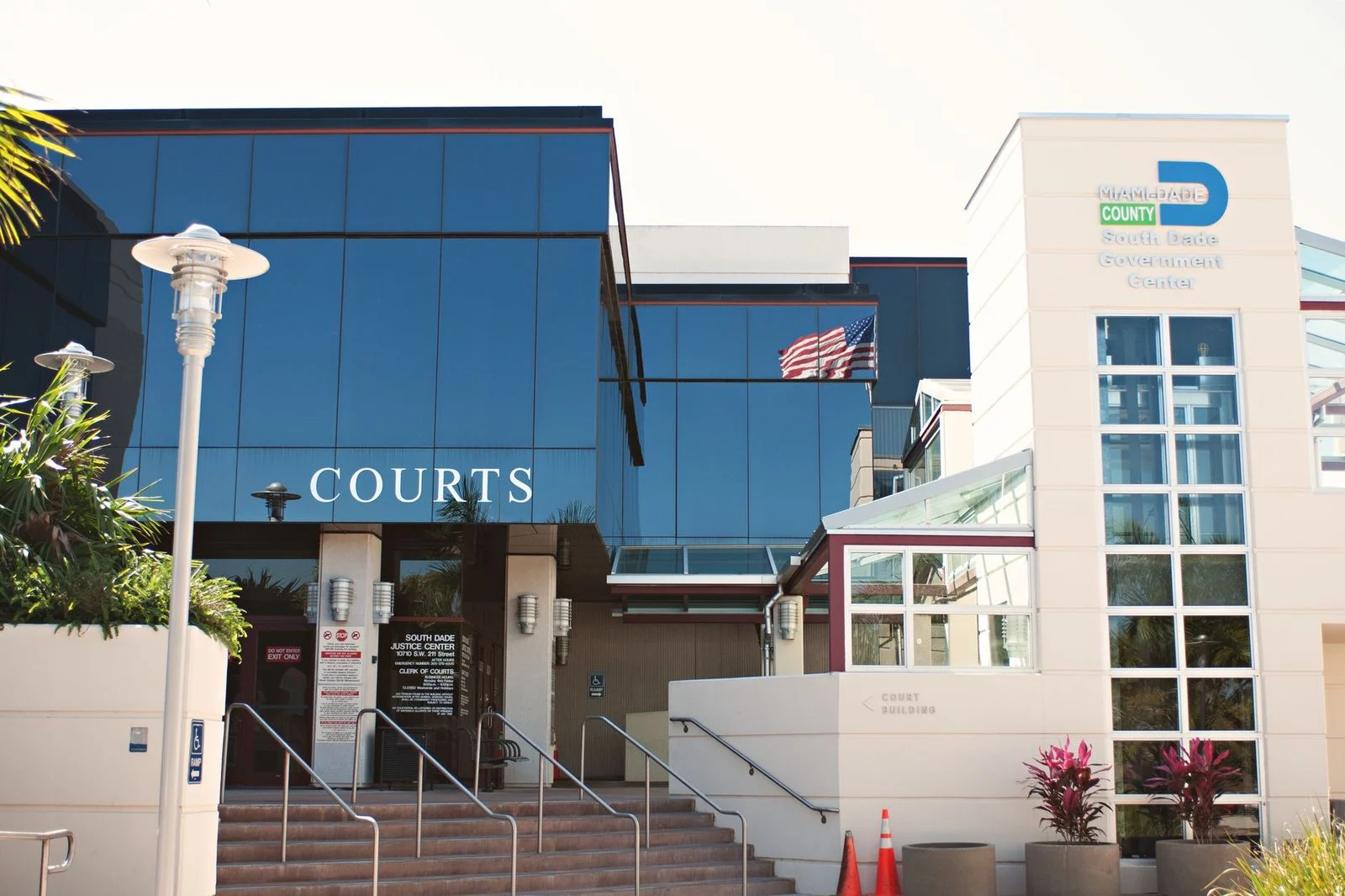
Families in Miami-Dade often deal with people who move between streets, shelters, and outreach sites. Those patterns shape how facts get gathered and where a petition must be filed. Knowing the local routing helps you act without delay.
Under the statute, the filing must match the county where the person is located at the time.
For local context, see our Miami-Dade involuntary commitment guide and our South Florida guide.
Richard J. Casey III, Esq. is the responsible lawyer for this page. Robinson Casey focuses on Marchman Act petitions and guardianship matters for families across South Florida and statewide.
Not sure what your next step is?
Talk it through with our team — the first consultation is free, confidential, and carries no obligation.
Talk With Robinson Casey About Your Situation
Robinson Casey can review the facts of your family member’s situation with you. Call (561) 849-4149 to start the conversation.
Can a Marchman Act petition be filed if my family member has no address?
Yes. Under Fla. Stat. § 397.681(1), such petitions must be filed with the clerk of the court in the county where the person is located.
Who can file a Marchman Act petition for an adult?
If the respondent is an adult, a spouse or legal guardian, any relative, a service provider, or an adult with direct personal knowledge of the impairment and his or her prior course of assessment and treatment can file; if the respondent is a minor, a parent, legal guardian, or service provider can file.
Does filing a petition mean the person will receive treatment?
No. The court must find the conditions proved by clear and convincing evidence before it orders treatment.
Does the person get a lawyer?
Yes. A respondent has the right to counsel at every stage, though the respondent may waive that right if present and the court finds the waiver is made knowingly, intelligently, and voluntarily; a respondent who desires counsel and is unable to afford private counsel has the right to court-appointed counsel.
If your family member is sleeping outdoors or bouncing between shelters, and you’re showing signs of worry about impairment, you don’t have to decide alone. Request a free, confidential initial consultation with no obligation to continue through our contact page, or call (561) 849-4149.
How Robinson Casey Can Help Your Family
Marchman Act Petitions
We prepare and file petitions for involuntary assessment and treatment of an adult with a substance use disorder, including adults who have no fixed address.
Guardianship Matters
We handle guardianship petitions, including emergency temporary, plenary, limited, and mental health guardianships, when an adult cannot manage personal or financial decisions.
Clear Explanations
We explain each step of the process in plain language so you know what to expect before you decide how to proceed.
Focused on Families
Our team understands how stressful it is to watch a loved one live on the street, and we keep your family informed throughout the case.
Don't Wait to Ask Questions
Homelessness and addiction can become more dangerous with each passing day. Speaking with an attorney early helps your family understand the options available for your loved one's situation.
Matters We Handle
Marchman Act Attorney
Petitions for involuntary assessment and treatment of adults with substance use disorders, prepared and filed in the county where the person is located.
Plenary and Limited Guardianship
Guardianship petitions tailored to the level of decision-making support an adult needs, whether broad or limited in scope.
Mental Health Guardianship and Involuntary Commitment
Guardianship and commitment matters for adults whose mental health or addiction affects their ability to care for themselves.
Talk With Robinson Casey About Your Family's Situation. Your First Consultation Is Free, Confidential, and Comes With No Obligation to Continue.
Related practice areas
- Marchman Act vs Mental Health Guardianship in Florida