
Marchman Act Attorney | Miami-Dade & South Florida
Marchman Act Hearing in Florida: Clear Guidance for Families
Robinson & Casey focuses on Marchman Act petitions and guardianship matters for families across South Florida and statewide. Richard J. Casey III, Esq. is responsible for this page.
By Richard J. Casey III, Esq. · Published October 22, 2026
Marchman Act Hearing in Florida: What to Expect & How to Prepare
A Marchman Act hearing is a Florida court proceeding where a judge decides whether involuntary commitment for addiction treatment is necessary. If you’re filing a petition for a loved one, understanding the hearing process removes uncertainty and helps you present your case effectively.
If you're facing a Marchman Act hearing for a loved one struggling with addiction, you don't have to navigate the court process alone—call us to discuss your case. Talk it through with our team — the first consultation is free, confidential, and carries no obligation.

What Is a Marchman Act Hearing and Who Needs One
A Marchman Act hearing is a formal court proceeding governed by Florida Statute § 397.675 in which a judge reviews whether a person meets the legal criteria for involuntary commitment due to substance abuse or addiction.
Who files the petition: – Family members – Caregivers or healthcare providers
Who attends the hearing: – The respondent (the person whose commitment is being considered) – The petitioner (the person filing) – The judge – Attorneys for both parties (if represented) – Witnesses, if called to testify
The Marchman Act Hearing Process: Step-by-Step Timeline
Understanding the timeline helps you prepare and know what to expect.
Step 1 – Petition filed (Day 1): You or your attorney file the Marchman Act petition with the court. The petition includes details about the respondent’s substance use, specific incidents, and why you believe commitment is necessary.
The court schedules the hearing, and the timing depends on the type of petition and the court’s calendar. Marchman Act hearing procedure requires that notice of the hearing date, time, location, and allegations be served on the respondent and their attorney.
Step 3 – Pre-hearing preparation (Days 3–9): You and your attorney gather evidence, prepare witnesses, and organize documentation. This is when you build your case.
Step 4 – Hearing day: Both parties appear before the judge. The judge hears all evidence and may ask questions.
Step 5 – Judge’s ruling: The judge announces their decision. If commitment is ordered, a written order follows within days.
Step 6 – If commitment ordered: The respondent is transported to a designated treatment facility.
What Happens During the Marchman Act Hearing
The hearing is formal but less adversarial than a criminal trial. Here’s what to expect:
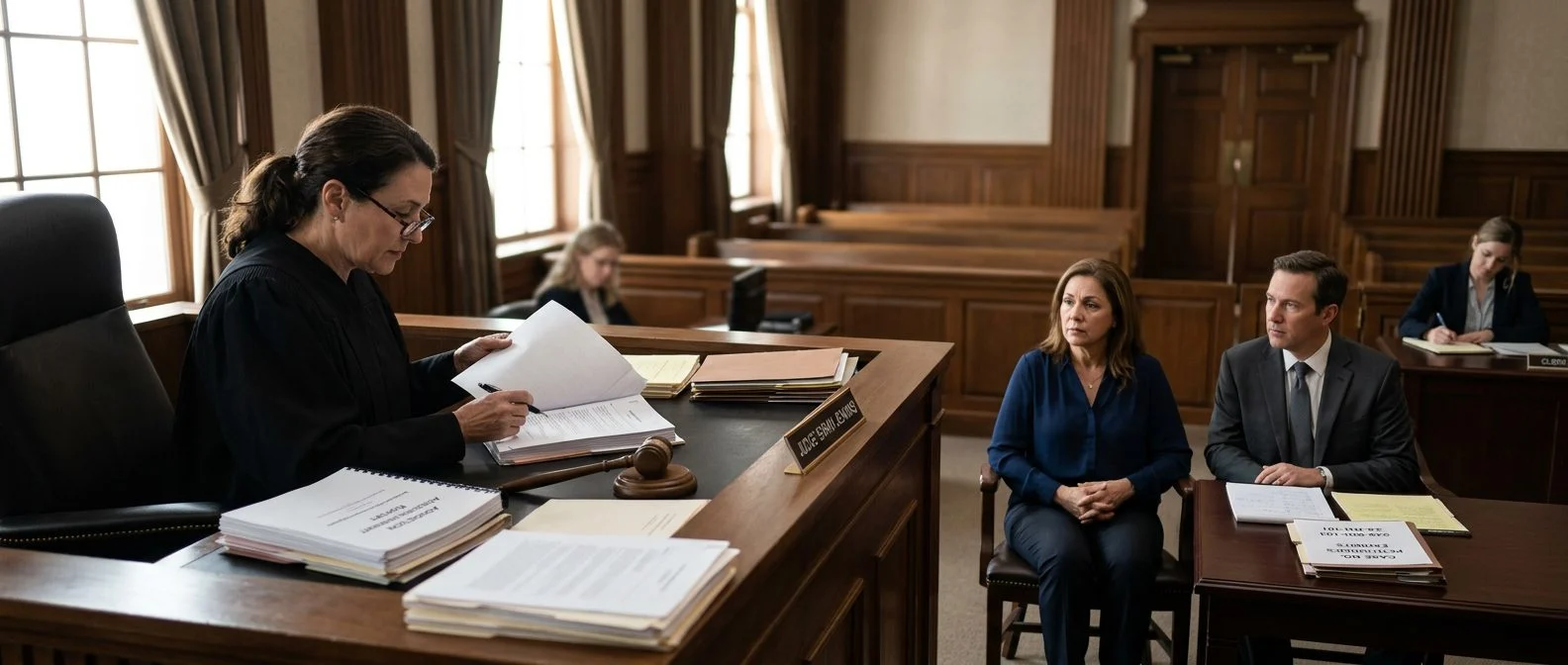
The courtroom setting: A judge presides. The respondent, petitioner, and any attorneys are present. Witnesses may testify under oath.
Your case as petitioner: You testify about the respondent’s substance use, specific incidents that show danger or loss of control, and why you believe they cannot consent to treatment. Your testimony should be factual, specific, and focused.
Evidence presented: The judge reviews: – Medical records or psychiatric evaluations – Police reports or incident reports – Prior treatment attempts or refusals – Documentation of substance use or behavior – Witness testimony from family, employers, or healthcare providers – Text messages, emails, or other communications showing substance use or danger
The respondent’s right to respond: The respondent may testify, present witnesses, or have an attorney argue against commitment. If they cannot afford an attorney, the court may appoint one.
The judge’s questions: The judge may ask clarifying questions of you, the respondent, witnesses, or attorneys to understand the facts fully.
The criteria are set out in Florida Statutes Chapter 397.
The outcome: The judge states their ruling and explains their reasoning. A written order follows, detailing the decision and any conditions.
How to Prepare for a Marchman Act Hearing
Thorough preparation is an important part of any Marchman Act hearing.
Gather documentation: Collect all relevant records: – Medical or psychiatric evaluations – Treatment history or prior treatment refusals – Police reports or arrest records – Incident reports from employers, schools, or institutions – Text messages, emails, or social media posts showing substance use or danger
Identify credible witnesses: Determine who can testify about the respondent’s addiction, behavior, or danger. Strong witnesses include: – Family members who have witnessed substance use or dangerous behavior – Healthcare providers or therapists – Employers or supervisors – First responders or law enforcement – Friends or neighbors with direct knowledge
Prepare your testimony: Write down specific dates, incidents, and behaviors. Focus on facts, not emotions. Example: “On March 15, my son did not come home for three days. When he returned, he was disheveled and admitted to using methamphetamine. He refused to go to treatment.”
Organize evidence chronologically: Create a clear timeline showing how the addiction has progressed, any incidents of danger, and any refusals of help. This helps the judge see the pattern.
Understand the legal standard: Know that the judge must find clear and convincing evidence. You don’t need perfect proof, but you need specific incidents and credible testimony.
Work with your attorney: Review your case, practice your testimony, and discuss strategy. Your attorney will guide you on what to emphasize and how to present evidence effectively.
Arrange logistics: Confirm the hearing date and location. Plan transportation. Notify witnesses of the date and time, and confirm they will attend.
What to Bring to Your Marchman Act Hearing
Bring originals or certified copies of: – Medical records, psychiatric evaluations, or treatment records – Police reports, arrest records, or incident reports – Documentation of prior treatment attempts or refusals – Photographs or videos (if relevant and admissible) showing evidence of drug use or unsafe conditions – Written statements from witnesses who cannot attend – Text messages, emails, or other communications showing substance use or danger – Your own written statement or notes for testimony – Any prior court orders or Marchman Act petitions – Insurance information or proof of treatment facility availability
Organize these materials in a folder or binder for easy reference during the hearing.
Not sure what your next step is?
Talk it through with our team — the first consultation is free, confidential, and carries no obligation.
Common Questions About Marchman Act Hearings
Q: Can the respondent refuse to attend the hearing?
Q: Will the respondent have an attorney?
The respondent has the right to an attorney. If they cannot afford one, the court may appoint one.
Q: How long does the hearing last?
Hearing length varies with the facts of each case.
Q: Will I have a chance to speak during the hearing?
Yes. As the petitioner, you will testify and may present evidence. Your attorney will guide your testimony.
Q: What happens if the judge orders commitment?
The respondent is transported to a designated treatment facility. Ask us during your consultation how the facility’s notice and visitation rules may apply to your family.
Q: Can I appeal the judge’s decision?
Yes. Appeal rights and deadlines depend on the order entered and on applicable Florida rules. An attorney can advise on grounds and likelihood of success.
Richard J. Casey III, Esq.: Guiding Families Through Marchman Act Hearings
Focused practice: Robinson & Casey concentrates exclusively on Marchman Act petitions and guardianship matters. We limit our practice to Marchman Act petitions and guardianship matters, so our work centers on these cases.
Local experience: We serve families across South Florida and statewide. Our work involves Florida court proceedings for Marchman Act and guardianship matters.
Preparation and strategy: We help you gather evidence, prepare testimony, and present your case clearly for the court’s consideration.
Representation at the hearing: We appear with you, examine witnesses, and advocate for your family’s position.
Realistic guidance: We explain what to expect, what the judge will look for, and how to strengthen your case.
Continuity: If commitment is ordered, we can advise on next steps, including guardianship or ongoing legal matters.

Addressing Common Concerns
“Will my loved one resent me for filing?” Involuntary commitment is difficult, but it may save their life.
“What if we don’t have perfect evidence?” The judge needs clear and convincing evidence, not perfection. Specific incidents and credible testimony are types of evidence that may be presented at these hearings.
“How much will this cost?” Costs vary. Discuss fees with your attorney upfront. Many families find the cost justified by the potential to save a life.
Each case is evaluated on current facts and circumstances.
If you’re preparing for a Marchman Act hearing or considering filing a petition for a loved one, Robinson & Casey can guide you through every step. We’ll help you gather evidence, prepare testimony, and present your case effectively in court. Call us at (561) 849-4149 or schedule a consultation to discuss your situation. Your family doesn’t have to face this alone.
How We Work With Families
Focused Practice
Our attorneys focus on Marchman Act petitions and guardianship matters, so your case is handled by a team that works in these areas every day.
Plain-Language Answers
We explain each step of the process in terms you can understand, so you know what to expect before the hearing.
Careful Preparation
We help you gather information and organize your concerns in advance, so you can focus on your family during a difficult time.
Compassionate Support
We understand how stressful a Marchman Act matter can be for everyone involved, and we treat each family with respect.
Important to Know
The length of a Marchman Act hearing depends on the facts of each case, and no particular result can be promised. Speaking with an attorney early can help you understand the process and your options.
Questions Families Ask Before a Hearing
What happens at the hearing?
We walk you through the hearing from start to finish, including who will be present and how the court reviews the petition.
Will I have a chance to speak?
We discuss your role in the hearing during your consultation, so you can prepare what you would like the court to know.
How do guardianship and Marchman Act matters differ?
Each matter involves different steps and goals. We explain how each one may apply to your family's situation.
What should I bring to a consultation?
Bring any court papers, medical or treatment records you have, and a list of your questions. We will tell you what else may help.